Nobody likes to pay almost half of one’s wages for housing, but that is what is happening to so many California residents. Reasons for the astronomical housing costs vary according to whom one asks. However, regardless of reason, the situation is now promoted as a “crisis,” and duly exploited as such.
Of concern to the Just Vote No Blog is that the housing crisis is at the heart of today’s central planning, which renders residents and voters increasingly powerless in land use and housing decisions.
A Brief Background
In The Curious Case of Housing Legislation, the Just Vote No Blog noted the history behind today’s network of housing bills. The state’s evolving efforts to remove land use and housing decisions from voters is one of the evident aspects of such history. Here are some reminders:
The seminal Assembly Bill 32, The Global Warming Solutions Act of 2006, started the ball rolling by mandating the reduction of the state’s greenhouse gas emissions to 1990 levels by 2020 and to 80 percent below 1990 levels by 2050.
Climate crisis soon morphed into a land use crisis that required dense job/housing development along narrow corridors throughout the Bay Area, ostensibly to cut down on greenhouse gas emissions produced by workers commuting from homes in the suburbs.
Predictable pushback from neighborhoods, cities and counties not wanting to lose their chosen quality of life encouraged increasingly stronger state mandates. SB 330 and AB 1487 are the latest high-profile bills bent on removing housing decisions from cities and counties.
SB 330, the Housing Crisis Act of 2019, introduced in February by Senator Nancy Skinner and approved by the legislature September 6, has the general objective to “prohibit a county or city, including the electorate exercising its local initiative or referendum power, in which specified conditions exist, determined by the Department of Housing and Community Development as provided, from enacting a development policy, standard, or condition, as defined…..” Thus, the electorate is summarily dismissed.
AB 1487, the San Francisco Bay Area Regional Housing Finance Act of 2019, introduced in February by Assembly Member David Chiu is currently active and in desk process. This bill is a game changer. Voters, no matter how disempowered by mandates such as SB 330, at present can still vote down tax proposals that finance mandates they do not like. AB 1487 makes that strategy more difficult. This bill establishes a new agency, the Bay Area Housing Finance Authority, run by bureaucrats removed from the wrath of voters, with the power to place tax proposals on region-wide ballots, and to determine pass/fail on an aggregate region-wide basis.
Progression Towards Powerful Public-Private Partnerships
The plethora of housing bills in the style of SB 330 and AB 1487 passed into law during the past few years calls for a good deal of cash, perhaps more than the creative financing that could be achieved by the Housing Finance Authority would be able to raise on its own. Thus, enter powerful private players interested in housing development for reasons of their own, willing to forge partnerships with public entities. As one would expect, tech companies like Google and Facebook are becoming major players.
Google, Facebook and other deep-pocketed tech companies are at present investing in housing, a dream come true for housing advocates. They are also encouraging the California legislature to pass legislation that will streamline housing production (more on this later), since investors do not like lengthy bickering over what or where housing is built.
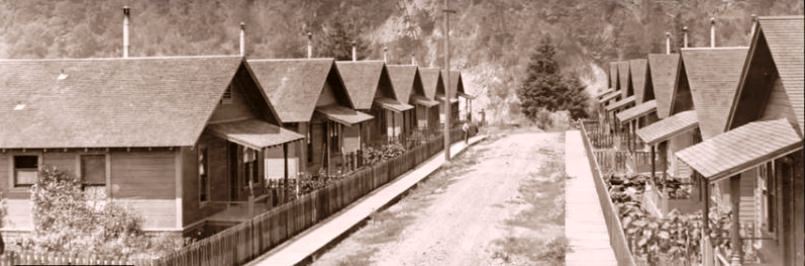
Of course, private influence in public affairs is nothing new. Neither is privately-funded housing developed with government blessings — company towns like Hershey, Marktown, and Pullman are examples. However, today California is witnessing not just tech-towns developed for tech workers, but also the much broader endeavor of using tech money to fund housing for the general population.
Recommended Articles on Public-Private Partnerships
A San Francisco Bay Area publication, 48 Hills, has been deeply concerned about the waning power of voters in land use, housing and transportation decisions. A series of articles by researcher and journalist Zelda Bronstein, published in 48 Hills, explains in great detail how a private entity, the Chan Zuckerberg Initiative, is poised to affect housing policy. In the first two installments published May 29, 2019 and August 29, 2019 of the series (there might be more to come), Ms. Bronstein zeroes in on Senate Bill 330 and Assembly Bill 1487.
The articles are rich with information that Bay Area residents will find useful in understanding who is becoming in charge of their neighborhoods.
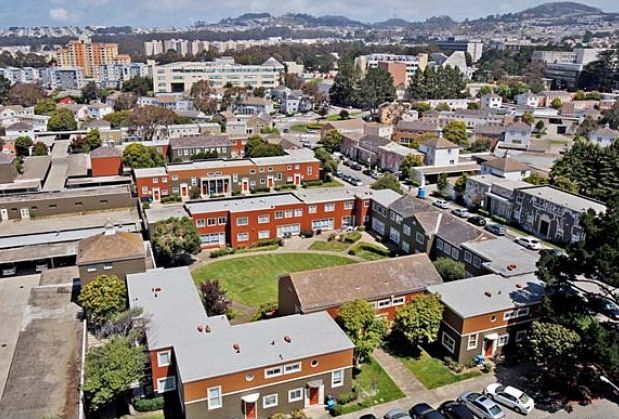 Parkmerced, a traditional privately owned residential community in the heart of San Francisco that houses over 3,000 residents, has developed
  hoped that Congress would go back to work. Unfortunately, that has not happened. Taxpayers are paying Congress to bicker. Congress is not working with the Administrative Branch in developing an effective foreign policy. It is not addressing the nation’s unsustainable level of debt. It is not producing a realistic immigration policy. The latter is the most egregious inattention of the current members of our Federal Legislature.
 The passage by the California legislature of numerous housing-related bills during the past four or so years made it possible for developers to receive ministerial stream-lined approval of housing developments throughout the state – regardless of city or county zoning rules. (Pictured are Senator Scott Wiener, Assembly Member David Chiu, and Senator Nancy Skinner, the more prolific affordable housing advocates in the California State Legislature.)
 Remember Willie E. Coyote? He tried so hard to defeat the Road Runner, but he consistently used products manufactured by the Acme Co. that failed to operate at all, exploded prematurely, or otherwise caused Willie Coyote the worst of harm. Some folks just don’t learn….
 Pacific Gas & Electric is facing liabilities that could exceed $30 billion as a result of law suits arising from California’s devastating 2017 and 2018 fires.
 California Senate Bill 50, authored by Senator Scott Wiener, was tabled today by the Appropriations Committee until “at least 2020.” In a previous post Just Vote No asked
 alifornia is home not only to a lot of homeless and housing insecure people, but also home to rich people. Recent statistics say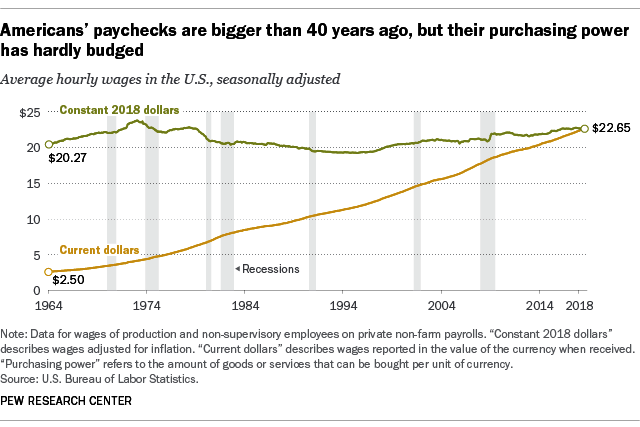
 Just Vote No