MACA: Make America Civil Again

Famously, the U.S. has the highest age-adjusted rate of firearms homicides per 100,000 population among developed higher-income nations. The U.S. should have a new slogan: MACA: Make America Civil Again.

Conservatives have stood their ground on gun possession – give in on “common sense legislation,” and gun control advocates will come after the Second Amendment. This situation is akin to abortion advocates refusing to give one inch for fear a mile will be taken. Both misgivings are warranted. So, nobody budges.

Meanwhile, gun violence continues to escalate. Famously, the U.S. has the highest age-adjusted rate of firearms homicides per 100,000 population among higher-income nations. The U.S. should have a new slogan: MACA: Make America Civil Again.

Unfortunately, leaders as well the general public no longer value civility. Leaders lead by discordant slogans, political candidates rile up their base, and special interests sell their agendas with cherry-picked facts. The desire for trust, compromise and consensus has become a scarce commodity.

Add to the brew granular and persistent factors: mediocre schools, violent video games, pervasive social media, busy or absent parents, isolation, Covid-19, anxiety hammered into young minds by race/gender focused narratives, an uncertain economy, easily-obtainable drugs. Something bad is bound to happen.

Gun violence is what happened

In 2020, 43% of the [gun] deaths – amounting to 19,384 people – were homicides, according to data from the CDC. The figure represents a 34% increase from 2019, and a 75% increase over the course of the previous decade … The data also shows that the vast majority of murders, 79%, were carried out with guns.

Suicides were 54% of gun deaths in 2020. Mass shootings were 3% of gun deaths in 2020 (this figure changes depending on how mass shooting is described – some say 3 or more people, and some say 4 or more people).

From America’s Gun Culture in Seven Charts, BBC News, May 25, 2022

Enter “America’s Rifle”

Although mass shootings are a relatively small percentage of gun-related death, they are the most visible and the most remembered. Also mass shootings are rising since around 2012, giving cause for great alarm.

Pistols are often used in mass shootings, but the focus of rage is over semi-automatic, high-capacity rifles such as the AR-15, possibly because of their visibility and popularity. If anything has substantially contributed to America’s gun culture, the AR-15 has, especially right after President Bill Clinton’s 1994 ban and subsequent ban expiration in 2004.

Culturally, the ban did what marketers could not: In outlawing it, the government made the AR-15 tantalizing. “Once Banned, Now Loved and Loathed: How the AR-15 Became ‘America’s Rifle’,” New York Times, March 3, 2018.

Check out the AR-15s below, and spread the word on what AR really stands for, America’s Rifle. NRA Blog, January 20, 2016.

Clever marketing and plenty of lobbying by the NSSF (National Shooting Sports Foundation) and the NRA (National Rifle Association) further cement America’s obsession with guns, popularize semi-automatic weapons, and help make the gun industry very profitable.

The NSSF has a sleek website and spent $4,580,000 in 2020 on lobbying. The NRA’s lobbying expenses were $2,200,000 in 2020. For comparison, Michael Bloomberg’s Everytown Foundation, the better known of the gun-restriction advocates, spent $1,330,000 on lobbying in 2020. One could wager that such influence might tend to keep public officials from doing much fraternizing with the enemy.

No fraternizing with the enemy or coming to agreements

There are cultural, political, patriotic, economic and self-defense issues that appear to be irreconcilable, with all factions escalating their rhetoric. The discord runs deep, with significant divergence in broad questions such as what was the Founders’ aim when they wrote the Bill of Rights, what is the role of government, who is responsible for the populace’s safety, and must government treat everyone as “created equal.”

Here are recent comments reported in the media that serve to illustrate how deep and acrimonious the divergence runs.

North Carolina Lieutenant Governor speaking at a worship service at Midpoint Church, Middlesex, NC, May 15, 2022: “I got them AR-15s in case the government gets too big for his britches because I’m going to fill the backside of them britches with some lead.”

North Carolina Governor Roy Cooper in a Tweet on May 31, 2022, commenting on Lt. Governor Robinson’s speech: “An elected official sworn to uphold the Constitution advocating violent overthrow of our govt shames NC and puts our safety and our democracy at risk.”

These two comments, both needlessly confrontational, are examples of profound and irreconcilable disagreement as to the nature of the Constitution and the Bill of Rights. One faction views government as a principal entity representing “democracy,” to which public officials swear allegiance; thus no distinction is made between government and the Constitution. The opposing faction views the Constitution and the Bill of Rights as a foundation document intended to constrain actions of government, and give the people means (Second Amendment) to defend themselves against a government that becomes tyrannical; the distinction between government and the Constitution is observed.

President Joe Biden, during a speech outlining his plan to combat gun violence, June 23, 2021: “If you wanted or if you think you need to have weapons to take on the government, you need F-15s and maybe some nuclear weapons.”

Maybe such a comment illustrates what Lt. Governor Robinson was talking about when he mentioned a government getting “too big for his breeches.” President Biden is apparently OK with a pretty powerful government obliterating its citizens. Hopefully, citizens will use the ballot box to restrain government when needed before the conflagration envisioned by President Biden occurs.

Saida Grundy, Sociology and African American studies Professor at Boston University, Tweet, May 25, 2022, regarding destruction of property during the George Floyd riots: “When you say that to Black people, who historically have been property, one of our greatest weapons was the looting of ourselves as property from the system of slavery. And what we see in communities is they are reacting to the very racism of what we call property … I think it’s very important for people who see reactions in communities not to judge or make assumptions about what is good and not good reactions. And not actually re-victimize communities by saying there’s an acceptable and not acceptable way to react.”

The sentiment in Professor Grundy’s Tweet alludes that not all were viewed as “created equal” by the nation’s Founders, and therefore not all should be judged equally today. The question must then arise if the violence following George Floyd’s murder should not be judged as good or not good, how much leniency should society afford. Is gun violence included in the leniency? It would be difficult to reconcile such leniency with credible solutions to rising violence.

Polarization is the order of the day. There are sacred cows that would be difficult to eliminate, the Second Amendment is one of them. Any law that gun supporters perceive as threats to the Amendment is opposed. On the other hand, there are legitimate fears of people with guns. As families of murdered children increase, so does the call for stricter gun laws.

Again, the seemingly irreconcilable comments above are needlessly confrontational. Leaders like Lt. Governor Robinson mentioned above, who plans to run for governor in 2024, delight in incendiary comments about gun rights. Another governorship contender, Beto O’Rourke of Texas, who famously said during his presidential campaign in 2020, “Hell yes, we’re going to take your AR-15, your AK-47,” was escorted out of a press conference called by Texas Governor Gregory Abbott to report on the Uvalde murders, shouting to Abbott, “This is on you until you choose to do something different.”

But not too different

When Beto O’Rourke challenged Governor Abbott to “do something different,” a good guess would be he was not thinking of something too different, like taking on the underlying forces of which gun violence is a symptom. That would entail reversing over 50 years of the cultural and political status quo.

Some talk about eliminating the “root causes” of violence does come up, usually referring to incidents of mental illness and poverty. That’s like giving someone with a headache an aspirin to combat the root cause of the headache: pain. Cultural, political, economic issues behind mental illness and poverty are way too big to even think about tackling.

And not much can be fixed without a modicum of trust. After every highly-publicized shooting incident, anti-gun factions call for additional gun restrictions claiming the majority of Americans want restrictions. Yet, after every such incident gun sales rise significantly. Seems a lot of people either do not trust law enforcement to protect them, or fear government will use a shooting incident to make guns and/or ammunition largely unavailable to civilians. Again, such concerns are warranted, and will continue until public officials stop posturing.

Palliatives don’t cure but do blunt the pain

Since it does not appear that anyone is talking about deep diving into the real root causes of gun violence, gun restrictions arising from compromise and trust would serve as palliatives.

Compromise is accepting things one fears in exchange for acquiring things others fear. Trust is hoping the party to whom power is allocated will act responsibly. Both require eternal vigilance by average citizens and voters – or like Teddy Roosevelt said, “Speak softly, and carry a big stick.”

There are three gun restrictions at the federal level: the long-standing restriction on owning fully-automatic weapons and “highly destructive” weapons, requirement that licensed gun dealers do background checks on gun purchasers, and requirement that purchasers be 18 years or older. Unlicensed firearms dealers are not required to make background checks. Presumably, folks in the underground market are not too constrained by gun restrictions.

Proposals for federal universal background checks, as well as federal red-flag legislation (law enforcement officer removing guns from individuals that appear to present a danger to themselves and others) are often proposed by anti-gun legislators and often opposed by pro-gun legislators.

As America remains the developed country with the highest rate of gun violence, right up there with failed poverty-stricken nations, more intelligent restrictions than those we have now seem in order. For example, how does it make sense for anyone, but especially someone barely out of childhood, to legally purchase several powerful weapons sometimes on the same day?

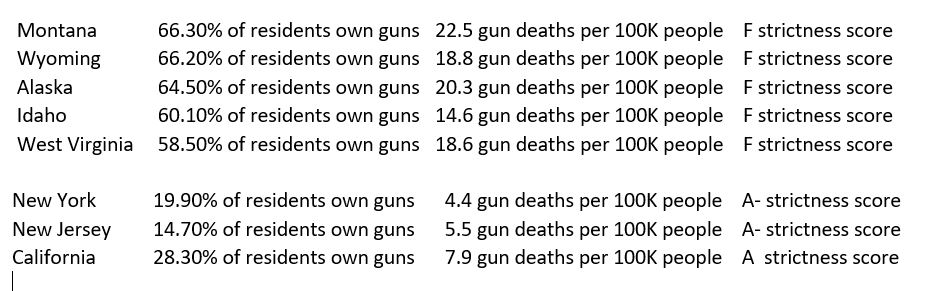
Here are a few figures from World Population Review (2018 figures). Suicides are included in gun violence statistics, and suicides account to 60% of U.S. gun deaths. The chart also shows level of strictness of gun laws (2019): A+ for strictest through F for least strict.
Gun ownership in the U.S.

The figures on the chart show that states with the highest rate of gun ownership also have the highest rate of gun deaths. Statisticians acknowledge there could be externalities, like isolation in states with low population density or lack of supportive services in less progressive states.

Regulations and restrictions at the federal level preclude choices by individual states. They would also presumably provide a wider and deeper bank of information on potential purchasers, making background checks and other requirements more effective in excluding people deemed dangerous to themselves and others.

Reversing America’s gun culture, helping people cope with serious adversities, finding a way to get young people to stay away from isolating and violent video games, making the economy work for the less affluent, decrease dependence on government and increase self-reliance – all would help to reduce destructive or violent behavior. None of this has so far been done effectively.

Best that can be done at this time might be to encourage our leaders via the ballot box to tone down the rhetoric, and give a little to take a little.

CBDC: Where Angels Should Fear to Tread

CBDC is not like Bitcoin or Stablecoin or any other form of private digital currency in existence today. CBDC is government issued, and government controlled to stay in concert with government objectives.

CBDC stands for Central Bank Digital Currency, and President Joe Biden, along with other heads of state are on a roll to get CBDC implemented.

“My Administration places the highest urgency on research and development efforts into the potential design and deployment options of a United States CBDC.” Executive Order, March 9, 2022.

The Fed’s White Paper

The Federal Reserve had already been tasked with preliminary exploration, and on January 20, 2022, the Fed released Money and Payments: The U.S. Dollar in the Age of Digital Transformation, a surprisingly balanced white paper.

The paper mainly lists the forms CBDC could take, and the benefits and risks of implementation. That is all the paper could do, since the key issue – the form CBDC could take – is at this time undetermined.

However, Money and Payments is clear on the following points,

* CBDC is a liability of the U.S. government, just like paper money. The general public and private institutions such as banks carry no liability. The white paper does not discuss that a U.S. government liability is a public liability – when government functions sour, Joe Q. Public pays the price in taxes or soup lines.

* CBDC can be designed to achieve various levels of privacy, stability, surveillance, crime fighting, inclusion, risk, transparency, permanency, cross-border availability. The white paper does not discuss the likely levels of each. Numerous articles found on the Internet simply assume the shapes CBDC will take without any basis for such assumptions.

In other words, CBDC is not like Bitcoin or Stablecoin or any other form of private digital currency in existence today. CBDC is government issued, and government controlled to stay in concert with government objectives.

Today, several countries have launched pilot CBDC programs, and 9 countries – 8 in the Caribbean plus Nigeria – have fully functioning CBDC.

Rushing to where angels should fear to tread

It is not just Internet pundits imagining what CBDC would look like.

The Federal Reserve Bank of Boston and the Massachusetts Institute of Technology are collaborating on Project Hamilton to explore CBDC design.

Some members of Congress have introduced legislation on CBDC. Not the kind of authorizing legislation that Chairman Powell would like to have, but what could be called preemptive legislation. Examples:

On January 12, Representative Tom Emmer (R-MN) introduced a bill prohibiting the Federal Reserve from issuing a central bank digital currency directly to individuals.

On March 30, Senator Ted Cruz (R-TX) introduced a bill, companion to Rep. Emmer’s, in the U.S. Senate. The Federal Reserve is already prohibited by Constitution and statute from issuing money directly to the public; which might be the reason Senator Cruz emphasizes his concern for individual privacy and his desire to keep the market competitive

U.S. Sen. Ted Cruz (R-Texas), member of the Senate Commerce Committee, today introduced legislation to prohibit the Federal Reserve from issuing a central bank digital currency (CBDC) directly to individuals. Sen. Cruz’s bill was cosponsored by Sens. Braun (R-IN) and Grassley (R-IA).

Specifically, the legislation prohibits the Federal Reserve from developing a direct-to-consumer CBDC which could be used as a financial surveillance tool by the federal government, similar to what is currently happening in China. The bill aims to maintain the dollar’s dominance without competing with the private sector.

On March 28, Representative Stephen Lynch (D-M), with co-sponsors Jesús “Chuy” García (D-IL), Rashida Tlaib (D-MI), Ayanna Pressley (D-MA), and Alma Adams (D-NC), introduced a bill calling for an “ECash” prototype that would be distributed directly to the public by the U.S. Treasury.

The Fed treads more lightly

The Fed Board of Governors so far has stuck to what it was mandated to do: produce a preliminary study.

On several occasions Fed Chairman Jerome Powell indicated that he will not proceed with CBDC on his own. He wants specific authority from Congress in the form of legislation, concurrence from the Administration, and acceptance from the general public.

When issuing those statements, Powell might be referring to the fact that the U.S. Constitution clearly says that the power “to coin money, regulate the value thereof…” belongs to Congress. Also, although the Federal Reserve is tasked with ensuring the efficiency and safety of payment systems, it does not have the power to unilaterally implement a totally new payment system or engage in transactions with the public directly.

Powell also might be noting that implementation of CBDC could, as the white paper states, “fundamentally change the structure of the U.S. financial system, altering the roles and responsibilities of the private sector and the central bank.” Not something the Federal Reserve should undertake without support from the public and their representatives in Congress.

What is Biden proposing exactly?

We don’t know what Biden is proposing, and at this point neither does he. U.S. CBDC could be designed in many forms and to accomplish many diverse objectives.

The Money and Payments white paper comment section illustrates how widely interpreted is CBDC. Comments vary from viewing CBCD as a pig in a poke, a solution looking for a problem, another step in the evolution of the current U.S. payment system, a great opportunity for inclusion, and so on.

Informed consent from Congress in the form of adopted legislation (if that ever happens) with the approval of the President will provide cover for Chairman Powell.

But can do little to ensure,

  • Individual privacy
  • Economic good health
  • Sustainable national debt

Alternate Media with Cameron Weber

The Just Vote No Blog recommends Hardfire TV with host Cameron Weber for engaging, liberty-leaning discussions.

Thank you to Cameron Weber — economist, historian, and educator — for writing, producing and hosting Hardfire TV. Several of the Hardfire segments are on YouTube.

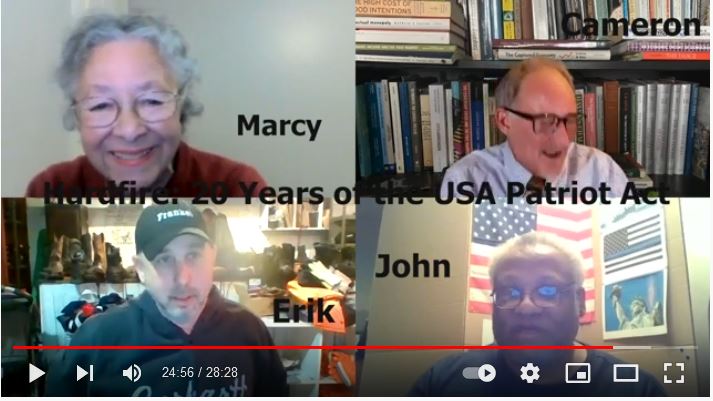
Dr. Weber and the guests on his show provide the liberal (“liberal” meaning “liberty-leaning”) view on a wide variety of subjects. On December 10, 2021, guests Marcy Berry, John Clifton, and Erik Frankel discussed how government seizes the opportunity of a crisis to expand its power and reach.

20 Years of the USA Patriot Act shows how new laws and changes to existing laws immediately followed the declaration of emergency in the wake of the 9/11 attack. The Patriot Act was not renewed in 2020, but the numerous restrictions imposed by the laws the Act left behind remain.

Guests at Hardfire TV

Congress could still be MIA after new war powers bill

On July 20, Senate Bill 2391 was introduced and celebrated as Congress reclaiming the war powers granted to it by the Constitution. The Bill only reforms how Congress can continue to dodge its war power duties.

On a regular basis, members of Congress grumble about the Executive Branch usurping the war powers granted to Congress by the U.S. Constitution. Nevertheless, air strikes and other incursions continue unabated. Last month, President Joe Biden ordered “defensive precision air strikes” in Iraq and Syria, reportedly in response to drone attacks on U.S. personnel stationed in Iraq.

This month, Congress’ grumbling resulted in Senate Bill 2391, the National Security Powers Act, introduced on 07/20/21 by Senators Chris Murphy (D-Connecticut), Mike Lee (R-Utah) and Bernie Sanders (I-Vermont).

SB 2391 aims to do the following:

  • Increase Congress’ control over the authorization of military actions.
  • Reform the review of weapons sales to foreign countries.
  • Increase Congress’ control over the declaration of national emergencies.

The Bill aims to accomplish its objectives principally by the following:

  • Repeal of the War Powers Resolution of 1973.
  • Sunset four existing authorizations for the use of military force. One of which is the open-ended authorization President Dwight Eisenhower obtained from Congress in 1957 purportedly to protect Middle Eastern nations from Communist aggression. The remaining three authorizations are those Congress granted following the 9/11 attack on the U.S.
  • Set forth the minutia of what words in the Bill mean, when a U.S. President can send troops into military action without Congress’ authorization, and when authorizations are supposed to end.
  • Require Congressional authorization for foreign arms sales over certain amounts.
  • Require a President submit underlying laws and protocols supporting declarations of emergency, and limit the duration of states of emergency.

In spite of rhetoric about usurpation of war powers, all this bill aims to accomplish is a reform of how Congress can continue to dodge its Constitutional responsibility to speedily and efficiently deliberate on matters of war, and choose to declare or not declare war when military hostilities arise.

If Congress were really serious about curbing Presidential usurpation of power in matters of military action, all that Congress needs to do is repeal all war-related statutory authorizations now on the books and abide solely by what the U.S. Constitution states in Article I, Section 8, Clause 11; and Article II, Section 2,

Article I – Congress shall have the power,

  • To declare War, grant Letters of Marque and Reprisal, and make Rules concerning Captures on Land and Water;
  • To raise and support Armies, but no Appropriation of Money to that Use shall be for a longer Term than two Years;
  • To make Rules for the Government and Regulation of the land and naval Forces.

Article II –

  • The President shall be Commander in Chief of the Army and Navy of the United States, and of the Militia of the several States, when called into the actual Service of the United States.

Articles I and II make clear that Congress needs to declare war before a President exercises his duties as Commander in Chief. Constitutionally, in matters of war a President’s duties are solely military, directing deployments of troops placed at his command by Congress.

This Bill requires Congressional approval of government foreign arms sales over certain amounts. This requirement implies Congress’ view that choosing arms buyers is akin to choosing friends and foes. Besides, the U.S. Constitution gives Congress sole power in Article I, Section 8, Clause 3 to “Regulate commerce with foreign nations.”

The last time Congress exercised its Constitutional responsibility under Article I, Section 8, Clause 11 was December 1941. For the last 80 years, men and women in the military have been sent into battle without public debate or a formal declaration of war. Although Senate Bill 2391 falls short in requiring that Congress exercise its Constitutional duty regarding the declaration of war, it does call for some restraints that could prevent the Executive Branch from engaging the nation in forever wars.

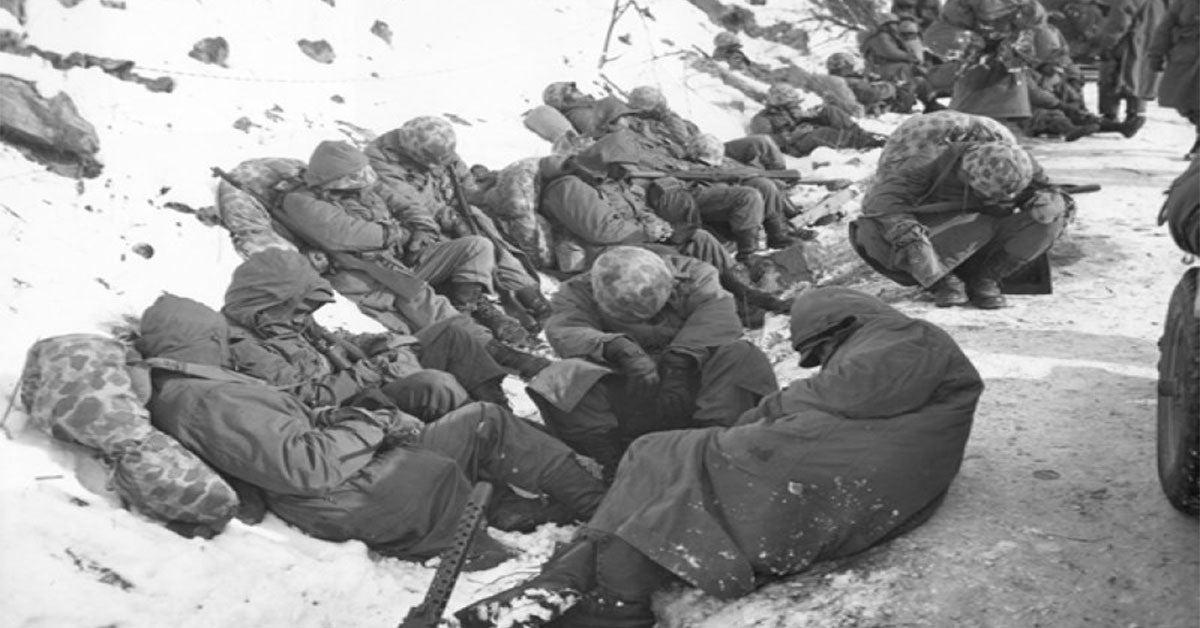
Pictured: Korean War – Nearly 40,000 U.S. soldiers died in action and more than 100,000 were wounded in a war that was never declared by the U.S. Congress.

Yoga Moms United for Slow Streets

Thank you to Steve Frank of California Political News and Views for publishing my article on “slow streets.” These streets, closed to vehicular traffic, at present affect only some neighborhoods. How long until they affect all neighborhoods? Marcy Berry JVN Website Editor.

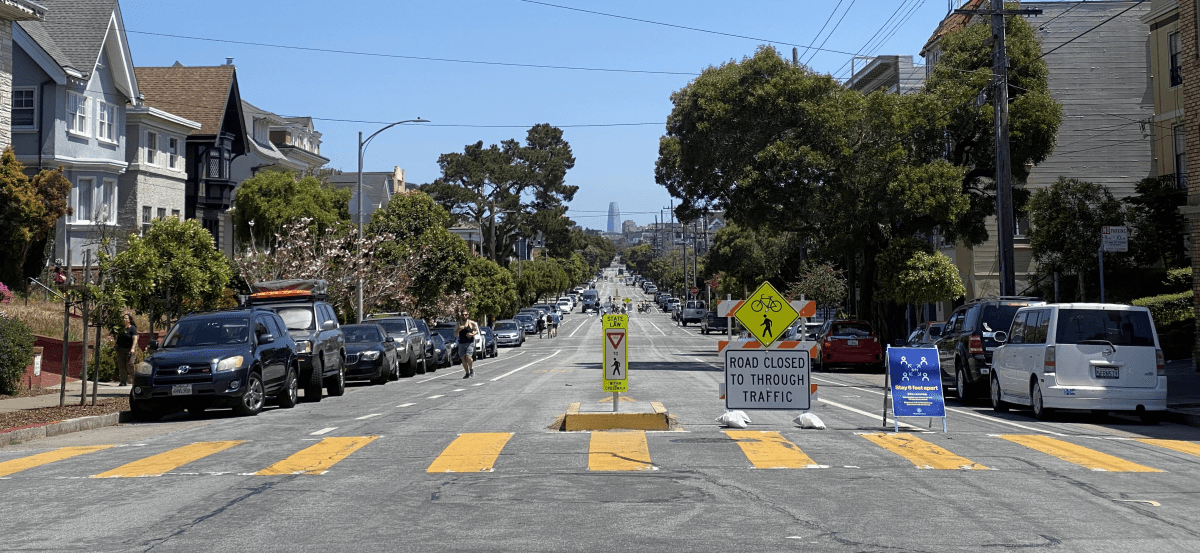
Today’s urban streets that feature barricades prohibiting thru traffic sport different names depending on target population – slow streets, car-free streets, safe streets, and open streets are the most popular titles.  Bikers, joggers, and central planners love these streets.  Central planners especially have been dreaming about the extinction of automobiles for decades.

The COVID-19 pandemic was the brass ring, the golden ticket for car-free-streets implementation in cities throughout the U.S.  Sheltered-in-place folks in urban areas needed safe outdoor spaces for fresh air and exercise, and car-free streets stepped in as a solution.

The City of Oakland was the first in California to implement a slow-streets program back in April 2020.  The cities of Emeryville, San Francisco, Los Angeles, San Diego, Berkeley, Alameda, and others soon followed.   

However now as the pandemic wanes, so does the temporary nature of car-free streets.  Local legislation is popping up to make these streets permanent.  Cities are rebranding the streets’ existence as good for health, recreation and pedestrian protection regardless of pandemics. 

California assembly member Adrin Nazarian (D-LA) introduced AB 773 (at present awaiting referral) to facilitate the “closing of a portion of any street to through vehicular traffic if local authorities deem such action necessary for the safety and protection of people using that portion of the street.”

All the enthusiasm for car-free streets comes with a measure of cynicism. 

Car-free streets are best suited for yoga moms, cycling dads and others in the higher-income brackets.  They fit right in with the lifestyles of work-from-home professionals that like to go out for a stroll between Zoom meetings.  They are fantastic for bike messengers and able-bodied non-workers. 

Generally, they are impediments for workers that need to drop off their kids in daycare and/or school and be at work by 8:00 am.  Closed areas that provide direct access to destinations, such as the Great Highway in San Francisco, represent scarce time spent on meandering.  Car-free streets do not serve residents of neighborhoods plagued with crime, where taking a stroll down a street might not be the wise thing to do. 

In spite of talk of aiming for racial equity in car-free streets initiatives, neighborhoods with majority black and brown residents often reject them. 

Ah, but slow streets help small businesses that often employ those of lower income, no?  – picture of happy people sitting outside in a “shared space” on a sunny day enjoying their margaritas.  Feels more like advertising than truthful reporting. 

But slow streets reduce pollution and traffic fatalities! – no picture of the irate motorist barreling through a slow street barricade, or another just clogging up the parallel street.

San Francisco Supervisor Shamann Walton made pretty clear what he thinks of slow-street equity.  Of the proposed permanent closure of the eastern half of Golden Gate Park’s JFK Drive, Supervisor Walton said like “1950s in the South.”  Walton’s supervisorial district contains large populations of lower-income residents that live in less than safe areas, without efficient public transit.  Thus car ownership and usage is high compared to the rest of the City.  Where do they park if they want to visit the north-eastern part of GGP?  No parking along the closed portion of JFK, and the park’s underground garage is expensive.

In the city of Oakland, initial surveys on car-free streets showed the program was popular.  Problem was, two thirds of survey respondents were white and 40% had household incomes of $150,000 or more (Oakland’s population is over 70% non-white, and the median household income is $76,000).  So, Oakland’s Essential Places program, designed for lower-income neighborhoods, chucked the strolling/biking narrative, strengthened barricades so cars would not plow through them, and rebranded objectives as helping pedestrians move around safely in reaching essential destinations.  Maybe lower-income Oaklanders view slow streets as suspiciously as does San Francisco Supervisor Walton? 

Government programs are immortal by nature.  Like government bureaus, they are also “the nearest thing to eternal life we’ll ever see on this earth.”   Especially so are programs such as car-free streets that help implement agendas like climate change, smart cities, or transit-oriented development.  For example, Smart Growth America, advocates for smart cities, contributed to the funding for Oakland’s slow-street initiative. 

The elites can comfortably ignore or embrace these agendas. The less affluent cannot.  Urban housing developments have contributed to gentrification and increased cost of housing for families.  Divestment from petroleum has increased the cost of energy and transportation.  Slow streets, coupled with a “transit first” policy that lacks reliable transit, only serve to inconvenience the working poor. 

Politicians and the public need to stop the cynicism.  Streets are for transit and responsible drivers that need to get where they need to go.  Bike lanes, street crossings, sidewalks, playgrounds and parks are the domain of folks not driving at the time. 

This article, written by JVN website editor, was first published on California Political News and Views

Taxes Disguised as Fees Raiding Your Pockets

The California Supreme Court accepted for review on October 14, 2020, Howard Jarvis Taxpayers Association vs. Bay Area Toll Authority. Those who recall the 2018 epic battle pro and con Regional Measure 3 (RM3) might not be surprised.

The California Supreme Court accepted for review on October 14, 2020, Howard Jarvis Taxpayers Association vs. Bay Area Toll Authority. Those who recall the 2018 epic battle pro and con Regional Measure 3 (RM3), which raised bridge tolls by $3, might not be surprised.

The Court granted and held the HJTA case pending disposition of a similar case, Zolly v. City of Oakland. So, it will be a while.

The basic issue with RM3 is whether it is a fee – as supporters claim – or a tax — as opponents point out. RM3 passed with 55% voter approval. Article XIII, Section 3 of the California Constitution requires two thirds approval for passage of a tax.

Article XIII, Section 3 is the Constitutional Amendment approved by voters November 2010 as Proposition 26. Prop 26 was intended to put a break on the proliferation of taxes and fees emptying the pockets of California residents.

Difference Between a Tax and A Fee

Article XIII, Section 3 says any charge is a tax except what the Section specifically says is a fee:

“(b) As used in this section, “tax” means any levy, charge, or exaction of any kind imposed by the State, except the following:

(1) A charge imposed for a specific benefit conferred or privilege granted directly to the payor that is not provided to those not charged, and which does not exceed the reasonable costs to the State of conferring the benefit or granting the privilege to the payor.

(2) A charge imposed for a specific government service or product provided directly to the payor that is not provided to those not charged, and which does not exceed the reasonable costs to the State of providing the service or product to the payor.

(3) A charge imposed for the reasonable regulatory costs to the State incident to issuing licenses and permits, performing investigations, inspections, and audits, enforcing agricultural marketing orders, and the administrative enforcement and adjudication thereof.

(4) A charge imposed for entrance to or use of state property, or the purchase, rental, or lease of state property, except charges governed by Section 15 of Article XI.

(5) A fine, penalty, or other monetary charge imposed by the judicial branch of government or the State, as a result of a violation of law. “

(Article XI, Section 15, of the California Constitution refers to “revenues derived from taxes imposed pursuant to the Vehicle License Fee Law.”)

The Problem With RM3

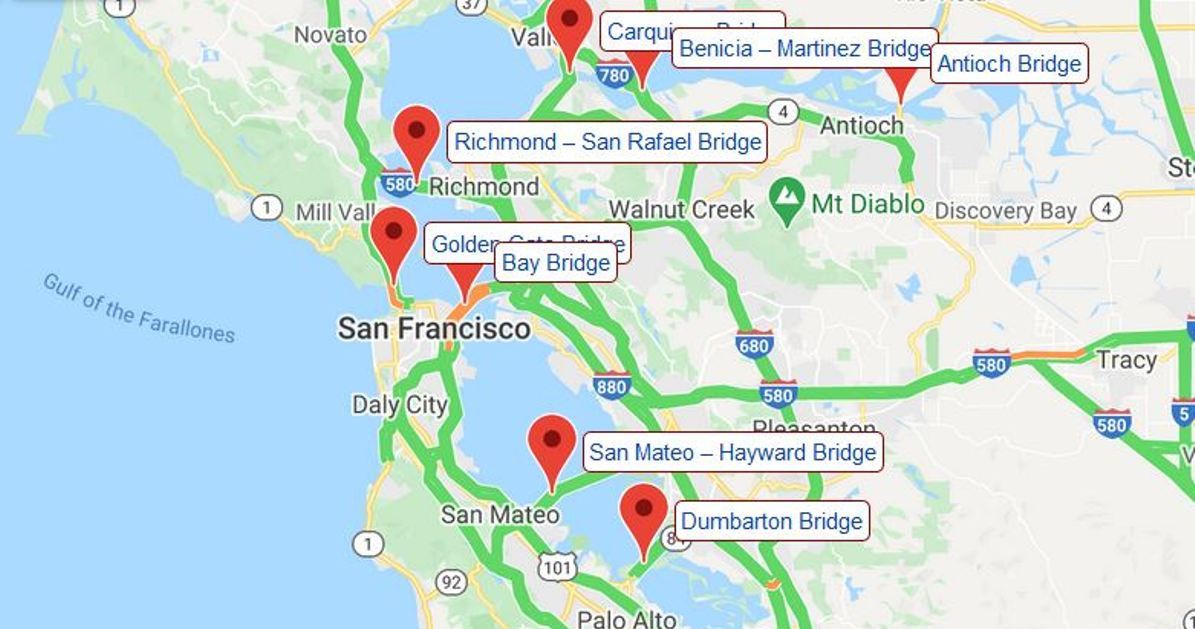
Regional Measure 3 exacts a charge to motorists crossing the Bay Area’s State-owned bridges. But revenues derived from that charge are not limited to benefiting motorists by building highways or fixing potholes. The bulk of RM3 revenues benefits users of other modes of transportation, like public transit riders, bicyclists, and walkers.

RM3 is intended to fund a wide variety of improvements to Bay Area mobility. Therefore, the measures’ charge to motorists exceeds the cost of benefits received by motorists.

The use of revenues derived from RM3 make the measure clearly a tax, according to Clauses 1) and 2) of Section 3, Article XIII.

Proponents’ Argument

What argument could proponents of Regional Measure 3 make in view of Clauses 1) and 2)?

Aside from arguments that amount to we want the money, proponents argue that RM3 falls under Clause 4), a charge to enter or use state-owned property. They also argue that Clause 4) is not subject to the relationship of charge to payer vs. benefit to payer as are Clauses 1) and 2). Clause 4) does not have the wording on charge vs. benefit that Clauses 1) and 2) have.

Enter Zolly vs. City of Oakland

Robert Zolly, owner of an Oakland apartment building, joined two other small-property landlords in suing the City of Oakland. The lawsuit claims that the city’s fee for hauling garbage far exceeds the cost of hauling said garbage. Indeed it does, because the haulers’ franchise costs are included in the garbage-collecting fee. A portion representing the haulers’ franchise pass through is placed in Oakland’s general fund to cover expenses not related to garbage collection.

The Court sees a comparison between using garbage-hauling fees to fund general city services, and using bridge tolls to fund public transit and other modes of mobility. A strict adherence to Article XIII, Section 3 would render such use of funds unconstitutional.

Bigger Issues

Regional Measure 3 is the brainchild of the Bay Area Metropolitan Transportation Commission (MTC). MTC is an agency easy to dislike. Its commissioners are appointed, not elected. However, MTC’s power to determine the destiny of the San Francisco Bay Area keeps growing.

Although MTC is a transportation agency, it is deeply involved in housing policy. Its Committee to House the Bay Area (CASA) has been a powerful influence behind state and local legislation dealing with evictions, rent caps, rent assistance, and other housing-related mandates.

There is a crucial difference between Regional Measure 3 and Measures 1 and 2. RM3 carried a mandate that all nine Bay Area Counties had to place RM3 on their ballots whether they liked it or not, and passage was based on votes aggregated from all nine counties. More of this strategy should be expected, as indicated by plans to place Faster Bay Area on a future ballot. RM3 contributed to the ongoing blurring of what a legal voters’ jurisdiction is supposed to be.

Your Pockets Are At Peril

There are pitfalls inherent in the kind of “regional planning” exemplified by RM3. If the Court sides with RM3 proponents, extracting money from Bay Area residents will become a lot easier. Proposals for tax increases disguised as fees will rain upon all our heads.

Stimulus Plans – Peace For Our Time

In difficult times people tend to want immediate solutions, regardless of how those solutions will affect their own future or the future of their descendants. Stimulus packages fall into that category.

CARES allocations

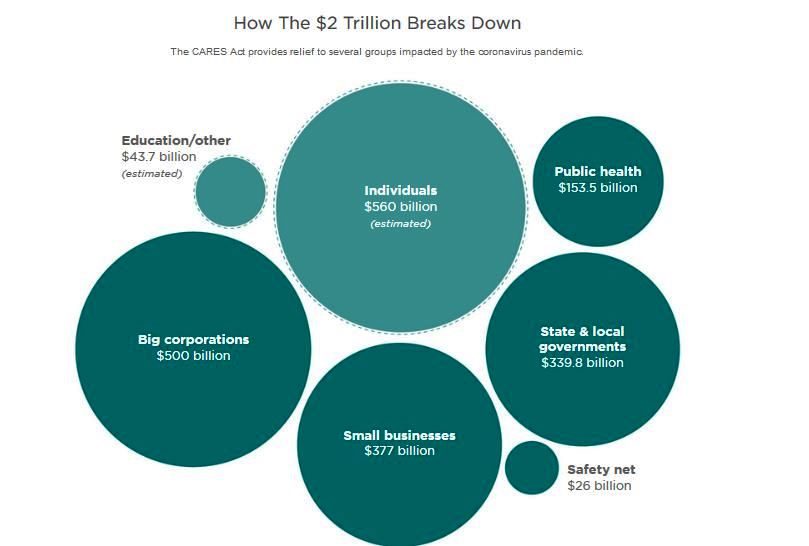
Senate Version of CARES Act that passed the House on March 27, 2020.  Diagram from NPR Special Series: “What’s Inside The Senate’s $2 Trillion Coronavirus Aid Package.”

In difficult times people tend to want immediate solutions, regardless of how those solutions will affect their own future or the future of their descendants.

England’s Prime Minister Neville Chamberlain became the poster child for such actions when on September 30, 1938 he delivered to a jubilant crowd the news that there would be “peace for our time.”

Today the U.S. faces the challenge of a pandemic that is causing not only sickness and death, but also economic havoc. In response to a looming economic disaster, the Administration, Congress, Treasury, and the Federal Reserve all responded forcefully.

Forceful responses, often done hastily under pressure from a fearful public and eager special interests, are never free of consequences.

The Fed’s Response

Between March 17 and March 23, the Federal Reserve significantly increased its power and monetary risk by implementing its plan to provide funds and guarantees to private non-banking entities. This response shifts the burden of default from private investors to the American taxpayer – taxation without representation at its worse. The Just Vote No Blog summarized the Fed’s response in Once Again the Fed Wants to Save Us.

Congressional Response

Close on the heels of the Federal Reserve’s actions, Congress passed three major emergency spending packages, which President Trump signed into law:

* The $8.3 billion Coronavirus Preparedness and Response Supplemental Appropriations Act, signed into law March 6, 2020. The bill provides $6.7 billion in emergency funding to federal agencies responding to the coronavirus pandemic, and $1.6 billion to aid international response.

* The Families First Coronavirus Response Act, signed into law March 18, 2020. The bill includes provisions for paid sick leave, insurance coverage of coronavirus testing, nutrition assistance, and unemployment benefits. Funding available for the program is currently $3 billion. The federal Joint Committee on Taxation estimates that outlays for the next 12 months will be around $97.4 billion.

* The $2 trillion CARES Act (Coronavirus Aid, Relief, and Economic Security Act), signed into law March 27, 2020. CARES estimated allocations are: $560 billion to individuals. $500 billion to big corporations. $377 billion to small businesses. $339.8 billion to state and local governments. $153.5 billion to public health. $26 billion to food programs. $43.7 billion to education and “other.”

“Phase 4,” an “infrastructure” bill is being considered. There is not yet an agreement as to what “infrastructure” might entail.

Future Consequences

The three emergency packages now signed into law, plus the anticipated infrastructure bill, represent huge increases in federal spending. Necessary by most accounts to revive an economy suffering from the devastation wrought be the coronavirus, but not free of future consequences.

As of April 6, 2020, the U.S. national debt stood at $23.9 trillion, the largest in the world for a single sovereign country. CARES and the other rescue packages will add to that already enormous debt. Our leaders under advice of post-Keynesian economists choose to dismiss threats of default or hardships imposed on future generations.

Government grows with spending, and government growth is a concern to many. With growth comes overreach and a moving away from the Republic’s legacy of limited government as spelled out in the Constitution. Our leaders, as well as the public, increasingly demand from government whatever it takes to fix a challenge, often without regard to Constitutional protections over individual rights and private property.

Representative Thomas Massie Speaks Up

A popular recent piece of news was Thomas Massie (R-KY) and his request for a roll call vote to approve the CARES Act in the House of Representatives. The narrative was how dare Massie stand in the way of passage of a piece of legislation designed to save us all from total economic collapse!

Thomas Massie dared because it was important to him that the Republic not die of a thousand cuts inflicted by the “let’s do what it takes” crowd. So, he announced before the vote was to take place that he would mount the challenge of a roll call vote and quorum. That prompted legislators to do their job and ensure a quorum in the passage of CARES, as the Constitution requires. As expected, though, legislators present refused a roll call vote.

The Just Vote No Blog recommends you watch Nick Gillespie’s interview with Representative Thomas Massie. The Representative from Kentucky deep dives into questions leaders and the media gloss over, like what is the extent to government’s role in this pandemic, where is the criteria for lockdowns, is the corporate bailout a transfer for wealth from workers to stockholders, why is so much money going into economic relief instead of into efforts to find a vaccine, test every American, produce ventilators.

There are Two Californias: Why Pretend there is Only One?

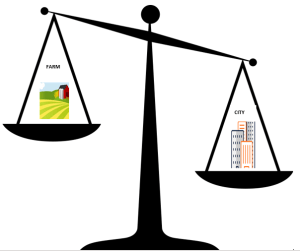
The needs of farmers in the Central Valley differ from the needs of coastal city residents. Yet, inland residents live under the decisions the populous residents in the coastal cities make for them.

Scales of justice

In California, residents of the coastal cities are different from those who live inland. There is a similar divide between people who live in coastal states and people who live in inland states. Do these two factions enjoy equal say?

Inland states, less populous than coastal states, enjoy equal say in the U.S. Senate, where all states are represented by an equal number of Senators. However, residents of inland California have zero say, since the California Senate structure is based on population, exactly the same as the California Assembly. The needs of inland Californians might be entirely different from those of coastal Californians, but the inland people must live under rules developed and approved by the populous coastal people.

It was not always that way. At one time California operated under the U.S. Senate model, and all its Senatorial districts were represented by an equal number of state Senators. In those days farmers in the Central Valley had a change to compete with their big-city brethren.

That all changed in 1964 when an activist U.S. Supreme Court under the leadership of “Living Constitution” advocate Earl Warrant, declared in Reynolds vs. Sims that all state Senate seats needed to be allocated based on population.

One of the first things the newly empowered big-city folks did was to change the California Legislature from part time to full time. That happened in 1966. A full-time legislature is usually defined as one that meets throughout the year, while a part-time legislature meets for a portion of the year. For reference, today we have 10 full time state legislatures out of 50.

1966 marked the birth of the professional California politician, without other means of support, who keeps recycling through the state’s political system. It started the exponential growth in the volume of bills micromanaging every nook and cranny to be found. Staff, salaries, benefits, taxes, fees all grew as well.

For those readers interested in the first part of the new reality – Reynolds vs Sims, and the resulting neglect of farmers in the Central Valley – here is a link to an article in the California Political News & Views. Note that in his introduction to the article, publisher Steve Frank, mentions the ruinous results of California moving to a full-time legislature:  All California is Not Alike.

Would Even Bigger Government Fix California?

Our Founding Fathers advocated a lean Federal government. Not so lean right now. But in the case of California, we are talking bloat. Does California really need 250 instead of 120 legislators?

Big Government

The California Secretary of State cleared for signature gathering voters’ initiative 19-0012, that would do the following if passed:

* Replace the current partisan bicameral legislature with a non-partisan unicameral one.

* Increase the number of legislators from 40 State Senators and 80 Assembly Members to 250 legislators intended to represent by 2024 80,000 to 100,000 persons for each legislator.

* According to the California Legislative Analyst’s Office, if passed this initiative would incur a one-time cost of hundreds of millions of dollars to expand the State Capitol in Sacramento to accommodate the new legislators, incur ongoing increased building maintenance costs of a few million dollars annually, and incur state costs of millions of dollars per year to oversee elections.

What are the Real Changes?

The substantive changes this initiative if passed would implement would be,

* A significant growth in government.

* A significant growth in legislators writing laws to govern California residents.

* A significant growth in costs, and thus presumably taxpayer obligations.

Can the Changes Accomplish Objectives?

Whether this initiative would accomplish its objectives might be questionable.

* There would be no change in California’s proportional representation based on population. Thus, the populous coastal areas would continue to dominate sparsely-populated inland areas.

* The hope that much smaller districts would afford residents better control of their representatives might be a consummation devoutly to be wished.

Representatives Without Representation

This Nation was born over the rallying cry “Taxation Without Representation!” Today perhaps the rallying cry should be “Representatives Without Representation!”

The Just Vote No Blog has often noted a new trend: Ideological legislators whose actions are based on what they believe is needed from their point of view, not based on what their constituents need or want.

We are not speaking here about unconstitutional proposals, which legislators should indeed reject. We are talking about ordinary things described in the Just Vote No Article Who Are California Legislators Working For?

Government Growth is Not The Solution But the Problem

Whether smaller districts at significantly increased costs would change the present ideological bent of legislators is something voters need to think about when considering increasing the size of our legislature.

Our Founding Fathers advocated a lean Federal government that focused on specific enumerated obligations.  They did not opine on how states should govern, as long as states operated withing the bounds of the Federal Constitution.

California’s government is anything but lean.  The volume of laws and regulations attempting to control every aspect of California residents’ lives is mind boggling.  Could residents in a smaller district control such a tsunami?

Lies, Hate and Disinformation – Should Facebook Decide What’s What?

Say, a Facebook political ad states that immigrants helped build our nation, while another ad states that illegal immigrants are a burden to taxpayers. What ad should Facebook approve or prohibit?

FB Protesters - Copy

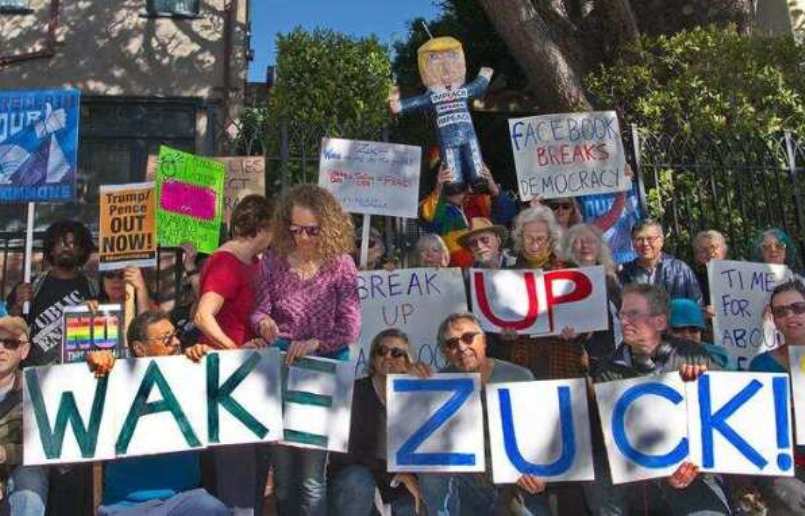
Crowds have been gathering in front of Facebook headquarters and Mark Zuckerberg’s home demanding that Facebook stop accepting political ads from users and stop availing users of targeted political ads.  The crowd that gathered on February 17 was organized by well-known groups like Media Alliance and Global Exchange

Some groups have demanded that Mark Zuckerberg step down as Facebook CEO. They cite Twitter’s ban on political ads and Google’s ban on targeted political ads as models for stopping posted content that mislead voters.

Although both major political parties use Facebook and other media platforms to promote their causes, the current demands focus more specifically on right-leaning political groups:

* Mr. Zuckerberg appears to be engaged in some kind of mutual assistance arrangement with Donald Trump that will help him to get re-elected. Facebook does not need to wait for government regulations to stop accepting any political advertising in 2020 until after the elections on November 4. If there is any doubt whether an ad is political, it should err on the side of caution and refuse to publish. It is unlikely that Facebook will follow this course. George Soros: Remove Zuckerberg and Sandberg From Their Posts. Letter from Soros to Financial Times, February 17, 2020.

* This year’s US presidential elections are in jeopardy—in part because San Francisco Bay Area technology company Facebook refuses to take responsibility for the lies, hate, and disinformation that are being spread using its platform. Crowd Outside Mark Zuckerberg’s Home Protests Political Disinformation on Facebook, Newsweek, February 18, 2020.

* Tech companies must play a more active role in regulating the content on their platforms, and we stand in full support of tech platforms removing demonstrably false content and instituting better transparency standards. That approach combats the spread of disinformation without harming civic engagement or limiting the ability of campaigns to connect directly with voters. DCCC, DNC, DSCC Joint Statement on Google’s Recent Changes To Its Political Ad Policy. November 22, 2019.

In spite of demands for banning all political ads or banning targeted ads, the real item on the left-leaning wish list is for Facebook to act as gatekeeper and ban false or misleading content. This is a tall order requiring ample resources, which does not help Facebook’s bottom line.

Facebook is not a content provider, it merely offers a platform for content generated by users. Therefore, Facebook is supposedly protected by Section 230 of the Communications Decency Act.

Section 230 of the Communications Decency Act immunizes websites from certain liability when they publish information provided by another source. This usually arises in the context of defamation, privacy, negligence, and other tort claims. It does not, however, cover criminal liability, copyright infringement, or other intellectual property claims. Findlaw:  Understanding the Legal Issues for Social Networking Sites.

The bigger elephant in the room, other than that Facebook benefits monetarily from political ads that might be misleading, is how would the folks creating Facebook algorithms determine what is misleading.

Say, a Facebook political ad states that immigrants helped build our nation, while another ad states that illegal immigrants are a burden to taxpayers. What ad should Facebook approve or prohibit? Could picking one or the other ever be considered objective? Would Facebook’s financial bottom line be affected by an effort to fact check such a complex question?

The point here is that what protesters are advocating is blatant censorship, and censorship outside the parameters of laws such as Section 230 is never good.