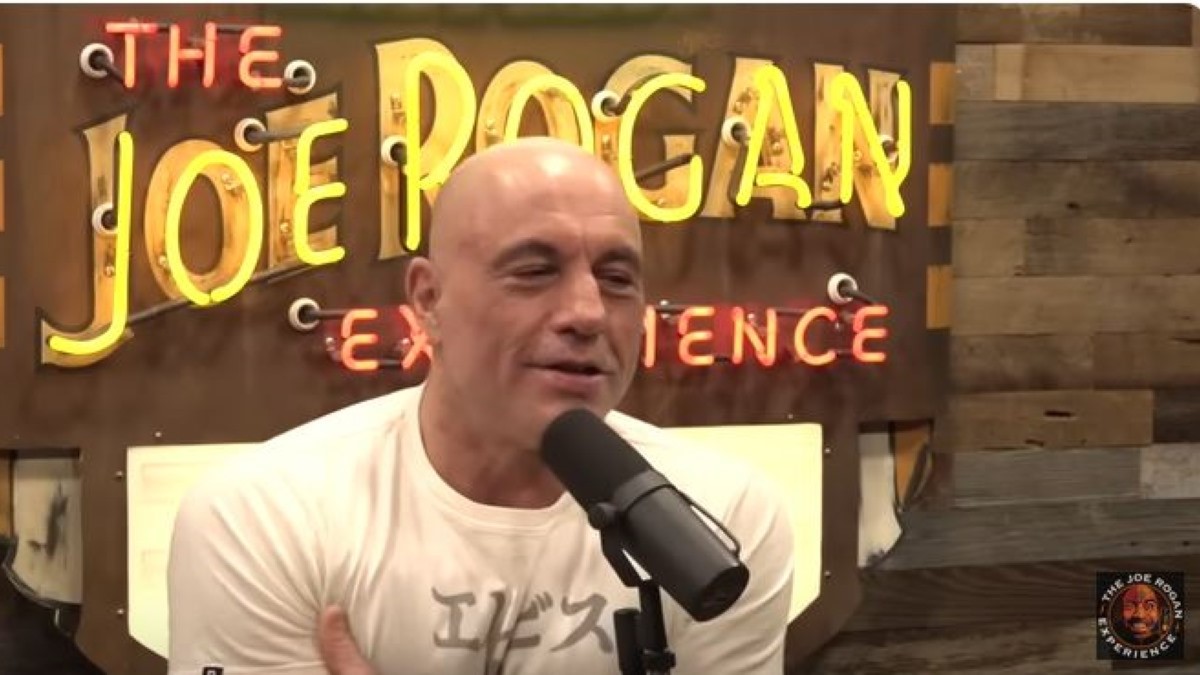
Recommended eye opener: Joe Rogan podcast #2281 with Elon Musk

This recommendation is for folks not familiar with The Joe Rogan Experience podcasts. And for those who would like to understand what DOGE is really doing and why.

This recommendation is for those not yet familiar with Rogan’s conversations with folks like J.D. Vance, Mark Zuckerberg, Mel Gibson, Rod Blagojevich, Tulsi Gabbard, Donald J. Trump, Woody Harrelson, Bob Lazar, Gad Saad, and many others with a lot to say.  Those who are already Rogan enthusiasts will surely have already listened to this episode.

Briefly regarding the Joe Rogan Experience podcasts: Rogan, born in 1967, started his podcast in 2009 on YouTube.  Today, the podcast has massive audiences on all popular platforms.  The recommended episode #2281 with Elon Musk had 10,518,308 views and 66,911 comments on YouTube as of this writing.  Joe Rogan lives in Austin, Texas.  He practices martial and fighting arts, and is an avid archer and bow hunter (yes, he and his family eat everything he kills).  Rogan is able enthusiastically to discuss all kinds of subjects with his podcast guests.

So, why is the Joe Rogan Experience episode #2281 with Elon Musk important?  Because this episode has the potential of forcing DOGE opponents to understand what DOGE is really doing and why it needs to be done.

In episode #2281, Elon Musk says that Americans are living in two separate universes.  There is the DOGE opponents’ universe, and there is the DOGE supporters’ universe.  As a rule, opponents most likely get their news and facts only from mainstream media sources like MSNBC, AP, Washington Post, New York Times, and Facebook.  As a rule, DOGE supporters most likely also consume alternative media like X and the Joe Rogan podcasts. 

Today’s mainstream media shows DOGE protesters speaking of service cuts to the needy, fears of deportation from the U.S., anxiety over changes to Social Security and Medicare, shattered dreams of laid off government employees.  It shows legislators pointing to the “human impact of DOGE cuts.”  It talks about DOGE usurping Congress’ job.  All valid concerns.

Alternative media like X and the Joe Rogan podcasts expose DOGE’s findings in the underbelly of a government doing its best to delay its certain collapse.  The alternative media tacitly brings awareness that DOGE is indeed doing the job Congress has failed to do, since Congress remains unconcerned that absent policy changes the U.S. will face bankruptcy in the not too distant future.   

Just a few numbers can show why DOGE needs to take a chainsaw to the U.S.’s bloated bureaucracy – a task Congress should do but will not.

*   National debt as percentage of gross national debt was 123% as of fiscal year 2024.  As debt increases faster than GDP, this percentage will increase, eventually resulting in unsustainability.

*   House Continuing Resolution No. 14 passed on February 25, 2025, along party lines, with the sole Republican “Nay” coming from Thomas Massie (R-KY).  The Resolution recommended increased amounts of debt each year, resulting in a 47.5% cumulative increase 2025 to 2034.  The Economic Times sounded a warning in November 2024, which like all other warnings, was ignored by the U.S. Congress.

America’s national debt has reached a record high of $36 trillion, with a $2 trillion increase this year alone … The situation is becoming more dire, with the US debt now standing at 125% of the country’s GDP. Experts predict that this debt-to-GDP ratio could reach 200% in the coming years, meaning that the national debt could be twice the size of the entire US economy.  This is expected to result in the government spending more on interest payments than on essential areas such as infrastructure, development, and education.” America Headed for Bankruptcy, The Economic Times, November 25, 2024.

*   In 2024 the U.S. national debt was $35.5 trillion.  The combined wealth of billionaires was $6.2 trillion.  The combined wealth of millionaires was $26.1 trillion.  Even if the government taxed all the wealth of billionaires and millionaires in 2024, it would not succeed in reducing the national debt to zero.  Congress has preferred to remain ambivalent on calls to fix the country’s deficits by taxing the rich, because it can’t be done.

It would be great if DOGE’s opponents among voters would listen to Elon Musk’s conversation of February 28, 2025, with Joe Rogan. The entire 3-hour conversation is worth listening to, with plenty of entertaining topics — like responses from the sassy sexy voice from Grok. But the segment starting at 13.56 relates to DOGE findings and is the most crucial part of the podcast. 

Here are just a few observations by Musk:

*   Today’s dominant notion is that although a business needs to at least break even to survive, government can spend way beyond its revenues.  That notion is flawed, and on the current trajectory, the U.S. government will collapse in the near future. 

*   Again comparing government to business, a business must pass audits (external or internal) showing clearly described payment (where the money goes and why).  The U.S. Treasury issues numerous payments without codes or descriptions, the destination of which no one can readily determine.  [Note: This observation about the U.S. Treasury is not new.  For example, a report issued by the Office of Inspector General released May 29, 2024, concluded that the Treasury lacked sufficient controls to be fully compliant with the Payment Integrity Information Act of 2019.  Apparently, nothing has changed.]

*    About 1.5 million non-government organizations (NGOs) operate in the U.S.  An estimated 30% of NGOs rely on U.S government grants.  Payments to them are often on autopilot, without any follow-up as to the NGOs activities or efficiency. 

*   Concerns over the fate of Social Security are valid.  Concerns should include the fact that Social Security is a pay-as-you-go system that has created massive unfunded liabilities.  Future obligations are far greater than payments.  If the system is not rectified soon, it will collapse.

*  “DOGE staffers”:  These are the worker bees of DOGE.  They work as employees of government agencies and are vetted in the same way as any other government employee.  Their role is explained in the Executive Order of January 20, 2025. 

*   What DOGE does is shown event by event, line by line, on the DOGE website.  The website is accessible to anyone, including DOGE critics who express concern about not knowing what DOGE does. 

It is unfortunate that those truly concerned about the economic future of our nation had to resort to drastic unconventional action.  But inaction would have been an even more unfortunate choice. 

Picture:  Joe Rogan in his studio on February 28, 2025.
USAID – Humanitarianism vs. America First

The new normal: “Every dollar we spend, every program we fund, and every policy we pursue must be justified with the answer to three simple questions: Does it make America safer? Does it make America stronger? Does it make America more prosperous?”

On January 26, less than a week after President Donald Trump took office, the U.S. State Department announced Secretary Marco Rubio was initiating a review of aid programs under the following guidelines:

Every dollar we spend, every program we fund, and every policy we pursue must be justified with the answer to three simple questions: Does it make America safer? Does it make America stronger? Does it make America more prosperous?”

As the principal U.S. agency funding foreign assistance, the U.S. Agency for International Development (USAID) was the first to be reviewed, and subsequently slated for elimination, reform or consolidation.

A perusal of the Internet readily shows numerous articles lamenting the humanitarian catastrophe that pausing USAID assistance will cause. One really must dig to find articles confirming the problems inherent in USAID. Depending on viewpoint, this might be because USAID has no problems or because mainstream media is biased. Or all of the above.

In spite of rhetoric about the ills of wealth redistribution, mainly coming from the right, today’s average Americans do observe charity. The National Philanthropic Trust says, “Per capita, Americans voluntarily donate about seven times as much as continental Europeans.”

This humanitarian spirit spills into governmental policies. Therefore, it should not be surprising that U.S. foreign aid agencies have been giving generously to populations in need whether friend of foe. A hungry child in Taliban-controlled Afghanistan experiences the same suffering as a hungry child in the Philippines.

Unfortunately, this humanitarian spirit causes U.S. aid agencies and other parts of government to work at cross purposes, one part spending money and effort on an adversary and the other part spending money and effort combating that same adversary. Here is an example:

The influx of undocumented individuals into the U.S. has become a cause for concern, particularly in conservative circles. Another cause for concern has been reform district attorneys whom conservatives associate with rise in crime. However, USAID funded East West Management Institute, an Open Society Network organization focusing on judicial reform. Also in the Open Society Network is Welcoming America, an organization that empowers “supportive residents of local communities—immigrants and U.S.-born together—to disseminate positive messages about local immigrants.”

This is most probably just one of many examples of cross purpose foreign assistance that does not sit well with the new White House, prompting the swift actions we all have witnessed.

Indeed, as supporters of USAID point out, government spent in fiscal year 2023 only 1.2% of its budget in foreign aid – not a lot to worry about. However, one of the reasons the nation is $36 trillion in debt (121% of GDP) is that members of the U.S. Congress have been either asleep or busy campaigning, while nickel and diming the nation into fiscal unsustainability.

Supporters also have expressed angst that China, our current competitor on many levels, will gain ground if USAID work is paused. Such concern borders on wishful thinking. While USAID focuses on food and social justice, China focuses on roads, hydro power, transportation, and other hard “aid.” The U.S. Government Accountability Office in its October 2024 post says,

China is the world’s largest debt collector, with outstanding borrower debt sitting between $1.1 and $1.5 trillion. But countries receiving Chinese investments may end up with unsustainable debt that leaves them no choice but to support Chinese global goals.”

Sounds like while the U.S. is playing checkers, China is playing 3-D chess.

Although it is good for the American people to remain charitable and the U.S. to remain engaged in the needs of less fortunate nations, we need to refrain from being naïve. Our legislative leaders have done very little besides bicker and campaign. It is time for somebody to make our government efficient and focused on America’s best interests.

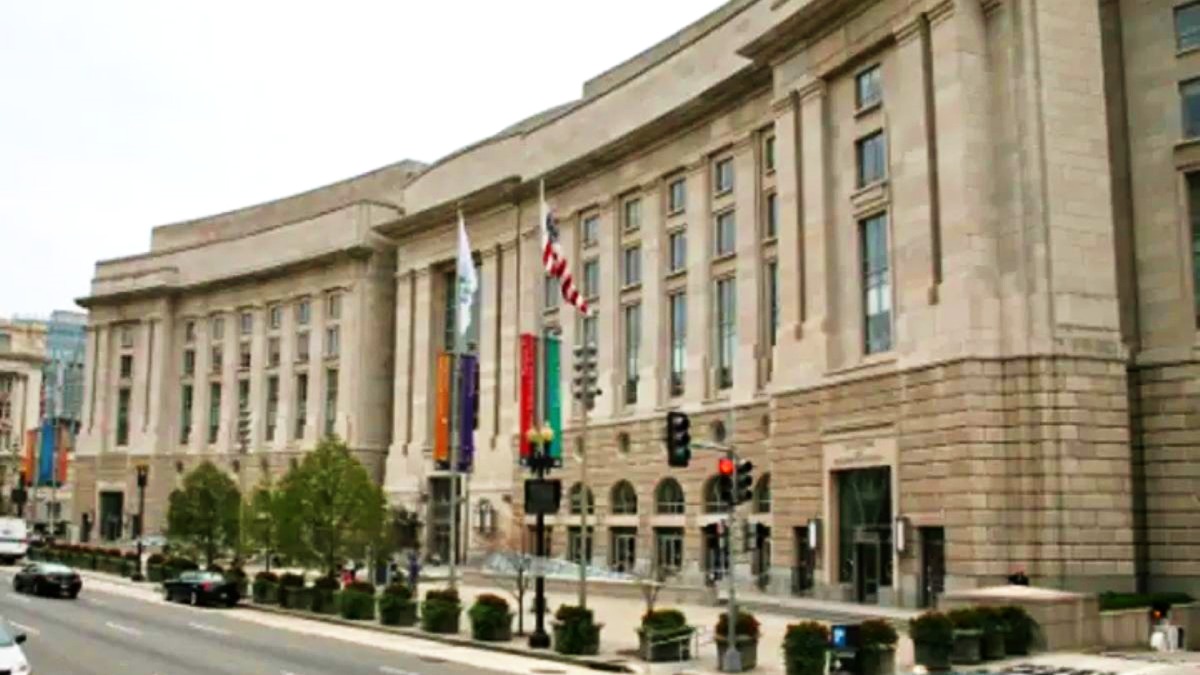
Picture: The former USAID headquarters in Washington DC. USAID employees also occupied a 38,520 sq ft annex building, also located in Washington DC.

With a name like DOGE it’s got to be good

Wasteful government spending is nobody’s secret. Neither are ways to curtail that spending. However, the debt ceiling is raised every year, the spending continues, and the national debt keeps rising. Maybe DOGE, named after a meme coin featuring Kabosu the dog is weird enough to succeed!

We are living in a brave new world of memes, soundbites, and billion-dollar campaign war chests. Thus, chances are media savvy billionaires calling themselves DOGE might succeed in saving this nation from eventual bankruptcy, when other fiscal Cassandras were and are ignored.

Some reminders

As of December 31, 2024, the U.S. national debt was $36 trillion. As of September 30, 2024, the debt to GDP was 123%. What the country owes is greater than what the country produces to pay its debt.

For the last several decades, Congress – keeper of the nation’s purse strings — has shown no interest in cutting spending. Members feign anguish about raising the debt ceiling every year at budget time, then go ahead and raise it.

Voters seem content re-electing spenders and having their giggles at news of any ludicrous government expenditures.

Three outstanding producers of much giggle but little action

The late Senator William Proxmire (D-Wisconsin) issued 168 “Golden Fleece” awards from 1975 to 1988, informing the public of questionable ways Congress was spending taxpayer money. One of his best choices was a 1978 $97,000 ($400,489 today) study by the National Institute of Mental Health of activities in a Peruvian brothel.

Retired Representative Ron Paul (R-Texas) served in the U.S. Congress for 12 non-consecutive terms. While in Congress he was known as “Dr. No,” since he would not vote in favor of any proposal not expressly authorized by the Constitution. Imagine how much leaner, better, faster, cheaper government would be if every member of Congress did the same!

Current Senator Rand Paul (R-Kansas) has somewhat followed his father’s footsteps in speaking out against our big, expensive government. So far, Rand Paul has issued 10 annual “Festivus Reports” to acquaint voters of the frivolous ways their hard-earned tax money is spent by Congress. Judging by press reaction, one of the most giggle-worthy expenditures in the 2024 report is National Endowment of the Arts funding for ice-skating drag queens.

Enter DOGE

Soon after his presidential victory, Donald Trump appointed entrepreneurs Elon Musk and Vivek Ramaswamy to lead an extra-governmental group tasked with dramatically reducing the federal budget and the national debt. These objectives are to be accomplished by drastically curtailing government spending, downsizing the federal workforce, and radically cutting regulations. This yet to be configured group has been named DOGE, an acronym for Department of Government Efficiency.

Never mind that, in addition to the government waste warriors mentioned above, we already have the Government Accountability Office and the House Committee on Oversight and Accountability shouting from the rooftops about the incredible amount of taxpayer dollars wasted by various and sundry federal government activities.

Never mind that DOGE will need to dodge all manner of pelts that will surely come its way – claims of extra-constitutional actions, challenges from the legion of entities feeding at the public trough, lawsuits from axed civil servants, dissatisfaction from the forever-growing mass of government-dependent voters, and reluctance from Congress members not willing to upset established sources of donations and votes.

How could DOGE miraculously succeed when others have failed?

  • The power of constant soundbites

Most people these days tolerate (or welcome) a ceaseless stream of breaking news and social media notifications. Shortcuts into the populace’s conscious abound. So do media influencers who successfully promote or ruin products, people, and ideas. Just look at your Facebook or X account, and no further indication of this truth is necessary.

DOGE comes with the power of Elon Musk’s frequent soundbites in the news. It comes with the power of X. It comes riding on the waves of a populist movement made credible by the success and high visibility of leaders like Javier Milei of Argentina and Nayib Bukele of El Salvador.

  • The power of ubiquitous memes

Evolutionary biologist Richard Dawkins coined the word “meme,” short for the ancient Greek word “mimeme” meaning cultural copying. Dawkins characterized memes as,

“… melodies, ideas, catchphrases or bits of information that leap from brain to brain through imitation, expediting their transmission.” The surprising power of internet memes, 09/28/2022.

Unsurprisingly, DOGE is a meme coin, Elon Musk’s favorite crypto currency. The coin came into being when a photo of a Shiba Inu dog named Kabosu went viral, and crypto innovators riding on the popularity of Bitcoin produced the DOGE featuring Kabosu. Take your pick as to whether DOGE stands for DOG-E coin or not.

Kabosu, RIP, died May 24, 2024, at the age of 18. But she will forever be remembered thanks to the Kabosu monument built in 2023 in her honor in Sakura City’s Sakura Furusato Hiroba riverside park. See featured image of this article, showing Atsuko Sato (who rescued Kabosu from an animal shelter) cuddling Kabosu at the Sakura monument.

May the fiscal salvation offered by the X owner and frequent poster come to pass.

  • The power of excellence.

Elon Musk and Vivek Ramaswamy are of the intellectual elites of our times. In the old days we had Nicolaus Copernicus, Isaac Newton, John Locke, Benjemin Franklin – minds that operated outside the accepted norm and thus produced what was unimaginable before they came along.

Nowadays with excellence justifiably comes monetary rewards. Musk and Ramaswamy are billionaires. And with money comes power. Musk contributed $259 million to groups supporting Trump’s 2024 campaign, most certainly because he did want to do what he proposed during an X interview with Trump: cut government waste.

One would be naïve to think members of Congress are not aware that plying ball might translate into re-election support.

  • The power of sudden epiphanies.

Today, January 6, is Epiphany, also called the Day of the Magi and the 12th Day of Christmas. The word epiphany means a sudden realization of something, an unexpected grasp of reality.

Let’s hope that voters, Congress, and the legacy media soon come to the realization that the current national practice of borrowing to support spending is not sustainable.

On day one, mind our house divided

Victorious conservatives see the recent decisive presidential election as a mandate for radical change. And progressives are predictably suiting up for battle. A house divided cannot stand.

The recent decisive presidential election showed that a significant number of voters were mad as hell and were not going to take it anymore. However, the aftermath showed some with fear of real and imagined threats and public figures vowing to fight in defense of their turf. Everyone seemingly ignoring that “A house divided against itself cannot stand.”

Abraham Lincoln spoke of the peril of a house divided — quoting Matthew 12:25 — at a time of great national sorrow, when the Southern economy dependent on slave labor was made to face an anti-slavery movement. Today, our nation is on a similar, although thankfully not as tragically wrenching, position of divisiveness: populous coastal states dependent on a redistributive economy were made to face a solid mass of conservative middle states.

Obviously, magnitude of suffering is not what can be compared between today’s divisiveness and the post-Civil War discord. What can be instructive, however, is an assessment of what works best after an upheaval. The post-Civil War Reconstruction period tried both change through conciliatory compromise and change through forced acquiescence. The latter overwhelmed the former, leaving unhealed wounds residues of which linger to this day.

Andrew Johnson, Vice President during Abraham Lincoln’s administration, assumed the presidency upon Lincoln’s assassination. He attempted to follow Lincoln’s advice to bind up the nation’s wounds by adopting a conciliatory approach to full emancipation of former slaves.

His efforts were ineffectively lenient, given the enormity of the challenge. The defeated South experienced rampant violence against former slaves. Radical Republicans in Congress upon achieving a majority, implemented a vastly more stringent agenda, imposing military rule in the South, and disenfranchising Southern rebels.

While Radical Republican actions enabled basic requirements of equality with passage of the 13th, 14th, and 15th Amendments to the Constitution, they also ushered Jim Crow. From Whites Only water fountains to Whites Only suburbs, Jim Crow lasted for nearly 100 years. The last vestiges of which were legislatively erased by the Civil Rights Act of 1964, but Jim Crow left an entire population of citizens playing catch up.

We should accept that Andrew Johnson’s conciliatory approach did not work. However, we should also speculate whether the Radical Republican approach might have been too harsh, producing unfortunate boomerang effects.

The result of the 2024 presidential election is being lauded by supporters as a mandate for radical change that will necessitate radical actions. Predictably, progressive-socialist bastions are already suiting up for battle – the boomerang effect is already evident.

Progressive state governors like Gavin Newsom of California, J.B. Pritzker of Illinois, Kathy Hochul of New York, and Maura Healey of Massachusetts are leading the charge – in the words of Gavin Newsom – to “Trump-proof” their states.

Less strident state leaders have issued more thoughtful messages. Minnesota Governor Tim Walz made a good point: the Trump-Vance team often spoke of leaving decisions to the states; therefore, he is “willing to take them at their word for that.” Walz listed the areas he will defend: abortion rights, climate change, gun restrictions in schools and labor rights. These issues are good ones for the federal government to handle with finesse rather than bluster.

Admitedly, there are issues that need to be handled firmly, but hopefully not belligerently.

It should be obvious by now given the nation’s current unsustainable $35 trillion debt that government is spending beyond its means trying to support an obscenely bloated bureaucracy and a dependent legal and illegal constituency. The incoming administration has pledged to trim both.

Hopefully, in its efforts to keep its pledge the new administration will act “with malice toward none” by avoiding unnecessary acrimonious words and deeds. This tactic will do wonders to heal the nation’s divisiveness and set it on a path to greater prosperity.

Hopefully, the new majority in Congress will heed its Constitutional duties “to pay the Debts and provide for the common Defense and general Welfare of the United States.” (Article I, Section 8, Clause 1). For the last two decades, Congress has abdicated most of its Constitutional responsibilities, by loosening its purse strings ($35 trillion in national debt), adopting a lenient approach to homeland security (open borders and a military not fully prepared), and forgetting what “general” as opposed to selective welfare means.

Hopefully, new leaders will focus on the big picture – national expenditures, prosperity, and a safe homeland. And defer posturing, especially in signing of Executive Orders.

Hopefully, new leaders will mind history and the perils of a house divided.

Trump in Iowa – Bad news for elites

Former President Donald Trump received a landslide win in the Iowa caucus. As the chaos bringer, deep state foe, and beloved of “deplorables” and other hard-working folks, Trump is putting fear in the hearts of the elites.

U.S. former President Donald Trump easily won the Republican Iowa caucus on Tuesday. He has remained the leading Republican candidate throughout the campaigns. Meanwhile President Joe Biden’s approval ratings keep falling. By now, Trump — “unpresidential,” loved by “deplorables,” name caller, knee-high in legal troubles, and the bringer of chaos – he must be putting fear and trembling in the hearts of the elites (globalists, deepstaters, corporate cronies can be included).

You see, Trump is not a career politician. He does not need from the elites money or permission to take action. He looks pretty much like he is running for President only because he is peeved, annoyed, tired of the status quo. He is ready to rumble. Ready for some serious chaos that might upend the long march towards the capitalism with Chinese characteristics (i.e., cronyism) beloved of the elites.

A lot of Americans seem also ready to turn tides in several areas of both government and society. For example,

Relentless increase in size and scope of government agencies intent on micromanaging not only the country’s economy, but also the lives of the country’s people. For some people it might be difficult to believe the following paragraph did not come from the Babylon Bee.

“The Department of Commerce is developing the Business Diversity Principles (BDP) Initiative as part of its 2022-2026 Strategic Plan goal of promoting inclusive capitalism and equitable economic growth for all Americans.” U.S. Department of Commerce. Business Diversity Principles Initiative. December 22, 2023.

Unremitting increases in the already unsustainable national debt, currently of $34 trillion. As the media and other progressives revile Congress’ Freedom Caucus for fighting debt increases, voters wonder what the debt might do to their retirement funds, to their grandchildren’s economic well-being, to the country’s ability to keep borrowing to support massive spending.

“Public concern about federal spending is on the rise. In a new Pew Research Center survey about the public’s policy priorities, 57% of Americans cited reducing the budget deficit as a top priority for the president and Congress to address this year, up from 45% a year ago.”5 Facts About the U.S. National Debt. Pew Research Center. February 14, 2023.

The overwhelming number of unauthorized U.S. border crossers have caused respected aphorism, like “we are a nation of immigrants,” to now sound hollow to an increasing number of Americans.

“Annually, illegal immigration now costs taxpayers billions of dollars a year. For instance, in states far away from the southern border like Illinois, that cost was $4.59 billion in 2022. That’s $930 per household. Every year.
The crisis now costs California $21.76 billion and Texas $8.88 billion annually in education, health care, law enforcement and criminal justice system costs, welfare expenditures, and more. Border states are often the subject of shocking reports of epidemics of violent attacks, taxpayers footing the bill for illegal aliens’ health care costs, and increased property destruction.”
 Shocking Cost of the Illegal Immigration Crisis to Americans. The Heritage Foundation. February 17, 2023.

The list can go on with several other ills either ignored, too entrenched, or welcomed by opportunists. Voters might be awakening to the possibility that great risk and major chaos are the only way to erase or at least ameliorate such ills. Any wonder Donald Trump is the contender to the reckoned with?

PG&E Shuts Off Power for Non-Payment – Who Would Have Thunk It!

If you want to help Mother Earth and did not opt out of San Francisco’s CleanPower, good luck if you live in the more privileged neighborhoods.

A bus stop at Bayview neighborhood

Sometimes it is difficult to tell whether folks in San Francisco, especially its public officials, are serious in what they say or spoofing.

A graduate student recently produced an “equity report,” which was presented to the City’s Local Agency Formation Commission.  The report’s primary concern was how PG&E, the City’s embattled utility company was handling the billing of San Francisco’s community-owned CleanPower.  The report contained data on where and how often PG&E shut off power for non-payment.

To everyone’s astonishment, distress, and concern, the data showed that more power shut offs for non-payment occurred in poor neighborhoods where people of color live than in more affluent neighborhoods (where supposedly more white people live?).

According to one of the City’s principal newspapers, the San Francisco Examiner, Sandra Fewer, chair of the Local Agency Formation Commission, also one of the City’s Supervisors and recently responsible for spearheading the formation of an Office of Racial Equity said that she had not thought of power shut-offs as an equity issue (presumably now she does?).

When viewed as an equity issue, the fact that poor people sometimes do not have enough money to pay their bills prompted a predictable response:  implement rebates or debt forgiveness and implement prohibition of shutoffs in household where there are children 12 years of age and younger.

In other words, CleanPower could spread customer costs across more well-off sections of the city so that poorer sections can have power even when residents do not pay for it.

On second thought, perhaps it is evident that San Francisco residents and officials are not spoofing.  As newly-elected District 5 Supervisor Dean Preston, a self-described Democratic Socialist says,

We need to rethink what’s possible for San Francisco. We need a Green New Deal for San Francisco starting with clean public power instead of PG&E.

Pictured above: a busy transit stop in San Francisco’s Bayview neighborhood from a SFGate 2011 article on efforts to revitalize the area.

AB 1487 is Scheduled for Some Lipstick

Residents need to become aware of how much control they will cede to a regional agency such as the proposed BAHFA. Voters’ intentions to cast NO votes on BAHFA funding proposals might prove more effective than attempting to negotiate patches to AB 1487 with legislators. Putting lipstick on a piggy will not make it any pettier.

Assembly Member David Chiu, author of AB 1487, and his colleagues in the California legislature have removed all hint of what the bill would specifically do if signed into law. Now, in essence, the bill simply says that a new agency is being created with power to raise, administer, and allocate funding as it sees fit for affordable housing in the San Francisco Bay area.

Not much of what was said of Assembly Bill 1487 when it was first introduced in February 2019 applies. “Stakeholders and local leaders” are at present meeting with legislators to re-construct the peripherals of the bill. Of course, the core feature remains: Establishment of the Bay Area Housing Financing Authority, an agency that will initially share staffing with the Bay Area’s Metropolitan Transportation Commission, and that will have power to raise tax money from all counties in the Bay Area.

BAHFA as MTC’s Other Self

The proposed new agency will serve as the Metropolitan Transportation Commission’s other self, with the additional coveted ability to raise funds.

MTC, the Bay Area’s version of a federally-mandated Metropolitan Planning Organization, has what one might call a checkered past. Its major feats are finalizing the construction of a span of the Bay Bridge damaged by the 1989 Loma Prieta earthquake after years of delays and billions in costs overruns, and implementing central planning via Plan Bay Area (approved in 2013 by MTC Commissioners, but never by voters). Today, MTC doles out considerable sums under its various centrally-planned transportation and housing projects, but it does not have power to raise fund. It will indirectly should AB 1487 pass.

So, now the prospects are excellent for MTC’s other self, the Bay Area Housing Financing Authority, routinely to raise taxes regionally in the fashion of Measure AA.  As the Just Vote No Blog noted in With AB 1487 There is No Opt Out, in 2015 Measure AA passed by the aggregate votes of all counties without possibility of any county opting out.

An Alternative to Putting Lipstick on AB 1487

AB 1487, last amended July 11, 2019, is currently an active bill in Floor process. A third reading in the Senate is scheduled for August 26, 2019.

Individuals and organizations concerned about BAHFA’s undue influence in the operation of their city or county should remember that the agency’s success in raising money depends entirely on the willingness of taxpayers to part with their hard-earned cash.

The possibility of residents becoming aware of how much control they will cede to a regional agency such as BAHFA and deciding to vote “No” on BAHFA funding proposals might give legislators some pause in moving forward with their plans. For those opposed to mandated central planning, aiming for such pause might be more effective than accepting BAHFA as fait accompli and merely attempting to negotiate damage control with legislators.

Putting lipstick on a piggy will not make it any pettier.

Addendum:  The Transformation of NeighborhoodsParkmerced - CopyParkmerced, a traditional privately owned residential community in the heart of San Francisco that houses over 3,000 residents, has developed Parkmerced Vision.  Under the plan, the garden homes surrounding green spaces will be demolished to make room for taller, denser buildings.  Some applaud the plan, others despise it. The transformation of neighborhoods is occurring for good or bad all over the state.  A regional housing agency such as the proposed Bay Area Housing Financing Administration is intended to accelerate the process by injecting public funds for subsidized housing.

 

With AB 1487 There is No Opt Out

California legislators are devising a superb way to remove land-use planning from the hands of cities and counties: A regional housing authority that can levy taxes, and provides for no opt out.

What is California Assembly Bill 1487?

Authored by Assembly Member David Chiu (D-San Francisco), this bill enacts the San Francisco Bay Area Regional Housing Finance Act, which authorizes the creation of a region-wide housing authority with powers to “raise, administer, and allocate funding for affordable housing in the San Francisco Bay area.”

Thus, the Bay Area Housing Finance Authority (BAHFA) would act as a permanent agency, the purpose of which would be to place on the ballot of all nine Bay Area counties concurrently identical ballot measures proposing fees, taxes and bonds to finance construction of affordable housing, preserve existing rent-controlled housing, and to provide tenant protections.  BAHFA would be one more regional agency operating under the wing, and sharing staff with, the Bay Area Metropolitan Transportation Commission.

CA Housing JuntaThe passage by the California legislature of numerous housing-related bills during the past four or so years made it possible for developers to receive ministerial stream-lined approval of housing developments throughout the state – regardless of city or county zoning rules.   (Pictured are Senator Scott Wiener, Assembly Member David Chiu, and Senator Nancy Skinner, the more prolific affordable housing advocates in the California State Legislature.)

Fees, taxes and bonds approved regionally by voters under AB 1487 would help finance development projects regionally – regardless of whether voters in each individual county voted to approve such measures or not.

Examples of the success of such region-wide measures enabled by state legislation are Measure AA (enabled by AB 746) approved regionally by voters June 2016, and Regional Measure 3 (enabled by SB 595) approved regionally by voters June 2018.

AB 1487 is currently housed in the Senate Appropriations Committee. As of today, no hearing date has been indicated. Perhaps legislators are having second thoughts about the viability of AB 1487? After all, the Appropriations Committee was the one that summarily placed Senate Bill 50 (the bill some have labeled WIMBY – Wall Street in My Back Yard) in hibernation.

Highlights of AB 1487

* The findings and declarations in Section 64501, i.e. why the bill’s author thinks his bill should be enacted, follow the by-now required mantra that there is a grand housing crisis due in essence to cities and counties failure to provide “enough” housing, and therefore, legislation needs to be enacted overriding local laws and regulations.

The housing crisis in the San Francisco Bay area is regional in nature and too great to be addressed individually by the region’s 101 cities and 9 counties.

However, the current process is anything but regional; instead each city and county is each responsible for their own decisions around housing …

Regional funding is necessary to help address the housing crisis in the San Francisco Bay area by delivering resources and technical assistance at a regional scale …

* The version previous to amendments made to AB 1487 on July 10, listed in great detail the powers of the Bay Area Housing Finance Authority. The current version does not. In other words, the door is left wide open as to what the Authority would be empowered to do. Here is what is left of the list of powers, in Section 64514, including the bills applicability to any other agency that might replace the Metropolitan Transportation Commission.

The board may make and enforce rules and regulations necessary for governing the authority, the preservation of order, and the transaction of business.

In exercising the powers and duties conferred on the authority by this title, the board may act by resolution.

It is the intent of the Legislature that the powers granted to the authority and the executive board under this title shall be transferred to a future regional agency if an agency is established to replace the Metropolitan Transportation Commission and the Association of Bay Area Governments and integrate regional transportation and housing funding and policy decisions within the San Francisco Bay area under one governing board, subsequent to a robust public engagement process at the regional level.

* Because California legislators have labeled the current high-cost housing in the state a crisis – not state and regional land-use policies unbeneficial to the general public – they can enact legislation that overrides any and all local laws and regulations. For example, AB 1487 specifically indicates the bill is not subject to either the orderly reorganization of city and county governments, or the relative independence of charter cities.

The formation and jurisdictional boundaries of the authority are not subject to the Cortese-Knox-Hertzberg Local Government Reorganization Act of 2000 (Division 3 (commencing with Section 56000) of Title 5).

The Legislature finds and declares that providing a regional financing mechanism for affordable housing development and preservation in the San Francisco Bay area, as described in this section and Section 64501, is a matter of statewide concern and is not a municipal affair as that term is used in Section 5 of Article XI of the California Constitution. Therefore, this title applies to all cities within the San Francisco Bay area, including charter cities.

California’s Acme Co.

Acme CoRemember Willie E. Coyote? He tried so hard to defeat the Road Runner, but he consistently used products manufactured by the Acme Co. that failed to operate at all, exploded prematurely, or otherwise caused Willie Coyote the worst of harm. Some folks just don’t learn….


If after half a dozen or so years, say from the implementation of Plan Bay Area, and after numerous state mandates purportedly intended to make housing more affordable, California still sports the most unaffordable housing in the nation, then it would appear the state is facing a Willie E. Coyote vs. The Road Runner struggle.

The main characters in the struggle: On one side homeowners who worked hard to purchase a single-family home in a nice and quiet neighborhood, and wish to keep their neighborhood nice and quiet, as well as their home values astronomical. On the other side newcomers who want to live in those neighborhoods, whether the neighborhoods remain nice and quiet or not, and whether they can afford the market cost of those neighborhoods.

The supporting characters: Legislators at all levels of state government understand that clustering job-creating businesses as well as homes within narrow areas increases the value of both, which translates into higher state GDP and higher revenue from property taxes. Couple that with residents in the quiet nice neighborhoods that do not want job-creating businesses anywhere near them.

So, everybody in California seems to be a fan of the Acme Co. Will AB 1487 reach the finish line and thus change the entire character of city and county land-use planning? Will California residents realize AB 1487 offers no opt out for cities and counties?

The Ballot Box is the Ultimate Decider

AB 1487, as all affordable housing bills, will surely come with a price tag, because somebody has to pay for somebody to benefit.  In the case of AB 1487, the price tag will be in the billions,

The San Francisco Bay area faces an annual funding shortfall of two billion five hundred million dollars ($2,500,000,000) in its efforts to address the affordable housing crisis.  Section 64501 (e)

So far, legislators have not succeeded in doing away with voters’ rights to weigh in on tax proposals. Therefore, the expectedly huge amount of taxes needed to fund AB 1487 would have to be approved at the ballot box.

Since the bill does not offer residents an opt out, the ballot box will become the only venue available to those opposed to the bill to just say no.

Update July 13, 2019

It now has surfaced that on July 9, two days before the scheduled hearing before the Senate Governance and Finance Committee, the sponsors of AB 1487 wrote a letter “To Whom it May Concern” saying they are “temporarily hitting the pause button…” on AB 1487 to allow for more time for feedback from the two main Bay Area bureaucracies deeply involved in land-use issues, the Metropolitan Transportation Commission and the Association of Bay Area Governments.  The Marin Post has a good article about the letter.

Good time for voters to use the “pause” to provide their own feedback.

Time for Congress to Go Back to Work?

Now that the Muller report has been completed is there a chance that our Congress people might go back to work?

Now that the Mueller report has been completed is there a chance that our Congress people might go back to work? Or maybe it’s only us working stiffs that need to produce at our jobs? Congress folk make around $180,000 with benefits. You, dear taxpayers, pay for that. You, yes, you who maybe have a job without benefits.

For nearly 16 months now, it seems that Congress has been doing nothing but foaming at the mouth – or campaigning for re-election. Meanwhile, somebody out there, maybe the Deep State, maybe the vast bureaucracy, maybe the status quo that does not want real change has been busy whipping the populace into a frenzy.

Have you tried to ask a “resister” what he is resisting? Is the response word-for-word what the media has been feeding her? If the response is a well-thought reason, a reason that involves a realistic perception that the current situation presents a real danger to oneself or to our Republic, then, of course, a fight is essential. But, is that danger really present, or the only danger is that presented to an entrenched bureaucracy that has ceased to be By the People and For the People.

Is it time for we the people to start wondering if the bickering among us is natural or engineered? Time to question whether the bickering among class, race, gender, or political belief is really beneficial? How about asking if what we are being told is true? For example, Congress is now clamoring for the Mueller report to be released to the public. Congress is full of lawyers; surely one of them must be aware that there are legal reasons why the report cannot be released immediately. For one, nothing can be released that contains reference to on-going investigations, and probably the report has much of that. So, some manipulation going on?

Resistance

Green Deals and Watermelons

The watermelon people might not be entirely red yet. However, with all their talk of democratic socialism, social justice, income inequality, and 70% taxation, they are certainly getting there.

WatermelonThere is a saying among “climate deniers” that “climate alarmists” are like watermelons – green on the outside and red in the inside. The watermelon people might not be entirely red, at least not yet. However, with all their talk of democratic socialism, social justice, income inequality, and 70% taxation, they are certainly getting there.

Whether the Earth is getting warmer or not is irrelevant for the purposes of discussing the watermelon people. They have been implementing their plans across the globe since the Rio Earth Summit in 1992, and have not decreased greenhouse gasses in any meaningful way. But their strategy is to keep ratcheting up what has not worked so far.

What has not worked so far is the reduction of greenhouse gasses in a meaningful way – the green part. What has worked quite beautifully is what critics call the real motives behind the actions of the watermelon people – the red part: raising revenue for social programs, redistributing wealth, and herding people into controllable zones.

The plans of the watermelon people are all handled pretty much in the same way; they are enabled by legislatures and implemented by regional planning agencies. For an example of a powerful regional planning agency, read about Priority Development Areas implemented by the Metropolitan Transportation Commission in the San Francisco Bay Area.  MTC administers transportation and housing through “Plan Bay Area.”

Whether you are convinced that climate action and wealth redistribution in the name of social justice are essential for our survival, or you are still a bit dubious, you might enjoy the transcript of a 2010 interview with Ottmar Edenhofer, co-chair of the United Nations working group Mitigation of Climate Change from 2008 to 2015. This passage is especially interesting:

Edenhofer: First of all, developed countries have basically expropriated the atmosphere of the world community. But one must say clearly that we redistribute de facto the world’s wealth by climate policy. Obviously, the owners of coal and oil will not be enthusiastic about this. One has to free oneself from the illusion that international climate policy is environmental policy. This has almost nothing to do with environmental policy anymore, with problems such as deforestation or the ozone hole.  The Daily Signal, Nov. 19, 2010