On January 26, less than a week after President Donald Trump took office, the U.S. State Department announced Secretary Marco Rubio was initiating a review of aid programs under the following guidelines:
“Every dollar we spend, every program we fund, and every policy we pursue must be justified with the answer to three simple questions: Does it make America safer? Does it make America stronger? Does it make America more prosperous?”
As the principal U.S. agency funding foreign assistance, the U.S. Agency for International Development (USAID) was the first to be reviewed, and subsequently slated for elimination, reform or consolidation.
A perusal of the Internet readily shows numerous articles lamenting the humanitarian catastrophe that pausing USAID assistance will cause. One really must dig to find articles confirming the problems inherent in USAID. Depending on viewpoint, this might be because USAID has no problems or because mainstream media is biased. Or all of the above.
In spite of rhetoric about the ills of wealth redistribution, mainly coming from the right, today’s average Americans do observe charity. The National Philanthropic Trust says, “Per capita, Americans voluntarily donate about seven times as much as continental Europeans.”
This humanitarian spirit spills into governmental policies. Therefore, it should not be surprising that U.S. foreign aid agencies have been giving generously to populations in need whether friend of foe. A hungry child in Taliban-controlled Afghanistan experiences the same suffering as a hungry child in the Philippines.
Unfortunately, this humanitarian spirit causes U.S. aid agencies and other parts of government to work at cross purposes, one part spending money and effort on an adversary and the other part spending money and effort combating that same adversary. Here is an example:
The influx of undocumented individuals into the U.S. has become a cause for concern, particularly in conservative circles. Another cause for concern has been reform district attorneys whom conservatives associate with rise in crime. However, USAID funded East West Management Institute, an Open Society Network organization focusing on judicial reform. Also in the Open Society Network is Welcoming America, an organization that empowers “supportive residents of local communities—immigrants and U.S.-born together—to disseminate positive messages about local immigrants.”
This is most probably just one of many examples of cross purpose foreign assistance that does not sit well with the new White House, prompting the swift actions we all have witnessed.
Indeed, as supporters of USAID point out, government spent in fiscal year 2023 only 1.2% of its budget in foreign aid – not a lot to worry about. However, one of the reasons the nation is $36 trillion in debt (121% of GDP) is that members of the U.S. Congress have been either asleep or busy campaigning, while nickel and diming the nation into fiscal unsustainability.
Supporters also have expressed angst that China, our current competitor on many levels, will gain ground if USAID work is paused. Such concern borders on wishful thinking. While USAID focuses on food and social justice, China focuses on roads, hydro power, transportation, and other hard “aid.” The U.S. Government Accountability Office in its October 2024 post says,
“China is the world’s largest debt collector, with outstanding borrower debt sitting between $1.1 and $1.5 trillion. But countries receiving Chinese investments may end up with unsustainable debt that leaves them no choice but to support Chinese global goals.”
Sounds like while the U.S. is playing checkers, China is playing 3-D chess.
Although it is good for the American people to remain charitable and the U.S. to remain engaged in the needs of less fortunate nations, we need to refrain from being naïve. Our legislative leaders have done very little besides bicker and campaign. It is time for somebody to make our government efficient and focused on America’s best interests.
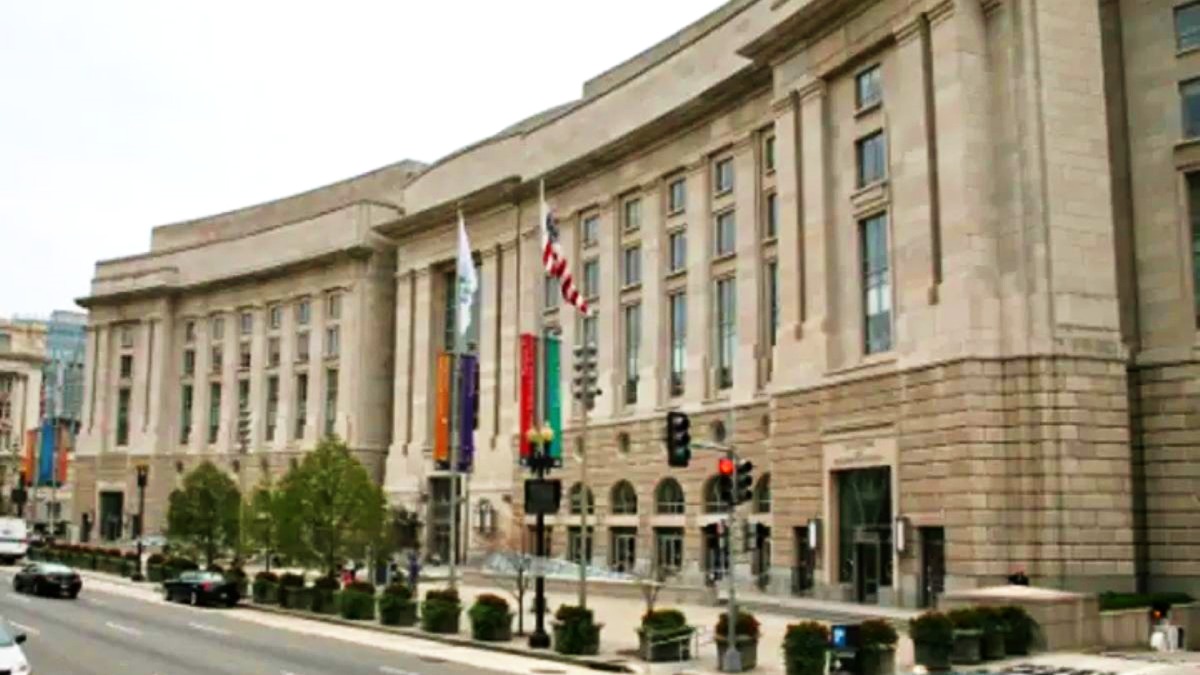
Picture: The former USAID headquarters in Washington DC. USAID employees also occupied a 38,520 sq ft annex building, also located in Washington DC.


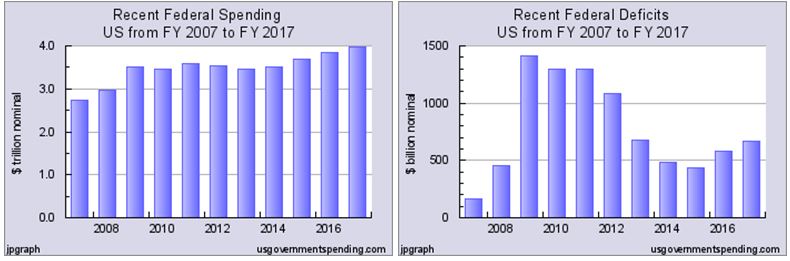
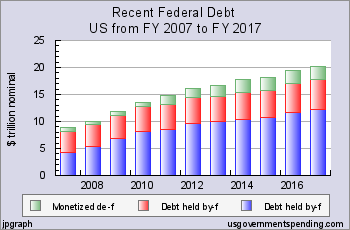 When job pays you less than you spend, you borrow from credit card companies, banks, credit unions, family, or friends. The federal government does the same thing – it borrows when it spends more than it earns. Here is a picture of the federal steadily-growing debt 2007 – 2017, showing debt in December 2017 at $21 trillion.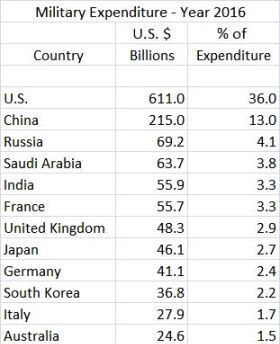
 Certain ideas so defy logic that it is difficult to determine whether proponents aim to make suckers out of the unsuspecting or are being made suckers themselves. Such is the case with the currently proposed Article V Convention, under which states would gather to propose amendments to the U.S. Constitution. Proponents either intentionally or credulously are placing the very nature of our Republic in peril. Therefore, as W.C. Fields would ask, why give suckers an even break?
 Just Vote No