We need to make our kids happy again

Today, our children and youth, coddled by parents and government, have shed the masters of the workhouses and acquired the masters of advertising and agendas.

School age children today exhibit greater emotional instability than in the past, seen since around the 1970s in poorer academic performance, inattention, incidents of violence, and suicides. Society’s response has been to significantly increase the number of mental health counselors present in schools, so far it appears to no avail.

To a hammer everything looks like a nail.

To the American Psychological Association, “With a growing mental health crisis among young people—a trend both exacerbated and illuminated by Covid—the need for school psychologists is multiplying.”

However, to a layperson with an open mind, there should be something amiss with this one-solution mindset, especially since it does not seem to be working. The “growing mental health crisis” did not develop in a vacuum – nothing does. Should we not look for what changed in the past few decades that might have contributed to the “crisis” and fix those variables?

Here are some likely candidates.

Bad Therapy: Let’s begin with the emphasis on mental health in schools – “trauma informed education” – that encourages inward-looking, self-awareness, and emotional skills. A common sense question should be whether “An individual is more likely to meet a challenge if she focuses on the task ahead, rather than her own emotional state. If she’s thinking about herself, she’s less likely to meet any challenge.” (How Bad Therapy Hijacked Our Nation’s Schools, The Free Press, 02/27/24.)

Clueless experts: “Experts” nowadays seem to come with an agenda, rather than with common sense. For example, when someone blames poverty and lack of sufficient services for the sad state of our youth, the question should arise, was there no poverty in the past?

Denatured foods: Nutrients in our foods feed our bodies, our brains, our energy levels, our well being. The detrimental effects of processed foods should be obvious to everyone. However, more insidious is the prevalence since the 1960s of denatured (meaning altered) fruits and vegetables, which contain significantly lower nutrient contents. In an effort to increase fresh produce yield, resistance to disease, storage life, transit capability, attractiveness, and other beneficial characteristics, farmers choose to grow hybrid varieties. Unfortunately, in nature we often lose one characteristic to gain another. (Industry Scandal: The Loss Of Nutrients, 07/20/24)

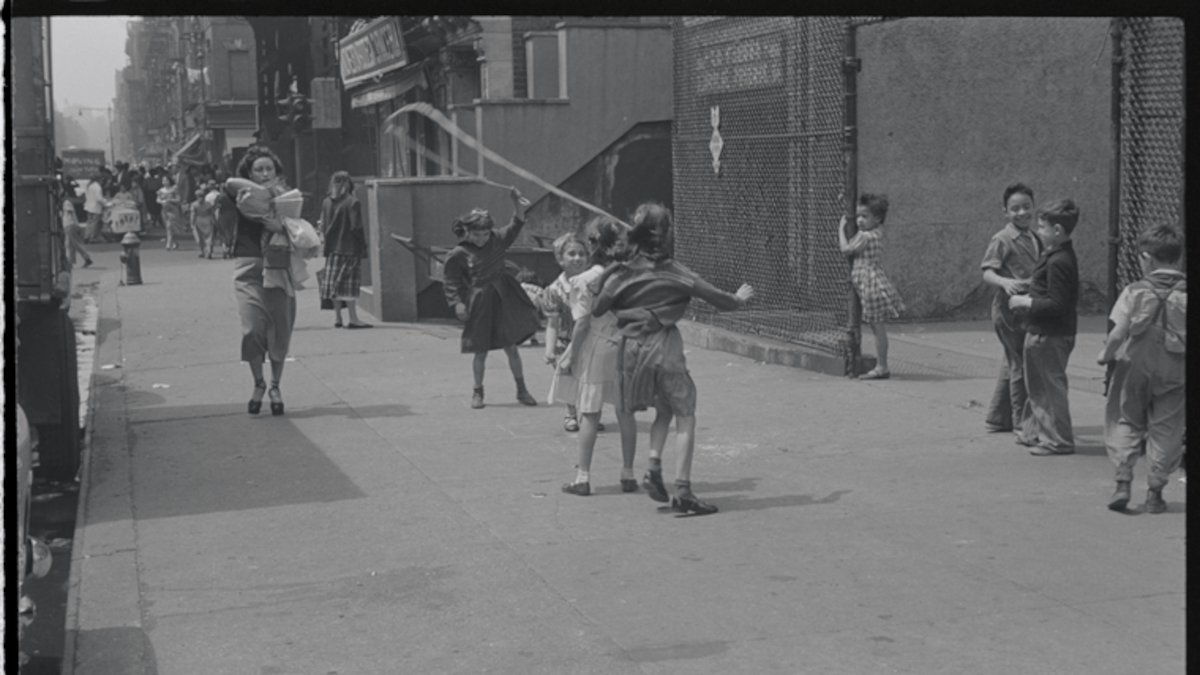
Barren existence: Boomers like to tell how when they were kids, their free time was spent outdoors, jumping rope, making up games, deciding who went first and whose turn it was to wait, watching fireflies, and hurrying home just before suppertime (lateness had consequences). Hot summers in the inner cities were famous for fire hydrant sprinkling & splashing. Too many kids today have supervised playdates and structured activities — if they are lucky. Otherwise, chances are their time is spent in front of TV screens, on endless scrolling on smartphones, texting, or immersed in video games where differences are solved by shooting opponents and blowing things up.

Screen time: It should be obvious to anyone with an iota of common sense that today’s addiction to screens cannot be healthy or lead to productive social interactions. Yet parents and teachers seem to lack the will or authority to keep youth away from screens (often they themselves suffer from screen addiction). Worse, video games — purposefully and obsessively designed to addict, extract information, and monetize — fill hours of youth time. “Gaming audiences form a wide-ranging, worldwide community that goes beyond age, gender, and cultural limits … They’re deeply involved in these games, making them a prime audience for tech, entertainment, and lifestyle ads … Gaming audience spend a lot of time playing, giving advertisers a great chance to connect.” ( Advertising in Gaming: Who are Gamers?, Iion, 03/25/24)

But in the old days there were the work houses…

Media and other communicators are fond of pointing out the plight of children and youth in days gone by, when there was no “regulation” or “services.” Indeed the life of poor and sometimes orphaned children and young adults was certainly not idyllic in the past. Child labor, work houses, illiteracy, and often hunger were common.

Society did eventually recognize and effectively deal with those egregious conditions, mostly though legislation.

Unfortunately, as is so often the case, solutions implemented to solve one problem spawn other problems. Today, our children and youth, coddled by parents and government, have shed the masters of the workhouses and acquired the masters of advertising and agendas. Promotional advertising creates lifestyles, and agendas create dependence on everything from government assistance to youth gang requirements.

Looking back might help

Maybe looking at the array of variables that made kids different back in the day would help. Those variables could include hard working two-parent households, parents with high expectations of their children, teachers willing to impose discipline and expect performance, focus on the 3 Rs of education, and effective (not ineffectively brutal) law enforcement to ensure safe neighborhoods where all kids can play outside.

Interestingly, all those variables include action, not the navel gazing today’s “experts” encourage our kids, to wallow in!

Picture: Kids playing in the street around the 1940s, from the New York Public Library Digital Collections.


Student loans and the Great Bailout

Recommended item: Cameron Weber – economist, historian, and author of the popular book Economics for Everyone, is also producer of Hardfire TV, a political economics talk show. His latest show discusses student loan debt and debt “forgiveness.” It is worth watching for a different perspective.

Recommended item: Cameron Weber – economist, historian, and author of the popular book Economics for Everyone, is also producer of Hardfire TV, a political economics talk show. His latest show discusses student loan debt and debt “forgiveness.”

College tuition and student loan debt have suffered mind-boggling increases since the early 2000s. In an October 2023 report Education Data reported the following,

“Before adjusting for inflation, the average student loan debt at graduation has increased 106% since 2007; after adjusting for inflation, the average debt increased 41%.”

When adding to this sad statistic a February 2024 report by Inside Higher Ed indicating that nowadays 52% of college graduates are underemployed, seems that young people need to do some homework on what is causing such unfortunate situation.

The student loan segment on Hardfire TV might help. The show can be seen on YouTube.

A few words on political economics as preview.

Economics, especially political economics, wears several hats. It is not akin to, say, mathematics. Political economics is more like the costume of Le Bon Florian, Anatole France’s harlequin – viewed from one perspective the costume is red, and viewed from another it is blue.

The libertarian-leaning perspective of student loans and the accompanying student loan debt is that government intervention – subsidies – has incentivized colleges to raise their tuition to unsustainable levels. As tuition rises, so does student loan debt. The solution is to end the subsidies. This will force colleges to trim their offerings, staff, and tuition. Also, colleges will likely return to emphasizing work-study programs, and financial institutions in the marketplace will again compete to offer college assistance.

The progressive-leaning perspective is that government is a better provider than the marketplace. The marketplace increased tuition and student loan debt to untenable levels. Therefore, government needs to step in and abate that debt. Students and former students carrying the heavy burden of student loan debt are constrained from investing sufficiently in goods and services, thus fail to contribute fully to the economy. Everyone benefits when everyone contributes, which justifies taxation – income and debt redistribution.

And in the middle of these harlequinesque perspectives is the vision of the nation’s Founding Parents. This nation was founded as a grand experiment. It would be ruled not by kings or other sole decision makers, but by the people, like farmers, silversmiths, and carpenters. Therefore, education beyond that of the well to do and privileged was necessary. George Washington, Thomas Jefferson, John Adams were among those that argued in favor of public schools and colleges that would provide the populace with the wisdom, knowledge and awareness necessary to make wise decisions at the ballot box.

Letter from Thomas Jefferson to Richard Price, January 8, 1789. “… wherever the people are well informed they can be trusted with their own government…”

Letter from John Adams to John Jebb, September 10, 1785. “There should not be a district of one Mile Square without a school in it, not founded by a Charitable individual but maintained at the expense of the People themselves.”

So, would our Founders then support the idea of having free colleges today? Probably not. Today, things are quite different than back in the 1800s.

Today we talk about money earned by college graduates vs. non-graduates. Young people often major in trendy subjects, like gender studies or DEI, hoping to find positions in government programs or equally trendy corporations. Hardly expectations seeped in wisdom and awareness.

Agreed that not all was perfect back then. It took nearly 100 years for women and Black students to be routinely admitted into colleges. For a brief historical perspective:

Harvard University (originally called New College) was established in 1636, and Yale University in 1701. These and other equally fine schools, were Colonial institutions established for the education of white, mostly upper class, males.

Oberlin College started accepting women in 1837. 1865 saw the emergence of women’s colleges that offered courses comparable to those of men. By the 1880s women could acquire higher education at Vassar, Smith, Wellesley, Bryn Mawr, and Mount Holyoke colleges.

There were only a few Black colleges before the Civil War. However, between 1865 and 1900, several Historically Black Colleges were established, the majority in 1867, two years after Emancipation.

Today, qualified students are admitted to colleges and universities regardless of sex and color. But whether they are receiving the skills, wisdom, and work ethic the Founders had in mind is questionable.

As libertarian-leaning economists consistently point out, government often creates problems which it then tries to take credit for solving, only to create more problems. The problem of the ballooning student loan debt, and the perceived need for debt forgiveness is a prime example. Those of a libertarian bent suggest that government get out of the student loan business, and let private banks compete to offer students the best loan deal.

Maybe the November 2024 elections will inform us which side of the harlequin’s costume is the most appealing.

Picture: From YouTube video of the Hardfire TV show on Student Loans, with host Cameron Weber and guests Marcy Berry and Melissa Wilcox.

The consummate political football: Title IX

Rules under the new Title IX go into effect August 1, 2024. While the original 1972 Title IX was a straightforward 37-word mandate to treat women and men in educational environments equally, the new 2024 rules are a salad bowl of schemes sure to bring confusion rather than equality under the law.

On August 1, 2024, rules under President Joe Biden’s revision of Title IX go into effect. The new Title IX reverses the revisions provided by former President Donald Trump, which in turn reversed the revisions provided by former President Barack Obama.

Title IX has become a special kind of proverbial political football, as it grows bigger and more adorned with every presidential administration.

The rules, commonly known as Title IX, were signed into law by then President Richard M. Nixon as part of the Education Act of 1972. Title IX was a straightforward command based on the 14th Amendment’s Constitutional principle of equal protection under the law. It read,

“No person in the United States shall, on the basis of sex, be excluded from participation in, be denied the benefits of, or be subject to discrimination under any educational programs or activity receiving federal financial assistance.”

This 37-word directive worked just fine for three decades after its enactment, providing major educational opportunities for girls and women. Educational institutions could no longer exclude women from elite sports, courses, and activities – exclusions that were the norm rather than exceptions.

The original Title IX was not without opposition, especially from those concerned about its effect on time-honored and often lucrative men’s sports. However, all states complied with and implemented Title IX rules.

As time passed, meanings for the words “discrimination” and “sex” proliferated. In the case of Title IX, discrimination no longer simply meant not providing equal treatment, and sex no longer simply meant a difference in number of chromosomes or bodily characteristics.

Along with the growing interpretations of what is discrimination, of what is sex as opposed to gender as opposed to identity, and of who belongs to what category, came the proliferation of agendas. In 2024, the new Title IX looks more like a salad bowl of schemes than a necessary, ethical and Constitutional effort to provide equal protection under the law.

Yes, the argument can be made that the original 1972 Title IX broke with some conventions accepted by many at the time: Family and society need women as caregivers not as scholars or athletes. Elite educational institutions need the revenue and prestige brought by men’s athletics. Women’s athletics would dilute revenue and prestige. Women don’t like sports, anyway. However, all states accepted and complied with the new rules without major revolt.

The argument can also be made that a woman’s team that includes a biological male would have an advantage over an all-biological female team. And that would be a good thing for the inclusive team.

However, attorneys general in Alabama, Arkansas, Florida, Georgia, Idaho, Indiana, Iowa, Kentucky, Louisiana, Missouri, Mississippi, Montana, Nebraska, North Dakota, Ohio, Oklahoma, South Carolina, South Dakota, Tennessee, Texas, Virginia, and West Virginia have sued the Biden administration, arguing primarily that the administration exceeded its authority changing Title IX. Governors and state education officials in Arkansas, Florida, Louisiana, Montana, Oklahoma Nebraska, South Carolina, and Texas have directed their states’ educational institutions not to comply with the new Title IX rules.

The position of conservative, Republican-led states is that the new rules are a bridge too far in its intent to ignore physical differences by requiring protection against discrimination based on gender identity. Although the new rules stop short of specifically permitting biological men that identify as women competing in women’s sports, the rules lead to such permission by adding gender identity to protected characteristics.

Certainly, a biological male athlete that has received at least 2 years of gender-affirming care prior to puberty could claim his muscle size and strength is comparable to that of a biological female. Totally fair to allow him in women’s sports. But, nowhere in Title IX rules does that eventuality appear, thereby opening the doors to biological males unfairly competing with biological females.

The new Title IX rules are not only unfair to women but are also loaded with nuances likely to cause confusion.

The original 1972 Title IX established a new, straightforward rule that did not exist prior to the title’s enactment. The new 2024 Title IX heaps more prohibitions against infractions that are already punishable under federal, state and local laws, purportedly to tailor said infractions to sex and gender. For example, harassment, assault, violence, and stalking are already punishable. It should be questionable whether the new Title IX rules needed to list all of these already punishable infractions under “sex based” behavior – and why the rules did so. Is a sexual assault on a campus that receives federal assistance any different than a sexual assault in a shopping mall’s parking lot?

Legislators passed the original 1972 Title IX to help end the evident unfairness inherent in the exclusion of women from elite sports, courses, and educational activities. The Title IX rules helped women to achieve excellence in fields previously closed to them. If federal, state, and local jurisdictions abide by existing laws against all harassment and other violence, is there really a need for more than the original Title IX? Probably not. But factions have not resisted the urge to use Title IX as an agenda-driven political football.

Picture: New Zealand’s Laurel Hubbard, a trans athlete, competed in the women’s weightlifting team in the 2020 Tokyo Olympics. Hubbard was eligible to compete because his testosterone level was below the maximum allowed trans athletes at the time. Requirements did not take into account that if transgender care starts after puberty, biological males will keep their muscular advantage over females.

Why would wealthy families need school vouchers?

The newly-expanded North Carolina school voucher program – Choose your School, Choose your future – grants tuition assistance to any North Carolina family, regardless of income. Do wealthy families really need financial assistance to choose which ritzy school is best for their kids?

On May 17, 2023, the North Carolina Assembly passed House Bill 823, enthusiastically called Choose your School, Choose your Future. The bill expanded the state’s K-12 school voucher program, originally enacted in 2013 to assist low-income families. The Opportunity Scholarship, as the North Carolina voucher program is called, now grants vouchers to all North Carolina families regardless of income. Grants are on a sliding scale determined by family income, with amounts varying between $3,360 and $7,468 per child per year.

Legislators allocated $354.5 million for the Opportunity Scholarship program’s reserve fund for the 2024-2025 school year, and $416 million for the 2025-2026 year.

Lawmakers included HB-823 in the state’s $30 billion very much delayed and anticipated budget, which Governor Roy Cooper allowed to become law without his signature in September.

This program has received accolades as well as criticism.

Sadly, many traditional public schools are of poor quality and lately mired in controversy regarding race, gender, and sexuality. Children should not be stuck in such schools. The Opportunity Scholarship program is a godsend to lower-income families who cannot afford or who can barely afford private, including religious, schools.

However, back in May 2023, WFAE opinion columnist Tommy Tomlinson came up with an interesting description of the newly-overhauled North Carolina voucher program: “Robin Hood in reverse.” He said,

At some point, I have a certain grudging respect for the dedication some people have to playing Robin Hood in reverse — taking money from regular folks and handing it to the rich. Their latest maneuver here in North Carolina is a move to provide taxpayer-funded vouchers to any child in the state who wants to go to private school …

Kids from families with modest incomes have been eligible for similar vouchers here for the past 10 years. That, to me, actually makes some sense. It provides an escape route for a kid stuck in a failing school.

Wealthy families, whose children already attend the “ritziest schools in town” can argue that given the poor quality of public schools they are forced to pay both private school tuition and taxes that support public schools. Vouchers would help level their playing field. However, let us not forget that the working poor also pay taxes, some of which will help pay for school vouchers their wealthy neighbors receive.

Unfortunately, “Robin Hood in reverse” is not the only problem with universal school vouchers.

A worrisome possibility is a significant tuition increase.

North Carolina News & Observer education columnist T. Keung Hui noted in his excellent report of February 15, 2024, that some private schools have already announced tuition increases.

Private schools across the state are raising tuition and sending information to families about applying for Opportunity Scholarships. How much of the tuition increase is due to inflation or to take advantage of additional voucher funding is unclear. … The tuition rate increases for some schools across the state is more than 10%, which is well above the rate of inflation.”

People who attended college in the late 1980s might recall the shock wave of sudden tuition increases. Reasonably affordable four-year colleges became voracious, pushing students into quagmires of student loan debt. 1987 to 2010 witnessed a 106% increase in college tuition, according to a Mises Institute report dated November 30, 2021.

Coincidentally, the years 1980 – 2010 also saw expansion of college student loans guaranteed by the Federal government. William Bennett, President Ronald Reagan’s Secretary of Education, provided in 1987 his view for the college tuition increases he witnessed. Bennett’s assessment — what became known as the Bennett Hypothesis — was discussed in Science Direct, December, 2019

“Increases in financial aid in recent years have enabled colleges and universities blithely to raise their tuitions, confident that Federal loan subsidies would help cushion the increase.”

Scholars have debated the Bennett Hypothesis ever since it was first presented. But even when pitted against other possible reasons for substantial tuition surges — increase in attendance without concomitant growth in institutions, inflation, excessive regulation — the Bennett Hypothesis survives common sense. Is there a valid argument against the view that everybody likes money, and if it is available, most individuals and institutions will take it? Or a valid argument against expecting substantial expansion in school vouchers to have negative effects like those associated with college student loans?

Families should also be concerned about class sizes.

Mr. Hui of the News & Observer indicated an estimated 60% increase in students getting vouchers. Recipients that are already attending private schools will not affect class sizes, but students crossing over from public schools might. Chances are private schools will not rush to expand their facilities to accommodate the crossover population, which could result in increased class sizes.

Vouchers might not be operating on a level playing field.

Lower-income families and their advocates should ask themselves whether universal school voucher programs operate on a level playing field.

By way of comparison: Progressive advocates for poor and minorities often oppose voter ID requirements, citing that poor and minority voters face greater difficulties obtaining IDs. Would the same difficulties apply to obtaining school vouchers? Might more affluent, more educated families possessing greater resources hold advantages over the less fortunate?

Hopefully, in the interest of fairness, the priorities in receiving vouchers contained in HB-823 will lower any advantages held by wealthier families. Families whose children were voucher recipients prior to HB-823 (when there were income limits) will enter a voucher lottery first, followed by lower-income applicants; the more affluent applicants will enter the lottery last to receive what funds are left in the year’s allocation.

Lastly, do the wealthy really need vouchers?

The common-sense answer is clearly “No.” The title of House Bill 823 — Choose your School, Choose your Future – although catchy, is disingenuously applicable only to lower-income families. It is difficult to imagine circumstances in which wealthy families need vouchers to choose which ritzy school is best for their children.

Indeed, it is unfair that families with children who attend private schools pay both tuition and taxes that support public schools. However, universal school vouchers possess an unfortunate aura of benefits for the rich.

Conceivably a better idea might be to pass legislation absolving parents with K-12 children in private schools from paying taxes that support public schools, limiting vouchers to very low-income families living in poor-performing school districts, and improving the performance and cost effectiveness of public schools by practicing the good old focus on “reading, writing, and arithmetic.”

Picture: The beautiful Groton School in Groton, MA. Founded in 1884. Educating 380 students, grades 8-12.

Read till you come to the end: then stop

Children are familiar with animated film version of classic tales. But how much more interesting are the original books! Even more interesting is the quest for learning to read well.

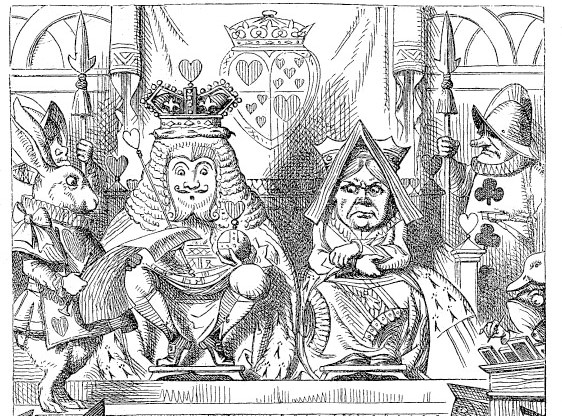
Has your highschooler read Alice in Wonderland or Through the Looking Glass? Not Walt Disney’s or other abridged versions, but the original Lewis Carroll, illustrated with the fantastical drawings of John Tenniel. The original Through the Looking Glass delights with the quirky poem Jabberwocky. Here is a sample,

Beware the Jabberwock, my son!
The jaws that bite, the claws that catch!
Beware the Jubjub bird, and shun
The frumious Bandersnatch!

… and the equally zany The Walrus and the Carpenter — one of the best verses for sample,

The sun was shining on the sea,
Shining with all his might:
He did his very best to make
The billows smooth and bright —
And this was odd, because it was
The middle of the night.

Cautionary tales

Good heavens, you might say, read such nonsense when there is so much strife and challenges in the world?

Well, yes. If your kid can read Through the Looking Glass cover to cover at his own pace and find it fascinating, then he is playing chess while others are playing checkers.

Also, if the reader uses her imagination to turn the “nonsense” into cautionary tales, then she is ready for life’s challenges! Let’s consider tricky folks one of life’s difficulties – like Mr. Walrus and Mr. Carpenter. These snippets from the poem summarize the situation well,

O Oysters, come and walk with us!’
The Walrus did beseech.
A pleasant walk, a pleasant talk,
Along the briny beach:
We cannot do with more than four,
To give a hand to each.’

The eldest Oyster looked at him,
But never a word he said:
The eldest Oyster winked his eye,
And shook his heavy head —
Meaning to say he did not choose
To leave the oyster-bed.

But four young Oysters hurried up,
All eager for the treat:
Their coats were brushed, their faces washed,
Their shoes were clean and neat —
And this was odd, because, you know,
They hadn’t any feet.

Guess what happened to the gullible little oysters.

O Oysters,’ said the Carpenter,
You’ve had a pleasant run!
Shall we be trotting home again?’
But answer came there none —
And this was scarcely odd, because
They’d eaten every one.”

Alas, innocents that believe in wondrous promises from the powerful.

The mathematician who wrote children’s books

Lewis Carroll was the pen name of Charles Lutwidge Dodgson, born in Daresbury, Cheshire, England, in 1832. He died in 1898. He is known for Alice in Wonderland (1865) and Through the Looking Glass (1871), although he wrote other books, short stories, and poems. His other most-often mentioned works are Bruno’s Revenge (1867), The Hunting of the Snark (1876), and A Tangled Tale (1885).

Carroll was not only a prolific writer, but also a mathematician, logician, photographer, and Anglican deacon. He taught mathematics and logic at Christ Church, Oxford, and wrote several mathematical books under his birth name. His mathematical puzzles are sometimes included in puzzle books. His most-often mentioned mathematical book is An Elementary Treatise on Determinants with their Application to Simultaneous Linear Equations and Algebraic Geometry (1867).

A whole lot of Carroll’s writings and puzzles were intended to teach children math and logic. His work can still do so today. The popular website Teachers Pay Teachers is just one of the several that have materials related to Lewis Carroll’s works for younger children as well as for highschoolers. Lesson Planet has good material on Lewis Carroll as well.

Gee, this book is long!

The last chapter of Alice in Wonderland has useful advice for readers of long books,

“There’s more evidence to come yet, please your Majesty,” said the White Rabbit, jumping up in a great hurry: “this paper has just been picked up …” “it’s a set of verses …” “Read them,” said the King. The White Rabbit put on his spectacles. “Where shall I begin, please your Majesty,” he asked.

Begin at the beginning,” the King said, very gravely, “and go on till you come to the end: then stop.

Alice at the Trial

CA AB 257 vs Fast Food Industry

A more sustainable way to guarantee good wages and benefits is to encourage workers to obtain marketable skills, rather than engage in a never-ending battle with the realities of the market.

The California Legislature passed Assembly Bill 257, the Fast Food Accountability and Standards Recovery Act, on August 29, 2022. If Governor Gavin Newsom approves AB 257, California will be the first state in the nation to broadly regulate wages and working conditions for an entire industry. Fight for $15 and the Service Employees International Union (SEIU) California sponsored AB 257. Their hope is the bill will lead to European-style industry-wide unionization, and end company-by-company efforts. The fast-food industry predictably opposes the bill.

Although states, as well as the federal government, regulate several industries, like banking and petroleum, these regulations do not set minimum wage and labor standards. They do not attempt to regulate social inequities. That is why the bill is being touted by the media as “first in the nation.”

A Super Agency in the Making

AB 257 creates a council comprised of government officials appointed by the Governor, business leaders, and worker representatives. The council will draw regulation to apply to all fast food restaurants with 100 or more establishments nationally that share a common brand. The bill has broad powers to repeal or amend existing regulation to accomplish its mission of establishing wage and labor standards.

AB 257 claims its intent is not to usurp legislative powers by creating or amending statutes. However, sections of the bill seem to send a contradictory message.

Section 4 (d) (1) (B) Nothing herein restrains the Legislature from enacting legislation that prevents a standard, repeal, or amendment from taking effect.

This wording seems to say elected representatives of the people do not have the power to simply veto regulations presented by the council, but instead can if they choose create legislation that would amend or repeal the regulation.

The council created by AB 257 seems in reality to be a super-agency, whose unelected members have de facto power to make and enforce law. As such, voters have no say in rules and regulations this super-agency implements. The only recourse of unhappy voters is appeal to their California legislators to try to enact more legislation that modifies or repeals the “law” created by the council – a council they themselves created.

The council will succeed where no agency has before?

California already has numerous laws, rules and regulations regarding wages and working conditions. However, AB 257 correctly states that enforcement is ineffective and problems in the workplace abound.

Section 2 (j) Furthermore, because existing enforcement and regulatory mechanisms have proved inadequate in ensuring fast food restaurant worker health, safety, and welfare, the Legislature concludes that sectorwide minimum health, safety, and employment standards, including standards concerning wages and other working conditions, identified by an expert body with subject matter expertise and experience in the fast food sector and which can represent the demographic diversity of the state’s fast food restaurant operators and employees, are necessary to protect, maintain, and ensure the health, safety, and welfare of, and to supply the necessary cost of proper living to, fast food restaurant employees.

So, AB 257 creates a super-agency (without discontinuing any of the ineffective agencies) and claims it will do the job none of the other numerous agencies have succeeded in doing. Seems this endeavor could only be accomplished either by amazing efficiency, for which government agencies are not well known, or tyrannical power over the fast food industry, approaching a takeover.

Interesting background of AB 257

AB 257 was originally authored by then Assemblymember Lorena Gonzalez, who resigned from office in January 2022 to take the position of chief officer of the California Labor Federation. Ms. Gonzalez is also the author of Assembly Bill 5, signed into law September 2019, which reclassified numerous California workers from independent contractors to employees.

AB 5 caused enormous upheaval, like upending supply chains by curbing the work of hundreds of independent truckers. AB 5 has also spawned numerous high-profile lawsuits, the most prominent of which are those initiated by ride-sharing company Uber, the California Trucking Association, and the International Franchise Association.

It would not be unreasonable to expect the same upheaval from AB 257, given the bill’s unusually broad powers.

After Assemblymember Lorena Gonzalez’s resignation from office, Assemblymember Chris Holden reintroduced the bill in January 2022.

There is a better way

Government micromanagement of industries, promising “living wages” and a plethora of “benefits” might seem to low-wage workers like a dream come true.

Unfortunately, they do not realize that life will find a way. The marketplace is a living thing that survives the harshest conditions – ask any underground entrepreneur thriving in the world’s tyrannies. Another quote is “money goes to where it is treated best.” Ask the many major companies that have left California for more business-friendly states. The cure promised by AB 257 might be worse than the ailments.

Another way to view low-wage workers, like those in the fast food industry, is that there are too many of them. Although sometimes denied by today’s progressives, supply and demand do determine prices. If companies see too many people with non-marketable skills (like graduates of California’s low-rated school system or graduates from Stanford with degrees in philosophy) then companies can pay their workers low wages without fear of exhausting the worker supply.

A more sustainable way to guarantee worker respect, good wages, and benefits is to encourage workers to obtain marketable skills. Never-ending battles with the realities of the market only serve to grow government power, increase taxation necessary to maintain bureaucracies, and divert resources from helping the populace obtain good skills.

1619 Project: any equity yet?

Some ideas in The 1619 Project have some merit, but the Project is riddled with illusory truths, which relegate it to the realm of propaganda.

When works with some merit are too forcefully publicized, they become hysterical rhetoric that require a set of illusory truths repeated ad infinitum. At that point they attract critics bent on stripping those works of all value. A good example of this phenomenon is The 1619 Project.

New York Times journalist Nikole Hannah-Jones assembled essays on America’s history and named the collection The 1619 Project, which was published by The New York Times in 2019 with great fanfare. The name refers to the year the first shipload of Black slaves landed in America.

According to the project, this seminal event in 1619 forever imprinted racism in the American psyche, causing foundational and expansion episodes to carry slavery’s imprint to this day. The project in its original publication contended that 1619 must be considered America’s founding date, not 1776.

Praises and Disdain

Immediately after its publication, The 1619 Project received accolades from liberals and searing criticism from conservatives. In 2020, Nikole Hannah-Jones received a Pulitzer Prize for her work. She also received denunciations of circulating junk history.

The great tragedy of the original 1619 Project was its missed opportunity to add detail, nuance, and reflection to our historical understanding of slavery and its legacy. That opportunity was lost not upon publication but in the aftermath, when The New York Times met its scholarly critics with insult and derision. The ensuing controversies, initially confined to Hannah-Jones’ and Desmond’s essays, came to overshadow the remainder of the project, including its other historical contributions as well as its literary and artistic sections. The 1619 Project Unrepentantly Pushes Junk History, Reason, March 29, 2022

The principal purpose of The 1619 Project is not to inform but to agitate and entice action. Hannah-Jones wants to see acknowledgement of the persistent consequences of slavery and the ubiquitous nature of racism, present in the judicial system, housing, employment, education, and all other institutions. Her premise is that without that acknowledgement, society cannot begin to erase the negative effects of prejudice. In this regard, her premise aligns with the principles of Critical Race Theory.

Action is often best achieved with focus, flexible statements, relentless publicity, and fascinating storytelling. Lest The New York Times version of the project starts losing media space, Hannah-Jones expanded it into a book, The 1619 Project: A New Origin Story, and a school curriculum, Reading Guide for The 1619 Project Essays.

Measures of early action enticed by The 1619 Project could be the level of sales of the book, how many school districts adopted the curriculum, and the backlash. The book is an Amazon best seller. The number of school districts that adopted the curriculum does not seem to be available; there are only article, mostly published in 2020, saying that “4,500 classrooms” are using the curriculum. As of February 2022, 38 states have introduced or passed legislation banning the teaching of race-based curricula.

Illusory Truths

Possibly because of its dependence on illusory truths and storytelling, the Project is an easy target for criticism and dismissal. Here are three of the Project’s most salient, most often repeated, assertions and the JVN Blog’s opinion of how these assertions missed opportunities to enrich American history.

  • The American Revolution was fought over slavery

Traditional history does not fully discuss the crucial role slavery played in colonial economy, principally in the Southern plantations, but also Northern commerce. A deeper discussion would serve better to understand the words of the Declaration of Independence, the Civil War, Reconstruction, and government-sponsored segregation.

However, other reasons for the Revolution abound: British soldiers quartered in America starting in 1763. Devastating taxation and regulation in 1765. The Boston Massacre in 1770. The long list of other grievances listed on the Declaration of Independence.

Also, the British were the middlemen who exported slaves to America. Calls for abolishing slavery in Britain did not occur until 1780, five years after the Revolutionary War began.

  • The Second Amendment to the Constitution was placed there to allow White men to defend themselves against Black slaves.

Indeed, history needs to speak more about slaves’ discontent and frequent rebellion, which no doubt caused White apprehension.

History also needs to be clear that the ten original Amendments that make up the Bill of Rights were the result of the Founders’ mistrust of a central government and particularly government’s standing armies. Those Amendments, including the Second, were intended to protect the People against government, not against each other.

What, Sir, is the use of a militia? It is to prevent the establishment of a standing army, the bane of liberty …. Whenever Governments mean to invade the rights and liberties of the people, they always attempt to destroy the militia, in order to raise an army upon their ruins. Rep. Elbridge Gerry of Massachusetts, Annals of Congress 750, August 17, 1789.

  • Slavery and racism were, and still are, root causes of unjust social, judicial, and educational systems.

There are events that could be better understood with more honest discussions of their relation to racism. For example, during the 1930s through the 1950s, the Federal Housing Administration guaranteed most private mortgages that helped build America’s suburbs. Only 2% of those mortgages went to non-white applicants. The FHA encouraged covenants that kept suburban neighborhoods “harmonious.”

Areas surrounding a location are investigated to determine whether incompatible racial and social groups are present, for the purpose of making a prediction regarding the probability of the location being invaded by such groups. If a neighborhood is to retain stability, it is necessary that properties shall continue to be occupied by the same social and racial classes. Federal Housing Administration 1936:233.

It is not difficult to determine what social and racial class was preferred when we consider what the American suburbs of the 1950s looked like.

Civil rights legislation of the 1960s removed housing discrimination, and many Black families did resettle to prosperous suburbs. But poverty kept more in the inner cities.

Poor Black neighborhoods share key characteristics that ensure poverty: Children living in one-parent families (64% vs. 24% of White children). Incarceration (in state prisons 5 times the rate of White incarceration). Gun violence, that results in high, mostly Black-on-Black, violent crime.

These self-inflicted wounds keep poor Black families poor and deluded by the cruel lie of victimhood.

Meanwhile, Black individuals and families that refuse to cling to victimhood prosper: Harriett Tubman, Frederick Douglass, Candace Owens, Clarence Thomas, the countless number of Black families who insist on discipline and have achieved economic well being.

Yes, slavery, government-sponsored segregation, and prejudice are the despicable triumvirate that shares a place in America’s identity. But they need not be the determining variables in anyone’s life. They need not be the relentless distraction from purposeful endeavors that Nikole Hannah-Jones and her fellow Critical Race Theorists want them to be.

A Great Experiment Goes Unnoticed

The 1619 Project’s plea to face history honestly makes sense, since nothing can be learned from an embellished version that ignores mistakes to be avoided. However, The Project’s version, stripped of understanding, has caused it to be dismissed in its entirely. Good understanding of history should include these three principles:

  • History is incremental. People develop knowledge of themselves and the world around them in bits and pieces.

Earth was once the center of the universe, until it was not. Slavery was once a fact of life going back to ancient times, until it was not.

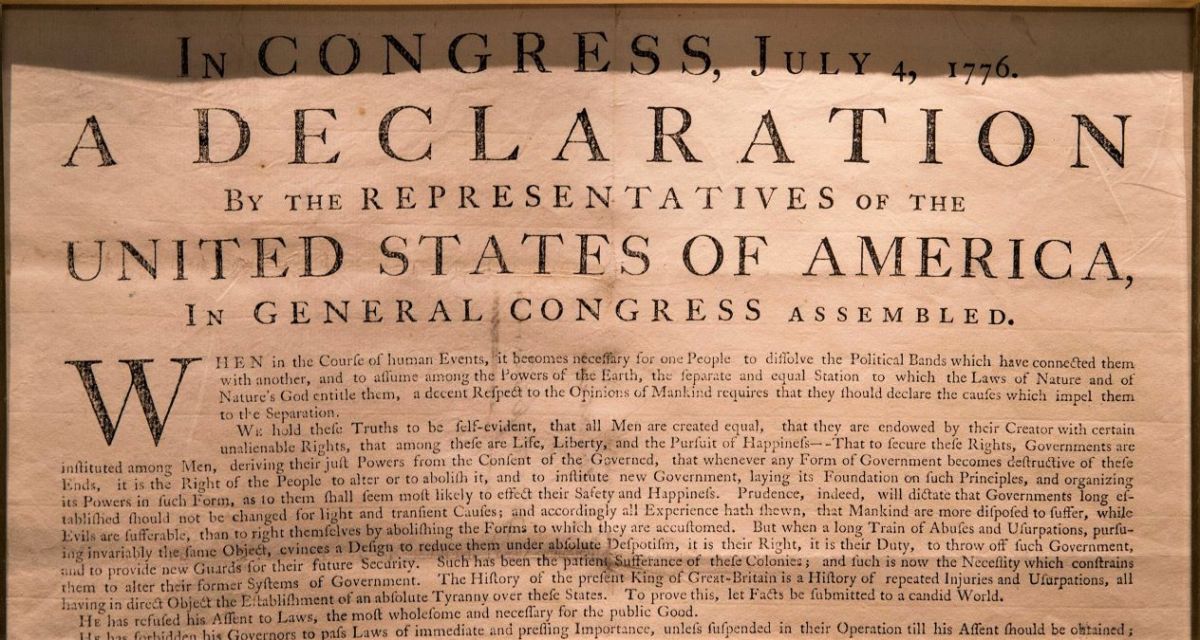
  • America’s Declaration of Independence laid down a new concept of the rights to life, liberty, and pursuit of happiness: these rights are not granted by government, but by The Creator.

At the time the Declaration was written, the Founding Fathers’ attitude toward slavery and an economy dependent on slavery was evolving. As Hannah-Jones herself pointed out Thomas Jefferson included in the Declaration a passage condemning slavery, but the passage was removed prior to ratification. One would have to speculate that the Founders must have figured that if they were to have a country at all, they could not obliterate their economy by suddenly freeing the slaves.

  • America’s Constitution laid down a never-before tried system of government 1) of rule by the people through the peoples’ representatives in Congress, 2) of enumerated powers in the Articles clearly indicating what each of the three branches of government does, and 3) of restrictions in the first 10 Amendments indicating what government cannot do.

In other words, the Founders wrote the American Constitution as an experiment in self-government, something never before attempted. It turned the idea of government held since time immemorial on its head. Under this Constitution, government works for the people, not the other way around. That means the People, through their representatives, can change (amend) any part of that document if they so choose.

Baby Gone With the Bathwater

In conclusion, The 1619 Project throws away the baby with the bathwater. That is unfortunate. However, if the Project’s intent, along with that of brethren Critical Race Theory, is to agitate, distract, and solidify Black adherence to progressive politics, then rational thinking does not matter.

E Pluribus and More Pluribus

The motto the Founders chose was “E Pluribus Unum” — From Many, One. The “many” were the several states carrying their own philosophies, economies, and customs. The “one” was the new nation governed by one Constitution and one goal of realization.

This 4th of July is a good time to reflect how our country today differs from the nation our Founders envisioned. A handy measure is to compare the national motto the Founders chose vs. how our country behaves today.

What is the national motto.

The U.S. national motto is “In God We Trust.” This phrase first appeared in some coinage during the Civil War, was officially sanctioned as the national motto in 1956 by then President Dwight Eisenhower, but is not the original national motto the Founders chose. Actually, the Founders rejected that and other similar phrases for obvious reasons: they were trying to build a secular nation that acknowledged the blessings of Providence but rejected the supremacy of any specific religion (including Deism, to which several Founders adhered). The subject was important enough to the Founders that they wrote this as the first clause in the Bill of Rights: “Congress shall make no law respecting an establishment of religion, or prohibiting the free exercise thereof.”

The motto the Founders chose was “E Pluribus Unum” — From Many, One. The “many” were the several states carrying their own philosophies, economies, and customs. The “one” was the new nation governed by one Constitution and one goal of realization. Of course, one must acknowledge that the norms of that time and place, which allowed for a more homogenous leadership and electorate, facilitated the transition from many to one. However, the sentiment of E Pluribus Unum could have remained unaltered as our nation grew. It did not. At least it did not to the extent the Founders envisioned.

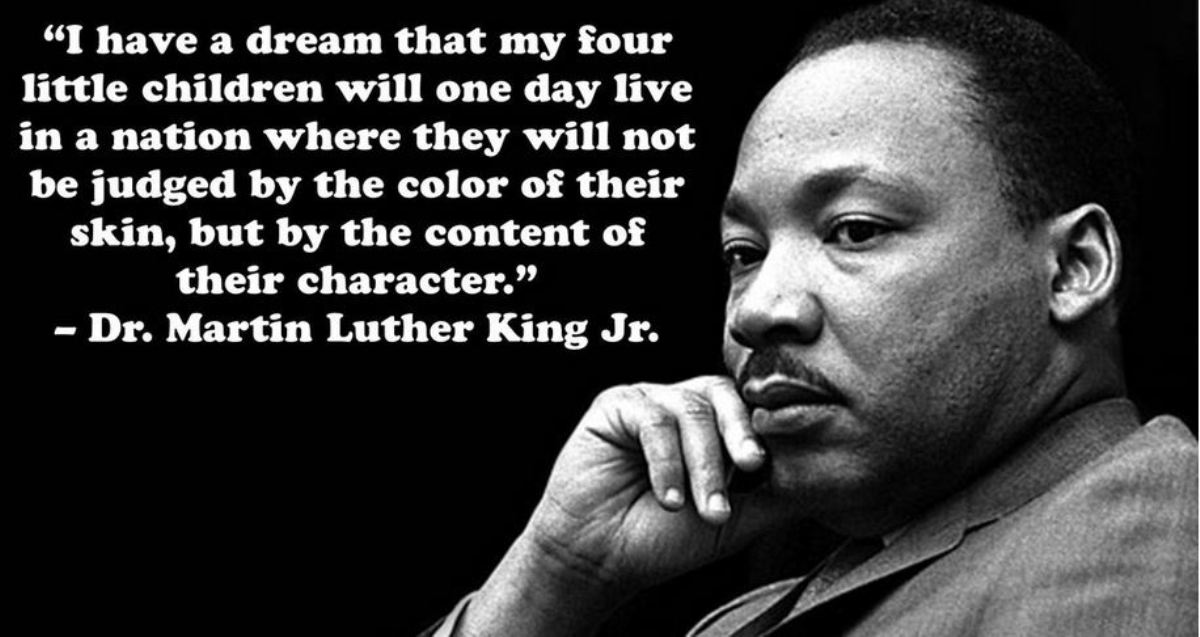
Sentiments of divide and conquer that permeate the national psyche have webbed and flowed since the nation’s birth. Today, we are on an upward flow. Media, including social media, compartmentalizes everybody into spheres of preference – echo chambers – and turn participants into one-issue zealots. Schools, especially government schools, are indoctrination centers, as are workplaces. When school children and employees are forced to sit through hours of diversity training, it is a good bet that a true preference for diversity (when persons will “not be judged by the color of their skin but by the content of their character”) is not occurring. Add to that brew, legislators that moved away from an ideological center that allows for rational discussion and compromise.

Happy 4th of July

Enjoy the hotdogs and the fireworks. Take a few minutes to cogitate on the new national motto vs. the old one. If you prefer the old motto, perhaps help turn the tide towards E Pluribus, Unum.

Critical Race Theory: A Dream Cancelled

President Joe Biden is considering grants to schools that include critical race theory in their curriculum. Some parents are calling CRT “obsession with race.”

Andrew Gutmann, parent of a 4th grader at the elite Brearley School in New York City, has touched a nerve in today’s woke culture. His 1,700-word letter to 650 parents at the school, decrying the famed institution’s race-saturated curriculum went viral after being leaked.

Mr. Gutmann explained in his April 13, 2021, letter why he and his family decided not to reenroll their daughter at Brearley for the 2021-22 school year. The letter discusses his objections to the schools’ embrace of critical race theory. Here are two of his objections that are particularly forceful.

I object to the view that I should be judged by the color of my skin. I cannot tolerate a school that not only judges my daughter by the color of her skin, but encourages and instructs her to prejudge others by theirs. By viewing every element of education, every aspect of history, and every facet of society through the lens of skin color and race, we are desecrating the legacy of Dr. Martin Luther King Jr., and utterly violating the movement for which such civil rights leaders believed, fought, and died.

I object to the idea that Blacks are unable to succeed in this country without aid from government or from whites. Brearley, by adopting critical race theory, is advocating the abhorrent viewpoint that Blacks should forever be regarded as helpless victims, and are incapable of success regardless of their skills, talents, or hard work. What Brearley is teaching our children is precisely the true and correct definition of racism.

Predictably, the response from the Brearley administration is to suggest Mr. Gutmann is a racist, ignoring that what he was so vehemently opposing in his letter was the racism inherent in critical race theory. Surely the Brearley administration is capable of grasping how anti-racism has devolved from the ideals of Martin Luther King Jr to the decrees of Black Lives Matter. Or perhaps not.

We express our unequivocal support for our Black, Asian, Indigenous, Multiracial and Latinx students, faculty, staff, and alums. Many of our students of color, especially those who identify as Black, felt that the letter questioned their belonging in the Brearley community. Their belonging and their excellence are unquestionable.

Brearley Is Not Alon

* Paul Rossi, a teacher at Grace Church High School in Manhattan, wrote an essay, which podcaster Bari Weiss published on April 13 (as she did Andrew Gutmann’s letter). Mr. Rossi warned that Grace Church’s focus on race was damaging to students. Here is a short excerpt of his essay.

As a teacher, my first obligation is to my students. But right now, my school is asking me to embrace “antiracism” training and pedagogy that I believe is deeply harmful to them and to any person who seeks to nurture the virtues of curiosity, empathy and understanding …

My school, like so many others, induces students via shame and sophistry to identify primarily with their race before their individual identities are fully formed. Students are pressured to conform their opinions to those broadly associated with their race and gender and to minimize or dismiss individual experiences that don’t match those assumptions.

* “Parents at Harvard-Westlake School in Los Angeles gather to strategize in their war on the school’s race orthodoxy. Bari Weiss was invited to one such gathering, and reported what transpired in “The Miseducation of America’s Elites.” This from City Journal

Affluent parents, terrified of running afoul of the new orthodoxy in their children’s private schools, organize in secret.

In a backyard behind a four-bedroom home, ten people sat in a circle of plastic Adirondack chairs, eating bags of Skinny Pop. These are the rebels: well-off Los Angeles parents who send their children to Harvard-Westlake, the most prestigious private school in the city.

Most of all, they worry that the school’s new plan to become an “anti-racist institution”—unveiled this July, in a 20-page document—is making their kids fixate on race and attach importance to it in ways that strike them as grotesque.

These are America’s cream of the crop $40,000 – $55,000 a year schools, feeders to Princeton, Yale, and Harvard. Average on-lookers might find it strange that any student at such schools would actually view themselves as oppressed. But, often reality is situational.

Chances are there will be more schools embracing a race-based curriculum

On April 19, The U.S. Department of Education proposed a two-prong approach to embed race-based curriculum in American schools. The proposals are described in The Federal Register (the public comment period of these proposals ends May 19, 2021).

Proposed Priority 1—Projects That Incorporate Racially, Ethnically, Culturally, and Linguistically Diverse Perspectives into Teaching and Learning. Proposed

Priority 2—Promoting Information Literacy Skills.

Proposal #1 is fairly clear. Proposal #2 is open to interpretation, but might mean simply don’t look at anything on Zero Hedge, The Keiser Report, or Alex Jones.

President Joe Biden is considering grants to support implementation of these proposals. Public schools always need more money. Private schools might be welcoming extra funding to make up for loss of tuition due to Covid-19 closure. Federal grant money could be the enforcing mechanism for implementation of critical race theory in American schools.

In Fairness To Woke Progressives

Parents rebelling against today’s critical race theory curriculum are often quoted as saying their children are being indoctrinated, not educated. True, indoctrination of what is occurring.

However, it is only fair to say woke indoctrination on race is not unique in America. Our country’s schools operated under strict government-sanctioned segregation by race for nearly 80 years. The school segregation mirrored the wider culture at the time, when white people felt they needed to be vigilant against black people “forgetting their place.”

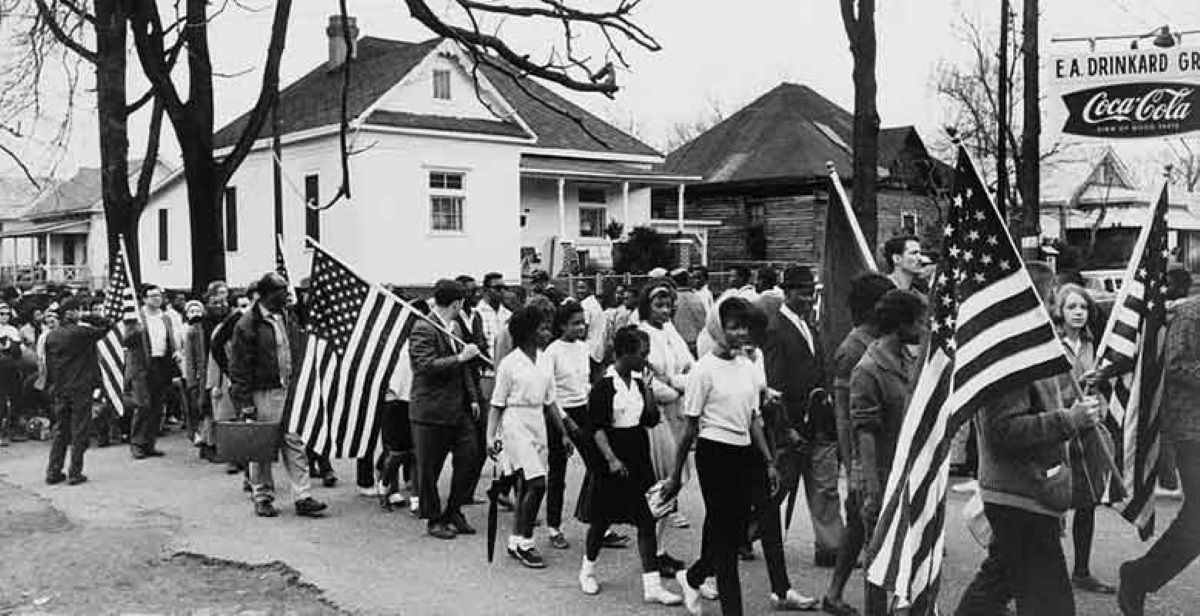
Thankfully, there were brave people who fought to dismantle the race-obsessed, baseless indoctrination inherent in Jim Crow.

Let’s ensure today’s parents are not contributing, willing or unwillingly, to raising racists. Let’s not let our desire to foster inclusiveness to turn into obsession with race.

Parents of School Children are Fighting Back

Alison Collins, S.F. School Board Vice President, is the latest official caught in today’s endless uproar about race. Petition for her removal is in full swing.

The Just Vote No Blog recently discussed California’s BLM-inspired schools. Identity politics has permeated schools as it has other sectors of society. Some are fighting back. In San Francisco, a fuse that ignited a revolt was the Board of Education’s decision to change the merit-based admission policy of Lowell High School to a lottery-based system. This decision will bring Lowell down to the mediocre level of other San Francisco government/union-run schools.

One school official caught in the maelstrom is Alison Collins, Vice President of the San Francisco Board of Education. Her unfortunate Tweets insinuating that Asians behave like white supremacists to get ahead placed Ms. Collins in a difficult position. She offended both the race-focused progressives and the traditional-education-focused parents of Lowell High students. Mission Local in an article dated March 23, explains the situation well.

A petition calling for Ms. Collins ejection from the School Board has been posted on Change.org.

Perhaps petitions and other means of raising awareness need to be posted regarding the broader issue: school officials that descend into race peddling.