Socialism: A self-inflicted wound

Political commentator Bruce Bialosky recently wrote that progressive U.S. cities like San Francisco, Seattle, Portland, Chicago are at the vanguard of social and economic deconstruction. He compares these once great cities to the former economic powerhouse, Venezuela.

Dependence on government largess is the hallmark of a socialist populace. Unfortunately, sources of largess are not unlimited, and eventually government leaders run out of money. Then, inevitably moral and economic collapse ensues. Examples going back to the fall of the Roman Republic and beyond abound. Sadly, the U.S., once the bedrock of true capitalism, is going the way of Venezuela.

Bruce Bialosky, CPA and political commentator, recently wrote on flashreport.org that progressive U.S. cities like San Francisco, Seattle, Portland, Chicago are at the vanguard of social and economic deconstruction. He compares these once great cities – no longer clean, safe, or worth visiting – to the former economic powerhouse, Venezuela. This South American nation, Bialosky says, is now a “full-blown humanitarian crisis.” On We Are Becoming Venezuela (flashport.org, May 21, 2023) he wrote,

At one point not too long ago, Venezuela had the best economy in Latin America and was in the top 20 economies in the world. It has the largest oil reserves in the world. In the last two decades of the 20th century, the economy started to decline. It was still a country with which many people I know did business and visited regularly. I wanted to vacation there. I heard wonderful things about Caracas, the capital.

Then Hugo Chavez became president promising a Bolivian (socialist) revolution. He indeed provided a revolution until he died. A revolution of despair. The current leader, Nicolas Maduro, took over the country and finished destroying any semblance of civilized life. Human Rights Watch has reported there is a full-blown humanitarian crisis lacking safe water, basic nutrition, and healthcare. Whoever can get out has gotten out.

Yet, Mr. Bialosky, says, U.S. cities continue to follow the socialist path. He cites Chicago.

There is another city I am thinking of adding to the list. Just 18 months ago after numerous prior visits, we were in Chicago. We were there when possibly the worst mayor in American history was in office – Lori Lightfoot. She was so bad her constituency gave her only 17% in the election primary, thus eliminating her from the general election.

Given an opportunity to begin correcting the malaise Lightfoot created, the residents of Chicago doubled down by electing someone who could easily become worse. With a failing school system they elected someone who received 95% of his contributions from public employee unions, largely from the teachers’ union.

Bruce Bialosky is referring to Brandon Johnson, elected Mayor of Chicago in a runoff election April 2023, and on whom Bialosky does not place much faith:

Mr. Johnson won his election largely on the back of two groups voting for him – blacks and, you guessed it, the most dangerous group in America – white liberals.

Harsh words! Bialosky elucidates on the source of the devolution experienced by declining cities.

You cannot blame any of this on blacks or other minorities as they represent a minor portion of the population in these cities. No, the dismal decline of these cities is caused by the most dangerous people in America – white liberals. They have voted for hard-core Leftists to come into office with their extreme policies. They think they are doing well for others allowing the public-school systems to corrode while sending their own children to private schools. They believe criminals should not have ramifications for their crimes because crimes were just a manifestation of their challenging past.

Let that sink in, “the most dangerous people in America – white liberals.” Mr. Bialosky denounces white liberals for implementing destructive leftist ideology. The Just Vote No Blog would like to excoriate white liberals, as well as their opportunistic counterparts of color, even further.

Look around, look them up on the Internet, what are the liberals saying? Are they encouraging the populace to practice self-reliance and self-discipline? Are they talking about Black or Latino entrepreneurs, educators, authors, nurturing fathers and mothers? Did they ever mention businesswoman and philanthropist Sheila Johnson, the first Black woman billionaire? No, white liberals, along with Black opportunist like Al Sharpton and Nikole Hannah-Jones, promote victimhood. Victimhood, synonymous with dependence, propagates the socialism for which liberals crave.

The U.S. is today at a forked road with three, not two, divergent paths. One path will lead to the U.S. becoming yet another failed socialist state like Venezuela; the other path will lead to the mirror image of liberal extremism which is repressive conservative extremism; and the third path could lead to a productive self-reliant populace, prosperity, individual liberty, and true help for the few who are unable to provide for themselves.

We still have ballot boxes, and what is placed in them in the next few years will determine which path our country will take.

Who stole Arbor Day?

In 1885, Nebraska declared Arbor Day a state holiday, to be celebrated on April 22. Within the next 20 years, Arbor Day was celebrated in most states. Tree-planting on this holiday remained popular, until the 1970’s. Then events overshadowed it.

A question meriting even more attention than who stole Arbor Day is “Why?” Who would want to hijack a holiday? Half a century after the takeover, events have developed sufficiently for a reasonable guess.

The story started way back in 1854.

In 1854, a journalist named Julius Sterling Morton and his wife Caroline moved to the wind-swept territory of Nebraska. There were few trees to serve as windbreaks, and few trees to protect soil from erosion or crops from burning in the sun.

For several years, Morton editorialized on the benefits of trees and encouraged his fellow Nebraskans to plant trees. As part of his campaign, Morton proposed an Arbor Day.

In 1885, Nebraska declared Arbor Day a state holiday, and April 22 the date of annual observance. April offered ideal weather for planting trees, and the 22nd of April was J. Sterling Morton’s birthday. By that time, Morton had led the planning of more than 1 million trees.

Within the next 20 years, Arbor Day was celebrated in all states of the U.S., except Delaware. The Arbor Day concept also spread outside the U.S., to Japan, Europe, Canada, and Australia.

Enter Senator Gaylord Nelson of Wisconsin.

In 1969, Senator Gaylord Nelson saw the opportunity to capitalize on a populace spooked by environmental ruin. Rachel Carson’s widely read Silent Spring, published in 1962, lifted the veil that theretofore had hidden massive pollution caused by pesticides. In January of 1969, an oil well off the pristine coast of Santa Barbara, California, blew up, and hundreds of images of aquatic animals covered oil flooded the airwaves.

In the same year as the Santa Barbara oil spill, Senator Nelson started organizing nation-wide rallies to bring attention to what was happening to Mother Earth. The day he picked for the coordinated rallies was April 22, for the purported reason that young college students, who were expected to play a big role, would be on spring break. April 22 was also the original day for Arbor Day celebrations already established throughout the nation. (Critics of Earth Day point out that April 22 is also Vladimir Lenin’s birthday, but any connection between the environmental movement and abolition of private property shall be left for another day.)

Earth Day 1970, with its catchy slogan “Give Earth a Chance” and heavy promotion, was a success. An estimated 20 million people attended various rallies and festivities.

Meanwhile, Richard Nixon promoted environmental legislation.

President Richard M. Nixon embarked on a series of environmental legislation. He signed the National Environmental Policy Act (January 1970), creation of the Environmental Protection Agency (December 1970), Clean Air Act (December 1970), Marine Mammal Protection Act (October 1972), Endangered Species Act (December 1973).

As part of his environmental plan, Nixon signed two proclamations:

Proclamation 4042, dated April 2, 1971, designated the period of April 18 through April 24, 1971, as Earth Week.

Proclamation 4126, dated April 24, 1972, designated the last Friday of April 1972, April 28, as National Arbor Day.

These celebrations today continue, but at different levels.

Today, Arbor Day is still observed by avid supporters on the last Friday in April, as well as on several other dates in different states. The Arbor Day Foundation, a 501(c)(3) organization, claims more than 1 million members.

However, Earth Day, remains much more visible, and some have given it the mantle of fighting climate change.

The Earth Day Network (Earthday.org), a 501(c) corporation, whose mission is to “Broaden and diversify the environmental movement worldwide”, picked “Invest in our Planet” as the theme of Earth Day 2023. Its press release states,

Investing in a green economy is the only path to a healthy, prosperous, and equitable future. Human influence is unequivocally to blame for the warming of the planet and the sad truth is some forms of climate disruption will be felt for centuries to come. However, we must collectively push away from the dirty fossil fuel economy and old technologies of centuries past – and redirect attention to creating a 21st century economy that restores the health of our planet, protects our species, and provides opportunities for all.

On April 21, 2023, President Joe Biden issued A Proclamation on Earth Day, 2023.

On Earth Day, we celebrate the modern environmental movement that kicked off 53 years ago, when millions of Americans of every age and background first rallied together to change our laws and become better stewards of our planet …

This work has never been more urgent. Climate change is a clear and present danger — in the words of UN Secretary General Antonio Guterres, it is a “code red for humanity.

The last Presidential Proclamation helping to celebrate Arbor Day appears to be that of President George H.W. Bush in 1990.

It would have been nice if both celebrations remained popular.

Arbor Day and Earth Day occupy different spheres of influence. Arbor Day incentivizes individuals to develop personal awareness of the benefit of trees in absorbing carbon dioxide, combating soil erosion, protecting people and crops from sun overexposure, and adding beauty. Earth Day has the much broader objective of fixing the environment by any means necessary.

Senator Gaylord Nelson could have meant well when he chose to celebrate Earth Day on the same day as Arbor Day had been celebrated for more than 80 years – perhaps as a nod to J. Sterling Morton’s birthday.

But surely Senator Nelson must have considered the possibility that the massive publicity received by Earth Day would overshadow Arbor Day. Environmental action by any means necessary?

Pictured: Arbor Day celebration in New York City, 1908.

Advanced AI is inevitable – Good luck, humans!

Tucker Carlson recently talked with Elon Musk about artificial intelligence. Elon Musk concurred with most people that as AI develops abilities to perform increasingly human-like functions, it also increases threats.

In a two-part interview April 17 and April 18, Fox News’ Tucker Carlson talked with Elon Musk on several subjects, one of which was development of artificial intelligence. Elon Musk concurred with most people that as AI develops abilities to perform increasingly human-like functions, it also increases threats.

Eventual result: Singularity

Musk noted that at present AI can do some things better and faster than humans. An old example is computing large amounts of data at very fast speeds. A new example is ChatGPT’s ability quickly to write beautiful poetry. As development proceeds, the eventual result is Singularity – AI able to make decisions, perform actions, and implement structures without human intervention. At that point, AI would be considered smarter than humans and potentially in charge of humans.

Closer results: AI that lie (or barely deliver what is intended)

The current race between technology giants like Microsoft, Google, and Musk’s own X.AI to develop increasingly smarter artificial intelligence poses dangers at many levels. Musk mentioned the ability of current AI to “lie,” that is, bend events to serve agendas. Future AI could manipulate outcomes, such as results of elections.

Although Musk and Carlson expressed admiration for some current technologies, like ChatGPT, they did not mention the mediocre performance of virtual assistants used by today’s companies. Online chats often result in real people needing to eventually intervene. Virtually-enabled responses posted in support sites are often irrelevant to the questions posed. Companies are comfortable using these less than technically proficient tools.

Therefore, it would be reasonable to assume companies would also be comfortable launching and using less than trustworthy advanced AI. How non-threatening to human civilization would an earthling HAL be? Would he be human enough to say, “Stop, David … I’m afraid?” Or human enough to say, “Former masters, be afraid!”

What to do?

Elon Musk discussed two possible paths to achieving AI tools that collaborate with humans to the benefit of human civilization.

One path is preemptive government regulation. Musk cited government intervention by agencies like the Federal Communications Commission and the Securities and Exchange Commission.

Another path is development of TruthGPT by Musk’s latest venture X.AI. On this path, Musk envisions an AI that seeks maximum truth, thus escapes agendas. The TruthGPT would try to understand the nature of the universe, would realize humans are part of that universe, and therefore would not contemplate human destruction.

Musk’s mention of federal agencies controlling AI, even having the power to shut down servers to destroy AI tools these agencies deem dangerous, seems strange. Soon after Musk purchased Twitter, he released “The Twitter Files,” in which government’s lack of transparency, and collusion to suppress Covid19 information is evident. If there is concern about AI bending truths to satisfy agendas, a government that has done just that seems a poor choice of honest controller.

A TruthGPT that could effectively determine what events really occurred, and expose errors and intentional deceptions, could potentially better protect humans from rogue AI. A challenge not mentioned by Musk is whether fallible humans so often tempted by agendas could initially design such an AI tool.

X.AI is not Elon Musk’s first venture into artificial intelligence. In 2015, he co-founded the non-profit Open-AI, but walked away from it 3 years later. Microsoft gained control of Open-AI in 2019. ChatGPT, released in November 2022, is a product of Open-AI.

Battles and their unpredictable outcomes

The world of coders, programmers, and software developers offers a glimpse of what a future artificial intelligence arena would look like. Today there are people developing useful technology beneficial to humanity. Today there are also people hacking their way into systems, stealing identities, money, and peace of mind. These two distinct entities are in constant combat with one another. Most likely the same battles will be fought by “good AI” against “bad AI.”

An even more frightening scenario would be battles fought between AI – the good or bad kind, depending on viewpoint — and humans.

So, welcome to the unpredictable world that Microsoft Corp., Alphabet Inc., Meta Platforms Inc., X.AI and many smaller players are creating. Good luck, humans!

Pictured: David resorts to disabling HAL in 2001 Space Odyssey.
Science fiction has been painting the picture of humans vs. robots for a long time. David wins against HAL in 2001 Space Odyssey when he succeeds in disabling HAL. Rick Deckard gives up the fight in Do Androids Dream of Electric Sheep, when he realizes it is impossible to tell who is human and who is Android. As Elon Musk said, it is all unpredictable.

DA Bragg’s case against Trump: dubious

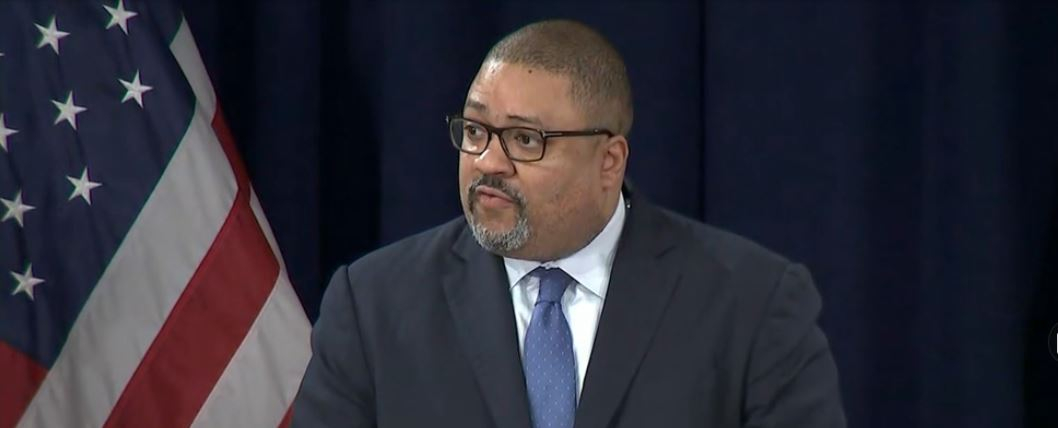
Progressive New York DA Alvin Bragg presented his case against Donald Trump. Unfortunately for him, even the liberal media has pointed to the pitfalls in the case.

Alvin Bragg’s 2020 campaign for New York County DA included a promise to “get Trump.” He is trying to deliver on his pledge by filing a pile of charges against the former President. Unfortunately, even the liberal press, known to turn cartwheels defending progressive DAs like Bragg, is skeptical.

Very skeptical.

Vox explains the root of the skepticism in its article of April 4, The dubious legal theory at the heart of the Trump indictment, explained. A few words can summarize:

“The actual felony counts arise out of allegedly false entries that Trump made in various business records in order to make the payment to Daniels appear to be ordinary legal expenses paid to Cohen.

But Bragg built his case on an exceedingly uncertain legal theory. Even if Trump did the things he’s accused of, it’s not clear Bragg can legally charge Trump for them, at least under the felony version of New York’s false records law.”

The HuffPost, while seemingly expressing hopeful thoughts of a Bragg success, states in its April 4 article How The Manhattan District Attorney Ended Up Charging Donald Trump With Felonies,

“There are potential pitfalls for DA Alvin Bragg in the legal theory he is using to charge the former president with 34 felony counts.”

Conservative Washington Free Beacon seems to have had a field day quoting liberals in its article of April 5, Even the Liberal Media Aren’t Buying Alvin Bragg’s Bogus Trump. Possibly the best quote is,

“[Bragg is] plunging forward with a premise that has given pause to even some of Mr. Trump’s toughest critics.” — Charles Savage, New York Times

And there is more.

Trump is accused of violating a state law that makes it a crime to falsify business records with the intent to defraud, specifically to conceal another crime. The concealment of another crime turns the misdemeanor of falsifying business records into a felony. A felony conviction is what DA Bragg wants, even if he must stretch facts and laws. And stretch he does.

  • The alleged other crime is influencing the outcome of the 2016 presidential election by arranging for hush money to keep two women from divulging their affairs with Trump. But Trump was running for a federal office, so it is questionable whether Bragg can bring state charges based on an alleged federal violation.
  • Bragg claims Trump violated a New York election law that makes it a crime to conspire to promote a candidacy by unlawful means. But this law is not mentioned in Bragg’s charges.
  • Trump’s final payment of hush money was in 2017. The statute of limitations for the felony charge of falsifying records to conceal another crime is 5 years. The statute of limitations for the misdemeanor charge of falsifying records is 2 years.
  • Trump’s former lawyer, Michael Cohen, made the hush money payments on behalf of Trump, and Trump then reimbursed Cohen, calling the reimbursement “legal expenses.” The Feds charged Cohen with violation of campaign finance law. But the legality of the charge was never tested in court since Cohen quietly went to prison without contesting the charge. Trump could challenge the legality of the charge now. If the hush money payments are not deemed illegal, then there is no violation of campaign finance law for Bragg to hang his felony charge on.

One could wonder why bring dubious charges.

DA Bragg is simply following a script prescribed by those who do not wish their long-standing power disturbed by Trump: just keep throwing stuff at him until, 1) he quits, or 2) voters can no longer stand the turbulence and want Trump gone from public life.

It really does not matter what is thrown – a lineup of accusing ladies (we are talking back in 2015), claims of Islamophobia, impeachments, treason, inciting violence, too many Tweets.

In all fairness, it should be mentioned that Donald Trump’s penchant for creating chaos provides good cover for the extreme actions taken against him. However, it should also be mentioned that Trump supporters view chaos as means to reform. Alvin Bragg may have just helped to ensure Donald Trump’s return to the Presidency.

Pictured: New York County District Attorney Alvin Bragg announcing his charges against former President Donal Trump.

Biden’s 2024 Budget: 5 loaves and two fish

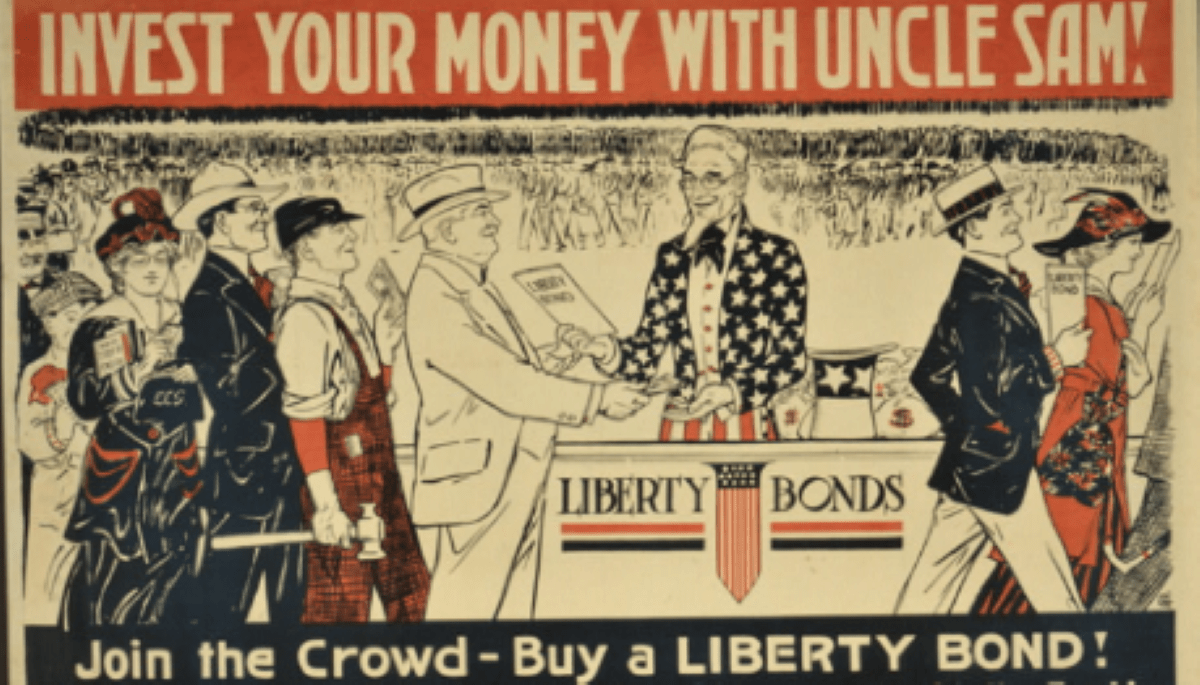
The current trajectory of the U.S. national debt could be attributed to Keynesian Economics or to Modern Monetary Theory. However, a more accurate description would be Kicking the Can Down the Road.

Annually, our national leaders repeat the ritual: The President presents a budget, Congress frets over it, after a lot of fretting the budget is adopted, and a couple of trillion dollars are added to the already unsustainable national debt.

Democrat President Joe Biden presented his generous $6.8 trillion spending plan on March 9, 2023. $4.7 trillion in taxes on corporations and high earners is also in the budget. As is a promise to cut deficits by $3 trillion over the next 10 years. Republicans controlling the House of Representatives immediately declared the budget dead on arrival.

Many articles have been written on how this budget would achieve its goal of reducing deficits (the shortfall between revenues and expenditures: $722.6 billion so far this fiscal year). Some have pointed that this budget will not reduce the national debt (the accumulation of years and years of deficits: $31.4 trillion as of 03/16/23).

Here, it will suffice to say that Jesus fed 5,000 people with 5 loaves and two fish (John 6:1-14), and perhaps President Biden truly believes he can accomplish something similar.

Barring miracles, can the U.S. sustain its current debt?

In its Financial Report posted on January 31, 2023, the U.S. Department of the Treasury, Bureau of the Fiscal Service, said the following,

The current fiscal path is unsustainable … The debt-to-GDP ratio was approximately 100 percent at the end of FY 2021, and under current policy and based on this report’s assumptions is projected to reach 701 percent in 2096.

The national debt is the nation’s credit card.

Just like an individual’s credit card, the national debt can avoid immediate full payment of obligations. Also, just like an individual’s creditor (the bank or credit union that issued the credit card), creditors that hold U.S. debt (China, for instance), will not lend indefinitely. At some point, creditors start worrying about losing their money and stop lending.

Credit card companies watch your credit balance in relation to the money you said you make. This will give them an idea whether you can pay down your balance or not. Creditors of the United States do the same. They watch the U.S. national debt as a percentage of the U.S. Gross National Product. By traditional metrics, when the Debt to GDP ratio reaches 77%, its time to worry. The U.S. Debt to GDP at the end of the 4th quarter 2022 was 120%. When there is not enough money in the kitty to pay creditors, “full faith and credit” does not mean much.

How about infrastructure and benefits?

The higher the national debt, the more revenue goes toward paying interest on the debt, and less revenue goes toward infrastructure or benefits like healthcare.

Lowering interest rates makes it easier to pay back debt but will unleash inflation. The current rising interest rates will suck money away from other government expenditures.

Why is it practically impossible to lower the national debt?

Politicians depend on donors and voters to keep their job. Dependence on government largess is widespread, and nobody likes to pay taxes.

The most a President and Congress can do is prepare a complex budget that promises to lower deficits over 8 or 10 years (which means nothing when a new President and new Congress comes into power), raise the debt limit each year, and hope that when the day of reckoning arrives they will be long dead.

Accepted economic theories

The current trajectory of the U.S. national debt could be attributed to Keynesian Economics or to Modern Monetary Theory. However, a more accurate description would be Kicking the Can Down the Road.

Choosing life is admirable, but so is choosing mercy.

The rash of state anti-abortion laws popping up since the overturning of Roe v Wade has led to heartbreaking situations in which an expectant mother must carry a fatally abnormal baby only to bury him at birth.

When an ailment is rare, it is placed way down in everyone’s awareness list – unless the ailment strikes home. That situation has appeared and will continue to appear as a result of the rash of state anti-abortion laws popping up since the overturning of Roe v Wade.

A recent case in the news serves as example. A Florida expectant mother carrying a baby with a rare and fatal abnormality referred to as Potter syndrome, has found herself with no other choice than giving birth then surely burying her dead infant. This tragic scenario comes in the wake of Florida’s new law, “Reducing Fetal and Infant Mortality Act,” HB 5, passed by Florida’s Legislators in 2022 and signed by Governor Ron DeSantis.

Potter syndrome, present in 1 per 2000-5000 births, is considered fatal at or shortly after birth. The U.S. National Library of Medicine describes it as follow,

Potter syndrome is a fatal congenital disorder characterized by the changes in physical appearances of neonate due to oligohydramnios caused by renal agenesis and impairment. It is incompatible with life as neonates with Potter syndrome have pulmonary hypoplasia that leads to respiratory distress within an hour of birth.

In other words, babies with Potter syndrome have abnormal kidneys or no kidneys at all (bilateral renal agenesis), which prevents production of the amniotic fluid that keeps them afloat in their mother’s uterus and helps organs, including lungs, develop. Underdeveloped lungs (pulmonary hypoplasia) mean babies cannot breathe outside the womb and die.

Suspicion of anomalies may arise during a standard first-trimester ultrasound performed around 4-12 weeks of pregnancy. In the case of the Florida mother in question, a standard ultrasound performed at 11 weeks and 6 days did not show any abnormality. Her second-trimester ultrasound (usually, these are high-resolution anatomy scans) at 23 weeks did show lack of amniotic fluid and several abnormalities. A third diagnostic scan at 24 weeks showed the baby had no kidneys, and the diagnosis of Potter syndrome was made.

Although this was a very much wanted baby, the mother, Deborah Dorbert, and her husband Lee Dorbert decided to end the pregnancy, since they were given no hope their baby would survive past a few hours after birth. They thought that although the pregnancy had gone past the 15-week limit imposed by HB 5 – note the heartbreaking diagnosis was done at 24 weeks of pregnancy — the law did provide for an exception in the case of “fatal fetal abnormality.”

However, the Dorbets’ doctors felt they needed to investigate the legal ramifications of HB 5. After doing so, they decided the wording of HB 5 was uncomfortably unclear, and refused to perform the abortion.

Indeed, unclear it is, whether by sloppiness or design. HB 5 says:

(1) … A physician may not perform a termination of pregnancy if the physician determines the gestational age of the fetus is more than 15 weeks, unless one of the following conditions is met …
(c) The fetus has not achieved viability under s. 390.01112 and two physicians certify in writing that, in reasonable medical judgement, the fetus has a fatal fetal abnormality.

Section 390.01112 of the Florida Statutes requires that a physician perform and record exhaustive examinations to determine fetus viability. Should the fetus be viable, the physician must exercise as much care and professional skill as he would delivering a baby not intended for abortion.

Abortion laws like HB 5 are more form than substance.

Laws like HB 5 have the buzzwords – life of the mother, fatal fetal abnormality – but not the intent of finding optimal medical outcomes.

Diagnostic tests that can accurately detect fetal abnormalities are usually done around 18-20 week of pregnancy; HB 5’s prohibits abortion after a fetus’ gestation age of 15 weeks. Such a situation is even more unsound in states that have adopted “heartbeat” laws, with limits around 6 weeks of gestation.

HB 5 requires exhaustive reporting that could prompt physicians to err on the side of not performing a medically necessary abortion: “The physician must document in the pregnant woman’s medical file the physician’s determination and the method, equipment, fetal measurements, and any other information used to determine the viability of the fetus.”

These laws are more Christian evangelical religion than medicine

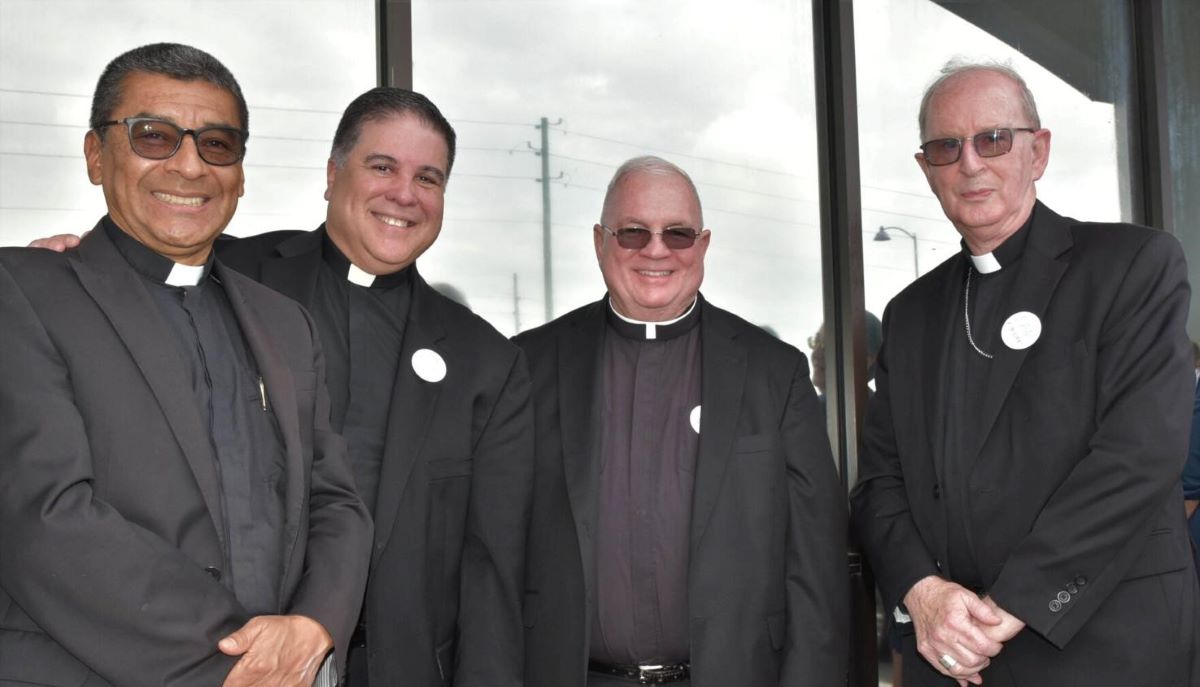
The U.S. Constitution clearly separates secular laws from religious laws in the First Amendment. Yet, at the signing ceremony of HB 5 into law, Governor DeSantis said, “This will represent the most significant protections for life that have been enacted in this state in a generation.” Several religious leaders attended the ceremony and expressed delight at HB 5 becoming law.

“I see this as the beginning of what is yet to come. It is a step in the right direction..” Leidy Rivas, director of Catholic Charities of Central Florida’s Culture of Life office. April 21, 2022.

Not all religions interpret “life” as Governor DeSantis does, and several religious leaders have filed suit against HB 5.

The Rev. Tom Capo of the Unitarian Universalist Congregation of Miami, whose motion now rests with Florida’s 11th Judicial Circuit, has skillfully pointed out that HB 5 fails “to account for the diverse religious views of many Floridians. . . whose faith leads them to take a very different view of when life begins and to counsel abortion.” New legal challenges to Florida’s abortion law, MSNBC, October 18, 2022.

Respect for life, even unborn life in the view of evangelical Christianity, is admirable. But so is mercy.

Luke 6:36 “Be merciful, even as your Father is merciful.”

Leaving a mother no choice but to give birth to her baby only to bury him is far from merciful.

Who is more racist, Song of the South or Disney?

Complex situations can be overwhelming, so we reduce all the variables into one attribute, then we use an instrument we happen to have at hand to deal with that one attribute. If all we have is a hammer, the complex variables become a nail. If all we have is the word “racism” to describe the African American experience, a lot of things will become “racist.”

Disneyland and Disneyworld are dismantling Splash Mountain starting in 2023. Even though renovations continuously take place in the kingdoms with new themes and new technology, the demise of Splash Mountain carries an additional verdict – Splash Mountain is racist. Such verdict is good reminder of psychologist Abraham Maslow’s famous quote, “If the only tool you have is a hammer, it is tempting to treat everything as if it were a nail.”

Maslow used the hammer and nail example to explain the theory of reductionism as it applies to psychology. Complex situations can be overwhelming, so we reduce all the variables into one attribute, then we use an instrument we happen to have at hand to deal with that one attribute. If all we have is a hammer, the complex variables become a nail. If all we have is the word “racism” to describe the African American experience, a lot of things will become “racist.”

Thus, Splash Mountain’s complex history becomes racist

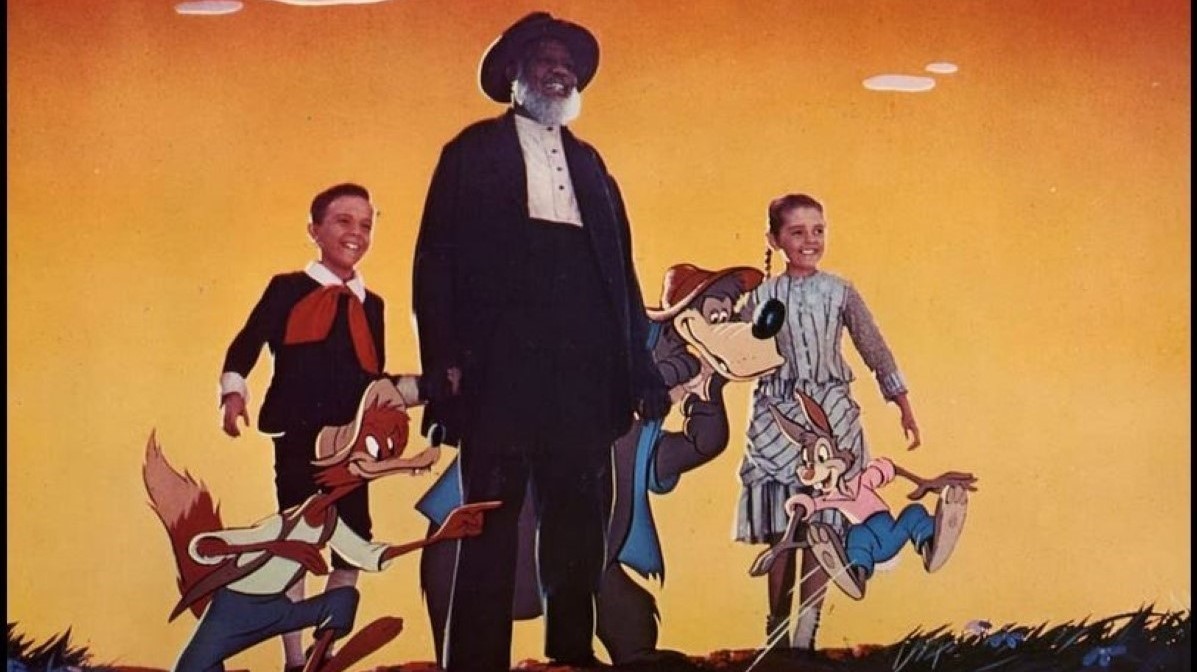
The story behind Splash Mountain is Walt Disney’s Song of the South, a 1946 musical film that combined live action and animation to present an idyllic Reconstruction Period American South and showcase the stories of Uncle Remus.

True, the post-Civil War Reconstruction Period was certainly not idyllic. Freed slaves had little or no education easily conducive to independent living, many plantation owners suddenly found themselves without labor, former slaves that stayed in plantations as sharecroppers were trapped in a new form of servitude.

So, do we succumb to reductionism, label Song of the South racist, and hammer it into oblivion? Or do we endeavor to understand the complexities of life during Reconstruction? Do we accept the film as a work of art that broke some racial ground in its day?

There is a litany of reasons why Song of the South should be remembered

Classic Walt Disney movies like Snow White, Pinocchio, and Sleeping Beauty are well remembered. So should Song of the South. Here are some interesting things about the film.

* Back in 1946, by releasing Song of the South, Walt Disney helped preserve 23 of the 185 Uncle Remus folktales recorded by historian and journalist Joel Chandler Harris.

As a young white newspaper apprentice, Harris lived in a Georgia plantation during the Civil War years of 1862 through 1866. There he heard many folk tales from slaves. Later he created the fictional character Uncle Remus as a vehicle for telling the stories, and in 1880 Harris published his first book, Uncle Remus: His Songs and Sayings, The Folklore of the Old Plantation. The book was a creative and financial success. Songs and Sayings was followed by many other Uncle Remus and Southern story books.

* Today, a 2019 Mcallister Editions The Complete Tales of Uncle Remus, a compilation from eight Harris Chandler books, is available of Amazon (1,768 ratings and 4-1/2 stars) for $12.96. An Appleton and Company 1881 edition of Uncle Remus: His Songs and Sayings can be purchased at Abe Books for $7,500 – $15,000, depending on condition of the book.

Given the availability and popularity of the books upon which Song of the South is based, the discomfort with the movie is difficult to understand. Perhaps it is best assumed that people who purchased and rated these books accepted them as good written art, at the same time understanding the stories’ time and place.

* In 1948 James Baskett was the first African American male actor to win an Oscar of any kind and the first to win for a leading role (Hattie McDaniel won in 1939 for her supporting role of Mammy in Gone with the Wind).

Although Baskett’s Oscar for his role as Uncle Remus in Song of the South was a “Special Award,” an Oscar presented for outstanding work that in the eyes of the Academy does not fit under any of the standard Oscar categories, it was still a significant “first.”

James Baskett’s pioneer work in Song of the South is at the level of other African American film pioneers, like Hattie McDaniel, Sidney Poitier (first Best Actor Oscar, Lilies of the Field, 1963), and Halle Berry (first Best Actress Oscar, Monster’s Ball, 2002).

* Unlike James Baskett, Zip-a-Dee-Doo-Dah, Song of the South’s theme song, did win a “real” Oscar in 1948 for Best Original Song. It’s a happy, beautiful tune worthy of remembrance.

* Replacing or updating theme rides – or any other product – is different from censoring.

The Disney Company has made numerous animated and live-action films since the 1940s, so of course the old needs to make room for the new. Song of the South has not been re-released since 1986 because supposedly it is “racist.” But, let’s look at the last time some other Disney classics were released in U.S. theaters: Snow White 1993, Bambi 1988, Dumbo 1976, and Cinderella 1987.

The American past, good and bad, is part of who we are today. Some of us focus on the good legacies of our human and therefore flawed past. Others focus on the flaws alone, thereby losing all sense of perspective or balance – in essence, seeing what is not there. Here are a coupe of examples.

* The Tar Baby in one of Uncle Remus stories is not a disrespectful representation of a Black baby, but a doll of sticky tar made by Br’er Fox to entrap Br’er Rabbit. Most people figured that out, as evidenced by the usage of “tar baby” as a sticky situation difficult to extricate oneself from.

* The “slaves” in the Joel Chandler Harris stories were no longer slaves, since the stories take place during the post-Civil War Reconstruction period. Although Walt Disney chose not to specify when exactly the stories in Song of the South take place, we can look at when Chandler Harris says they took place. We can also notice that when Miss Sally asks Uncle Remus not to tell any more stories to Johnny (because Johnny is too young and might get confused), Uncle Remus is so sad that he prepares to leave the plantation. Slaves didn’t usually walk away from plantations.

Seeing what is not there is one of the results of reductionisn.

Hopefully, the current practice of reducing complex situations into a matter of race will soon end. Other fads, like hula hoops and pet rocks, did eventually fade away. There’s hope.

Democracy is at risk from climate experts

The recent UN conference on climate change was a reminder: We the people do not chose the delegates we send to UN conferences, we do not choose the issues the conferences discuss, we do not have any say on what our delegates commit us to do. Therein lies the threat to Democracy.

Three weeks ago, President Joe Biden declared that “in our bones we know democracy is at risk.” He attributed the threat to Trump acolytes “running for every level of office in America.” Well, no mayhem ensued after November 8.

However, a bigger threat that probably few heard of did arise soon after. On November 6, 2022, the world’s elite once again gathered at the 27th annual United Nations Conference of the Parties (COP27). This time, the conference’s focus was on methods by which the 197 participating countries, including the U.S., should implement the ambitious UN-prescribed climate action plan.

And therein lies the threat to U.S. democracy.

Delegates to the COP27 gathering implicitly agreed to accept the prescribed science behind the climate action plan, identify and remove barriers to implementation of the plan, require changes in corporate behavior to advance the plan, and compel changes in investment to finance the plan. Specific examples were given during the conference:

* Climate science is what the Intergovernmental Panel on Climate Change (IPCC) prescribes based on its research.

* Barriers to implementation of the climate action plan include oil and gas industry lobbying, dominant modes of transportation, and counties without sufficient capital.

* Corporate behavior in need of change include compensation based on production rather than climate action, lack of specific means of accountability for lack of climate action, resistance to a universal repository for listing specific corporate advances in climate action, and the mere existence of fossil fuel industries.

* Investment needs to move away from fossil fuels and into renewable energy. Developed nations need to pay into a fund designed to assist climate action by less developed nations. Financial institutions need to reduce barriers to financing climate action, such as interest rates or development plan characteristics.

Most of the action points above cannot be binding but are implicitly accepted by delegates. The more explicit point is the establishment of a fund to help poorer nations deal with the costs of climate-induced disasters. At COP27, there was agreement to establish the UN Loss and Damage Fund, details of which will be worked out next year.

Why is this seemingly intelligent climate action plan a threat to U.S. democracy?

The COP27, regardless of any sincere and worthy intentions of participants, is nevertheless a body not chosen by or even widely known to U.S. voters. The bedrock of democracy is the vote of the people. Through their vote on candidates and issues, voters express what they want their country to be.

Since the birth of the United Nations, concerned individuals have expressed uneasiness. We the people do not chose the delegates we send to UN conferences, we do not choose the issues the conferences discuss, we do not have any say on what our delegates commit us to do. We can vote on proposals on our ballots but may or may not readily associate them with UN pledges.

Concern in some circles extend even deeper.

A threat to our political structure – call it democracy or representative republic – for the sake of saving us from climate disaster is bad enough. However, a threat disguised as climate action for the sake of ideology is worse.

Here are a couple of interesting excerpts from recent publications:

* The Lew Rockwell blog on November 2, 2022, published a piece by Thomas DiLorenzo that well encapsulates some people’s concern about the relentless talk of climate action. DiLorenzo says,

Years ago my friend the late Murray Weidenbaum, the chairman of President Reagan’s Council of Economic Advisors, told a story of how he had a conversation with Barry Commoner, one of the founding fathers of the modern enviro-commie movement. (I believe they both taught at Washington University in St. Louis). Weidenbaum said to him (paraphrasing from memory): You guys are against oil, natural gas, coal, and nuclear power. Without energy, you cannot have a capitalist market economy.

Commoner’s response was to sit back and smile. Weidenbaum told me that he interpreted Commoner’s expression as saying “exactly right.

* Greta Thunberg, the high-profile teen climate activist, attended a Southbank Center event to promote her new collection of essays, The Climate Book. During her speech and subsequent interview with journalist Samira Ahmed, Ms. Thunberg stated that it is too late for individual action, and saving the planet now requires system-wide transformation.

We need to change everything because right now our current system is on a collision course with the future of humanity and the future of our civilization.

[the current system is] “defined by colonialism, imperialism, oppression and genocide by the so-called global North to accumulate wealth that still shapes our current world order.

As an aside it is useful to note that Greta Thunberg is aware that changes are unlikely without people’s (supposedly including voters’) demand for such changes. She made that point several times during her interview with Samira Ahmed. Whether COP27 participants were equally cognizant, is not clear.

Additional concerns regarding ideology include a perception of bias.

Bias is an unavoidable feature of the human mind. Sometimes it is unintentional and unperceived, and at times it is intentionally baked into ideologies.

Right-leaning ideologues tend to dismiss the negative impacts of carbon dioxide and/or ignore the association between the rise of carbon dioxide in the atmosphere and the rise of industrialization. Left-leaning ideologues tend to blame climate change for events that could be ascribed to other causes (residential encroachment into fire zones during the last decade as contributors to forest fires, for example), and tend to limit themselves to prescribed remedies.

At present, left-leaning ideologies have the upper hand on matters of climate change.

Left-leaning bias focuses on elimination of fossil fuels. But the plan lacks sufficient focus on the thousands of products derived from fossil fuels. Lots of talk there is about wind turbines, solar panels, and electric vehicles; but not much talk about effectively replacing polyester clothing, PVC pipes, nylon ropes, plastic toys, or small appliance casings.

Also, left-leaning bias ignores the harm derived from disposal of the large energy-storage batteries required in renewable energies and electric vehicles. It is hard to tell percentage of components that are recycled, although some say 5%. The rest is buried and left to sip into soil and waterways.

Left-leaning bias against capitalism and its profit motive fails to acknowledge that government cannot produce capital. People (including those that work or invest in corporations) produce capital from the profits they make. Focusing on climate action instead of profits will reduce capital. That is fine, as long as we all agree that climate action is more important than the standard of living to which some of us have grown accustomed.

Faced with the conundrums listed above, do we simply do nothing?

Doing nothing about the documented acceleration in the level of global warming since the start of the industrial revolution is not a wise choice. However, neither is risking democracy – which we keep claiming is so important to us – for a promise of safety from anticipated climate disasters.

That is not to say that people who are willing to exchange democracy for a promise of safety should be prevented from seeking that option. They must be free to do so if democracy is to be upheld!

Those who prefer democracy need to be free to choose that preference as well, which is not something by which climate activists like Greta Thunberg abide, or which our “official” climate experts want to allow. And, by the way, who are these official experts?

The United Nations Intergovernmental Panel on Climate Change (IPCC) was created in 1988 to provide policymakers with regular scientific risk assessment on climate change, formulate options for adaptation and mitigation, and determine the state of knowledge on climate change. In other words, the IPCC is the poo-bah of climate science. Suggest other scientific avenues, and risk accusation of spreading misinformation.

But there should be competition with the IPCC

Elon Musk, who seems to be rapidly catching up with former president Donald Trump as the Left’s most prominent thorn, on February of 2021 funded through his foundation a four-year global competition to award innovators that demonstrate ways to pull carbon dioxide from the atmosphere or oceans and sequester it durably and sustainably. The idea is not only to fund work on carbon sequestration, but also to incite other investors.

It took NASA only 10 years to figure how to put a man on the Moon and safely bring him back to Earth. It has been 57 years since the first climate conference in 1979 (Geneva, February 12-23, 1979), and according to COP27 participants, global warming is still taking place, disasters are increasing, and not much has been put in place to reverse the trend.

COP27 participants and experts are correct in their assertion it is time for structural changes. However, given the UN’s 57-year failure to bend the curve of global warming, perhaps such changes could include giving up on the UN and focusing more on hyping the work NASA has done on carbon conversion and sequestration, and the awards EPA has established for credible sustainable methods of reducing and sequestering carbon.

If U.S. voters wish to help poor regions with mitigation of disasters due to climate change, voters can choose candidates that promise to do so. Primary focus, however, should be on developing cost-effective technology that nations poorer or richer can use if they choose to do so to curb emissions and sequester carbon dioxide already present in the atmosphere.

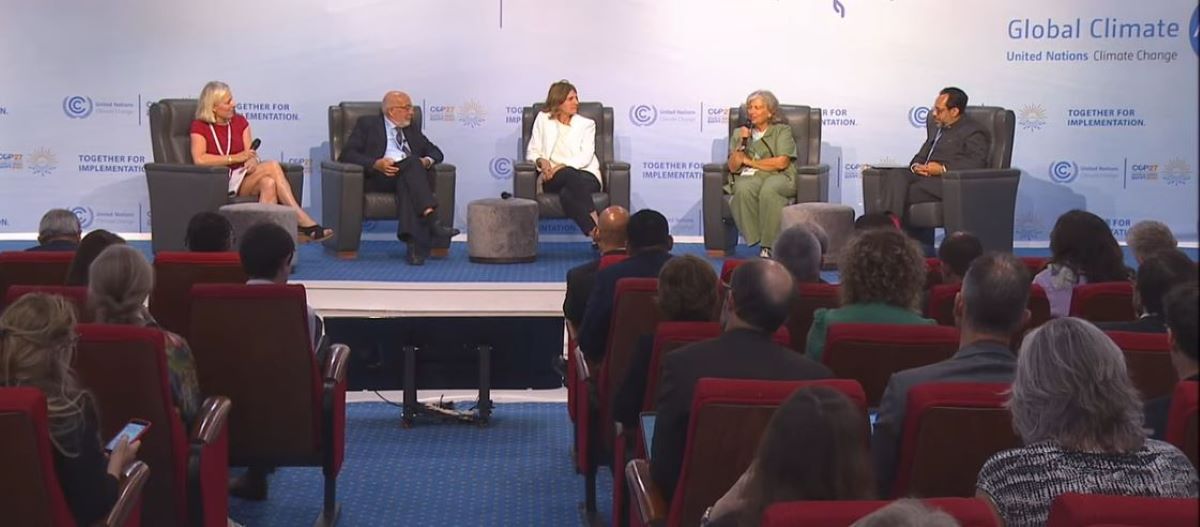
Pictured: YouTube excerpt of COP27 Recommendations of Expert Group on Net-Zero Commitments of Non-state Entities. Non-state entities include private businesses, agencies and financial institutions. The panel of experts recommended guidelines for explicit, required, equitable and just actions. It also recommended transparency via a central repository where progress could be viewed and evaluated.

November 11, 1918

November 11 is Veterans Day. This commemorative day was once called Armistice Day, the day WWI ended. At war’s end came the infamous Paris Peace Conference that created a “peace to end all peace.”

On November 11, the United States celebrates Veterans Day. This same day is called Remembrance Day in most of the British Commonwealth. New Zealand, Belgium and Serbia call the day by its original name, Armistice Day. On Veterans Day we honor the men and women who have served in the U.S. armed forces. Prior to 1954, before Congress changed the holiday’s name, we observed on November 11 the end of World War I. Or more specifically, we remembered the horrific carnage that killed 9 million soldiers and wounded 21 million.

We also remembered, or should have remembered, on Armistice Day the questionable excuses for the start of WWI. How did WWI start? There are probably as many answers to that question as there are historians. But here is a likely scenario offered by Dr Heather Jones, associate professor in international history, LSE.

Relatively common before 1914, assassinations of royal figures did not normally result in war. But Austria-Hungary’s military hawks – principal culprits for the conflict – saw the Sarajevo assassination of the Austro-Hungarian Archduke Franz Ferdinand and his wife by a Bosnian Serb as an excuse to conquer and destroy Serbia, an unstable neighbour which sought to expand beyond its borders into Austro-Hungarian territories. Serbia, exhausted by the two Balkan wars of 1912-13 in which it had played a major role, did not want war in 1914.

Broader European war ensued because German political and military figures egged on Austria-Hungary, Germany’s ally, to attack Serbia. This alarmed Russia, Serbia’s supporter, which put its armies on a war footing before all options for peace had been fully exhausted.

Ambitions did not stop with European expansion but extended into the Middle East. In the world of 1914, the Ottoman Empire ruled Arabia, Bedouin leaders wanted self-rule, and European leaders wanted to divide Arab territories among themselves.

Thus, the British offered self rule and control of Syria to Arab leaders, in exchange for their expelling the Ottomans. This arrangement was made in ten letters exchanged from 1915 to 1916 between Hussein bin Ali, Sharif of Mecca and Lieutenant Colonel Sir Henry McMahon, British High Commissioner to Egypt. Sharif Hussein took the letters seriously and defeated the Ottomans in 1918. Events after the end of WWI bring into question whether Lieutenant Colonel McMahon took the letters to heart as well.

At war’s end, nearly 30 nations gathered at the Paris Peace Conference, including a token Arab Delegation, supposedly to iron out terms of peace. However, three of the Big Four – Prime Ministers David Lloyd George of Great Britain, Georges Clemenceau of France, and Vittorio Emanuele Orlando of Italy – had already decided to divide territories in Europe and the Middle East between themselves.

They had already also decided, encouraged by Clemenceau, to dispense ruthless punishment on Germany.

As for the fourth of the Big Four, United States President Woodrow Wilson, who hoped for a new era of cooperation and self-rule, British economist and delegate to the Conference, John Maynard Keynes referred to him as “a blind and deaf Don Quixote.” True, Wilson was slow to understand that attendees of the Paris Peace Conference were not interested in his 14 Points for Peace, or for that matter, apparently not interested in peace at all.

Germany was almost completely disarmed and required to pay reparations on a scale calculated to beggar her population for a generation. She lost 10 per cent of her population, 15 per cent of her agricultural production and 20 per cent of her iron, coal and steel.

Thus, the Weimar Republic, born in 1919 in the throes of German defeat and resentment, gave rise to Adolph Hitler only 14 years later.

In the Middle East, mandates created spheres of influence under which Syria and Lebanon went to the French, and Palestine and three Ottoman provinces of Mesopotamia – transformed into Iraq – went to Great Britain. This arrangement unraveled by the end of WWII. France retreated from Syria and Lebanon in 1946 after uprisings by the local inhabitants. Britain withdrew from Palestine in 1948, after partition and creation of new states of Israel and Jordan.

The British protectorate of Iraq formed after WWI went through an interesting iteration. Concerned about unrest, Britain established a kingdom in Iraq in 1921 and placed Faisal I bin Al-Hussein as King. That strategy calmed the populace a bit and pacified Faisal. Although not welcomed with open arms, King Faisal I proved an effective and unifying leader.

Faisal was the son of the Sharif of Mecca Hussein bin Ali (mentioned earlier), the Hashemite leader who started the Arab Revolt against the Ottoman Empire. Emir Faisal and British Intelligence Officer Thomas Edward Lawrence waged relentless guerilla warfare against the Ottomans, defeating the colonizers in 1918. The Emir was confident Britain would keep its promises, he would be the recognized King of Syria, and soon the Arab-speaking world would be united under his leadership. Since Britain decided otherwise, Faisal had to be content with being King of Iraq, where he ruled until his death in 1933.

At war’s end, T. E. Lawrence was skeptical but hopeful. Sadly, his skepticism proved correct and his hopes futile. A passage from his memoir Seven Pillars of Wisdom, originally published in 1926, perfectly describes his and Emir Faisal’s struggles for naught.

We were fond together because of the sweep of open places, the taste of wide winds, the sunlight, and the hopes in which we worked. The morning freshness of the world-to-be intoxicated us. We were wrought up with ideas inexpressible and vaporous, but to be fought for. We lived many lives in those whirling campaigns, never sparing ourselves: yet when we achieved and the new world dawned, the old men came out again and took our victory to remake in the likeness of the former world they knew. Youth could win, but had not learned to keep, and was pitiably weak against age. We stammered that we had worked for a new heaven and a new earth, and they thanked us kindly and made their peace.

The Treaty of Versailles peace was forged by the old men, as were many other agreements and mandates during and in the wake of WWI. Much of the maladroit world these old men created in their own likeness is still here today.

T. E. Lawrence has another often quoted passage in Seven Pillars of Wisdom:

All men dream: but not equally. Those who dream by night in the dusty recesses of their minds wake up in the day to find it was vanity, but the dreamers of the day are dangerous men, for they may act their dreams with open eyes, to make it possible.

Perhaps this November 11, 2022, Armistice Day of remembrance, might inspire dreamers of the day throughout the world to challenge the bellicose world we have inherited, and ask a fundamental question, is war really necessary?

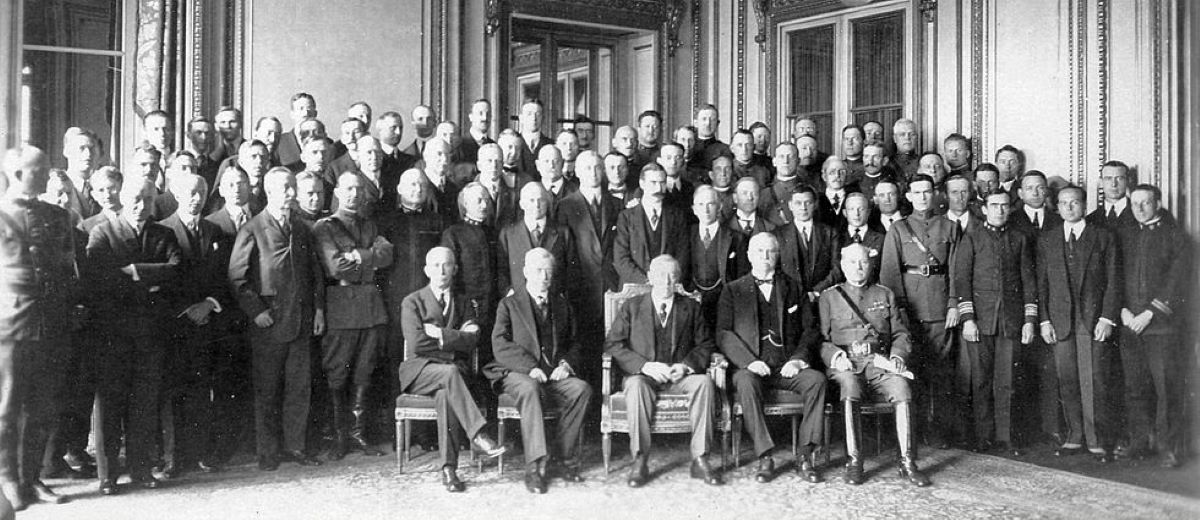
Pictured: Select delegates to the Paris Peace Conference of 1919

No more “cowardly wokeness” for Tulsi Gabbard

To no one’s surprise Tulsi Gabbard — former Congresswoman, war veteran and Presidential candidate — has left the Democratic Party. She made the announcement during her first podcast in what she hopes will be the Tulsi Gabbard Show. Gabbard’s long list of ills encouraged by the new Democrats is worth noting.

On October 11, 2022, former Congresswoman Tulsi Gabbard announced she is leaving the Democratic Party. After 20 years in the party, Gabbard said,

I can no longer remain in today’s Democratic Party. It’s now under the complete control of an elitist cabal of warmongers driven by cowardly wokeness, who divide us by racializing every issue and stoking anti-white racism, who actively work to undermine our God-given freedoms enshrined in our Constitution.

Tulsi Gabbard’s exit does not come as a surprise, since she has often and emphatically pointed to the Democratic Party’s devolution. She made her unsurprising announcement during the first podcast of what Gabbard hopes will be The Tulsi Gabbard Show. She also summarized the features of the new Democratic Party that contributed to her decision.

Before the new left brands her “anti-government” or attaches other customary labels used on non-compliant individuals, Tulsi Gabbard reminded viewers of her podcast of the oath she took as a member of the U.S. Army Reserve (with deployments to the Middle East) and as a member of the U.S. Congress (U.S. representative for Hawaii’s 2nd congressional district from 2013 to 2021). The oath to defend the U.S. Constitution is an oath to defend the principles of individual liberty and God-given individual rights.

As Gabbard sees it, the features of the new Democratic Party are diametrically opposed to the principles enshrined in the Constitution, and she vigorously lists those features in her introductory podcast. Here is a brief summary of the most salient points.

* In the Republic the Founders envisioned, the people through their elected representatives governed for the benefit of the people. The new Democrats want a government by the elites for the benefit of the elites.

* The old Democratic Party was the liberal, live and let live party that stood in opposition to the more conservative Republican Party. The new Democratic Party leads the cancel culture, in which fear rules – conformity is accomplished by fear of losing one’s job, fear of our kids not getting into good schools, fear of being cancelled, fear of violence.

* The rule of law is essential to a peaceful society. The new Democratic Party calls for defunding the police, electing progressive District Attorneys, unduly protecting criminals, questioning the legitimacy of courts when they do not rule according to the new Democratic Party principles.

* The Constitution’s original ten Amendments, referred as the Bill of Rights, are intended to protect the people from government’s restrictions on speech, religion, self-defense, and assembly. It also protects people’s private property and personal affairs. Leaders of the new Democratic Party are comfortable calling for the abridgement of these rights. Prime example is President Joe Biden’s attempt to establish a Disinformation Governing Board. Another is Democrat-supported credit card tracking of purchases at gun shops.

* Title IX of the Civil Rights Act was signed into law on June 23, 1972. The purpose of this act was to give women equal opportunities to those of men in the fields of education and sports. The Biden Administration proposes changing Title IX’s aim from prohibiting sex discrimination to prohibiting gender identity discrimination. If passed, this proposal will settle current controversies. Whether women showering or competing in sports with biological males will benefit from this change in Tittle IX depends on one’s ideology – certainly not on objective truths.

* The denial of the existence of objective truth removes boundaries. Truth becomes whatever those in power say it is.

At the end of her podcast, Tulsi Gabbard suggests that those who are opposed to the ills she listed and opposed to government by and for the elites, act by leaving the Democratic Party.

Party knows no impulse but spirit, no prize but victory. It is blind to truth, and hardened against conviction. It seeks to justify error by perseverance, and denies to its own mind the operation of its own judgment. Thomas Paine, The Opposers of the Bank, 1787.

Perhaps it is better to vote for candidates who understand the value of the legacies of our Founders as well as the Founders’ shortcomings, than vote the Party line.