Paycheck to paycheck America

Increasingly, since the 1970s Americans get stuck in survival mode, rather than thrive mode. More and more workers are living paycheck to paycheck. What happened?

There is no longer denying that the rich are getting richer and the poor are getting poorer. The once iconic American middle class has all but disappeared. There is, however, plenty of denying contributing events – and therefore solutions – for such a pickle.

There were plenty of events. Here are some, certainly not all:

The 1970s saw an economic watershed.

From the end of WWII until the 1970s, incomes of the rich, not so rich, and poor rose around the same pace. Household savings rates were around 7 to 10%, a healthy percentage that allowed people to build capital and improve their lot.

The 1970s saw the start of a widening income, savings, and wealth gap. Today’s average household savings rate is 4.5%. Incomes of the less-than-rich tend to cover household expenses and not much else. Moving up the economic ladder under such circumstances is a nearly impossible feat.

The 1970s also saw a cultural watershed.

Lyndon Johnson’s Great Society was a herculean effort to deal with poverty through social welfare. Congress passed legislation enshrining President Johnson’s agenda between 1964 and 1968. By the 1970s public assistance was culturally accepted as the way to improve the lot of the poor.

That is still the case today. Legions of government programs, non-profits, and billionaires’ tax-advantaged foundations exist today to end poverty.

1971 saw the birth of fiat money.

The Great Society social programs that started in 1964, the Vietnam War (1955 – 1975), and a Federal Reserve that did not respond forcefully enough to unbridled government spending and rising prices, all contributed to inflation that reached 5.89% in 1969.

Such level of inflation decimated the value of the U.S. dollar, and a run on U.S. gold appeared probable. So, President Richard Nixon ended the country’s gold standard in 1971 – releasing the fiat money genie out of the bottle!

Without the market restraints inherent in a gold standard, government folks became free to borrow and spend. And free to keep interest rates down to facilitate payment in the ever increasing national debt.

Sharp-eyed folks in the general population figured windows of low interest rates and cheap money allowed them to borrow, invest, and grow rich.

Technology helped.

In the olden days, stocks were considered risky business not suitable for average respectable people. However, as technology gave average respectable people the Internet, access to on-line accounts, apps, social media, and a dizzying array of asset classes, investment in intangibles was democratized.

Then came financialization.

An old working paper dated December 2007, by Thomas Palley, in conjunction with The Levy Economics Institute of Bard College, has a very good description of financialization. In Financialization: What is it and Why it Matters, Dr. Palley wrote:

“Financialization is a process whereby financial markets, financial institutions, and financial elites gain greater influence over economic policy and economic outcomes. Financialization transforms the functioning of economic systems at both the macro and micro levels.

Its principal impacts are to (1) elevate the significance of the financial sector relative to the real sector (2) transfer income from the real sector to the financial sector, and (3) increase income inequality and contribute to wage stagnation. Additionally, there are reasons to believe that financialization may put the economy at risk of debt deflation and prolonged recession.

Financialization operates through three different conduits: changes in the structure and operation of financial markets, changes in the behavior of nonfinancial corporations, and changes in economic policy.”

Basically, financialization says, why should a company bother with working to create better widgets or bother with managing a productive labor force. So much easier to make money from financial transactions like acquisitions facilitated by fiat money, stock buybacks to inflate value of outstanding shares, or speculation with today’s equivalent of puka shells– cryptocurrencies. What companies save on labor, goes to CEOs and shareholders.

On the other side, much of workers’ consumption changed from that based on wages to that based on debt. And looks like powers that be in the marketplace and in government are fine with that.

The rise of institutional investors followed.

Around the late 1970s, institutions like Vanguard, Fidelity Investors, and other fund managers popularized a variety of financial products, including mutual funds and 401-k management. This attracted investors, contributed to fund managers’ growth, and eventually resulted in institutional investors today accounting for about 80% of the volume of trades on the New York Stock Exchange.

Note that these institutions do not own the stocks and other instruments they manage. It is America’s wealthiest 1% that own 50% of stocks, while the 10% wealthiest own nearly 90% of stocks.

This level of shareholder power is bound to divert profits from labor to dividends and/or CEO compensation. Note that a large portion of CEO compensation today is in stock and tied to how well the CEO enriches the company’s shareholders.

Meanwhile, wars on poverty focus on social welfare.

Since the 1960s rivers of money have gone into social welfare. Most improvement, if any, in the lot of the poor has come from handouts. Lower-income earners have remained stuck in survival mode, rather than rise to thriving mode.

Certainly, there have been the relatively few that rose from very modest beginnings to wealth. But here we are talking about the average worker in the fast-food, home-health care, hospitality, and other lower-paying industries.

Included in handouts are government mandates such as minimum wage increases and rent control. These two mandates especially reveal the cynicism inherent in legislatures. Politicians surely have a modicum of knowledge of the realities of the marketplace, which they purposefully to ignore.

Surely, they must realize that when you increase people’s power to spend without an equal or greater increase in output, you end up with inflation. A 3% increase in the price of hamburger is not a big deal for the well to do, but very unfortunate for the poor.

Politicians must also realize that investors, like landlords, want a certain profit, and when you mess with that profit through rent control, they stop being landlords and go invest in something else. Fewer landlords mean fewer housing, and potentially more poor families living in their car or worse.

Awareness is the first step to cure

We cannot go back in time, but we can stop pretending handouts work.

Schools that teach not indoctrinate or coddle work, discipline works (in school and at home, for kids and for adults), work ethics work.

Cottage industries (stuff you make at home and sell) work. Fiscal responsibility at home and in government works (especially reducing the national debt before interest eats up all of GDP!). Politicians that promise wider opportunities for people to earn a living, not freebies and AI, work.

America is still the land people of over the world want to come to. But many American families must be wondering, “What happened to the Middle Class.”
We need to make our kids happy again

Today, our children and youth, coddled by parents and government, have shed the masters of the workhouses and acquired the masters of advertising and agendas.

School age children today exhibit greater emotional instability than in the past, seen since around the 1970s in poorer academic performance, inattention, incidents of violence, and suicides. Society’s response has been to significantly increase the number of mental health counselors present in schools, so far it appears to no avail.

To a hammer everything looks like a nail.

To the American Psychological Association, “With a growing mental health crisis among young people—a trend both exacerbated and illuminated by Covid—the need for school psychologists is multiplying.”

However, to a layperson with an open mind, there should be something amiss with this one-solution mindset, especially since it does not seem to be working. The “growing mental health crisis” did not develop in a vacuum – nothing does. Should we not look for what changed in the past few decades that might have contributed to the “crisis” and fix those variables?

Here are some likely candidates.

Bad Therapy: Let’s begin with the emphasis on mental health in schools – “trauma informed education” – that encourages inward-looking, self-awareness, and emotional skills. A common sense question should be whether “An individual is more likely to meet a challenge if she focuses on the task ahead, rather than her own emotional state. If she’s thinking about herself, she’s less likely to meet any challenge.” (How Bad Therapy Hijacked Our Nation’s Schools, The Free Press, 02/27/24.)

Clueless experts: “Experts” nowadays seem to come with an agenda, rather than with common sense. For example, when someone blames poverty and lack of sufficient services for the sad state of our youth, the question should arise, was there no poverty in the past?

Denatured foods: Nutrients in our foods feed our bodies, our brains, our energy levels, our well being. The detrimental effects of processed foods should be obvious to everyone. However, more insidious is the prevalence since the 1960s of denatured (meaning altered) fruits and vegetables, which contain significantly lower nutrient contents. In an effort to increase fresh produce yield, resistance to disease, storage life, transit capability, attractiveness, and other beneficial characteristics, farmers choose to grow hybrid varieties. Unfortunately, in nature we often lose one characteristic to gain another. (Industry Scandal: The Loss Of Nutrients, 07/20/24)

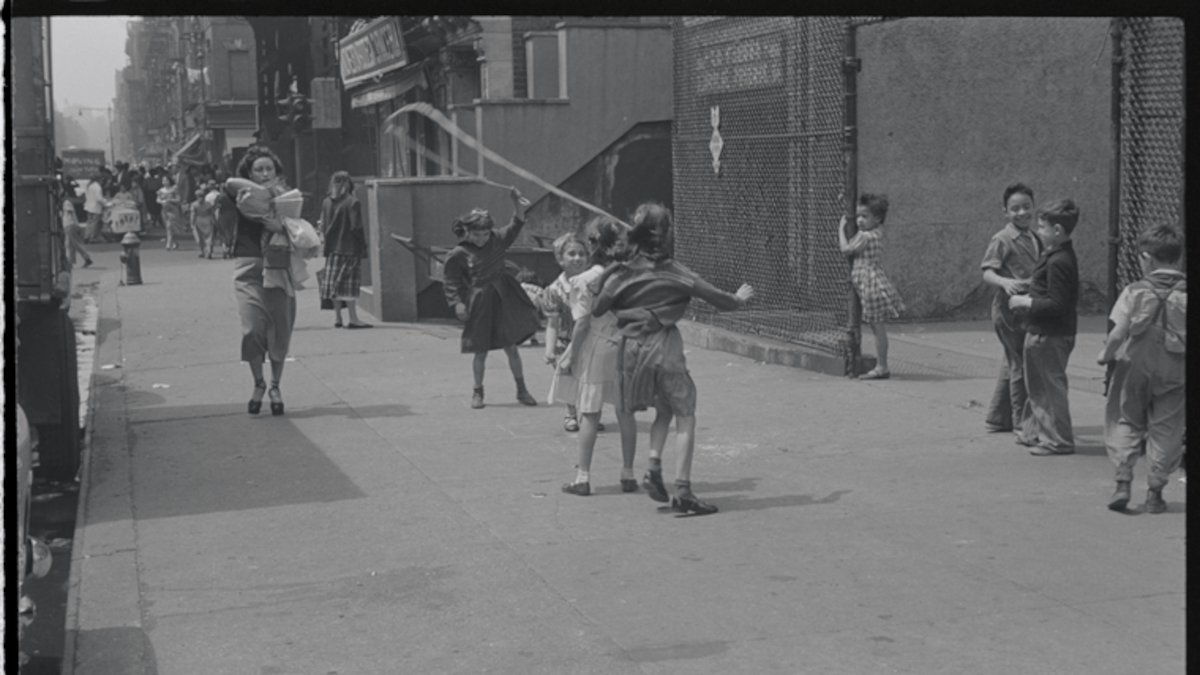
Barren existence: Boomers like to tell how when they were kids, their free time was spent outdoors, jumping rope, making up games, deciding who went first and whose turn it was to wait, watching fireflies, and hurrying home just before suppertime (lateness had consequences). Hot summers in the inner cities were famous for fire hydrant sprinkling & splashing. Too many kids today have supervised playdates and structured activities — if they are lucky. Otherwise, chances are their time is spent in front of TV screens, on endless scrolling on smartphones, texting, or immersed in video games where differences are solved by shooting opponents and blowing things up.

Screen time: It should be obvious to anyone with an iota of common sense that today’s addiction to screens cannot be healthy or lead to productive social interactions. Yet parents and teachers seem to lack the will or authority to keep youth away from screens (often they themselves suffer from screen addiction). Worse, video games — purposefully and obsessively designed to addict, extract information, and monetize — fill hours of youth time. “Gaming audiences form a wide-ranging, worldwide community that goes beyond age, gender, and cultural limits … They’re deeply involved in these games, making them a prime audience for tech, entertainment, and lifestyle ads … Gaming audience spend a lot of time playing, giving advertisers a great chance to connect.” ( Advertising in Gaming: Who are Gamers?, Iion, 03/25/24)

But in the old days there were the work houses…

Media and other communicators are fond of pointing out the plight of children and youth in days gone by, when there was no “regulation” or “services.” Indeed the life of poor and sometimes orphaned children and young adults was certainly not idyllic in the past. Child labor, work houses, illiteracy, and often hunger were common.

Society did eventually recognize and effectively deal with those egregious conditions, mostly though legislation.

Unfortunately, as is so often the case, solutions implemented to solve one problem spawn other problems. Today, our children and youth, coddled by parents and government, have shed the masters of the workhouses and acquired the masters of advertising and agendas. Promotional advertising creates lifestyles, and agendas create dependence on everything from government assistance to youth gang requirements.

Looking back might help

Maybe looking at the array of variables that made kids different back in the day would help. Those variables could include hard working two-parent households, parents with high expectations of their children, teachers willing to impose discipline and expect performance, focus on the 3 Rs of education, and effective (not ineffectively brutal) law enforcement to ensure safe neighborhoods where all kids can play outside.

Interestingly, all those variables include action, not the navel gazing today’s “experts” encourage our kids, to wallow in!

Picture: Kids playing in the street around the 1940s, from the New York Public Library Digital Collections.

BLM Protests and “The Moynihan Report”

Amid today’s massive Black Lives Matter demonstrations, filled with demands for redress of past and present injustices against Black people, it might be useful to revisit The Moynihan Report. The Report’s suggested remedy will sound outdated to today’s readers, possibly because society chose to take the path Moynihan warned against.

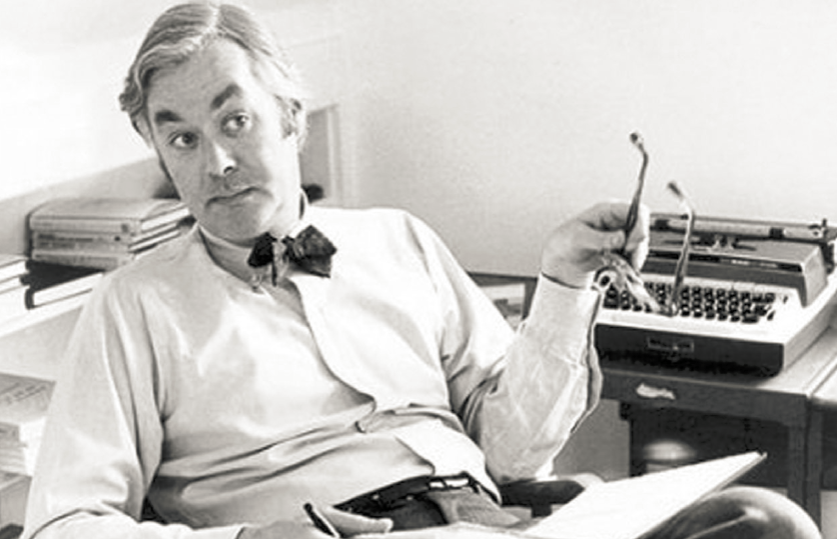
Moynihan

March of 1965, Assistant Labor Secretary Daniel Patrick Moynihan printed and distributed a report he wrote titled The Negro Family:  The Case for National Action. The report made him famous. However, Moynihan forever remained embittered that what became “The Moynihan Report” was never fully understood or acted upon.

Amid today’s massive Black Lives Matter demonstrations, filled with demands for redress of past and present injustices against Black people, it might be useful to revisit The Moynihan Report. The Report’s suggested remedy will sound outdated to today’s readers, possibly because society chose to take the path Moynihan warned against.

The Moynihan Report is a well-written, well documented treatise meant to counter what Moynihan saw as the misguided policies of President Lyndon Johnson’s War on Poverty. The report presents statistical data and interprets the data with care. It is a shot across the bow: continue ignoring the potent positive role of the traditional American family and suffer the consequences.

Indeed, for anyone paying attention, the centerpiece of Johnson’s Great Society, the War on Poverty, amounted to nothing more than war on poor families.

As an aside it should be noted that Pat Moynihan spoke of dysfunctional families and poverty from personal experience. Although he enjoyed an exceptional career as counselor to Presidents, ambassador to India and the United Nations, and U.S. Senator from New York, his parents were of modest means. Ta-Nehisi Coates, in his excellent article The Black Family in the Age of Mass Incarceration, goes as far as to say that Moynihan “was the product of a broken home and a pathological family… A cultured civil servant not to the manor born…”

War on families: a legacy of slavery

The Moynihan Report notes that while slavery existed in many parts of the world, slavery in America was especially onerous. Under law and custom, slaves were chattel, not entitled to education, religious practice, manumission, and most importantly a family of their own. Such conditions rendered slaves dependent on their masters, unable even to purchase their freedom or find solace in family attachments. Moynihan felt that neither emancipation nor government-granted civil rights could erase this awful legacy.

Emancipation granted freedom, but segregation ensured inadequate education and scant opportunities for advancement. Legislation granted civil rights – those rights government chooses to grant — but did nothing to fully acknowledge that all people are endowed from birth with the unalienable rights of personal liberty and personal responsibility.

Moynihan believed that devoid of a deep sense of personal liberty and personal responsibility, many Black people failed to form strong families or focus on personal advancement.

The bifurcation of American Blacks

In all communities there are those who succeed despite soul-shattering challenges. Moynihan saw a bifurcation between a rising Black middle class and an increasingly disadvantaged Black “lower class.”

There is considerable evidence that the Negro community is in fact dividing between a stable middle class group that is steadily growing stronger and more successful, and an increasingly disorganized and disadvantaged lower class group. There are indications, for example, that the middle class Negro family puts a higher premium on family stability and the conserving of family resources than does the white middle class family.

Moynihan’s concern in his Report is with the “disadvantaged lower class” Blacks. His focus is not on poor whites, Latinos or other persons of color.

Moynihan’s remedy

His remedy for the intractable poverty and chaos Moynihan perceived was to build strong patriarchal family units, in which fathers were the primary breadwinners and mothers the primary caretakers of offspring.

The role of the family in shaping character and ability is so pervasive as to be easily overlooked. The family is the basic social unit of American life; it is the basic socializing unit. By and large, adult conduct in society is learned as a child.

A fundamental insight of psychoanalytic theory, for example, is that the child learns a way of looking at life in his early years through which all later experience is viewed and which profoundly shapes his adult conduct.

The remedy society chose

While Moynihan persistently advocated for strong family units, administrations during his time in office helped the devastation of Black families with policies that fostered dependence on public assistance, absentee fathers, and incarceration. No need for fathers to stick around when moms and children will be cared for via numerous public assistance programs. No need to worry about poor education and work opportunities when there are plenty of prisons to isolate those who turn to crime as a last resort.

And plenty of prisons we have, as noted in the Prison Policy Initiative.

For four decades, the U.S. has been engaged in a globally unprecedented experiment to make every part of its criminal justice system more expansive and more punitive. As a result, incarceration has become the nation’s default response to crime. States of Incarceration: The Global Context 2018.  June 1918.

Such response results in absent fathers or mothers, unemployment due to conviction records, and broken families. The U.S. Bureau of Prisons estimates the current prison population is 38% Black. The U.S. Black population is around 13%. The U.S. “default response to crime” does disproportionate harm to Black families.

After the Great Society troubles remain

As Daniel Patrick Moynihan predicted 55 years ago, government-granted civil rights and public assistance programs focusing on individuals rather than families would do little to improve the lot of the poor and Black. Malevolent efforts such as the war on drugs and mass incarceration further destroy economic and social mobility for the poor and Black.

Intermittently, there are uprisings prompted by particularly egregious events perpetrated against Black people. Today, protests rage throughout the U.S. and the world in response to the May 25th killing by police of George Floyd. Floyd was unarmed, the arrest that led to his killing was for an alleged non-violent incident (suspicion of purchasing cigarettes with a forged $20 bill), and the manner of his killing was barbaric (police’s knee pressing on his neck for 8 minutes and 46 seconds). George Floyd, a Black man, was one of the latest victims at the hand of police.

Protesters today and in the past demand police accountability, even police “defunding.” They demand “social justice” and “equity.” But challenges remain, even as politicians expand the traditional largess in the model of Johnson’s Great Society.

The Moynihan Report, old fashioned and outdated as it sounds, might be worth revisiting.

The Culture of Victimhood

Politicians feed false narratives. Reject them!

Sometimes a post on Facebook resonates. People get it. This was the case with a post, shared on the Just Vote No Facebook Page, showing a video of a young man (Brandon Tatum) saying he voted for Barack Obama for U.S. President, but came to regret it. The young man’s message is that Democrats have harmed Black people by casting them as victims.

Just Vote No does not deal in partisan politics. A crook from one party looks the same as a crook from another party. So, let’s focus on what the young man is saying regardless of political party. When someone viewed as an authority figure (politician, police officer, teacher, social worker) acts as if you are different and in need of their assistance and discipline, you internalize that information, and neglect to review your own actions to see how they might change to improve your situation. The young man in the video calls this treatment the feeding of a false narrative – a narrative that does not help, and certainly hinders.

Thought of racism is for those who have time to think about it, or who promote it for their own benefit. The young man says he has no time to think of racism because he is too busy getting things done. Focusing on racism is victimhood. Focusing on getting things done is rejecting the false narrative and being on the way to success.

His recommendation? Same as ours. Believe in yourself and your ability to thrive. Look carefully at what you vote for. Don’t vote for crooks.

Brandon Tatum

Brandon Tatum speaks out against the feeding of false narratives.

War on Poverty or War on the Poor?

The welfare state declares itself a success by changing the description of poverty and encouraging cultural adaptation to dependency.

The Washington Post and other mainstream media are livid about the Trump administration proposed Tax Cuts and Jobs Act.

“President Trump and congressional Republicans want Americans to think that their proposed tax legislation is all about increasing economic growth. That’s their stated goal. But the stealth goal of GOP tax cuts is to start down the path toward gutting the New Deal and the Great Society — and if tax cuts pass, they might get away with it.”

”The stage is being set for an all-out attack on the welfare state the minute a tax cut is signed into law.”

One could garner from the Washington Post that the administration is poised to commit the unforgivable deed of tampering with a highly successful agenda. Or one could take a contrarian view and point to the actual results of the New Deal, the Great Society, and The War on Poverty.

The War on Poverty in hindsight

homess vet
Homeless vets are a national shame – evidence of failure of the welfare state.

Half a century after Lyndon B. Johnson launched The War on Poverty, urban streets serve as beds for the homeless, children have no roof over their heads but that of an unsafe and unclean shelter, tents under freeway overpasses are called home, jails house poor and dispossessed youth by the thousands, and the working poor depend on food stamps and Medicaid.

All this while the Ruling Elite declares the welfare state brought about by The War on Poverty a success, but in need of even more growth in order to take care of those who fall into the cracks.

What does it take to declare The War on Poverty a success?

* Changing the description of poverty:

Prior to the 1960s, poverty meant inability to take care of one’s needs for food and shelter. Lyndon Johnson’s Great Society changed that description to inability to receive enough public assistance. A 2015 study of the country’s “safety net” is described in Center on Budget and Polity Priorities,

“Previous analysis of Census data showed that safety net programs cut the poverty rate nearly in half. Data released recently by the Urban Institute, which correct for underreporting of key government benefits in the Census survey, reveal an even stronger impact: the safety net reduced the poverty rate from 29.1 percent to 13.8 percent in 2012 and lifted 48 million people above the poverty line, including 12 million children. Correcting for underreporting reveals that the safety net also did more to reduce deep poverty than previously shown, although 11.2 million Americans remained below half the poverty line.”

It should be obvious that if someone receives a free gift of $1,000, that person’s poverty will immediately decrease by $1,000!  Do we need a study to figure that? It should be equally obvious that when the $1,000 is consumed, that person will be just as poor as before the gift, unless another gift is forthcoming, or he/she finds a way to get out of poverty by becoming self sufficient.  We do not need a study for that either; we just need to look around us.

* Encouraging adaptation to dependency:

Survival depends on adaptation to external events. Short-term adaptation might mean trimming our budget if someone in our household loses a job, but we are confident another job is just around the corner. Longer-term adaptation might mean giving up a physically demanding job if we hurt out back. Long-term adaptation might mean cultural acceptance of raising children outside a traditional two-parent family in order to obtain public assistance. In more progressive regions of the country such as California, cultural adaptation includes middle-income families feeling comfortable receiving government subsidies for purchasing a home.

Although it is important to distinguish correlation from causation, the statistics are clear that so much of our precious youth is lost to inner-city violence or languishes in jails, our families are trapped in welfare-dependent neighborhoods, our children go to school hungry and depend on some slop gifted to them at some run-down government school. All this is culturally accepted and superficially monitored.

What does it take to fight back?

The first step to getting out of poverty might be to realize a good many folks have been screwed over by the Ruling Elite. In the Old South, power and the economic well being of the then Ruling Elite depended on slaves. Today’s Ruling Elite depends for its power and economic well being on a vast network of governmental bureaucracies doling out rules and make-believe benefits.

The next step is to truly wish to produce goods and services, rather than only consume them.  This is where the Just Vote No comes in:  threaten to run out of office anyone who makes it difficult for you to earn some cash braiding hair, selling tacos, typing, or selling your own apps on-line.

By the way, Forever 21 founder Do Won Chang started out as a janitor.  Ralph Lauren worked as a clerk at Brooks Brothers before building his fashion empire.  Read all about it on 15 Billionaires Who Were Once Dirt Poor.