On August 3, 2025, the Lancet, a well-known medical journal, published a report that went straight to the point regarding plastics. The Lancet Countdown on Health and Plastics, says:
“Plastics are a grave, growing, and under-recognised danger to human and planetary health. Plastics cause disease and death from infancy to old age and are responsible for health-related economic losses exceeding US$1·5 trillion annually.”
There has been enough talk about plastics harming our environment.
We have all seen the ubiquitous images of the mountains of plastic containers clogging waterways, decimating oceanic health, and blighting landscapes. What we have not seen or heard enough is talk of the health hazards caused by rooms full our children’s plastic toys, refrigerators with plastic containers, pantries with plastic-lined food cans, doors and windows encased in polyvinyl chloride (PVC, an acknowledged toxic plastic), and water pipes made of PVC.
So, lets talk about the human danger of plastics.
The human danger largely comes from two sources: (1) From inhaling chemicals that emanate from building materials like PVC, furniture made of engineered “wood,” and products — from toys to medical equipment — made from plastics. (2) From ingesting microplastics that enter our bodies via water, food, and breathing.
These foreign substances wreck havoc in endocrine and neurological systems, especially the systems of fetuses and children. Such disruptions increase risks for obesity, diabetes, lower fertility, and ADHD.
The remedy discussed in the Lancet report?
The several authors of the referenced Lancet report must be commended for sounding alarm in a popular journal, the publications of which are often picked up by the general media.
They must also be commended for starting a serious effort to track amelioration of harms done by plastics. The tracking – or “Countdown” — will begin after member states of the United Nations finalize a global plastics treaty during meetings in Geneva, Switzerland from August 5 – 14.
A press release dated August 5, 2025, on the The UN Environmental Programme website defines the objective of the upcoming sessions on global plastics:
“… to develop an international legally binding instrument on plastic pollution, including in the marine environment … to finalize and approve the text of the agreement and forward it for consideration and adoption at a future Diplomatic Conference of Plenipotentiaries.”
What was not discussed in the Lancet report?
Understandably, the scope of the Lancet report does not include two questions that hopefully will be addressed by ordinary concerned individuals.
* Have the climate change global agreements worked as expected? Some will say “yes” judging by the proliferation of laws regarding oil production, transportation, and infrastructure. Others will say “no” judging by the fact that climate continues to present increasing challenges since the Paris Agreement was signed in 2015.
* What will replace the innumerable plastic products in the market today? Some will say not to worry because that will be solved once enough plastics are banned. Others will say that the sheer volume of replacements needed requires that consumers become convinced that plastics threaten their health, start purchasing the alternatives that are already in the market, and producers reach economies of scale to make alternatives to plastics affordable to everyone. In other words, where mandates, like those made as a result of climate change treaties, do not work, consumer awareness might.
Replacement products must precede or accompany reduction in plastics.
In the old days, children’s toys were made of wood, cotton and wool, straw, paper, tin and other products derived from nature. The same with household products.
In 1907, the first completely synthetic plastic, made from phenol and formaldehyde, was developed. It was named Bakelite. Its many uses, including the manufacturing of colorful bangles, helped propel the development of more plastics.
As development and production of plastics grew, economies of scale made plastics cheap compared to naturally-sourced materials. New technologies made plastic products in all kinds of shapes, sizes, textures, strengths, and colors. And omnipresent advertising and powerful lobbying succeeded in selling plastics like polyvinyl chloride as safe for our water infrastructure (like PVC pipes), our homes’ building materials (like “luxury vinyl”), our children’s toys (like the plushy ones), and containers of things we put in our bodies (like IV bags).
Given such universal use of plastics, talk of reducing use via government mandates – as the UN global efforts seem to advocate – is unrealistic.
More realistic would be to increase consumers’ awareness.
To reduce the use of plastics, consumers must (1) become believers in the health hazards of plastics, and (2) become comfortable with using plastics alternatives, many of which are already in the market today.
Here is an example of the effectiveness of strategy (1).
The public’s awareness that cigarettes were deadly and not the safe glamorous indulgence they were portrayed to be helped to lower smoking addiction. Cigarettes were not banned, they just became yucky in the eyes of a lot of people.
The same could happen to most plastics. The environmental lobby has already succeeded in developing some distaste for plastics by publicizing realities like the island of plastic garbage located in the North Pacific and sea creatures helplessly tangled in plastic containers’ packaging yokes.
Now health enthusiasts could make inhaling the volatile organic compounds (VOCs) off-gassed by luxury vinyl, plushy toys, and the innumerable other plastic products in our homes and workplaces equally undesirable. Even easier to make unpleasant is the ingestion of micro plastics.
Strategy (2) is seen in trends like the general public of the 1970s feeling comfortable using computers or using recycling bins.
Some statistics show that demand for alternatives to plastic products is increasing. Maybe selling “sustainability” works, maybe plastic teething rings became a bridge too far for some, maybe more people now know that most plastic products are not recyclable and end up in landfills.
That trend could accelerate with clever promotion of alternative products that already exist, appeals to “early adopters,” encouraging the purchase of less but healthier stuff, support of politicians that advocate using petroleum (the raw material of many plastics) for essential industries and transportation not vinyl doors and Barbies.
Find out about the interesting plastic alternatives!
An online store (Impack, with no connection with this blog) selling non-plastic packaging has a good chart of alternative materials and their relative cost. The two more interesting products are glassine bags and mushroom cushioning.
Glassine bags are resistant to grease, air, and water vapor. They are also biodegradable, translucent, cost effective, and not coated with anything. Glassine is a healthy way to wrap food.
Mushroom cushioning is made of mushroom roots combined with agricultural waste like corn husks. It is a highly effective protective material for expensive fragile products like electronics and high-end cosmetics.
Choose healthy.
What keeps people from moving away from plastics is feeling comfortable with plastics’ image of trustworthy useful affordability. That image was carefully curated to consumers.
A 4th of July checkered tablecloth made of PVC looks just like grandma’s oilcloth made of cotton and linseed oil. Vinyl sheet flooring comes right up when you Google “linoleum,” also mostly of linseed oil. Parents and children are constantly fed images of happy kids surrounded by piles of cute and colorful plastic.
Pulling back the curtain on plastics, as the Lancet report has just helped do, and making people feel even more comfortable with natural alternatives to plastics is a good way to make us all much healthier.
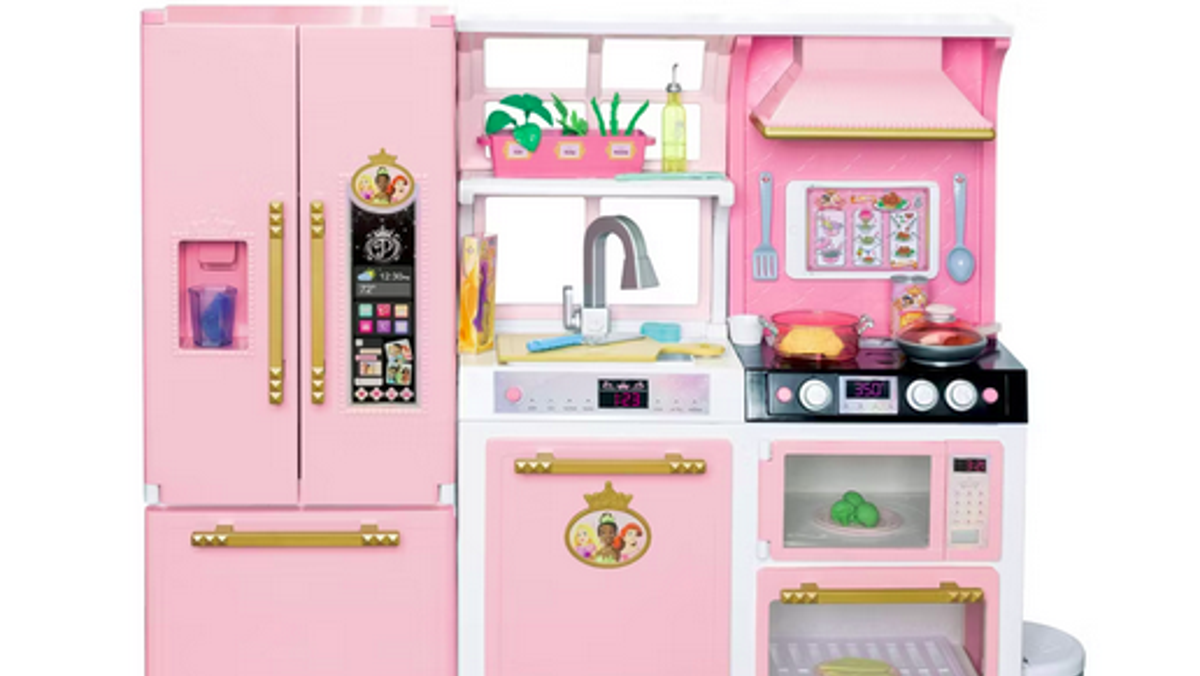
Picture: Disney Princess Gourmet Kitchen sold at Target. 42.32 H x 49.37 W x 12.59 D. Material: Plastic.

 Just Vote No