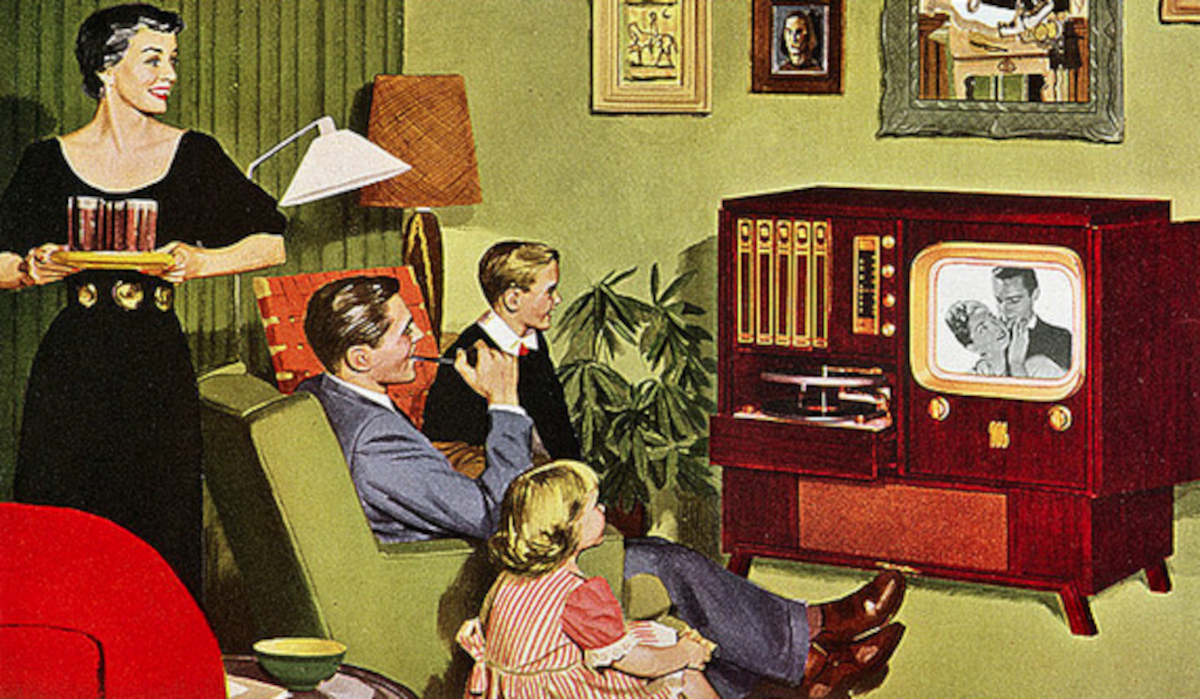
Paycheck to paycheck America

Increasingly, since the 1970s Americans get stuck in survival mode, rather than thrive mode. More and more workers are living paycheck to paycheck. What happened?

There is no longer denying that the rich are getting richer and the poor are getting poorer. The once iconic American middle class has all but disappeared. There is, however, plenty of denying contributing events – and therefore solutions – for such a pickle.

There were plenty of events. Here are some, certainly not all:

The 1970s saw an economic watershed.

From the end of WWII until the 1970s, incomes of the rich, not so rich, and poor rose around the same pace. Household savings rates were around 7 to 10%, a healthy percentage that allowed people to build capital and improve their lot.

The 1970s saw the start of a widening income, savings, and wealth gap. Today’s average household savings rate is 4.5%. Incomes of the less-than-rich tend to cover household expenses and not much else. Moving up the economic ladder under such circumstances is a nearly impossible feat.

The 1970s also saw a cultural watershed.

Lyndon Johnson’s Great Society was a herculean effort to deal with poverty through social welfare. Congress passed legislation enshrining President Johnson’s agenda between 1964 and 1968. By the 1970s public assistance was culturally accepted as the way to improve the lot of the poor.

That is still the case today. Legions of government programs, non-profits, and billionaires’ tax-advantaged foundations exist today to end poverty.

1971 saw the birth of fiat money.

The Great Society social programs that started in 1964, the Vietnam War (1955 – 1975), and a Federal Reserve that did not respond forcefully enough to unbridled government spending and rising prices, all contributed to inflation that reached 5.89% in 1969.

Such level of inflation decimated the value of the U.S. dollar, and a run on U.S. gold appeared probable. So, President Richard Nixon ended the country’s gold standard in 1971 – releasing the fiat money genie out of the bottle!

Without the market restraints inherent in a gold standard, government folks became free to borrow and spend. And free to keep interest rates down to facilitate payment in the ever increasing national debt.

Sharp-eyed folks in the general population figured windows of low interest rates and cheap money allowed them to borrow, invest, and grow rich.

Technology helped.

In the olden days, stocks were considered risky business not suitable for average respectable people. However, as technology gave average respectable people the Internet, access to on-line accounts, apps, social media, and a dizzying array of asset classes, investment in intangibles was democratized.

Then came financialization.

An old working paper dated December 2007, by Thomas Palley, in conjunction with The Levy Economics Institute of Bard College, has a very good description of financialization. In Financialization: What is it and Why it Matters, Dr. Palley wrote:

“Financialization is a process whereby financial markets, financial institutions, and financial elites gain greater influence over economic policy and economic outcomes. Financialization transforms the functioning of economic systems at both the macro and micro levels.

Its principal impacts are to (1) elevate the significance of the financial sector relative to the real sector (2) transfer income from the real sector to the financial sector, and (3) increase income inequality and contribute to wage stagnation. Additionally, there are reasons to believe that financialization may put the economy at risk of debt deflation and prolonged recession.

Financialization operates through three different conduits: changes in the structure and operation of financial markets, changes in the behavior of nonfinancial corporations, and changes in economic policy.”

Basically, financialization says, why should a company bother with working to create better widgets or bother with managing a productive labor force. So much easier to make money from financial transactions like acquisitions facilitated by fiat money, stock buybacks to inflate value of outstanding shares, or speculation with today’s equivalent of puka shells– cryptocurrencies. What companies save on labor, goes to CEOs and shareholders.

On the other side, much of workers’ consumption changed from that based on wages to that based on debt. And looks like powers that be in the marketplace and in government are fine with that.

The rise of institutional investors followed.

Around the late 1970s, institutions like Vanguard, Fidelity Investors, and other fund managers popularized a variety of financial products, including mutual funds and 401-k management. This attracted investors, contributed to fund managers’ growth, and eventually resulted in institutional investors today accounting for about 80% of the volume of trades on the New York Stock Exchange.

Note that these institutions do not own the stocks and other instruments they manage. It is America’s wealthiest 1% that own 50% of stocks, while the 10% wealthiest own nearly 90% of stocks.

This level of shareholder power is bound to divert profits from labor to dividends and/or CEO compensation. Note that a large portion of CEO compensation today is in stock and tied to how well the CEO enriches the company’s shareholders.

Meanwhile, wars on poverty focus on social welfare.

Since the 1960s rivers of money have gone into social welfare. Most improvement, if any, in the lot of the poor has come from handouts. Lower-income earners have remained stuck in survival mode, rather than rise to thriving mode.

Certainly, there have been the relatively few that rose from very modest beginnings to wealth. But here we are talking about the average worker in the fast-food, home-health care, hospitality, and other lower-paying industries.

Included in handouts are government mandates such as minimum wage increases and rent control. These two mandates especially reveal the cynicism inherent in legislatures. Politicians surely have a modicum of knowledge of the realities of the marketplace, which they purposefully to ignore.

Surely, they must realize that when you increase people’s power to spend without an equal or greater increase in output, you end up with inflation. A 3% increase in the price of hamburger is not a big deal for the well to do, but very unfortunate for the poor.

Politicians must also realize that investors, like landlords, want a certain profit, and when you mess with that profit through rent control, they stop being landlords and go invest in something else. Fewer landlords mean fewer housing, and potentially more poor families living in their car or worse.

Awareness is the first step to cure

We cannot go back in time, but we can stop pretending handouts work.

Schools that teach not indoctrinate or coddle work, discipline works (in school and at home, for kids and for adults), work ethics work.

Cottage industries (stuff you make at home and sell) work. Fiscal responsibility at home and in government works (especially reducing the national debt before interest eats up all of GDP!). Politicians that promise wider opportunities for people to earn a living, not freebies and AI, work.

America is still the land people of over the world want to come to. But many American families must be wondering, “What happened to the Middle Class.”
Why would wealthy families need school vouchers?

The newly-expanded North Carolina school voucher program – Choose your School, Choose your future – grants tuition assistance to any North Carolina family, regardless of income. Do wealthy families really need financial assistance to choose which ritzy school is best for their kids?

On May 17, 2023, the North Carolina Assembly passed House Bill 823, enthusiastically called Choose your School, Choose your Future. The bill expanded the state’s K-12 school voucher program, originally enacted in 2013 to assist low-income families. The Opportunity Scholarship, as the North Carolina voucher program is called, now grants vouchers to all North Carolina families regardless of income. Grants are on a sliding scale determined by family income, with amounts varying between $3,360 and $7,468 per child per year.

Legislators allocated $354.5 million for the Opportunity Scholarship program’s reserve fund for the 2024-2025 school year, and $416 million for the 2025-2026 year.

Lawmakers included HB-823 in the state’s $30 billion very much delayed and anticipated budget, which Governor Roy Cooper allowed to become law without his signature in September.

This program has received accolades as well as criticism.

Sadly, many traditional public schools are of poor quality and lately mired in controversy regarding race, gender, and sexuality. Children should not be stuck in such schools. The Opportunity Scholarship program is a godsend to lower-income families who cannot afford or who can barely afford private, including religious, schools.

However, back in May 2023, WFAE opinion columnist Tommy Tomlinson came up with an interesting description of the newly-overhauled North Carolina voucher program: “Robin Hood in reverse.” He said,

At some point, I have a certain grudging respect for the dedication some people have to playing Robin Hood in reverse — taking money from regular folks and handing it to the rich. Their latest maneuver here in North Carolina is a move to provide taxpayer-funded vouchers to any child in the state who wants to go to private school …

Kids from families with modest incomes have been eligible for similar vouchers here for the past 10 years. That, to me, actually makes some sense. It provides an escape route for a kid stuck in a failing school.

Wealthy families, whose children already attend the “ritziest schools in town” can argue that given the poor quality of public schools they are forced to pay both private school tuition and taxes that support public schools. Vouchers would help level their playing field. However, let us not forget that the working poor also pay taxes, some of which will help pay for school vouchers their wealthy neighbors receive.

Unfortunately, “Robin Hood in reverse” is not the only problem with universal school vouchers.

A worrisome possibility is a significant tuition increase.

North Carolina News & Observer education columnist T. Keung Hui noted in his excellent report of February 15, 2024, that some private schools have already announced tuition increases.

Private schools across the state are raising tuition and sending information to families about applying for Opportunity Scholarships. How much of the tuition increase is due to inflation or to take advantage of additional voucher funding is unclear. … The tuition rate increases for some schools across the state is more than 10%, which is well above the rate of inflation.”

People who attended college in the late 1980s might recall the shock wave of sudden tuition increases. Reasonably affordable four-year colleges became voracious, pushing students into quagmires of student loan debt. 1987 to 2010 witnessed a 106% increase in college tuition, according to a Mises Institute report dated November 30, 2021.

Coincidentally, the years 1980 – 2010 also saw expansion of college student loans guaranteed by the Federal government. William Bennett, President Ronald Reagan’s Secretary of Education, provided in 1987 his view for the college tuition increases he witnessed. Bennett’s assessment — what became known as the Bennett Hypothesis — was discussed in Science Direct, December, 2019

“Increases in financial aid in recent years have enabled colleges and universities blithely to raise their tuitions, confident that Federal loan subsidies would help cushion the increase.”

Scholars have debated the Bennett Hypothesis ever since it was first presented. But even when pitted against other possible reasons for substantial tuition surges — increase in attendance without concomitant growth in institutions, inflation, excessive regulation — the Bennett Hypothesis survives common sense. Is there a valid argument against the view that everybody likes money, and if it is available, most individuals and institutions will take it? Or a valid argument against expecting substantial expansion in school vouchers to have negative effects like those associated with college student loans?

Families should also be concerned about class sizes.

Mr. Hui of the News & Observer indicated an estimated 60% increase in students getting vouchers. Recipients that are already attending private schools will not affect class sizes, but students crossing over from public schools might. Chances are private schools will not rush to expand their facilities to accommodate the crossover population, which could result in increased class sizes.

Vouchers might not be operating on a level playing field.

Lower-income families and their advocates should ask themselves whether universal school voucher programs operate on a level playing field.

By way of comparison: Progressive advocates for poor and minorities often oppose voter ID requirements, citing that poor and minority voters face greater difficulties obtaining IDs. Would the same difficulties apply to obtaining school vouchers? Might more affluent, more educated families possessing greater resources hold advantages over the less fortunate?

Hopefully, in the interest of fairness, the priorities in receiving vouchers contained in HB-823 will lower any advantages held by wealthier families. Families whose children were voucher recipients prior to HB-823 (when there were income limits) will enter a voucher lottery first, followed by lower-income applicants; the more affluent applicants will enter the lottery last to receive what funds are left in the year’s allocation.

Lastly, do the wealthy really need vouchers?

The common-sense answer is clearly “No.” The title of House Bill 823 — Choose your School, Choose your Future – although catchy, is disingenuously applicable only to lower-income families. It is difficult to imagine circumstances in which wealthy families need vouchers to choose which ritzy school is best for their children.

Indeed, it is unfair that families with children who attend private schools pay both tuition and taxes that support public schools. However, universal school vouchers possess an unfortunate aura of benefits for the rich.

Conceivably a better idea might be to pass legislation absolving parents with K-12 children in private schools from paying taxes that support public schools, limiting vouchers to very low-income families living in poor-performing school districts, and improving the performance and cost effectiveness of public schools by practicing the good old focus on “reading, writing, and arithmetic.”

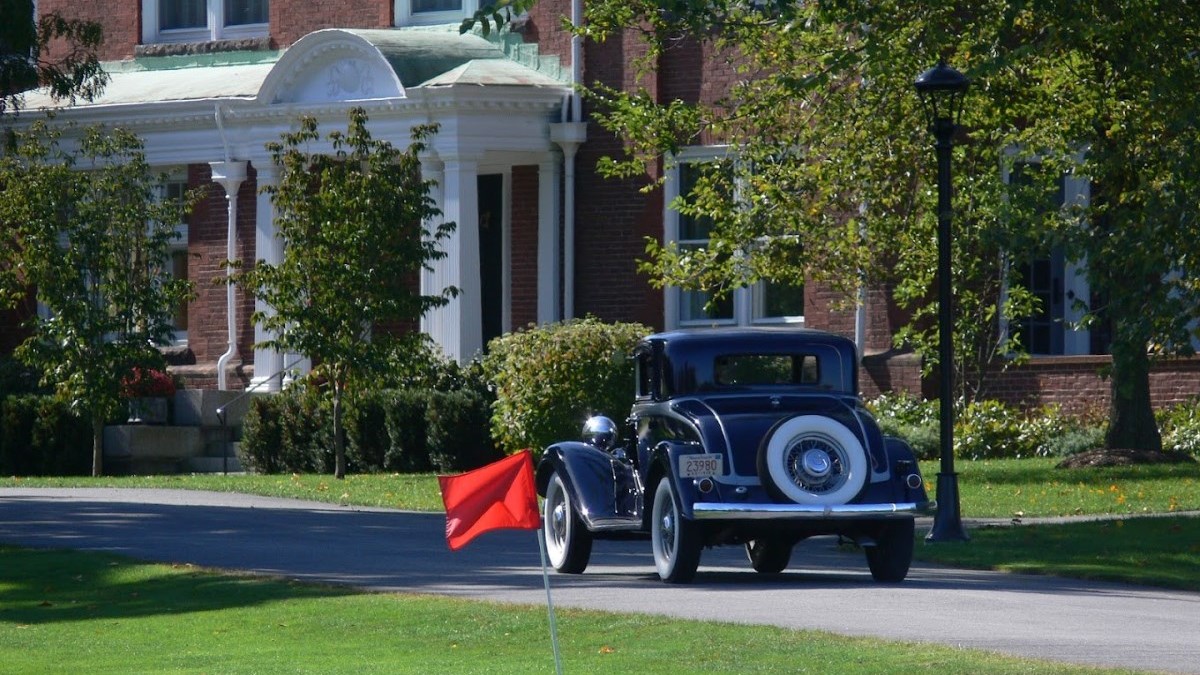
Picture: The beautiful Groton School in Groton, MA. Founded in 1884. Educating 380 students, grades 8-12.

Governor Newsom’s Recall Turns Real

Gavin Newsom is behaving like the quintessential elite–someone who creates a self-serving vision and proceed to implement it. The Recall is a reaction to Newsom’s perceived elitism as much as an attempt to put an end to his misguided policies.

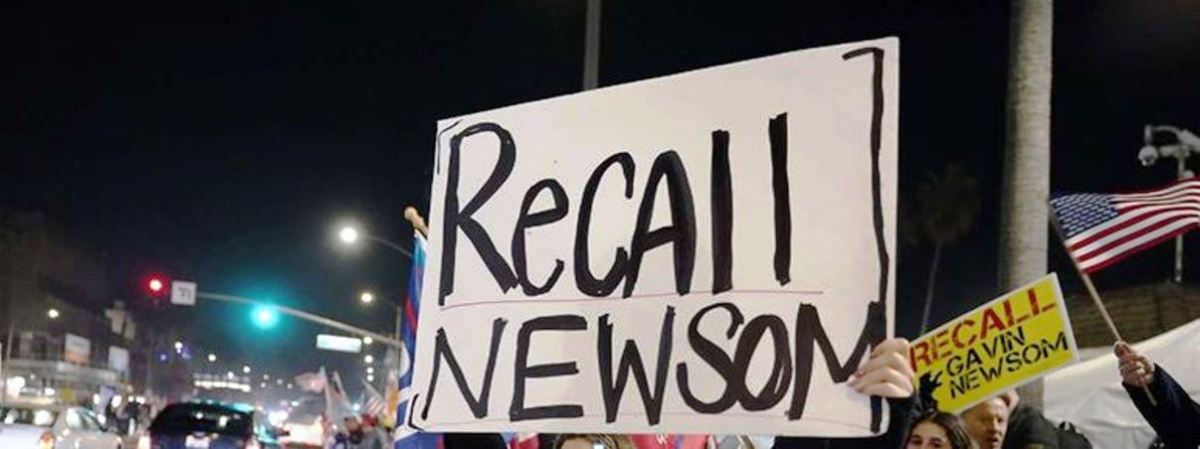
What started as a Quixotic effort to remove California Governor Gavin Newsom from office, has now turned serious. The Recall Gavin Newsom campaign has gathered as of the beginning of March 2021, 1.9 million signatures. California requires 1.5 million signatures for the recall to appear on the ballot. Looks like there are almost 2 million folks that are past their tolerance point for Newsom.

What has this once popular California governor done to deserve such fate? Is he so much worse than other progressive governors? Probably not.

However, constituents have grown skeptical of Newsom’s incessant swagger about California being an economic powerhouse as homeless tents pop up everywhere, public pensions become unsustainable, and California’s middle class dwindles. Workers are tired of being thrown out of jobs, first by legislation that strangles small businesses, and presently by lockdowns. Parents of public school children are seeing their children fall behind in their education as Newsom’s children attend in-person instruction in private school.

Such disregard for the common people has marked Gavin Newsom as the quintessential establishment elite – someone who conceives a self-serving vision of what people need and proceeds to impose the vision on the populace regardless of realities. The Recall is a reaction to Newsom’s perceived elitism as much as it is an attempt to put an end to his misguided policies.

The Recall Gavin Newsom campaign claims 80,000 grassroots volunteers that can be relied upon to waive signs and collect recall signatures. Campaign organizers say they have raised almost $4 million, mostly from wealthy donors within California, but some also from Nevada ($29,250), Kansas ($26,000), Texas ($20,100), and Arizona ($6,525). Interestingly, San Francisco – solidly Democrat and committedly progressive – stands second after Irvine in Newsome Recall donations.

The litany of Newsom failures listed on the Recall document include the following:

  • Housing unaffordable to the middle class
  • Exploding homelessness
  • Rising crime
  • Failing public schools
  • Harassment of independent contractors
  • Unsustainable public pension debt
  • Infringement of 2nd Amendment rights
  • Sanctuary laws that fail to screen out criminals
  • High taxes
  • Poor water management
  • A dysfunctional Employment Development Departments
  • Extreme overreach in dealing with Covid-19
  • Public schools closed for nearly a year
  • Inability to control teachers union refusal to resume in-person teaching.
  • A last straw occurred when Newsom and his wife were caught dining with lobbyists at the posh French Laundry eatery after he recommended that his constituents dine alone on Thanksgiving.

The establishment elite – not to be confused with the merely rich — operate by rules that grow without regard to what the populace want or need. For example, the Recall document mentions Assembly Bill 5, which assumes everyone wants to be an employee rather than an independent contractor, thus ruining the livelihood of many happily self employed workers.

The establishment elite do not seem to notice that often there is a discrepancy between what they mandate and what they do, as exemplified by Newsom’s French Laundry incident.

Thus, Gavin Newsom’s image stands as dubious as his policies, and a recall election to give voters a chance to weigh in on how seriously they take this matter is warranted.

The Culture of Victimhood

Politicians feed false narratives. Reject them!

Sometimes a post on Facebook resonates. People get it. This was the case with a post, shared on the Just Vote No Facebook Page, showing a video of a young man (Brandon Tatum) saying he voted for Barack Obama for U.S. President, but came to regret it. The young man’s message is that Democrats have harmed Black people by casting them as victims.

Just Vote No does not deal in partisan politics. A crook from one party looks the same as a crook from another party. So, let’s focus on what the young man is saying regardless of political party. When someone viewed as an authority figure (politician, police officer, teacher, social worker) acts as if you are different and in need of their assistance and discipline, you internalize that information, and neglect to review your own actions to see how they might change to improve your situation. The young man in the video calls this treatment the feeding of a false narrative – a narrative that does not help, and certainly hinders.

Thought of racism is for those who have time to think about it, or who promote it for their own benefit. The young man says he has no time to think of racism because he is too busy getting things done. Focusing on racism is victimhood. Focusing on getting things done is rejecting the false narrative and being on the way to success.

His recommendation? Same as ours. Believe in yourself and your ability to thrive. Look carefully at what you vote for. Don’t vote for crooks.

Brandon Tatum

Brandon Tatum speaks out against the feeding of false narratives.

Today’s Elite, Its Enablers, and Its Victims

Identifying and Defunding the Ruling Elite

The Just Vote No Blog is non-partisan and totally secular, but it is liberty-leaning in the manner Claude Frederic Bastiat or Thomas Jefferson. As such, we look for concrete and realistic steps to bring about, individually and collectively, freedom from public dependence. For clarification, here is an example of public dependence: Say you and your children would like to spend Thanksgiving with your Mom and Dad who live in another state, and to do that you need to take an airplane. In this scenario you are sufficiently dependent on the TSA to need to allow agents to forcefully touch your children.

Concrete and realistic steps intended to rid ourselves of public dependence require hard looks at economic, cultural, psychological and other human factors. Hard looks mean taking an idea – any idea — say the non-aggression principle, and looking for real-life instances where that idea has thrived. If the idea is not thriving, then either the idea is faulty or its advocates are ineffective.

Hans-Hermann Hoppe – Ignoring the Labels

Hard looks at possibly relevant variables also mean listening, without immediately ascribing labels. And that brings this rant to its purpose, the mention of a provocative talk by Hans-Hermann Hoppe, titled Libertarianism and the Alt-Right, at the 12th Annual Conference of the Property and Freedom Society, September 2017.

Hans-Hermann Hoppe is probably best known for his position of Senior Fellow at the Mises Institute, right along with Ron Paul, Lew Rockwell, Andrew Napolitano, Walter Block and other luminaries of the pro-liberty, pro-free market movement. However, the mere mention of Hans-Hermann Hoppe often temps labeling: Austrian School economist, libertarian anarcho-capitalist, alt-right, nationalist, homophobe, racist. As he says in his talk, the only label that seems not to stick is “self-hating Jewish Nazi.”

Now, let’s for the moment ignore the labels, even the labels of libertarian and alt-right, and focus on a few points in Mr. Hoppe’s speech. These points are presented here without opinions pro or con because the ideas are interesting and worth understanding.

Identifying and Understanding Conflict

* Scarcity is at the core of conflict. Conflict avoidance provides a good path to peace and prosperity. If there is respect for ownership of resources as the property of those that acquire it in a voluntary exchange, there is no conflict. If you say there are things to which you are entitled but did not acquire in a voluntary exchange, then there will be conflict. Examples of conflict-producing acquisitions: taxpayer-funded subsidies, invaded territory, rights other than property rights (in this context, your body/life is your property).

* In order to move from scarcity and conflict to peace and prosperity, human nature needs to be acknowledged. Human nature cannot be separated from culture, ability, or psychology. Force can try to obliterate the yearning for freedom of association, but often unsuccessfully.  Example of failure: today’s neighborhoods are as segregated as ever, with unfortunate pockets of no-go areas that live by their own rules of force.

* Once force is identified as an element of conflict, the next step is to identify the enablers of force, and remove their sustenance.

The Enablers of Force

* The top enabler is the Ruling Elite:  Military, Central Bankers, Big Corporations. The military possesses the power to acquire territory by force. Central bankers have the power to generate debt and dependence. Big corporations possess significant means of production that allow them to buy their political preferences, and thus impose their will on the populace.

* Intellectuals that populate the education/indoctrination systems. Today, the higher the level of one’s education the more extensive is one’s adherence to wealth redistribution, egalitarianism, and multiculturalism – all of which possible only via the force of legislation. Grants, student loans, free tuition render the intellectual class dependent on the state, and obliged to perpetuate the state’s objectives.

* Main-stream media, that serves as soft propaganda. The products of the education/indoctrination intellectual class move on to the professions, including journalism. They have been taught to believe, repeat, and proceed in the path of least intellectual vigor. If government says war is good, they repeat that endlessly. If government says the force of law is needed to bring about social justice and equity, they repeat that endlessly also.

Neutralizing the Enablers of Force

* Stop bombing other people. Such interventionist foreign policy benefits only the Ruling Elite. Victims of bombings die, and perpetrators of bombings suffer blowback.

* Withdraw from supra-national organizations. What a country, state, or city finds beneficial to their residents they can do without the interference of supra-national organizations such as the United Nations.

* Stop funding the higher ups that feed the central banks; who in turn facilitate war, debt, interest rate manipulation, and wealth redistribution. Fund your city and local institutions instead.

* Oppose the ongoing destruction of private initiative and the resulting dependence on government. As family and other social and cultural private support structures are destroyed, public assistance steps in with ineffective replacements. As tranquility is shattered by crime, unrest, cultural clashes and terror, public force steps in to provide marginal security.

* Understand real objectives of education that does not translated into good earnings in the workplace, generous public assistance programs, proliferation of protected classes, mass immigration, creation of civil rights concurrently with curtailment of individual and property rights. The objective is permanent poverty and eternal dependence. Get the state out of education; encourage youth to learn useful trades. Support immigration by invitation only; make sponsors – not taxpayers – responsible for new arrivals. Defund all strategies that lead to poverty and dependence. Prioritize funding and other support of your local jurisdictions and institutions.

* Do not put your trust in politics or political parties. Focus your efforts in arousing public anger at strategies that are not beneficial to anyone but the Ruling Elite.

* Learn to recognize political balderdash, and say “No, Hell, No!” when it is foisted upon you.

Addendum

Although no opinion on the above discussion is offered here, it is tempting to offer an observation. What has the Just Vote No Blog been saying all along? If something is being pushed on you, it is probably something that will not be to your benefit. When in doubt Just Vote No! Vote No, Hell No!