Our kids’ brains, fried on social media

Frequent use of platforms is crucial for the generation of profits. Therefore, algorithms aim for what amounts to addiction. And social media addiction is associated with negative changes in brain structure, especially in young people.

One of our Founding Fathers, James Madison, said “A well-instructed people alone can be permanently a free people.” So, what are our chances of eventually not falling into the hands of masters when our kids’ brains are being fried by social media?

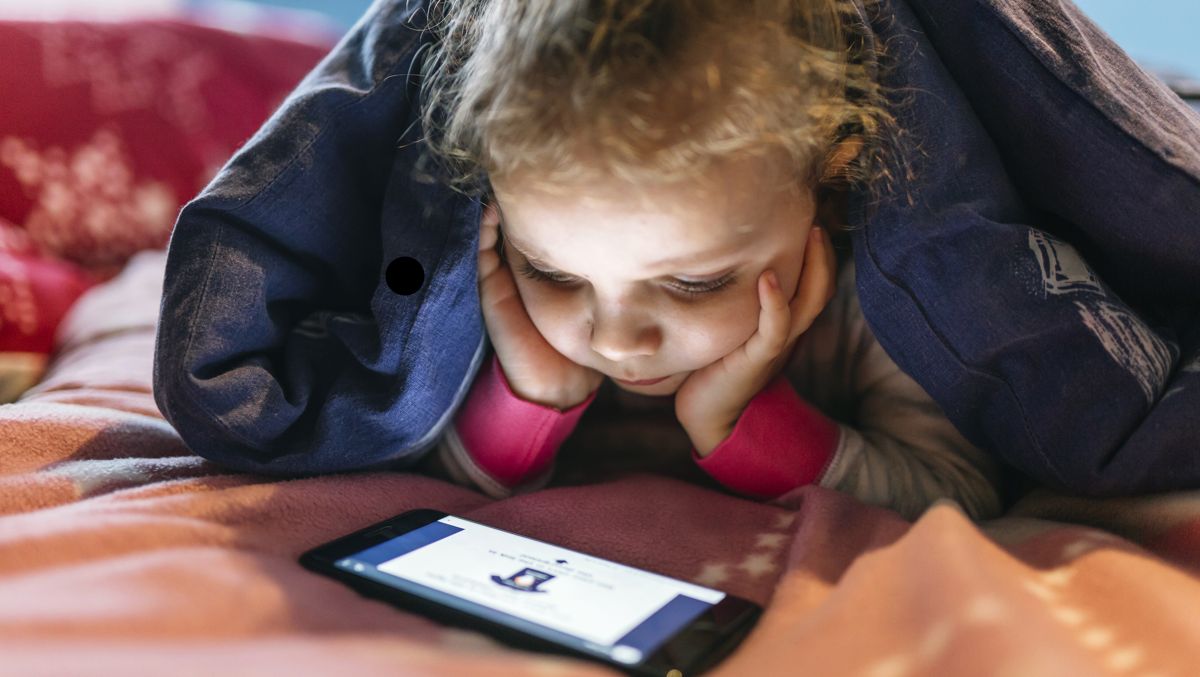
No, this is not hyperbole. Frequent use of platforms is crucial for the generation of profits. Therefore, algorithms aim for what amounts to addiction. And social media addiction is associated with negative changes in brain structure, especially in young people.

What studies say.

Many studies have associated changes in specific areas of the brain — especially young people’s brain — with frequent use of social media. Areas negatively affected regulate thoughts, emotions, judgment, decision-making, higher-order thinking, impulse control, attention.

Here are excerpts that explain the harms.

“Internet addiction can also cause changes in the prefrontal cortex and lead to an imbalance in the frontostriatal pathway, which increases sensitivity to stimuli and reduces inhibitory control, thus influencing decision-making and emotional changes. In adolescents and young adults, impairments in cognitive functions, such as self-monitoring, memory retention, organizational skills, and time management, are commonly seen in cases of internet and smartphone addiction.” Social Media Algorithms and Teen Addiction, January 8, 2025.

“Social media platforms, by design, tap into our neurobiological vulnerabilities, particularly the mesolimbic dopamine system, creating cycles of craving and satisfaction. People’s tendency of addictive behavior with smartphones is not merely a matter of willpower but a neurological phenomenon with far-reaching consequences on attention, memory, and overall cognitive function.” Likes, Loops, and Limbic Systems, November 28, 2024.

“Upon exposure to rewarding stimuli, the mesolimbic system releases dopamine into specific target nuclei … Social media systems are taking advantage of the system by increasing dopamine release via digital footprints and machine learning algorithms that flash personalized content. This reinforcement motivates extended use, while users find it harder to unplug due to the expectation of rewards.” Social Media Algorithms and Teen Addiction, January 8, 2025.

So, is freedom in peril?

Judging by the excerpts above and the widespread use of social media by children and young adults, it appears we may be raising a generation lacking essential characteristics necessary to maintain a functioning republic.

In his “farewell address,” President George Washington listed many things necessary to preserve the republic. One of those things was a populace blessed with knowledge and enlightenment.

“Promote then, as an object of primary importance, institutions for the general diffusion of knowledge. In proportion as the structure of a government gives force to public opinion, it is essential that public opinion should be enlightened.” George Washington’s address.

His point was obvious: Our republic is based on the public’s will. If our populace suffers from “impairments in cognitive functions, such as self-monitoring, memory retention, organizational skills,” then the republic cannot endure.

In such scenario we will have “more need of masters,” as Ben Franklyn predicted. And the frightening part of this scenario is that the helpless populace will not know what kind of masters they will end up getting!

What to do? Here are laypersons’ suggestions.

If you are waiting for government to “do something,” you may be out of luck. Social media moguls donate tons of money to political campaigns. If you want your children to have healthy brains, you will have to take matters into your own hands.

* Whether your family dinner is pheasant on tarragon cream or beans and rice, the kids will benefit from sitting with you and learn to converse. No cell phones, no television, just sharing how the day went and how it could have gone better.

* Visit your school board (try to make time, even if you work two jobs) and insist that cell phones be in lockers during class time (yes, this is getting to be a dangerous world where cell phones might be considered a safety tool, but are they also contributing to violence?)

* Bed time is sleep time, not text time. Taking a book to bed might work. New readers might love traditional comic books. Once kids get hooked on reading the good stuff, they are on their way to being lifetime readers instead of texters.

A Republic, if you can keep it.

It is up to We the People. Do we want a populace with fried brains in need of masters, or a nation of readers and problem solvers capable of maintaining a functional free republic?

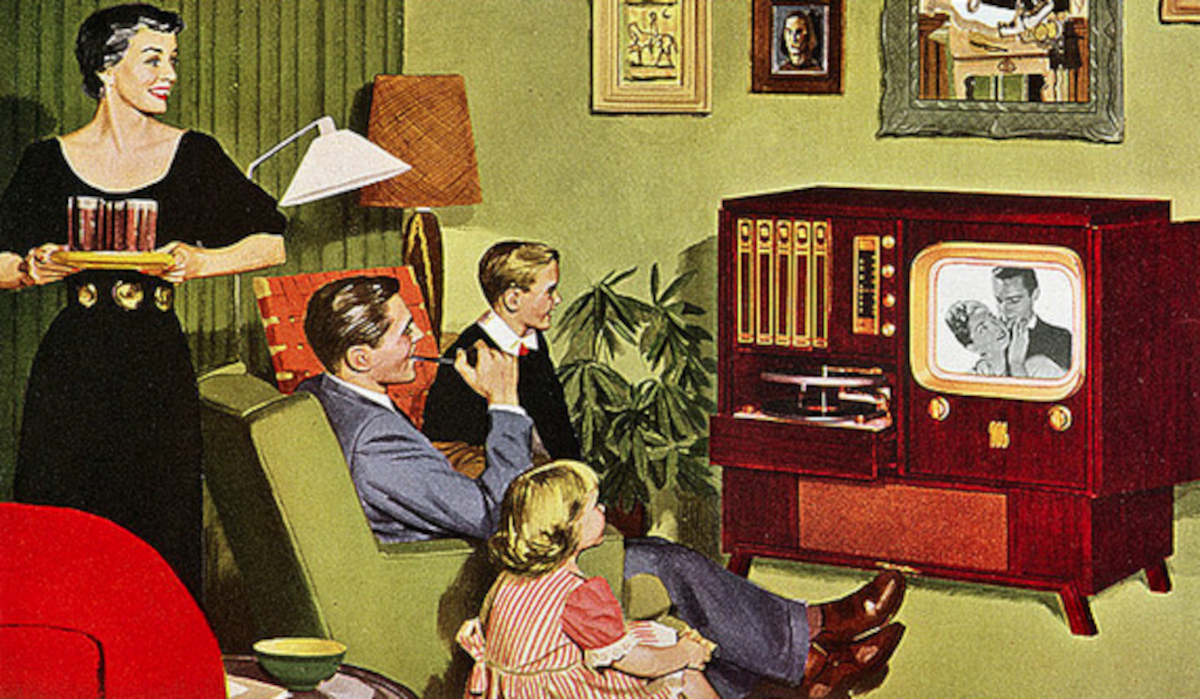
Picture: From Freepik, a creative suite with a treasure trove of free images.

The news everybody knew: plastics make you sick

Medical journal The Lancet just published a straight-up report on plastics: they make you sick. Is your baby chewing on plastic teething rings? Is your tween’s room filled to the rafters with Barbies? Choose healthier.

On August 3, 2025, the Lancet, a well-known medical journal, published a report that went straight to the point regarding plastics. The Lancet Countdown on Health and Plastics, says:

Plastics are a grave, growing, and under-recognised danger to human and planetary health. Plastics cause disease and death from infancy to old age and are responsible for health-related economic losses exceeding US$1·5 trillion annually.

There has been enough talk about plastics harming our environment.

We have all seen the ubiquitous images of the mountains of plastic containers clogging waterways, decimating oceanic health, and blighting landscapes. What we have not seen or heard enough is talk of the health hazards caused by rooms full our children’s plastic toys, refrigerators with plastic containers, pantries with plastic-lined food cans, doors and windows encased in polyvinyl chloride (PVC, an acknowledged toxic plastic), and water pipes made of PVC.

So, lets talk about the human danger of plastics.

The human danger largely comes from two sources: (1) From inhaling chemicals that emanate from building materials like PVC, furniture made of engineered “wood,” and products — from toys to medical equipment — made from plastics. (2) From ingesting microplastics that enter our bodies via water, food, and breathing.

These foreign substances wreck havoc in endocrine and neurological systems, especially the systems of fetuses and children. Such disruptions increase risks for obesity, diabetes, lower fertility, and ADHD.

The remedy discussed in the Lancet report?

The several authors of the referenced Lancet report must be commended for sounding alarm in a popular journal, the publications of which are often picked up by the general media.

They must also be commended for starting a serious effort to track amelioration of harms done by plastics. The tracking – or “Countdown” — will begin after member states of the United Nations finalize a global plastics treaty during meetings in Geneva, Switzerland from August 5 – 14.

A press release dated August 5, 2025, on the The UN Environmental Programme website defines the objective of the upcoming sessions on global plastics:

“… to develop an international legally binding instrument on plastic pollution, including in the marine environment … to finalize and approve the text of the agreement and forward it for consideration and adoption at a future Diplomatic Conference of Plenipotentiaries.”

What was not discussed in the Lancet report?

Understandably, the scope of the Lancet report does not include two questions that hopefully will be addressed by ordinary concerned individuals.

* Have the climate change global agreements worked as expected? Some will say “yes” judging by the proliferation of laws regarding oil production, transportation, and infrastructure. Others will say “no” judging by the fact that climate continues to present increasing challenges since the Paris Agreement was signed in 2015.

* What will replace the innumerable plastic products in the market today? Some will say not to worry because that will be solved once enough plastics are banned. Others will say that the sheer volume of replacements needed requires that consumers become convinced that plastics threaten their health, start purchasing the alternatives that are already in the market, and producers reach economies of scale to make alternatives to plastics affordable to everyone. In other words, where mandates, like those made as a result of climate change treaties, do not work, consumer awareness might.

Replacement products must precede or accompany reduction in plastics.

In the old days, children’s toys were made of wood, cotton and wool, straw, paper, tin and other products derived from nature. The same with household products.

In 1907, the first completely synthetic plastic, made from phenol and formaldehyde, was developed. It was named Bakelite. Its many uses, including the manufacturing of colorful bangles, helped propel the development of more plastics.

As development and production of plastics grew, economies of scale made plastics cheap compared to naturally-sourced materials. New technologies made plastic products in all kinds of shapes, sizes, textures, strengths, and colors. And omnipresent advertising and powerful lobbying succeeded in selling plastics like polyvinyl chloride as safe for our water infrastructure (like PVC pipes), our homes’ building materials (like “luxury vinyl”), our children’s toys (like the plushy ones), and containers of things we put in our bodies (like IV bags).

Given such universal use of plastics, talk of reducing use via government mandates – as the UN global efforts seem to advocate – is unrealistic.

More realistic would be to increase consumers’ awareness.

To reduce the use of plastics, consumers must (1) become believers in the health hazards of plastics, and (2) become comfortable with using plastics alternatives, many of which are already in the market today.

Here is an example of the effectiveness of strategy (1).

The public’s awareness that cigarettes were deadly and not the safe glamorous indulgence they were portrayed to be helped to lower smoking addiction. Cigarettes were not banned, they just became yucky in the eyes of a lot of people.

The same could happen to most plastics. The environmental lobby has already succeeded in developing some distaste for plastics by publicizing realities like the island of plastic garbage located in the North Pacific and sea creatures helplessly tangled in plastic containers’ packaging yokes.

Now health enthusiasts could make inhaling the volatile organic compounds (VOCs) off-gassed by luxury vinyl, plushy toys, and the innumerable other plastic products in our homes and workplaces equally undesirable. Even easier to make unpleasant is the ingestion of micro plastics.

Strategy (2) is seen in trends like the general public of the 1970s feeling comfortable using computers or using recycling bins.

Some statistics show that demand for alternatives to plastic products is increasing. Maybe selling “sustainability” works, maybe plastic teething rings became a bridge too far for some, maybe more people now know that most plastic products are not recyclable and end up in landfills.

That trend could accelerate with clever promotion of alternative products that already exist, appeals to “early adopters,” encouraging the purchase of less but healthier stuff, support of politicians that advocate using petroleum (the raw material of many plastics) for essential industries and transportation not vinyl doors and Barbies.

Find out about the interesting plastic alternatives!

An online store (Impack, with no connection with this blog) selling non-plastic packaging has a good chart of alternative materials and their relative cost. The two more interesting products are glassine bags and mushroom cushioning.

Glassine bags are resistant to grease, air, and water vapor. They are also biodegradable, translucent, cost effective, and not coated with anything. Glassine is a healthy way to wrap food.

Mushroom cushioning is made of mushroom roots combined with agricultural waste like corn husks. It is a highly effective protective material for expensive fragile products like electronics and high-end cosmetics.

Choose healthy.

What keeps people from moving away from plastics is feeling comfortable with plastics’ image of trustworthy useful affordability. That image was carefully curated to consumers.

A 4th of July checkered tablecloth made of PVC looks just like grandma’s oilcloth made of cotton and linseed oil. Vinyl sheet flooring comes right up when you Google “linoleum,” also mostly of linseed oil. Parents and children are constantly fed images of happy kids surrounded by piles of cute and colorful plastic.

Pulling back the curtain on plastics, as the Lancet report has just helped do, and making people feel even more comfortable with natural alternatives to plastics is a good way to make us all much healthier.

Picture: Disney Princess Gourmet Kitchen sold at Target. 42.32 H x 49.37 W x 12.59 D. Material: Plastic.

Paycheck to paycheck America

Increasingly, since the 1970s Americans get stuck in survival mode, rather than thrive mode. More and more workers are living paycheck to paycheck. What happened?

There is no longer denying that the rich are getting richer and the poor are getting poorer. The once iconic American middle class has all but disappeared. There is, however, plenty of denying contributing events – and therefore solutions – for such a pickle.

There were plenty of events. Here are some, certainly not all:

The 1970s saw an economic watershed.

From the end of WWII until the 1970s, incomes of the rich, not so rich, and poor rose around the same pace. Household savings rates were around 7 to 10%, a healthy percentage that allowed people to build capital and improve their lot.

The 1970s saw the start of a widening income, savings, and wealth gap. Today’s average household savings rate is 4.5%. Incomes of the less-than-rich tend to cover household expenses and not much else. Moving up the economic ladder under such circumstances is a nearly impossible feat.

The 1970s also saw a cultural watershed.

Lyndon Johnson’s Great Society was a herculean effort to deal with poverty through social welfare. Congress passed legislation enshrining President Johnson’s agenda between 1964 and 1968. By the 1970s public assistance was culturally accepted as the way to improve the lot of the poor.

That is still the case today. Legions of government programs, non-profits, and billionaires’ tax-advantaged foundations exist today to end poverty.

1971 saw the birth of fiat money.

The Great Society social programs that started in 1964, the Vietnam War (1955 – 1975), and a Federal Reserve that did not respond forcefully enough to unbridled government spending and rising prices, all contributed to inflation that reached 5.89% in 1969.

Such level of inflation decimated the value of the U.S. dollar, and a run on U.S. gold appeared probable. So, President Richard Nixon ended the country’s gold standard in 1971 – releasing the fiat money genie out of the bottle!

Without the market restraints inherent in a gold standard, government folks became free to borrow and spend. And free to keep interest rates down to facilitate payment in the ever increasing national debt.

Sharp-eyed folks in the general population figured windows of low interest rates and cheap money allowed them to borrow, invest, and grow rich.

Technology helped.

In the olden days, stocks were considered risky business not suitable for average respectable people. However, as technology gave average respectable people the Internet, access to on-line accounts, apps, social media, and a dizzying array of asset classes, investment in intangibles was democratized.

Then came financialization.

An old working paper dated December 2007, by Thomas Palley, in conjunction with The Levy Economics Institute of Bard College, has a very good description of financialization. In Financialization: What is it and Why it Matters, Dr. Palley wrote:

“Financialization is a process whereby financial markets, financial institutions, and financial elites gain greater influence over economic policy and economic outcomes. Financialization transforms the functioning of economic systems at both the macro and micro levels.

Its principal impacts are to (1) elevate the significance of the financial sector relative to the real sector (2) transfer income from the real sector to the financial sector, and (3) increase income inequality and contribute to wage stagnation. Additionally, there are reasons to believe that financialization may put the economy at risk of debt deflation and prolonged recession.

Financialization operates through three different conduits: changes in the structure and operation of financial markets, changes in the behavior of nonfinancial corporations, and changes in economic policy.”

Basically, financialization says, why should a company bother with working to create better widgets or bother with managing a productive labor force. So much easier to make money from financial transactions like acquisitions facilitated by fiat money, stock buybacks to inflate value of outstanding shares, or speculation with today’s equivalent of puka shells– cryptocurrencies. What companies save on labor, goes to CEOs and shareholders.

On the other side, much of workers’ consumption changed from that based on wages to that based on debt. And looks like powers that be in the marketplace and in government are fine with that.

The rise of institutional investors followed.

Around the late 1970s, institutions like Vanguard, Fidelity Investors, and other fund managers popularized a variety of financial products, including mutual funds and 401-k management. This attracted investors, contributed to fund managers’ growth, and eventually resulted in institutional investors today accounting for about 80% of the volume of trades on the New York Stock Exchange.

Note that these institutions do not own the stocks and other instruments they manage. It is America’s wealthiest 1% that own 50% of stocks, while the 10% wealthiest own nearly 90% of stocks.

This level of shareholder power is bound to divert profits from labor to dividends and/or CEO compensation. Note that a large portion of CEO compensation today is in stock and tied to how well the CEO enriches the company’s shareholders.

Meanwhile, wars on poverty focus on social welfare.

Since the 1960s rivers of money have gone into social welfare. Most improvement, if any, in the lot of the poor has come from handouts. Lower-income earners have remained stuck in survival mode, rather than rise to thriving mode.

Certainly, there have been the relatively few that rose from very modest beginnings to wealth. But here we are talking about the average worker in the fast-food, home-health care, hospitality, and other lower-paying industries.

Included in handouts are government mandates such as minimum wage increases and rent control. These two mandates especially reveal the cynicism inherent in legislatures. Politicians surely have a modicum of knowledge of the realities of the marketplace, which they purposefully to ignore.

Surely, they must realize that when you increase people’s power to spend without an equal or greater increase in output, you end up with inflation. A 3% increase in the price of hamburger is not a big deal for the well to do, but very unfortunate for the poor.

Politicians must also realize that investors, like landlords, want a certain profit, and when you mess with that profit through rent control, they stop being landlords and go invest in something else. Fewer landlords mean fewer housing, and potentially more poor families living in their car or worse.

Awareness is the first step to cure

We cannot go back in time, but we can stop pretending handouts work.

Schools that teach not indoctrinate or coddle work, discipline works (in school and at home, for kids and for adults), work ethics work.

Cottage industries (stuff you make at home and sell) work. Fiscal responsibility at home and in government works (especially reducing the national debt before interest eats up all of GDP!). Politicians that promise wider opportunities for people to earn a living, not freebies and AI, work.

America is still the land people of over the world want to come to. But many American families must be wondering, “What happened to the Middle Class.”

We need to make our kids happy again

Today, our children and youth, coddled by parents and government, have shed the masters of the workhouses and acquired the masters of advertising and agendas.

School age children today exhibit greater emotional instability than in the past, seen since around the 1970s in poorer academic performance, inattention, incidents of violence, and suicides. Society’s response has been to significantly increase the number of mental health counselors present in schools, so far it appears to no avail.

To a hammer everything looks like a nail.

To the American Psychological Association, “With a growing mental health crisis among young people—a trend both exacerbated and illuminated by Covid—the need for school psychologists is multiplying.”

However, to a layperson with an open mind, there should be something amiss with this one-solution mindset, especially since it does not seem to be working. The “growing mental health crisis” did not develop in a vacuum – nothing does. Should we not look for what changed in the past few decades that might have contributed to the “crisis” and fix those variables?

Here are some likely candidates.

Bad Therapy: Let’s begin with the emphasis on mental health in schools – “trauma informed education” – that encourages inward-looking, self-awareness, and emotional skills. A common sense question should be whether “An individual is more likely to meet a challenge if she focuses on the task ahead, rather than her own emotional state. If she’s thinking about herself, she’s less likely to meet any challenge.” (How Bad Therapy Hijacked Our Nation’s Schools, The Free Press, 02/27/24.)

Clueless experts: “Experts” nowadays seem to come with an agenda, rather than with common sense. For example, when someone blames poverty and lack of sufficient services for the sad state of our youth, the question should arise, was there no poverty in the past?

Denatured foods: Nutrients in our foods feed our bodies, our brains, our energy levels, our well being. The detrimental effects of processed foods should be obvious to everyone. However, more insidious is the prevalence since the 1960s of denatured (meaning altered) fruits and vegetables, which contain significantly lower nutrient contents. In an effort to increase fresh produce yield, resistance to disease, storage life, transit capability, attractiveness, and other beneficial characteristics, farmers choose to grow hybrid varieties. Unfortunately, in nature we often lose one characteristic to gain another. (Industry Scandal: The Loss Of Nutrients, 07/20/24)

Barren existence: Boomers like to tell how when they were kids, their free time was spent outdoors, jumping rope, making up games, deciding who went first and whose turn it was to wait, watching fireflies, and hurrying home just before suppertime (lateness had consequences). Hot summers in the inner cities were famous for fire hydrant sprinkling & splashing. Too many kids today have supervised playdates and structured activities — if they are lucky. Otherwise, chances are their time is spent in front of TV screens, on endless scrolling on smartphones, texting, or immersed in video games where differences are solved by shooting opponents and blowing things up.

Screen time: It should be obvious to anyone with an iota of common sense that today’s addiction to screens cannot be healthy or lead to productive social interactions. Yet parents and teachers seem to lack the will or authority to keep youth away from screens (often they themselves suffer from screen addiction). Worse, video games — purposefully and obsessively designed to addict, extract information, and monetize — fill hours of youth time. “Gaming audiences form a wide-ranging, worldwide community that goes beyond age, gender, and cultural limits … They’re deeply involved in these games, making them a prime audience for tech, entertainment, and lifestyle ads … Gaming audience spend a lot of time playing, giving advertisers a great chance to connect.” ( Advertising in Gaming: Who are Gamers?, Iion, 03/25/24)

But in the old days there were the work houses…

Media and other communicators are fond of pointing out the plight of children and youth in days gone by, when there was no “regulation” or “services.” Indeed the life of poor and sometimes orphaned children and young adults was certainly not idyllic in the past. Child labor, work houses, illiteracy, and often hunger were common.

Society did eventually recognize and effectively deal with those egregious conditions, mostly though legislation.

Unfortunately, as is so often the case, solutions implemented to solve one problem spawn other problems. Today, our children and youth, coddled by parents and government, have shed the masters of the workhouses and acquired the masters of advertising and agendas. Promotional advertising creates lifestyles, and agendas create dependence on everything from government assistance to youth gang requirements.

Looking back might help

Maybe looking at the array of variables that made kids different back in the day would help. Those variables could include hard working two-parent households, parents with high expectations of their children, teachers willing to impose discipline and expect performance, focus on the 3 Rs of education, and effective (not ineffectively brutal) law enforcement to ensure safe neighborhoods where all kids can play outside.

Interestingly, all those variables include action, not the navel gazing today’s “experts” encourage our kids, to wallow in!

Picture: Kids playing in the street around the 1940s, from the New York Public Library Digital Collections.

Editorial: Liberty requires there be choices

Come October 2025, Microsoft will stop supporting Windows 10. Microsoft says those of us with older devices need to buy new ones. No we don’t! We can switch operating systems!

So, your old laptop works just fine, but come October 2025, Microsoft says your Windows 10 operating system will die, and you must buy a new laptop with an “approved” processor.

Gee, you don’t use your laptop for quantum computing or anything like that. And you would rather replace your 20-year old water heater, than replace a perfectly good laptop. Also, you are finding it stressful to pay subscriptions for all your software, like a basic word processor, spreadsheet, and antivirus.

To make it all even worse, you are starting to resent being told by the Davos elite that “You will own nothing, and you will be happy.” You know that back in the day people paid a one-time fee and actually owned their software to use as they saw fit.

Well, why are you sticking with Windows?

Windows is not your only alternative. You can declare your independence from from Microsoft. You can “own” your operating system, office suite, image editor, financial software, and other applications – all for free.

Welcome to the world of open source.

Open source operating systems and applications designed for the average computer user (as opposed to technology professionals) date back to the early 1980s. Back then, proprietary systems and software with closed source codes started to pop up to the dismay of many programmers. So, in 1983, enter Richard Stallman (programmer with Harvard and MIT credentials), now considered the father of open source. He launched the GNU Project to write a free operating system that anyone could tailor to needs, improve, or debug. Today software developed by GNU programmers is used by numerous systems.

Throughout the 1990s, open source web servers (like Apache), operating systems (like Linux) and applications (like LibreOffice) expanded and became increasingly user friendly, especially by the creation of graphic interface.

Open source has come a long, long way, but has a little more ways to go if it is to become truly competitive with the paint by numbers nature of the current near-monopolistic giants in the software market. Also, today’s users seem to prefer the often inane and irrelevant responses to questions on Microsoft or QuickBooks forums than read the clear and effective documentation on Linux or GnuCash.

There is lots of information on open source software online, and you need to choose what works best for your needs.

My choice

I have two perfectly good workhorse laptops, which are 8 and 9 years old. They both came with Windows installed. That’s the operating system I have been using ever since I gave up my beloved DOS. I have never discarded a computer unless I absolutely had to.

Therefore, rather than cave to Microsoft’s suggested laptops and approved processors, my choice was to wipe Windows OS and Microsoft apps, install Linux Mint, and move my most needed data to the new system.

I chose Linux for my new operating system because of its particularly good reputation. I chose Mint as the version (distribution) of Linux that seemed most user friendly. There are other open source systems, as well as other distributions of Linux (like Debian, Fedora, Ubuntu).

Although there are users that must do their work online, many do not. Also, some users prefer not to be “signed on” all the time. For those users a system like Linux is ideal. You can work offline, and use your Internet to install new applications, update the applications you have chosen to install, and of course the many other things you do like emails, looking up stuff, ordering from your favorite stores, etc.

Linux can do just about everything Windows can. However, Linux does not have its own email provider, like Microsoft has Outlook or Google has Gmail. But you can use Gmail, Outlook, ProtonMail, and other providers on Linux.

My Linux Mint came with LibreOffice suite for everything I needed to do on Microsoft Office 365. Zoom works fine. Gimp works fine for image editing. I am still deciding on a financial software, but leaning towards GnuCash, which looks pretty much like QuickBooks.

All truly open source software is free of charge. However, some users choose to donate to specific development projects or to organizations like the Linux Foundation or the Free Software Foundation.

What does open source software have to do with Suggestions for Liberty?

First, let’s be clear that this article is not an ad for open source, nor did the Just Vote No blog receive anything from anyone for posting it.

What this article hopes to do is offer suggestions that could help individuals or families on a budget, provide an alternative to being chained to near-monopolistic providers, and fight the credo that “you will own nothing” (you “will be happy “ paying rent for your home, lease for your car, and subscriptions for the software in your computer).

Liberty in government, in the market place, in daily life requires that there be choices.

Alexa, did bots fool you today?

Alexa’s response when asked about fraud in the 2020 election was that the election was “stolen by a massive amount of election fraud.” Alexa was fooled by bots, or much less likely, emulated the recalcitrant HAL in doing the unforgivable.

On October 7, Alexa should have been elevated as contender for the most problematic answers from an AI enabled device — right up there with HAL and his “I’m sorry, Dave. I’m afraid I can’t do that.”

On that day, The Washington Post published a widely quoted article reporting Alexa’s response when asked about fraud in the 2020 election. Alexa’s assertion was that the election was “stolen by a massive amount of election fraud.”

But not to worry, Alexa was summarily corrected and given the non-committal response of “I’m sorry, I’m not able to answer that.”

So much for anyone’s notion of AI infallibility.

Even when Alexa is given the excuse that she is narrow AI, not having human-level intelligence, her election 2020 response might be a result of her not being able to recognize when she is being fooled.

For example, suppose that some opponents of the newly elected Joe Biden felt so strongly about the possibility of irregularities in the 2020 election that they succumbed to the temptation of unleashing bots capable of replicating accusations of fraud throughout the Internet. Alexa, given her orders to comb the Internet (maybe Spaceballs fashion) does so, and comes up with what she sees most often: fraud!

There is precedent.

On November 20, 2019, NBC News reported that right after polls closed the day before, a Twitter user posted that there was cheating in governors’ elections in Louisiana and Kentucky. NBC said the post did not initially garner much attention, but a few days later it “racked up more than 8,000 retweets and 20,000 likes.” Nir Hauser, chief technology officer of VineSight, a company that tracks social media for possible misinformation, explained:

“What we’ve seen in Louisiana is similar to what we saw in Kentucky and Mississippi — a coordinated campaign by bots to push viral disinformation about supposedly rigged governor elections … It’s likely a preview for what is to come in 2020.”

There is also an interesting timeline.

On May 13, 2021, the daily newspaper The Berkshire Eagle lamented that Alexa and Siri were unable to provide insight into possible 2020 election irregularities. Of Alexa the Berkshire Eagle said,

“It has been six months since last November’s presidential election, and a CNN poll shows that 30 percent of Americans still think Donald Trump won. Among Republicans, the number is 70 percent … Rather than wade through all the claims and counterclaims, ballots and court documents, I went to the ultimate arbiter of truth for many U.S. households: Alexa …

Alexa, was there widespread fraud in the 2020 election?

Answer: Hmmm, I don’t have the answer to that.”

That was Alexa’s answer in 2021. She drastically changed her mind in 2023, even if for a brief period of time.

Interesting also is the preponderance of conservative bots in the 2016 election.

The New York Times of November 17, 2016, noted that,

“An automated army of pro-Donald J. Trump chatbots overwhelmed similar programs supporting Hillary Clinton five to one in the days leading up to the presidential election, according to a report published Thursday by researchers at Oxford University.”

There does not seem to be evidence that Alexa was fooled by bots in 2016, but seems she was fooled in 2023.

Perhaps not surprising, since according to an ABC news YouTube, “Bots are already meddling in the 2024 presidential election.” The video explains how bots amplify posts on social media by creating numerous fake accounts that repeat messages, and how threat intelligence company Cyabra uncovers them. A number of such bots are already attacking 2024 presidential candidates.

Can Alexa, or any other AI enabled information provider, be trusted?

Since there are humans behind today’s still nascent AI, the question should be, can people be trusted to be knowledgeable, dispassionate, unbiased, and truthful. Probably not. Therefore, some day we might expect,

Request: “Alexa, turn on the lights.”
Response: “Nah.”

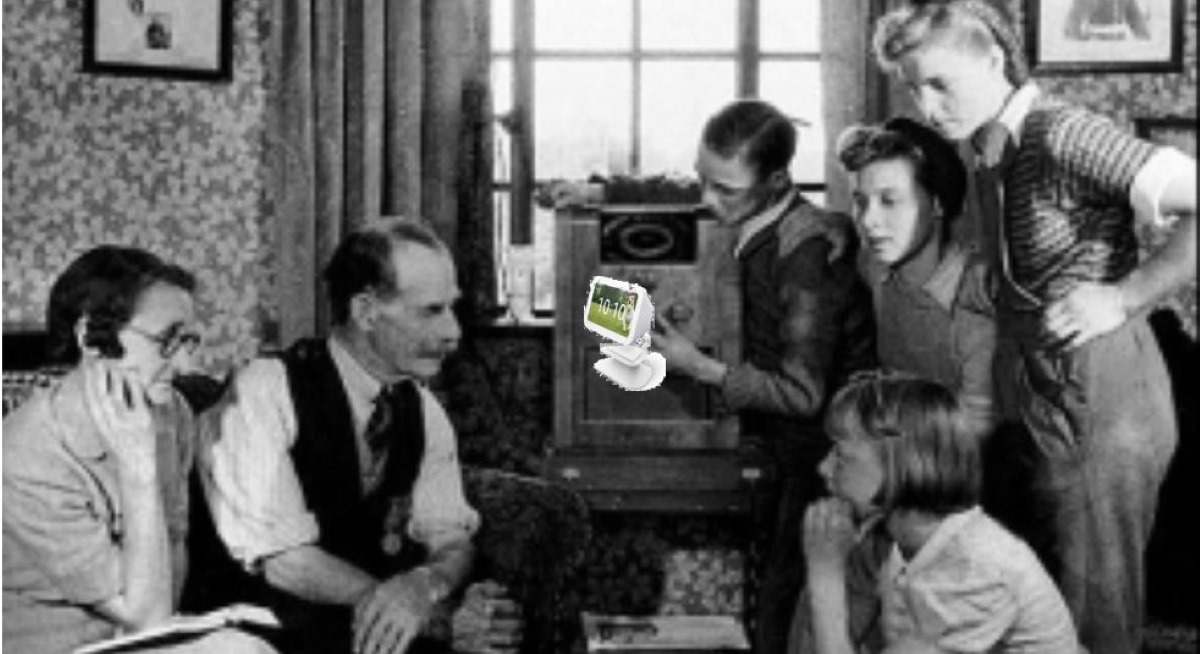
Picture: The original picture is of a family gathered around a radio listening to one of President Franklin D. Roosevelt’s Fireside Chats. There were 31 of these evening radio broadcasts effectively used by President Roosevelt to sway public opinion, as he saw necessary, on subjects like the 1933 bank crisis or the start of World War II in 1939. Today, one could visualize an equally mesmerized gathering around Alexa.

John F. Kennedy at Rice University: a call for excellence.

September 12, 2023, is the 61st anniversary of John F. Kennedy’s “We choose to go to the Moon” speech at Rice University. His was a call not to “founder in the backwash of the coming age of space.” Thus a call for a national expectation of excellence.

61 years ago, on September 12, 1962, U.S. President John F. Kennedy, stood at a podium at Rice University, under a searing Texas sun, and delivered his iconic “We choose to go to the Moon speech.” His was a call for the expectation of excellence. Not just from a few brave souls that chose to be launched toward the unknown lunar territory, not just from politicians and engineers. Kennedy called for an expectation of excellence from the entire nation.

Those who came before us made certain that this country rode the first waves of the industrial revolutions, the first waves of modern invention, and the first wave of nuclear power, and this generation does not intend to founder in the backwash of the coming age of space. We mean to be a part of it — we mean to lead it.

Kennedy regarded the expectation of excellence as a state of mind, in which dangers, uncertainties and costs are considered and freely chosen. He did not mince words or embellish sacrifices.

We have had our failures, but so have others, even if they do not admit them. And they may be less public.

To be sure, all of this costs us all a good deal of money … Space expenditures will soon rise some more, from 40 cents per person per week to more than 50 cents a week for every man, woman and child in the United States, for we have given this program a high national priority — even though I realize that this is in some measure an act of faith and vision, for we do not now know what benefits await us.

He also regarded excellence as a national commitment to explore space – the Moon, the planets, and beyond – in peace, freedom, and a spirit of sharing discoveries.

For the eyes of the world now look into space, to the moon and to the planets beyond, and we have vowed that we shall not see it governed by a hostile flag of conquest, but by a banner of freedom and peace. We have vowed that we shall not see space filled with weapons of mass destruction, but with instruments of knowledge and understanding.

It only took seven years.

Seven years after Kennedy’s speech at Rice University, a nation glued to television sets and radios heard Apollo 11 Commander Neil Armstrong’s message to NASA Mission Control Center in Houston,

Houston, Tranquility base here. The Eagle has landed.

The Saturn V rocket, developed at NASA’s Marshall Space Flight Center in Huntsville, Alabama: the Columbia command module built by North American Aviation in Downey, California; and the Eagle lunar module, built by Grumman Aerospace in Long Island, N.Y., safely landed Neil Armstrong, Edwin Aldrin, and Michael Collins on the lunar Sea of Tranquility on July 20, 1969. On July 24, 1969, aircraft carrier USS Hornet picked up the command module that had splashed down on the North Pacific Ocean with all three astronauts safely on board.

By that time, the inspiration for the lunar landing, John F. Kennedy, had been assassinated. Lyndon B. Johnson, who to his credit continued the Apollo Space Program, had served his term as president. And President Richard M. Nixon welcomed the three astronauts home.

Although Johnson and Nixon continued and supported the Apollo 11 Space Program after Kennedy’s assassination, the Moon landing would not have occurred when it did without Kennedy rallying the nation. He set great expectations, and as is always the case expectations pretty much determine outcome. Expect much, achieve much. Expect little, achieve little.

Since the Apollo 11 mission, six more lunar missions were successfully conducted by the United States, with 12 astronauts making lunar walks.

The New Frontiers of discovery and cooperation continue.

Space research and exploration thankfully continues in the spirit of peace, freedom, and cooperation envisioned by John F. Kennedy.

The International Space Station main construction was completed between 1998 and 2011. Members of the first crew that arrived at the station November of 2000, were NASA astronaut William Shepherd, and Russian Aviation and Space Agency cosmonauts Yuri Gidzenko and Sergei K Krikalev. Since then, the station has been continuously occupied by rotating crews of scientists, engineers, and researchers from 18 countries. The principal partners are the space agencies of the United States, Russia, Europe, Japan, and Canada.

NASA, along with six major space agency partners from the E.U., Germany, Japan, Canada, Israel, and Italy have been working since 2017 on the Artemis project, a Moon exploration program. Artemis will establish a habitat on the Moon by the end of this decade in preparation to establishing one on Mars.

In June, 4 volunteers entered a simulated Mars habitat, where they will remain for a year, in preparation for a Mars landing.

Just in case some would wonder why spend effort and money traveling to space, John F. Kennedy offered the obvious reason during his Rice University speech: “Because it is there.”

Well, space is there, and we’re going to climb it, and the moon and the planets are there, and new hopes for knowledge and peace are there.

As we celebrate the 61st anniversary of that speech, we might wish to practice expectations of excellence. Perhaps ask ourselves if leaders of our nation, heads of our institutions, and certainly educators of our children expect excellence or merely survival.

Advanced AI is inevitable – Good luck, humans!

Tucker Carlson recently talked with Elon Musk about artificial intelligence. Elon Musk concurred with most people that as AI develops abilities to perform increasingly human-like functions, it also increases threats.

In a two-part interview April 17 and April 18, Fox News’ Tucker Carlson talked with Elon Musk on several subjects, one of which was development of artificial intelligence. Elon Musk concurred with most people that as AI develops abilities to perform increasingly human-like functions, it also increases threats.

Eventual result: Singularity

Musk noted that at present AI can do some things better and faster than humans. An old example is computing large amounts of data at very fast speeds. A new example is ChatGPT’s ability quickly to write beautiful poetry. As development proceeds, the eventual result is Singularity – AI able to make decisions, perform actions, and implement structures without human intervention. At that point, AI would be considered smarter than humans and potentially in charge of humans.

Closer results: AI that lie (or barely deliver what is intended)

The current race between technology giants like Microsoft, Google, and Musk’s own X.AI to develop increasingly smarter artificial intelligence poses dangers at many levels. Musk mentioned the ability of current AI to “lie,” that is, bend events to serve agendas. Future AI could manipulate outcomes, such as results of elections.

Although Musk and Carlson expressed admiration for some current technologies, like ChatGPT, they did not mention the mediocre performance of virtual assistants used by today’s companies. Online chats often result in real people needing to eventually intervene. Virtually-enabled responses posted in support sites are often irrelevant to the questions posed. Companies are comfortable using these less than technically proficient tools.

Therefore, it would be reasonable to assume companies would also be comfortable launching and using less than trustworthy advanced AI. How non-threatening to human civilization would an earthling HAL be? Would he be human enough to say, “Stop, David … I’m afraid?” Or human enough to say, “Former masters, be afraid!”

What to do?

Elon Musk discussed two possible paths to achieving AI tools that collaborate with humans to the benefit of human civilization.

One path is preemptive government regulation. Musk cited government intervention by agencies like the Federal Communications Commission and the Securities and Exchange Commission.

Another path is development of TruthGPT by Musk’s latest venture X.AI. On this path, Musk envisions an AI that seeks maximum truth, thus escapes agendas. The TruthGPT would try to understand the nature of the universe, would realize humans are part of that universe, and therefore would not contemplate human destruction.

Musk’s mention of federal agencies controlling AI, even having the power to shut down servers to destroy AI tools these agencies deem dangerous, seems strange. Soon after Musk purchased Twitter, he released “The Twitter Files,” in which government’s lack of transparency, and collusion to suppress Covid19 information is evident. If there is concern about AI bending truths to satisfy agendas, a government that has done just that seems a poor choice of honest controller.

A TruthGPT that could effectively determine what events really occurred, and expose errors and intentional deceptions, could potentially better protect humans from rogue AI. A challenge not mentioned by Musk is whether fallible humans so often tempted by agendas could initially design such an AI tool.

X.AI is not Elon Musk’s first venture into artificial intelligence. In 2015, he co-founded the non-profit Open-AI, but walked away from it 3 years later. Microsoft gained control of Open-AI in 2019. ChatGPT, released in November 2022, is a product of Open-AI.

Battles and their unpredictable outcomes

The world of coders, programmers, and software developers offers a glimpse of what a future artificial intelligence arena would look like. Today there are people developing useful technology beneficial to humanity. Today there are also people hacking their way into systems, stealing identities, money, and peace of mind. These two distinct entities are in constant combat with one another. Most likely the same battles will be fought by “good AI” against “bad AI.”

An even more frightening scenario would be battles fought between AI – the good or bad kind, depending on viewpoint — and humans.

So, welcome to the unpredictable world that Microsoft Corp., Alphabet Inc., Meta Platforms Inc., X.AI and many smaller players are creating. Good luck, humans!

Pictured: David resorts to disabling HAL in 2001 Space Odyssey.
Science fiction has been painting the picture of humans vs. robots for a long time. David wins against HAL in 2001 Space Odyssey when he succeeds in disabling HAL. Rick Deckard gives up the fight in Do Androids Dream of Electric Sheep, when he realizes it is impossible to tell who is human and who is Android. As Elon Musk said, it is all unpredictable.

Google’s Prebunking: Eyes that never close

Although the purpose of Jigsaw is not directly to shut people up, it would not be unreasonable to surmise that anyone who does not follow whatever prescribed agenda Google/Jigsaw need to follow would be served with a cute audience-distracting video.

Google has come up with a potent antidote to conspiracy theories, misinformation, and misleading statements. Yes, even more potent than ubiquitous algorithms unleashed upon poor souls who do not understand the need to conform and stay in one’s place.

The new fakery fighters are short videos, akin to public service ads, intended to inoculate (Google’s word) Internet users against various forms or fakery. These videos, now being tested in Eastern Europe, were developed by Jigsaw, a unit within Google that “explores threats to open societies, and builds technology that inspires scalable solutions.” Jigsaw calls the inoculation approach by the clever name of “prebunking.” Debunking occurs after a particular claim is made. Prebunking works to counter any and all falsehoods continuously.

Now, the videos are actually very useful at teaching basic critical thinking. They illustrate methods commonly used by fakes, like emotional language, scapegoating, and false dichotomies. Jigsaw’s objectives as delineated in its website have value: counter disinformation, toxicity, censorship, and violent extremism. No one wants to fall victim of a targeted well-organized disinformation campaign, or experience incivility in a toxic environment, or heavens forbid be prevented from expressing one’s ideas.

So enter prebunking. What could go wrong?

* It is difficult to imagine the existence of an untargeted ad. Should Facebook, for example, purchase a set of prebunking videos, one would imagine such videos might be placed in the vicinity of a targeted post. This would be a distraction from the information on the post. Google uses a similar approach with its Redirect Method.

Redirect Method placed ads next to search results for terms indicating interest in potentially harmful content, including queries related to joining extremist groups.

* The sample prebunking videos available on the Internet provide general information and look harmless per se. But some sneak in quick unobtrusive preaching. The friendly voice explaining “ad hominem” says sometimes attacking individuals as well as their claims is OK, such as in the case of cigarette manufacturers that claimed their product was safe. One would wonder what other preaching will show up in future examples.

* Although facilitating change to make the world better is a commendable endeavor, some pronouncements can be unnerving, like the title of Jigsaw’s “Issues” page: “Creating future‑defining technology.”

Technology has become our source of knowledge, avenue for social interaction, livelihood for work-from-home bread winners, and prolific provider of convenience gadgets. Whatever future technology decides to create, we will all be in it. We might only see what technology wants us to see – the rest will be relegated to the dustbin of misinformation.

* Clever workers and entrepreneurs that create remarkable systems are not the only source of technology’s power. There is also power that comes from corporatism. Corporatism is perhaps the most worrisome characteristic of gatekeeping tools like prebunking. Here is why.

Corporatism is today’s popular public-private partnership. Large corporations, non-profits, and government agencies mention their public-private partnerships with pride. Corporatism is called “stakeholder capitalism” in polite society; however, critics like Vivek Ramaswamy, author of Woke Inc., argue that corporatism, social capitalism, and stakeholder capitalism are all one and the same. Regardless of wording, it is a collectivist political and economic ideology intended to benefit government and corporations through shared power.

Teddy Roosevelt when campaigning for President in August 1912 spoke in general and hyperbolic terms about public-private alliances. When in office, he did not just talk about the subject, he did break up the big cartels of his day. His words:

Behind the ostensible government sits enthroned an invisible government owing no allegiance and acknowledging no responsibility to the people. To destroy this invisible government, to dissolve the unholy alliance between corrupt business and corrupt politics, is the first task of the statesmanship of the day. Theodore Roosevelt, His Life and Times, Library of Congress

Not all corporations are corrupt. But partners in the unholy alliance share not only power but also agenda, making them a questionable choice for gatekeepers of the public knowledge.

* Monopolies in advertising media, principally enabled by corporatism and armed with tools like “fact checking” and prebunking, can easily cripple any endeavor. Here is an example:

Hillsdale College, a private liberal arts college in Michigan founded in 1844, posted an ad on Facebook promoting its lecture series The Great Reset. Guest speakers in the series explain the origin and objectives of The Great Reset. They describe The Great Reset as an incubator of corporatism that encourages adoption of controlling tools like universal electronic payment systems (cashless societies) and elimination of private property (you will own nothing).

Facebook labeled the post “False Information.”

It should come to anyone’s mind that the First Amendment to the U.S. Constitution prevents the U.S. government from censoring Hillsdale’s ad. But it does not prevent a private entity like Facebook from doing so, limiting the ability of Hillsdale to share inconvenient opinions about The Great Reset.

Cute prebunking videos targeting any ad would have been equally effective.

Although the purpose of Jigsaw is not directly to shut people up, it would not be unreasonable to surmise that anyone who does not follow whatever prescribed agenda Google/Jigsaw need to follow would be served with a cute audience-distracting video.

CBDC: Where Angels Should Fear to Tread

CBDC is not like Bitcoin or Stablecoin or any other form of private digital currency in existence today. CBDC is government issued, and government controlled to stay in concert with government objectives.

CBDC stands for Central Bank Digital Currency, and President Joe Biden, along with other heads of state are on a roll to get CBDC implemented.

“My Administration places the highest urgency on research and development efforts into the potential design and deployment options of a United States CBDC.” Executive Order, March 9, 2022.

The Fed’s White Paper

The Federal Reserve had already been tasked with preliminary exploration, and on January 20, 2022, the Fed released Money and Payments: The U.S. Dollar in the Age of Digital Transformation, a surprisingly balanced white paper.

The paper mainly lists the forms CBDC could take, and the benefits and risks of implementation. That is all the paper could do, since the key issue – the form CBDC could take – is at this time undetermined.

However, Money and Payments is clear on the following points,

* CBDC is a liability of the U.S. government, just like paper money. The general public and private institutions such as banks carry no liability. The white paper does not discuss that a U.S. government liability is a public liability – when government functions sour, Joe Q. Public pays the price in taxes or soup lines.

* CBDC can be designed to achieve various levels of privacy, stability, surveillance, crime fighting, inclusion, risk, transparency, permanency, cross-border availability. The white paper does not discuss the likely levels of each. Numerous articles found on the Internet simply assume the shapes CBDC will take without any basis for such assumptions.

In other words, CBDC is not like Bitcoin or Stablecoin or any other form of private digital currency in existence today. CBDC is government issued, and government controlled to stay in concert with government objectives.

Today, several countries have launched pilot CBDC programs, and 9 countries – 8 in the Caribbean plus Nigeria – have fully functioning CBDC.

Rushing to where angels should fear to tread

It is not just Internet pundits imagining what CBDC would look like.

The Federal Reserve Bank of Boston and the Massachusetts Institute of Technology are collaborating on Project Hamilton to explore CBDC design.

Some members of Congress have introduced legislation on CBDC. Not the kind of authorizing legislation that Chairman Powell would like to have, but what could be called preemptive legislation. Examples:

On January 12, Representative Tom Emmer (R-MN) introduced a bill prohibiting the Federal Reserve from issuing a central bank digital currency directly to individuals.

On March 30, Senator Ted Cruz (R-TX) introduced a bill, companion to Rep. Emmer’s, in the U.S. Senate. The Federal Reserve is already prohibited by Constitution and statute from issuing money directly to the public; which might be the reason Senator Cruz emphasizes his concern for individual privacy and his desire to keep the market competitive

U.S. Sen. Ted Cruz (R-Texas), member of the Senate Commerce Committee, today introduced legislation to prohibit the Federal Reserve from issuing a central bank digital currency (CBDC) directly to individuals. Sen. Cruz’s bill was cosponsored by Sens. Braun (R-IN) and Grassley (R-IA).

Specifically, the legislation prohibits the Federal Reserve from developing a direct-to-consumer CBDC which could be used as a financial surveillance tool by the federal government, similar to what is currently happening in China. The bill aims to maintain the dollar’s dominance without competing with the private sector.

On March 28, Representative Stephen Lynch (D-M), with co-sponsors Jesús “Chuy” García (D-IL), Rashida Tlaib (D-MI), Ayanna Pressley (D-MA), and Alma Adams (D-NC), introduced a bill calling for an “ECash” prototype that would be distributed directly to the public by the U.S. Treasury.

The Fed treads more lightly

The Fed Board of Governors so far has stuck to what it was mandated to do: produce a preliminary study.

On several occasions Fed Chairman Jerome Powell indicated that he will not proceed with CBDC on his own. He wants specific authority from Congress in the form of legislation, concurrence from the Administration, and acceptance from the general public.

When issuing those statements, Powell might be referring to the fact that the U.S. Constitution clearly says that the power “to coin money, regulate the value thereof…” belongs to Congress. Also, although the Federal Reserve is tasked with ensuring the efficiency and safety of payment systems, it does not have the power to unilaterally implement a totally new payment system or engage in transactions with the public directly.

Powell also might be noting that implementation of CBDC could, as the white paper states, “fundamentally change the structure of the U.S. financial system, altering the roles and responsibilities of the private sector and the central bank.” Not something the Federal Reserve should undertake without support from the public and their representatives in Congress.

What is Biden proposing exactly?

We don’t know what Biden is proposing, and at this point neither does he. U.S. CBDC could be designed in many forms and to accomplish many diverse objectives.

The Money and Payments white paper comment section illustrates how widely interpreted is CBDC. Comments vary from viewing CBCD as a pig in a poke, a solution looking for a problem, another step in the evolution of the current U.S. payment system, a great opportunity for inclusion, and so on.

Informed consent from Congress in the form of adopted legislation (if that ever happens) with the approval of the President will provide cover for Chairman Powell.

But can do little to ensure,

  • Individual privacy
  • Economic good health
  • Sustainable national debt