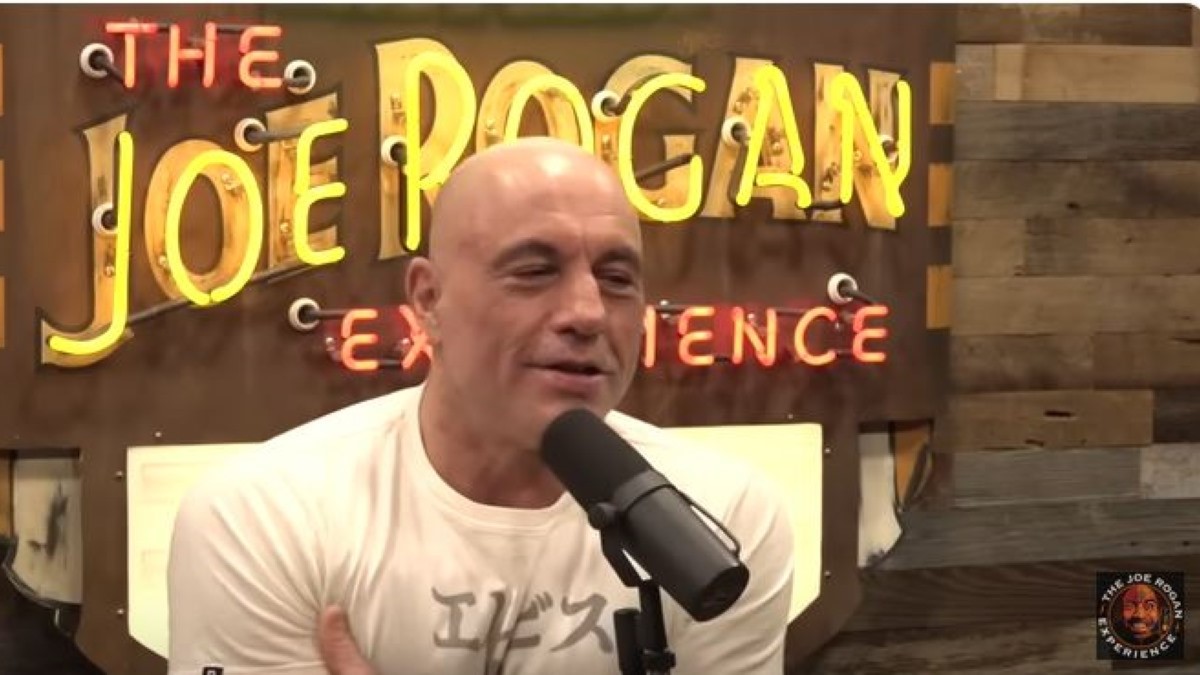
Recommended eye opener: Joe Rogan podcast #2281 with Elon Musk

This recommendation is for folks not familiar with The Joe Rogan Experience podcasts. And for those who would like to understand what DOGE is really doing and why.

This recommendation is for those not yet familiar with Rogan’s conversations with folks like J.D. Vance, Mark Zuckerberg, Mel Gibson, Rod Blagojevich, Tulsi Gabbard, Donald J. Trump, Woody Harrelson, Bob Lazar, Gad Saad, and many others with a lot to say.  Those who are already Rogan enthusiasts will surely have already listened to this episode.

Briefly regarding the Joe Rogan Experience podcasts: Rogan, born in 1967, started his podcast in 2009 on YouTube.  Today, the podcast has massive audiences on all popular platforms.  The recommended episode #2281 with Elon Musk had 10,518,308 views and 66,911 comments on YouTube as of this writing.  Joe Rogan lives in Austin, Texas.  He practices martial and fighting arts, and is an avid archer and bow hunter (yes, he and his family eat everything he kills).  Rogan is able enthusiastically to discuss all kinds of subjects with his podcast guests.

So, why is the Joe Rogan Experience episode #2281 with Elon Musk important?  Because this episode has the potential of forcing DOGE opponents to understand what DOGE is really doing and why it needs to be done.

In episode #2281, Elon Musk says that Americans are living in two separate universes.  There is the DOGE opponents’ universe, and there is the DOGE supporters’ universe.  As a rule, opponents most likely get their news and facts only from mainstream media sources like MSNBC, AP, Washington Post, New York Times, and Facebook.  As a rule, DOGE supporters most likely also consume alternative media like X and the Joe Rogan podcasts. 

Today’s mainstream media shows DOGE protesters speaking of service cuts to the needy, fears of deportation from the U.S., anxiety over changes to Social Security and Medicare, shattered dreams of laid off government employees.  It shows legislators pointing to the “human impact of DOGE cuts.”  It talks about DOGE usurping Congress’ job.  All valid concerns.

Alternative media like X and the Joe Rogan podcasts expose DOGE’s findings in the underbelly of a government doing its best to delay its certain collapse.  The alternative media tacitly brings awareness that DOGE is indeed doing the job Congress has failed to do, since Congress remains unconcerned that absent policy changes the U.S. will face bankruptcy in the not too distant future.   

Just a few numbers can show why DOGE needs to take a chainsaw to the U.S.’s bloated bureaucracy – a task Congress should do but will not.

*   National debt as percentage of gross national debt was 123% as of fiscal year 2024.  As debt increases faster than GDP, this percentage will increase, eventually resulting in unsustainability.

*   House Continuing Resolution No. 14 passed on February 25, 2025, along party lines, with the sole Republican “Nay” coming from Thomas Massie (R-KY).  The Resolution recommended increased amounts of debt each year, resulting in a 47.5% cumulative increase 2025 to 2034.  The Economic Times sounded a warning in November 2024, which like all other warnings, was ignored by the U.S. Congress.

America’s national debt has reached a record high of $36 trillion, with a $2 trillion increase this year alone … The situation is becoming more dire, with the US debt now standing at 125% of the country’s GDP. Experts predict that this debt-to-GDP ratio could reach 200% in the coming years, meaning that the national debt could be twice the size of the entire US economy.  This is expected to result in the government spending more on interest payments than on essential areas such as infrastructure, development, and education.” America Headed for Bankruptcy, The Economic Times, November 25, 2024.

*   In 2024 the U.S. national debt was $35.5 trillion.  The combined wealth of billionaires was $6.2 trillion.  The combined wealth of millionaires was $26.1 trillion.  Even if the government taxed all the wealth of billionaires and millionaires in 2024, it would not succeed in reducing the national debt to zero.  Congress has preferred to remain ambivalent on calls to fix the country’s deficits by taxing the rich, because it can’t be done.

It would be great if DOGE’s opponents among voters would listen to Elon Musk’s conversation of February 28, 2025, with Joe Rogan. The entire 3-hour conversation is worth listening to, with plenty of entertaining topics — like responses from the sassy sexy voice from Grok. But the segment starting at 13.56 relates to DOGE findings and is the most crucial part of the podcast. 

Here are just a few observations by Musk:

*   Today’s dominant notion is that although a business needs to at least break even to survive, government can spend way beyond its revenues.  That notion is flawed, and on the current trajectory, the U.S. government will collapse in the near future. 

*   Again comparing government to business, a business must pass audits (external or internal) showing clearly described payment (where the money goes and why).  The U.S. Treasury issues numerous payments without codes or descriptions, the destination of which no one can readily determine.  [Note: This observation about the U.S. Treasury is not new.  For example, a report issued by the Office of Inspector General released May 29, 2024, concluded that the Treasury lacked sufficient controls to be fully compliant with the Payment Integrity Information Act of 2019.  Apparently, nothing has changed.]

*    About 1.5 million non-government organizations (NGOs) operate in the U.S.  An estimated 30% of NGOs rely on U.S government grants.  Payments to them are often on autopilot, without any follow-up as to the NGOs activities or efficiency. 

*   Concerns over the fate of Social Security are valid.  Concerns should include the fact that Social Security is a pay-as-you-go system that has created massive unfunded liabilities.  Future obligations are far greater than payments.  If the system is not rectified soon, it will collapse.

*  “DOGE staffers”:  These are the worker bees of DOGE.  They work as employees of government agencies and are vetted in the same way as any other government employee.  Their role is explained in the Executive Order of January 20, 2025. 

*   What DOGE does is shown event by event, line by line, on the DOGE website.  The website is accessible to anyone, including DOGE critics who express concern about not knowing what DOGE does. 

It is unfortunate that those truly concerned about the economic future of our nation had to resort to drastic unconventional action.  But inaction would have been an even more unfortunate choice. 

Picture:  Joe Rogan in his studio on February 28, 2025.

USAID – Humanitarianism vs. America First

The new normal: “Every dollar we spend, every program we fund, and every policy we pursue must be justified with the answer to three simple questions: Does it make America safer? Does it make America stronger? Does it make America more prosperous?”

On January 26, less than a week after President Donald Trump took office, the U.S. State Department announced Secretary Marco Rubio was initiating a review of aid programs under the following guidelines:

Every dollar we spend, every program we fund, and every policy we pursue must be justified with the answer to three simple questions: Does it make America safer? Does it make America stronger? Does it make America more prosperous?”

As the principal U.S. agency funding foreign assistance, the U.S. Agency for International Development (USAID) was the first to be reviewed, and subsequently slated for elimination, reform or consolidation.

A perusal of the Internet readily shows numerous articles lamenting the humanitarian catastrophe that pausing USAID assistance will cause. One really must dig to find articles confirming the problems inherent in USAID. Depending on viewpoint, this might be because USAID has no problems or because mainstream media is biased. Or all of the above.

In spite of rhetoric about the ills of wealth redistribution, mainly coming from the right, today’s average Americans do observe charity. The National Philanthropic Trust says, “Per capita, Americans voluntarily donate about seven times as much as continental Europeans.”

This humanitarian spirit spills into governmental policies. Therefore, it should not be surprising that U.S. foreign aid agencies have been giving generously to populations in need whether friend of foe. A hungry child in Taliban-controlled Afghanistan experiences the same suffering as a hungry child in the Philippines.

Unfortunately, this humanitarian spirit causes U.S. aid agencies and other parts of government to work at cross purposes, one part spending money and effort on an adversary and the other part spending money and effort combating that same adversary. Here is an example:

The influx of undocumented individuals into the U.S. has become a cause for concern, particularly in conservative circles. Another cause for concern has been reform district attorneys whom conservatives associate with rise in crime. However, USAID funded East West Management Institute, an Open Society Network organization focusing on judicial reform. Also in the Open Society Network is Welcoming America, an organization that empowers “supportive residents of local communities—immigrants and U.S.-born together—to disseminate positive messages about local immigrants.”

This is most probably just one of many examples of cross purpose foreign assistance that does not sit well with the new White House, prompting the swift actions we all have witnessed.

Indeed, as supporters of USAID point out, government spent in fiscal year 2023 only 1.2% of its budget in foreign aid – not a lot to worry about. However, one of the reasons the nation is $36 trillion in debt (121% of GDP) is that members of the U.S. Congress have been either asleep or busy campaigning, while nickel and diming the nation into fiscal unsustainability.

Supporters also have expressed angst that China, our current competitor on many levels, will gain ground if USAID work is paused. Such concern borders on wishful thinking. While USAID focuses on food and social justice, China focuses on roads, hydro power, transportation, and other hard “aid.” The U.S. Government Accountability Office in its October 2024 post says,

China is the world’s largest debt collector, with outstanding borrower debt sitting between $1.1 and $1.5 trillion. But countries receiving Chinese investments may end up with unsustainable debt that leaves them no choice but to support Chinese global goals.”

Sounds like while the U.S. is playing checkers, China is playing 3-D chess.

Although it is good for the American people to remain charitable and the U.S. to remain engaged in the needs of less fortunate nations, we need to refrain from being naïve. Our legislative leaders have done very little besides bicker and campaign. It is time for somebody to make our government efficient and focused on America’s best interests.

Picture: The former USAID headquarters in Washington DC. USAID employees also occupied a 38,520 sq ft annex building, also located in Washington DC.

With a name like DOGE it’s got to be good

Wasteful government spending is nobody’s secret. Neither are ways to curtail that spending. However, the debt ceiling is raised every year, the spending continues, and the national debt keeps rising. Maybe DOGE, named after a meme coin featuring Kabosu the dog is weird enough to succeed!

We are living in a brave new world of memes, soundbites, and billion-dollar campaign war chests. Thus, chances are media savvy billionaires calling themselves DOGE might succeed in saving this nation from eventual bankruptcy, when other fiscal Cassandras were and are ignored.

Some reminders

As of December 31, 2024, the U.S. national debt was $36 trillion. As of September 30, 2024, the debt to GDP was 123%. What the country owes is greater than what the country produces to pay its debt.

For the last several decades, Congress – keeper of the nation’s purse strings — has shown no interest in cutting spending. Members feign anguish about raising the debt ceiling every year at budget time, then go ahead and raise it.

Voters seem content re-electing spenders and having their giggles at news of any ludicrous government expenditures.

Three outstanding producers of much giggle but little action

The late Senator William Proxmire (D-Wisconsin) issued 168 “Golden Fleece” awards from 1975 to 1988, informing the public of questionable ways Congress was spending taxpayer money. One of his best choices was a 1978 $97,000 ($400,489 today) study by the National Institute of Mental Health of activities in a Peruvian brothel.

Retired Representative Ron Paul (R-Texas) served in the U.S. Congress for 12 non-consecutive terms. While in Congress he was known as “Dr. No,” since he would not vote in favor of any proposal not expressly authorized by the Constitution. Imagine how much leaner, better, faster, cheaper government would be if every member of Congress did the same!

Current Senator Rand Paul (R-Kansas) has somewhat followed his father’s footsteps in speaking out against our big, expensive government. So far, Rand Paul has issued 10 annual “Festivus Reports” to acquaint voters of the frivolous ways their hard-earned tax money is spent by Congress. Judging by press reaction, one of the most giggle-worthy expenditures in the 2024 report is National Endowment of the Arts funding for ice-skating drag queens.

Enter DOGE

Soon after his presidential victory, Donald Trump appointed entrepreneurs Elon Musk and Vivek Ramaswamy to lead an extra-governmental group tasked with dramatically reducing the federal budget and the national debt. These objectives are to be accomplished by drastically curtailing government spending, downsizing the federal workforce, and radically cutting regulations. This yet to be configured group has been named DOGE, an acronym for Department of Government Efficiency.

Never mind that, in addition to the government waste warriors mentioned above, we already have the Government Accountability Office and the House Committee on Oversight and Accountability shouting from the rooftops about the incredible amount of taxpayer dollars wasted by various and sundry federal government activities.

Never mind that DOGE will need to dodge all manner of pelts that will surely come its way – claims of extra-constitutional actions, challenges from the legion of entities feeding at the public trough, lawsuits from axed civil servants, dissatisfaction from the forever-growing mass of government-dependent voters, and reluctance from Congress members not willing to upset established sources of donations and votes.

How could DOGE miraculously succeed when others have failed?

  • The power of constant soundbites

Most people these days tolerate (or welcome) a ceaseless stream of breaking news and social media notifications. Shortcuts into the populace’s conscious abound. So do media influencers who successfully promote or ruin products, people, and ideas. Just look at your Facebook or X account, and no further indication of this truth is necessary.

DOGE comes with the power of Elon Musk’s frequent soundbites in the news. It comes with the power of X. It comes riding on the waves of a populist movement made credible by the success and high visibility of leaders like Javier Milei of Argentina and Nayib Bukele of El Salvador.

  • The power of ubiquitous memes

Evolutionary biologist Richard Dawkins coined the word “meme,” short for the ancient Greek word “mimeme” meaning cultural copying. Dawkins characterized memes as,

“… melodies, ideas, catchphrases or bits of information that leap from brain to brain through imitation, expediting their transmission.” The surprising power of internet memes, 09/28/2022.

Unsurprisingly, DOGE is a meme coin, Elon Musk’s favorite crypto currency. The coin came into being when a photo of a Shiba Inu dog named Kabosu went viral, and crypto innovators riding on the popularity of Bitcoin produced the DOGE featuring Kabosu. Take your pick as to whether DOGE stands for DOG-E coin or not.

Kabosu, RIP, died May 24, 2024, at the age of 18. But she will forever be remembered thanks to the Kabosu monument built in 2023 in her honor in Sakura City’s Sakura Furusato Hiroba riverside park. See featured image of this article, showing Atsuko Sato (who rescued Kabosu from an animal shelter) cuddling Kabosu at the Sakura monument.

May the fiscal salvation offered by the X owner and frequent poster come to pass.

  • The power of excellence.

Elon Musk and Vivek Ramaswamy are of the intellectual elites of our times. In the old days we had Nicolaus Copernicus, Isaac Newton, John Locke, Benjemin Franklin – minds that operated outside the accepted norm and thus produced what was unimaginable before they came along.

Nowadays with excellence justifiably comes monetary rewards. Musk and Ramaswamy are billionaires. And with money comes power. Musk contributed $259 million to groups supporting Trump’s 2024 campaign, most certainly because he did want to do what he proposed during an X interview with Trump: cut government waste.

One would be naïve to think members of Congress are not aware that plying ball might translate into re-election support.

  • The power of sudden epiphanies.

Today, January 6, is Epiphany, also called the Day of the Magi and the 12th Day of Christmas. The word epiphany means a sudden realization of something, an unexpected grasp of reality.

Let’s hope that voters, Congress, and the legacy media soon come to the realization that the current national practice of borrowing to support spending is not sustainable.

On day one, mind our house divided

Victorious conservatives see the recent decisive presidential election as a mandate for radical change. And progressives are predictably suiting up for battle. A house divided cannot stand.

The recent decisive presidential election showed that a significant number of voters were mad as hell and were not going to take it anymore. However, the aftermath showed some with fear of real and imagined threats and public figures vowing to fight in defense of their turf. Everyone seemingly ignoring that “A house divided against itself cannot stand.”

Abraham Lincoln spoke of the peril of a house divided — quoting Matthew 12:25 — at a time of great national sorrow, when the Southern economy dependent on slave labor was made to face an anti-slavery movement. Today, our nation is on a similar, although thankfully not as tragically wrenching, position of divisiveness: populous coastal states dependent on a redistributive economy were made to face a solid mass of conservative middle states.

Obviously, magnitude of suffering is not what can be compared between today’s divisiveness and the post-Civil War discord. What can be instructive, however, is an assessment of what works best after an upheaval. The post-Civil War Reconstruction period tried both change through conciliatory compromise and change through forced acquiescence. The latter overwhelmed the former, leaving unhealed wounds residues of which linger to this day.

Andrew Johnson, Vice President during Abraham Lincoln’s administration, assumed the presidency upon Lincoln’s assassination. He attempted to follow Lincoln’s advice to bind up the nation’s wounds by adopting a conciliatory approach to full emancipation of former slaves.

His efforts were ineffectively lenient, given the enormity of the challenge. The defeated South experienced rampant violence against former slaves. Radical Republicans in Congress upon achieving a majority, implemented a vastly more stringent agenda, imposing military rule in the South, and disenfranchising Southern rebels.

While Radical Republican actions enabled basic requirements of equality with passage of the 13th, 14th, and 15th Amendments to the Constitution, they also ushered Jim Crow. From Whites Only water fountains to Whites Only suburbs, Jim Crow lasted for nearly 100 years. The last vestiges of which were legislatively erased by the Civil Rights Act of 1964, but Jim Crow left an entire population of citizens playing catch up.

We should accept that Andrew Johnson’s conciliatory approach did not work. However, we should also speculate whether the Radical Republican approach might have been too harsh, producing unfortunate boomerang effects.

The result of the 2024 presidential election is being lauded by supporters as a mandate for radical change that will necessitate radical actions. Predictably, progressive-socialist bastions are already suiting up for battle – the boomerang effect is already evident.

Progressive state governors like Gavin Newsom of California, J.B. Pritzker of Illinois, Kathy Hochul of New York, and Maura Healey of Massachusetts are leading the charge – in the words of Gavin Newsom – to “Trump-proof” their states.

Less strident state leaders have issued more thoughtful messages. Minnesota Governor Tim Walz made a good point: the Trump-Vance team often spoke of leaving decisions to the states; therefore, he is “willing to take them at their word for that.” Walz listed the areas he will defend: abortion rights, climate change, gun restrictions in schools and labor rights. These issues are good ones for the federal government to handle with finesse rather than bluster.

Admitedly, there are issues that need to be handled firmly, but hopefully not belligerently.

It should be obvious by now given the nation’s current unsustainable $35 trillion debt that government is spending beyond its means trying to support an obscenely bloated bureaucracy and a dependent legal and illegal constituency. The incoming administration has pledged to trim both.

Hopefully, in its efforts to keep its pledge the new administration will act “with malice toward none” by avoiding unnecessary acrimonious words and deeds. This tactic will do wonders to heal the nation’s divisiveness and set it on a path to greater prosperity.

Hopefully, the new majority in Congress will heed its Constitutional duties “to pay the Debts and provide for the common Defense and general Welfare of the United States.” (Article I, Section 8, Clause 1). For the last two decades, Congress has abdicated most of its Constitutional responsibilities, by loosening its purse strings ($35 trillion in national debt), adopting a lenient approach to homeland security (open borders and a military not fully prepared), and forgetting what “general” as opposed to selective welfare means.

Hopefully, new leaders will focus on the big picture – national expenditures, prosperity, and a safe homeland. And defer posturing, especially in signing of Executive Orders.

Hopefully, new leaders will mind history and the perils of a house divided.