The consummate political football: Title IX

Rules under the new Title IX go into effect August 1, 2024. While the original 1972 Title IX was a straightforward 37-word mandate to treat women and men in educational environments equally, the new 2024 rules are a salad bowl of schemes sure to bring confusion rather than equality under the law.

On August 1, 2024, rules under President Joe Biden’s revision of Title IX go into effect. The new Title IX reverses the revisions provided by former President Donald Trump, which in turn reversed the revisions provided by former President Barack Obama.

Title IX has become a special kind of proverbial political football, as it grows bigger and more adorned with every presidential administration.

The rules, commonly known as Title IX, were signed into law by then President Richard M. Nixon as part of the Education Act of 1972. Title IX was a straightforward command based on the 14th Amendment’s Constitutional principle of equal protection under the law. It read,

“No person in the United States shall, on the basis of sex, be excluded from participation in, be denied the benefits of, or be subject to discrimination under any educational programs or activity receiving federal financial assistance.”

This 37-word directive worked just fine for three decades after its enactment, providing major educational opportunities for girls and women. Educational institutions could no longer exclude women from elite sports, courses, and activities – exclusions that were the norm rather than exceptions.

The original Title IX was not without opposition, especially from those concerned about its effect on time-honored and often lucrative men’s sports. However, all states complied with and implemented Title IX rules.

As time passed, meanings for the words “discrimination” and “sex” proliferated. In the case of Title IX, discrimination no longer simply meant not providing equal treatment, and sex no longer simply meant a difference in number of chromosomes or bodily characteristics.

Along with the growing interpretations of what is discrimination, of what is sex as opposed to gender as opposed to identity, and of who belongs to what category, came the proliferation of agendas. In 2024, the new Title IX looks more like a salad bowl of schemes than a necessary, ethical and Constitutional effort to provide equal protection under the law.

Yes, the argument can be made that the original 1972 Title IX broke with some conventions accepted by many at the time: Family and society need women as caregivers not as scholars or athletes. Elite educational institutions need the revenue and prestige brought by men’s athletics. Women’s athletics would dilute revenue and prestige. Women don’t like sports, anyway. However, all states accepted and complied with the new rules without major revolt.

The argument can also be made that a woman’s team that includes a biological male would have an advantage over an all-biological female team. And that would be a good thing for the inclusive team.

However, attorneys general in Alabama, Arkansas, Florida, Georgia, Idaho, Indiana, Iowa, Kentucky, Louisiana, Missouri, Mississippi, Montana, Nebraska, North Dakota, Ohio, Oklahoma, South Carolina, South Dakota, Tennessee, Texas, Virginia, and West Virginia have sued the Biden administration, arguing primarily that the administration exceeded its authority changing Title IX. Governors and state education officials in Arkansas, Florida, Louisiana, Montana, Oklahoma Nebraska, South Carolina, and Texas have directed their states’ educational institutions not to comply with the new Title IX rules.

The position of conservative, Republican-led states is that the new rules are a bridge too far in its intent to ignore physical differences by requiring protection against discrimination based on gender identity. Although the new rules stop short of specifically permitting biological men that identify as women competing in women’s sports, the rules lead to such permission by adding gender identity to protected characteristics.

Certainly, a biological male athlete that has received at least 2 years of gender-affirming care prior to puberty could claim his muscle size and strength is comparable to that of a biological female. Totally fair to allow him in women’s sports. But, nowhere in Title IX rules does that eventuality appear, thereby opening the doors to biological males unfairly competing with biological females.

The new Title IX rules are not only unfair to women but are also loaded with nuances likely to cause confusion.

The original 1972 Title IX established a new, straightforward rule that did not exist prior to the title’s enactment. The new 2024 Title IX heaps more prohibitions against infractions that are already punishable under federal, state and local laws, purportedly to tailor said infractions to sex and gender. For example, harassment, assault, violence, and stalking are already punishable. It should be questionable whether the new Title IX rules needed to list all of these already punishable infractions under “sex based” behavior – and why the rules did so. Is a sexual assault on a campus that receives federal assistance any different than a sexual assault in a shopping mall’s parking lot?

Legislators passed the original 1972 Title IX to help end the evident unfairness inherent in the exclusion of women from elite sports, courses, and educational activities. The Title IX rules helped women to achieve excellence in fields previously closed to them. If federal, state, and local jurisdictions abide by existing laws against all harassment and other violence, is there really a need for more than the original Title IX? Probably not. But factions have not resisted the urge to use Title IX as an agenda-driven political football.

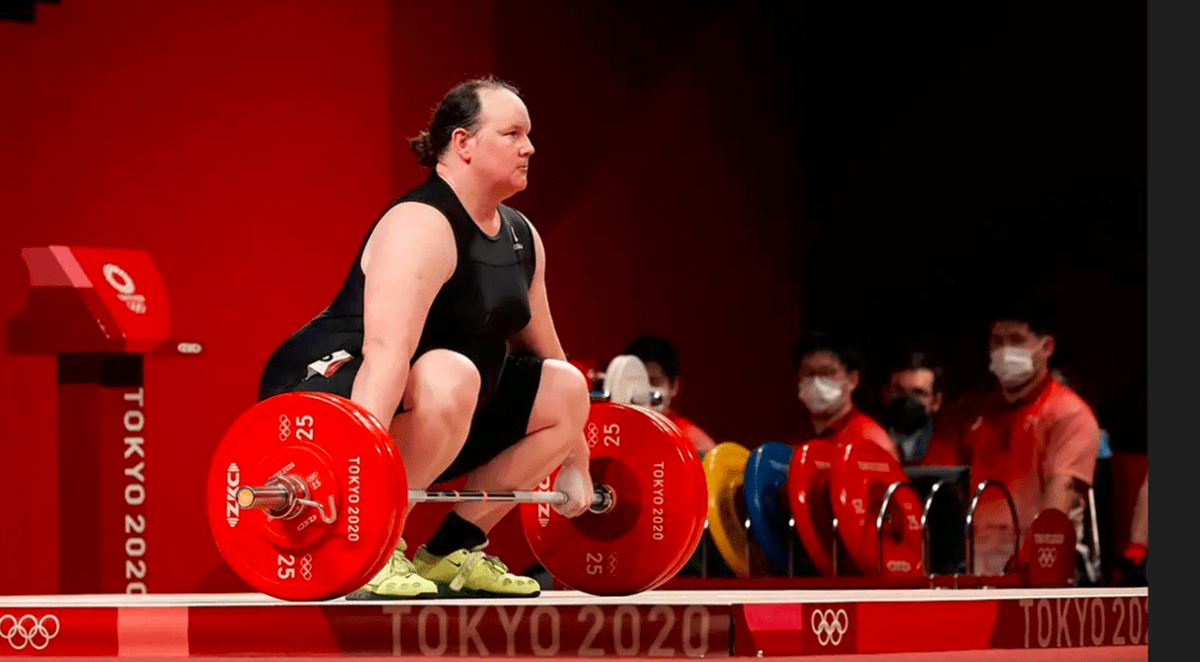
Picture: New Zealand’s Laurel Hubbard, a trans athlete, competed in the women’s weightlifting team in the 2020 Tokyo Olympics. Hubbard was eligible to compete because his testosterone level was below the maximum allowed trans athletes at the time. Requirements did not take into account that if transgender care starts after puberty, biological males will keep their muscular advantage over females.

The Rise of “Gender Identity”

In the early days of the gay-rights movement, people fought to gain civil rights. Today, the fight is for social acceptance of a wide spectrum of gender identities. That battle might prove more difficult than the earlier one..

June is Pride Month. Originally, June 28, the anniversary of the Stonewall Inn Rebellion of 1969, commemorated the event that galvanized the gay-rights movement. Since then, civil rights were won, like non-discrimination in the workplace and legalization of same-sex marriage. So the focus of the movement shifted towards full acceptance of the expanding designations represented in LGBTQIA+.

The road to equal protection under the law was steep and difficult. The road to full social acceptance is proving equally steep, judging by the proliferation of state laws intended to limit such acceptance. Pride Month 2023 is witnessing obstacles on several fronts: discussion of sexuality and gender in classrooms, biological males competing in women’s sports, children undergoing gender transitions, the presence of minors in drag shows, the presence of drag queens in classrooms.

To some, the movement has gone a step too far from original intent. The desire to be left alone to be who one wants to be – gay, straight, or anything in between – has turned into desire to impose. Impositions on either side of the conforming/non-conforming divide can turn out badly.

Perhaps a broader historical attitude to what we now call “gender identity” would ease today’s strident rhetoric. Although sometimes there are as many historical accounts of an event as there are people recounting that event, gist is not usually lost. Here is a summary of the Eras of sexual activity.

Mediterranean Classical Era 6th century B.C. – 5th century A.D.

Homosexual relationships were commonplace in the Greek and Roman Empires. But people were not classified as homosexual, heterosexual, bisexual, transgender. They were just people having varied sexual relations.

An example is the mythical Greek hero Achilles, whose love interests were diverse: Patroclus, Trojan War warrior and comrade of Achilles is portrayed in some stories as his lover. Deidamia, daughter of King Lycomedis of Scyros, enjoyed a love affair with Achilles and bore him children. Briseis, wife of King Mynes of Lyrnessus and one of Achilles’ war prizes, turned out to be the subject of his intense romantic love.

Today, Achilles might be labelled “bisexual.” Seems ancient Greeks felt no need to do so. Achilles’ diverse love life was the rule rather than the exception, especially among the elite and the sundry gods that populated the Greek psyche.

Middle Ages 5th century – 15th century

The Middle Ages also placed attention on sexual acts, rather than on any characteristics of individuals.

The medieval period had no notion equivalent to the modern ideas of homosexuality, of gay men, lesbians or bisexuals. What counted to medieval people was sexual activity, not inclination or sexual identity. Homosexuality in Medieval Europe, World Anvil, undated.

There was relative tolerance for same-sex sexual activity during the Middle Ages, until around the 11th century when non-conforming behavior started to be viewed as serious transgressions – perhaps an influence of the increasingly powerful Church.

However, even well into the 12th century, there is still ambivalence. Evoking past practices, an anonymous poet used two Classical Era darlings to discuss his present. In the poem Ganymede and Helen the two discuss the pros and cons of same-sex vs. opposite-sex relationships. Here is part of a stanza in which Ganymede points to hypocrisy among the supposedly most holy who engage in same-sex activity. For the sake of modesty, part of the last line if left out here,

We know this activity is accounted worthy by those worthy to be counted;
The people with power and position in the world—
The very censors who decide what is sin and what is allowed—
These men are not immune to …

Interestingly, as tolerance waned, gender inversion and cross dressing became popular subjects of theater plays. Here is a comment regarding two of these plays.

In fact, this illusory transsexuality drives home all the more strongly an aspect of gender that both plays present: it is “put on” or assumed and does not necessarily coincide with biological sex…Through a technique of mise en abime, gender is revealed to be a cultural construction, a representation, and ultimately, a performance. Queer Play: The Cultural Work of Crossdressing in Medieval Drama, JStor.org, Spring 1997.

One might ask how does the “put on” transsexuality of Medieval plays compare (or not compare) with today’s drag shows.

The Modern Era 15th century to 20th century

The Modern Era brought the world out of the “Dark Ages” with the printing press, industrial revolution, technology, cultural rebirth in the arts, and re-examinations of science and economics. The Renaissance was a return to Classical values. The Enlightenment was the “age of reason.” But, not much happened to the repressive views of sexuality inherited from the Middle Ages.

Sexual non-conformity was still not a specific subject of deliberation, but simply a part of culture considered at par with other infractions. Labeling or identification (or even the word “homosexual”) as it occurs today did not happen. If any labeling did occur, it was a general category of “pederast,” a word whose origin (paiderastḗs) dates to the ancient Greek traditions of men befriending young boys.

As often happens, most people went about their business immersed in traditional behavior. But there were prominent pockets of non-conformity, especially in the upper classes.

In France, there was the “confrerie,”

Prominent aristocratic figures like Condé and Orléans helped compose the backdrop to a series of scandals involving self-described noble confréries (“fraternities”) dedicated to sodomy. While documentary evidence on these confréries is extremely lacking, and all information about them are derived from outside observers, they appear to represent the existence of a sub-culture defined chiefly by same-sex desire among the court nobility. The Brotherhood : Male Same-Sex Love Among the Early Modern Court Nobility, June 1, 2014.

In England there were famous gentlemen of Victorian times. Two such upper middle-class gents were Ernest Boulton and Frederick Parke, better known as Stella and Fanny. They were sometimes pictured in their gentlemen’s attires and sometimes in beautiful dresses. Harmless enough, although not to some.

At the Bow Street Police Court yesterday, Ernest Boulton, aged 22, of 43, Shirland Road, Paddington, Frederick William Parke, aged 23, of 13, Bruton Street, Berkeley Square, law student, and Hugh Alexander Mundell, aged 23, of 158, Buckingham Palace Road, gentlemen, were charged before Mr. Flowers with frequenting a place of public resort, to wit, the Strand Theatre, with intent to commit felony, the first two named in female attire. Homosexuality in 19th Century England

By today’s standards, to what category would we assign Stella and Fanny?

The Post-Modern Era 1950s +

When did we start labeling people? The consensus seems to be the mid-1960s, with the research of psychologist John William Money.

John Money’s primary interest was research on cultural influences vs. inborn characteristics of sexuality. Believing that discussions on sexuality needed specific descriptive language, he popularized terms such as gender role (what society expects from each gender) and gender identity (the gender in which an individual feels most comfortable).

Money’s interest in cultural and other external forces that shape gender identity led him to research and execution of gender reassignment procedures. Unfortunately, his best chance to prove that gender can be shaped by external intervention ended tragically with his subject’s suicide. Although Money’s work and character became tarnished, he is regarded as a significant contributor to his field, especially the field’s vocabulary.

The vocabulary of sexual orientation, gender identify, and biology continued to expand after Dr. Money started the ball rolling. Expansion can be measured by additional letters on the original LG acronym. What was once LG (lesbian/gay), expanded to LGB (bisexual), then LGBT (transexual), LGBTQ (queer or questioning), LGBTQI (intersex), LGBTQIA (asexual), and LGBTQIA+ (the “+” is whatever was left out).

Many (sexually conforming and non-conforming) use these designations to describe themselves or others in “forever” terms, like “I am transgender because I was assigned male sex at birth but have always felt like a girl.” Others are better described by “+”, which can include impermanence: gender fluid, non-binary, pansexual, cross-dresser, etc.

Live and Let Live

History says varied sexual activity has been with us since the beginning of recorded time. However, emphasis on orientation and gender rather than activity is relatively new. The focus on what an individual “is” as opposed to what the individual “does” might increase the need to defend oneself, and thereby heighten confrontation.

Some will say confrontation is what brings about civil rights. Others will stand their ground on the view that some things are not rights at all. And the squabble goes on. Maybe time to live and let live – on both sides?

Enjoy Pride Month!

Random Access Minds – Happy Birthday Hedy Lamarr!

Let’s talk about Hedy Lamarr, Ada Lovelace, and Erna Hoover.

November 9 is the birthdate of Hedy Lamarr, and a good day to celebrate women who made their mark in technology. A good day also to wonder what could have prompted women like Kathleen Booth to develop one of the first computer assembly languages when, as another technology pioneer, Erna Hoover, said, “When I was hired, the glass ceiling was somewhere between the basement and the sub-basement.”

So, let’s celebrate just three of the many technology pioneers who happened to be women.

Hedy LamarrHedy Lamarr – Frequency Hopping and your Wi-Fi

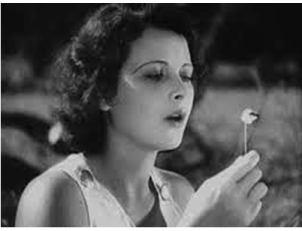
Hedwig Eva Maria Kiesler was born on November 9, 1914 in Vienna, Austria. By age 18, she was married to Austrian ammunition manufacturer Fritz Mandl, who encouraged her to participate in his professional and social associations with the Austrofascist elite. Also by age 18, Eva Kiesler became known for her role in Ecstasy, a film that shocked for its acknowledgement of female sexuality, similarly to the cognitive dissonance that to this day accompanies the combination of beauty and brains.

Soon after Ecstasy, Hedwig Eva Maria Kiesler, escaped her fascist milieu, went from Paris to Hollywood, and took the name of Hedy Lamarr. From the late 1930s to the late 1950s, Hedy Lamarr had a successful film career. She also decided during the 1940s to contribute to a solution to detection by enemy forces of radio-guided torpedoes. The knowledge of fascist plans and operations she acquired during her marriage to Fritz Mandl served her well.

“During World War II, Lamarr learned that radio-controlled torpedoes, which could be important in the naval war, could easily be jammed, thereby causing the torpedo to go off course. With the knowledge she had gained about torpedoes from her first husband, she thought of creating a frequency-hopping signal that could not be tracked or jammed. She contacted her friend, composer and pianist George Antheil, to help her develop a device for doing that, and he succeeded by synchronizing a miniaturized player-piano mechanism with radio signals. They drafted designs for the frequency-hopping system, which they patented.”

U.S. Patent 2,292,387 “Secret Communications System” was awarded to Lamarr (under her married name Hedy Kiesler Markey) and Antheil in 1942. Although the Navy at the time turned down the idea, probably because it could not conceive of torpedoes being guided by player-piano rolls, years later more random minds understood the basic usefulness of the principle of frequency hopping. The system eventually contributed to the development of spread-spectrum technology, the basis of today’s of wireless communications.

Ada Lovelace

Ada Lovelace – the First Programmer

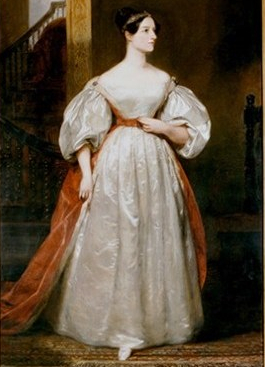
Augusta Ada Byron, born in 1815, was the daughter of poet Lord George Gordon Byron and Lady Anne Isabella Milbanke. The couple separated soon after Ada was born, and Ada was raised by a single mom, who simply decided not to worry about gender roles. Ada had tutors in science and mathematics just like the boys of the day. She married William King, Earl of Lovelace, father of Ada’s three children and supporter of her academic endeavors.

Around the age of 17, Ada met Charles Babbage, “father of the computer” and inventor of the analytic engine. Ada studied the machine, and “described how codes could be created for the device to handle letters and symbols along with numbers. She also theorized a method for the engine to repeat a series of instructions, a process known as looping that computer programs use today.”

Erna HooverErna S. Hoover – Feedback Control so your phone systems don’t overload

Erna Schneider Hoover, born in 1926, did not let her gender keep her from earning a PhD from Yale, being awarded one of the first software patents, becoming the first female supervisor of a technical department at Bell Labs, or being inducted in the National Inventors Hall of Fame.

In an age of ubiquitous smartphones, we tend to forget that it was not so long ago that Bell Labs struggled with a growing number of analog telephones and switching systems overwhelmed by dropped calls and dreaded busy signals. Aided by her background in mathematics, Erna Hoover drew plans for a computer program that kept track of the number, intervals, and classes of calls. The monitoring allowed for prioritizing resources, thus preventing systems from overloading.

Dr. Hoover was awarded U.S. Patent No. 3,623,007, Feedback Control Monitor for Stored Program Data Processing System. Inventors listed are Barry J. Eckhart Ottawa, Canada, and Erna S. Hoover, Summit, NJ, U.S.A. For information: the order in which names are listed under “Inventors” does not indicate importance of contribution.

What to “Just Vote No” On?

An article about women inventors might seem out of place on this website, but it is not. Here are four suggestions:

* Vote No on any proposal to allow prioritizing establishment politics over subject learning like reading, writing, arithmetic, science, technology. The women inventors had to know their subject, either by formal tutoring or schooling as Ada Lovelace and Erna Hoover, or by self study like Hedy Lamarr.

* Vote No on any proposal that excuses learning choices. If you wish to major in sociology, that’s fine, but be aware that on the average you will not be earning as much as someone who majors in engineering.

* Vote No on any proposal that emphasizes gender. They are all designed to keep women economically indebted to government largess.

* Vote No on any proposal to standardize schooling to the point that natural curiosity and randomness is stamped out. The inventions by Lovelace, Lamarr, and Hoover all called for planned randomness, finding a pattern in the unexpected, connecting dots where no connection was there before.