USAID – Humanitarianism vs. America First

The new normal: “Every dollar we spend, every program we fund, and every policy we pursue must be justified with the answer to three simple questions: Does it make America safer? Does it make America stronger? Does it make America more prosperous?”

On January 26, less than a week after President Donald Trump took office, the U.S. State Department announced Secretary Marco Rubio was initiating a review of aid programs under the following guidelines:

Every dollar we spend, every program we fund, and every policy we pursue must be justified with the answer to three simple questions: Does it make America safer? Does it make America stronger? Does it make America more prosperous?”

As the principal U.S. agency funding foreign assistance, the U.S. Agency for International Development (USAID) was the first to be reviewed, and subsequently slated for elimination, reform or consolidation.

A perusal of the Internet readily shows numerous articles lamenting the humanitarian catastrophe that pausing USAID assistance will cause. One really must dig to find articles confirming the problems inherent in USAID. Depending on viewpoint, this might be because USAID has no problems or because mainstream media is biased. Or all of the above.

In spite of rhetoric about the ills of wealth redistribution, mainly coming from the right, today’s average Americans do observe charity. The National Philanthropic Trust says, “Per capita, Americans voluntarily donate about seven times as much as continental Europeans.”

This humanitarian spirit spills into governmental policies. Therefore, it should not be surprising that U.S. foreign aid agencies have been giving generously to populations in need whether friend of foe. A hungry child in Taliban-controlled Afghanistan experiences the same suffering as a hungry child in the Philippines.

Unfortunately, this humanitarian spirit causes U.S. aid agencies and other parts of government to work at cross purposes, one part spending money and effort on an adversary and the other part spending money and effort combating that same adversary. Here is an example:

The influx of undocumented individuals into the U.S. has become a cause for concern, particularly in conservative circles. Another cause for concern has been reform district attorneys whom conservatives associate with rise in crime. However, USAID funded East West Management Institute, an Open Society Network organization focusing on judicial reform. Also in the Open Society Network is Welcoming America, an organization that empowers “supportive residents of local communities—immigrants and U.S.-born together—to disseminate positive messages about local immigrants.”

This is most probably just one of many examples of cross purpose foreign assistance that does not sit well with the new White House, prompting the swift actions we all have witnessed.

Indeed, as supporters of USAID point out, government spent in fiscal year 2023 only 1.2% of its budget in foreign aid – not a lot to worry about. However, one of the reasons the nation is $36 trillion in debt (121% of GDP) is that members of the U.S. Congress have been either asleep or busy campaigning, while nickel and diming the nation into fiscal unsustainability.

Supporters also have expressed angst that China, our current competitor on many levels, will gain ground if USAID work is paused. Such concern borders on wishful thinking. While USAID focuses on food and social justice, China focuses on roads, hydro power, transportation, and other hard “aid.” The U.S. Government Accountability Office in its October 2024 post says,

China is the world’s largest debt collector, with outstanding borrower debt sitting between $1.1 and $1.5 trillion. But countries receiving Chinese investments may end up with unsustainable debt that leaves them no choice but to support Chinese global goals.”

Sounds like while the U.S. is playing checkers, China is playing 3-D chess.

Although it is good for the American people to remain charitable and the U.S. to remain engaged in the needs of less fortunate nations, we need to refrain from being naïve. Our legislative leaders have done very little besides bicker and campaign. It is time for somebody to make our government efficient and focused on America’s best interests.

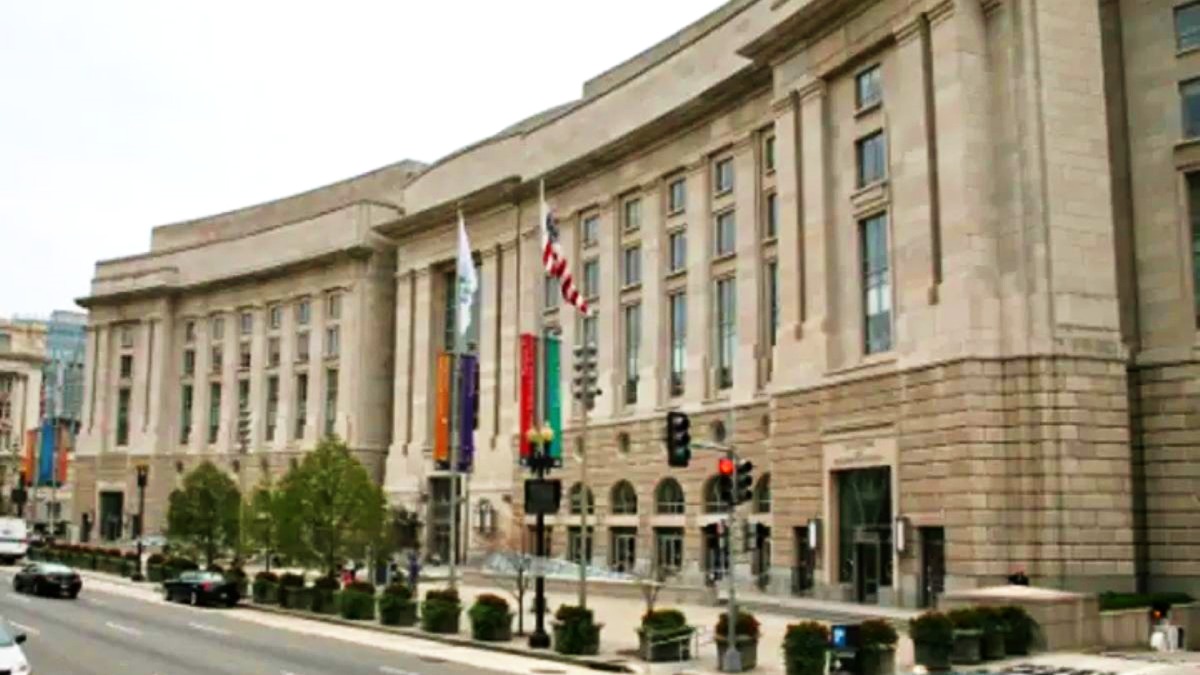
Picture: The former USAID headquarters in Washington DC. USAID employees also occupied a 38,520 sq ft annex building, also located in Washington DC.

Did Greenland say it wanted Texas?

Nations have always felt comfortable taking over other nations. So, it should not be surprising that President-elect Donal Trump wants Greenland. Niccolo Machiavelli explained the situation way back in 1532.

No, Greenland did not say it wants Texas. However, nations have always felt comfortable taking over other nations or occupying foreign territories, and nothing has changed. Examples currently abound: China is committed to reunification with Taiwan, by force if necessary. Russia wants Ukraine as security against NATO encroachment. Israel also cites security as it expands settlements in Palestinian territories and occupies buffer zones in southern Syria. North Korea has never stopped eyeing South Korea.

Therefore, it should not be surprising that President-elect Donald Trump, especially given the expansionist aspirations of China and Russia – as well as the treasure trove of valuable minerals under Arctic soil — wants to take over Greenland. This despite the clear message “Greenland is not for sale” repeated by both Greenland and Denmark. And by the way, Trump also would like to take over Canada and the Panama Canal.

Whether Trump’s threat of maximum menace represent his version of negating tactics or his version of American exceptionalism — i.e. empire building — is anyone’s guess. However, either way, he is seemingly guided by what Niccolo Machiavelli called “effectual truth” in his novel The Prince (1532). Here is an excerpt,

It remains now to see what the modes and government of a prince should be with subjects and with friends … it has appeared to me more fitting to go directly to the effectual truth of the thing than to the imagination of it … it is so far from how one lives to how one should live that he who lets go of what is done for what should be done learns his ruin rather than his preservation.

Especially in developed nations, ideal leaders are often envisioned as behaving presidentially, respecting other nations’ sovereignty, practicing “peace, commerce, and honest friendship with all nations, entangling alliances with none” (as Thomas Jefferson advised during his inaugural speech of 1801).

But the U.S. has enjoyed very few years of peace since independence in 1776. During the 19th century, the U.S. used force during its Western expansion and its removal of French and Mexican presence. The 20th century saw the two great wars and combat against Communist expansion. In the 21st century U.S. lives and treasure have been spent establishing footholds in the Middle East. Today, thankfully not U.S. lives, but certainly plenty of U.S. treasure is being spent defending Israel and Ukraine. While China and Russia are just outside the gates.

Perhaps the world is engaging in imagining what should be rather than what is. So, Donald Trump’s expansionist pronouncements stick out like a sore thumb.

Alternatives? Peace through strength (waging war and calling it peace) is the historical possibility chosen by great empires. Globalization as exemplified by the European Union chooses peace and prosperity through national acquiescence. That’s it?

Niccolo Machiavelli is often perceived as supporting ruthless leaders. However, in Chapter 19 of The Prince he says,

… a prince ought to have two fears, one from within, on account of his subjects, the other from without, on account of external powers. From the latter he is defended by being well armed and having good allies … But concerning his subjects, when affairs outside are disturbed he has only to fear that they will conspire secretly, from which a prince can easily secure himself by avoiding being hated and despised, and by keeping the people satisfied with him, which it is most necessary for him to accomplish,

It appears a prince stays in power at the will of his subjects! Would that mean that in our time and place we could at the ballot box choose leaders who prefer peace, commerce, and honest friendship with all nations? If so, why have we not?

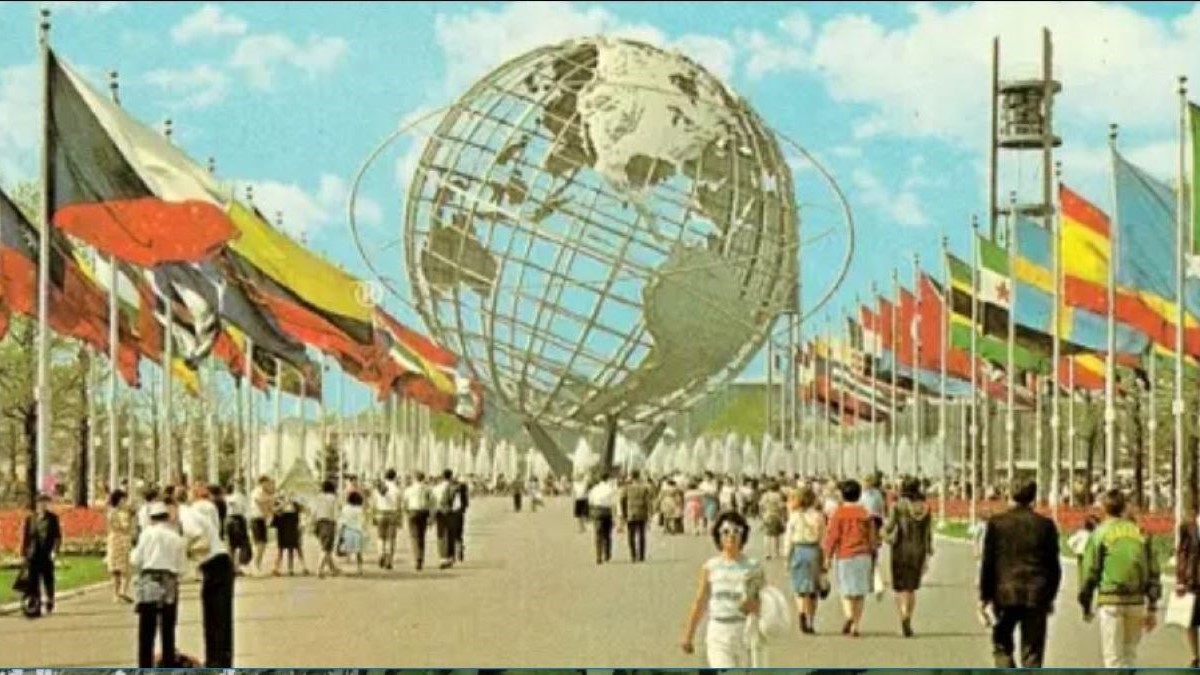
Picture: The symbol for the 1964 World’s Fair in New York state was The Unisphere. The theme of the fair was “Peace Through Understanding.” This picture is from The Legacy of the 1964 World’s Fair in the History website.

With a name like DOGE it’s got to be good

Wasteful government spending is nobody’s secret. Neither are ways to curtail that spending. However, the debt ceiling is raised every year, the spending continues, and the national debt keeps rising. Maybe DOGE, named after a meme coin featuring Kabosu the dog is weird enough to succeed!

We are living in a brave new world of memes, soundbites, and billion-dollar campaign war chests. Thus, chances are media savvy billionaires calling themselves DOGE might succeed in saving this nation from eventual bankruptcy, when other fiscal Cassandras were and are ignored.

Some reminders

As of December 31, 2024, the U.S. national debt was $36 trillion. As of September 30, 2024, the debt to GDP was 123%. What the country owes is greater than what the country produces to pay its debt.

For the last several decades, Congress – keeper of the nation’s purse strings — has shown no interest in cutting spending. Members feign anguish about raising the debt ceiling every year at budget time, then go ahead and raise it.

Voters seem content re-electing spenders and having their giggles at news of any ludicrous government expenditures.

Three outstanding producers of much giggle but little action

The late Senator William Proxmire (D-Wisconsin) issued 168 “Golden Fleece” awards from 1975 to 1988, informing the public of questionable ways Congress was spending taxpayer money. One of his best choices was a 1978 $97,000 ($400,489 today) study by the National Institute of Mental Health of activities in a Peruvian brothel.

Retired Representative Ron Paul (R-Texas) served in the U.S. Congress for 12 non-consecutive terms. While in Congress he was known as “Dr. No,” since he would not vote in favor of any proposal not expressly authorized by the Constitution. Imagine how much leaner, better, faster, cheaper government would be if every member of Congress did the same!

Current Senator Rand Paul (R-Kansas) has somewhat followed his father’s footsteps in speaking out against our big, expensive government. So far, Rand Paul has issued 10 annual “Festivus Reports” to acquaint voters of the frivolous ways their hard-earned tax money is spent by Congress. Judging by press reaction, one of the most giggle-worthy expenditures in the 2024 report is National Endowment of the Arts funding for ice-skating drag queens.

Enter DOGE

Soon after his presidential victory, Donald Trump appointed entrepreneurs Elon Musk and Vivek Ramaswamy to lead an extra-governmental group tasked with dramatically reducing the federal budget and the national debt. These objectives are to be accomplished by drastically curtailing government spending, downsizing the federal workforce, and radically cutting regulations. This yet to be configured group has been named DOGE, an acronym for Department of Government Efficiency.

Never mind that, in addition to the government waste warriors mentioned above, we already have the Government Accountability Office and the House Committee on Oversight and Accountability shouting from the rooftops about the incredible amount of taxpayer dollars wasted by various and sundry federal government activities.

Never mind that DOGE will need to dodge all manner of pelts that will surely come its way – claims of extra-constitutional actions, challenges from the legion of entities feeding at the public trough, lawsuits from axed civil servants, dissatisfaction from the forever-growing mass of government-dependent voters, and reluctance from Congress members not willing to upset established sources of donations and votes.

How could DOGE miraculously succeed when others have failed?

  • The power of constant soundbites

Most people these days tolerate (or welcome) a ceaseless stream of breaking news and social media notifications. Shortcuts into the populace’s conscious abound. So do media influencers who successfully promote or ruin products, people, and ideas. Just look at your Facebook or X account, and no further indication of this truth is necessary.

DOGE comes with the power of Elon Musk’s frequent soundbites in the news. It comes with the power of X. It comes riding on the waves of a populist movement made credible by the success and high visibility of leaders like Javier Milei of Argentina and Nayib Bukele of El Salvador.

  • The power of ubiquitous memes

Evolutionary biologist Richard Dawkins coined the word “meme,” short for the ancient Greek word “mimeme” meaning cultural copying. Dawkins characterized memes as,

“… melodies, ideas, catchphrases or bits of information that leap from brain to brain through imitation, expediting their transmission.” The surprising power of internet memes, 09/28/2022.

Unsurprisingly, DOGE is a meme coin, Elon Musk’s favorite crypto currency. The coin came into being when a photo of a Shiba Inu dog named Kabosu went viral, and crypto innovators riding on the popularity of Bitcoin produced the DOGE featuring Kabosu. Take your pick as to whether DOGE stands for DOG-E coin or not.

Kabosu, RIP, died May 24, 2024, at the age of 18. But she will forever be remembered thanks to the Kabosu monument built in 2023 in her honor in Sakura City’s Sakura Furusato Hiroba riverside park. See featured image of this article, showing Atsuko Sato (who rescued Kabosu from an animal shelter) cuddling Kabosu at the Sakura monument.

May the fiscal salvation offered by the X owner and frequent poster come to pass.

  • The power of excellence.

Elon Musk and Vivek Ramaswamy are of the intellectual elites of our times. In the old days we had Nicolaus Copernicus, Isaac Newton, John Locke, Benjemin Franklin – minds that operated outside the accepted norm and thus produced what was unimaginable before they came along.

Nowadays with excellence justifiably comes monetary rewards. Musk and Ramaswamy are billionaires. And with money comes power. Musk contributed $259 million to groups supporting Trump’s 2024 campaign, most certainly because he did want to do what he proposed during an X interview with Trump: cut government waste.

One would be naïve to think members of Congress are not aware that plying ball might translate into re-election support.

  • The power of sudden epiphanies.

Today, January 6, is Epiphany, also called the Day of the Magi and the 12th Day of Christmas. The word epiphany means a sudden realization of something, an unexpected grasp of reality.

Let’s hope that voters, Congress, and the legacy media soon come to the realization that the current national practice of borrowing to support spending is not sustainable.

On day one, mind our house divided

Victorious conservatives see the recent decisive presidential election as a mandate for radical change. And progressives are predictably suiting up for battle. A house divided cannot stand.

The recent decisive presidential election showed that a significant number of voters were mad as hell and were not going to take it anymore. However, the aftermath showed some with fear of real and imagined threats and public figures vowing to fight in defense of their turf. Everyone seemingly ignoring that “A house divided against itself cannot stand.”

Abraham Lincoln spoke of the peril of a house divided — quoting Matthew 12:25 — at a time of great national sorrow, when the Southern economy dependent on slave labor was made to face an anti-slavery movement. Today, our nation is on a similar, although thankfully not as tragically wrenching, position of divisiveness: populous coastal states dependent on a redistributive economy were made to face a solid mass of conservative middle states.

Obviously, magnitude of suffering is not what can be compared between today’s divisiveness and the post-Civil War discord. What can be instructive, however, is an assessment of what works best after an upheaval. The post-Civil War Reconstruction period tried both change through conciliatory compromise and change through forced acquiescence. The latter overwhelmed the former, leaving unhealed wounds residues of which linger to this day.

Andrew Johnson, Vice President during Abraham Lincoln’s administration, assumed the presidency upon Lincoln’s assassination. He attempted to follow Lincoln’s advice to bind up the nation’s wounds by adopting a conciliatory approach to full emancipation of former slaves.

His efforts were ineffectively lenient, given the enormity of the challenge. The defeated South experienced rampant violence against former slaves. Radical Republicans in Congress upon achieving a majority, implemented a vastly more stringent agenda, imposing military rule in the South, and disenfranchising Southern rebels.

While Radical Republican actions enabled basic requirements of equality with passage of the 13th, 14th, and 15th Amendments to the Constitution, they also ushered Jim Crow. From Whites Only water fountains to Whites Only suburbs, Jim Crow lasted for nearly 100 years. The last vestiges of which were legislatively erased by the Civil Rights Act of 1964, but Jim Crow left an entire population of citizens playing catch up.

We should accept that Andrew Johnson’s conciliatory approach did not work. However, we should also speculate whether the Radical Republican approach might have been too harsh, producing unfortunate boomerang effects.

The result of the 2024 presidential election is being lauded by supporters as a mandate for radical change that will necessitate radical actions. Predictably, progressive-socialist bastions are already suiting up for battle – the boomerang effect is already evident.

Progressive state governors like Gavin Newsom of California, J.B. Pritzker of Illinois, Kathy Hochul of New York, and Maura Healey of Massachusetts are leading the charge – in the words of Gavin Newsom – to “Trump-proof” their states.

Less strident state leaders have issued more thoughtful messages. Minnesota Governor Tim Walz made a good point: the Trump-Vance team often spoke of leaving decisions to the states; therefore, he is “willing to take them at their word for that.” Walz listed the areas he will defend: abortion rights, climate change, gun restrictions in schools and labor rights. These issues are good ones for the federal government to handle with finesse rather than bluster.

Admitedly, there are issues that need to be handled firmly, but hopefully not belligerently.

It should be obvious by now given the nation’s current unsustainable $35 trillion debt that government is spending beyond its means trying to support an obscenely bloated bureaucracy and a dependent legal and illegal constituency. The incoming administration has pledged to trim both.

Hopefully, in its efforts to keep its pledge the new administration will act “with malice toward none” by avoiding unnecessary acrimonious words and deeds. This tactic will do wonders to heal the nation’s divisiveness and set it on a path to greater prosperity.

Hopefully, the new majority in Congress will heed its Constitutional duties “to pay the Debts and provide for the common Defense and general Welfare of the United States.” (Article I, Section 8, Clause 1). For the last two decades, Congress has abdicated most of its Constitutional responsibilities, by loosening its purse strings ($35 trillion in national debt), adopting a lenient approach to homeland security (open borders and a military not fully prepared), and forgetting what “general” as opposed to selective welfare means.

Hopefully, new leaders will focus on the big picture – national expenditures, prosperity, and a safe homeland. And defer posturing, especially in signing of Executive Orders.

Hopefully, new leaders will mind history and the perils of a house divided.

Grocery prices too high? You can fix that!

When inflation gets so high that voters complain, politicians can dance around the challenge by implementing price controls, breaking up big corporations, or trying other gimmicks that have never worked. Or they can refrain from pressuring the Federal Reserve, and allow them to bring inflation down by increasing interest rates and decreasing the money supply.

The working middle and modest-income classes in the United States are struggling with rising prices and stagnant incomes. They are also hoping government will “do something” to ease their pain. Unfortunately, most often government is the cause of the pain, not the cure.

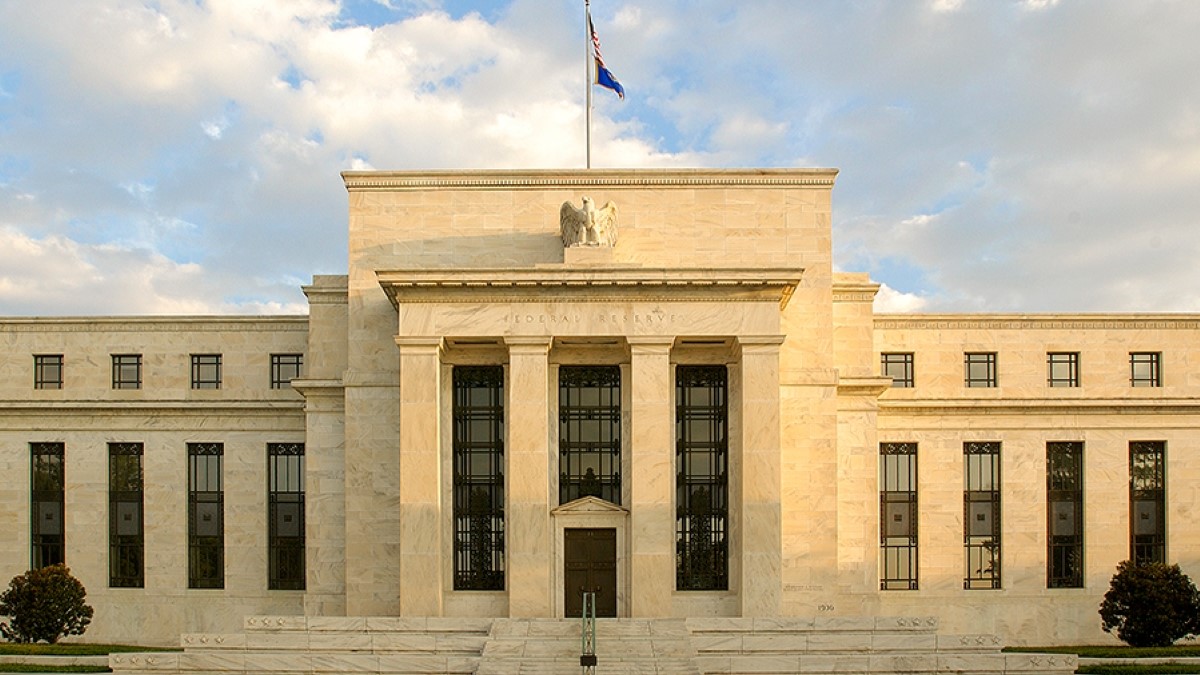
An article dated November 2013, on the website Federal Reserve History, has some interesting things to say about the Great Inflation of 1965-1982.

Here are a few quotes from that article:

“The Great Inflation was the defining macroeconomic event of the second half of the twentieth century … It was, according to one prominent economist, ‘the greatest failure of American macroeconomic policy in the postwar period.’ “

“In 1964, inflation measured a little more than 1 percent per year. It had been in this vicinity over the preceding six years. Inflation began ratcheting upward in the mid-1960s and reached more than 14 percent in 1980.”

“While economists debate the relative importance of the factors that motivated and perpetuated inflation for more than a decade, there is little debate about its source. The origins of the Great Inflation were policies that allowed for an excessive growth in the supply of money—Federal Reserve policies.”

“The late 1960s and the early 1970s were a turbulent time for the US economy. President Johnson’s Great Society legislation brought about major spending programs across a broad array of social initiatives at a time when the US fiscal situation was already being strained by the Vietnam War.”

“A more disruptive force was the repeated energy crises that increased oil costs and sapped U.S. growth. The first crisis was an Arab oil embargo that began in October 1973 and lasted about five months. During this period, crude oil prices quadrupled to a plateau that held until the Iranian revolution brought a second energy crisis in 1979. The second crisis tripled the cost of oil.”

“The Nixon administration introduced wage and price controls over three phases between 1971 and 1974. Those controls only temporarily slowed the rise in prices while exacerbating shortages, particularly for food and energy. The Ford administration fared no better in its efforts. After declaring inflation “enemy number one,” the president in 1974 introduced the Whip Inflation Now (WIN) program, which consisted of voluntary measures to encourage more thrift. It was a failure.”

“In 1979, Paul Volcker, formerly the president of the Federal Reserve Bank of New York, became chairman of the Federal Reserve Board.”

“By this time, it was generally accepted that reducing inflation required greater control over the growth rate of [bank] reserves specifically, and broad money more generally. … Lending activity fell, unemployment rose, and the economy entered a brief recession … But the Volcker Fed continued to press the fight against high inflation with a combination of higher interest rates and even slower reserve growth … Unemployment peaked at nearly 11 percent, but inflation continued to move lower and by recession’s end, year-over-year inflation was back under 5 percent.”

The meaning, summarized:

*Government spent too much thanks to the Federal Reserve’s generous increase in the money supply and its failure to change monetary policy when inflation started to rise significantly.

*There was no oil price gouging. The significant increase in the price of gas and energy was the result of shortages caused by the Arab oil embargo and by the Iranian revolution.

*The Nixon administration’s wage and price controls did not work. They resulted in massive shortages of goods and an inflation rate of 11%.

*The Ford administration’s measures to encourage corporate and consumer thrift did not work either.

*What did work in bringing inflation down to 3.66% by 1987 were the policies of Paul Volcker, Federal Reserve Chairman from August 1979 to August 1987. He raised interest rates as high as 19.08% and decreased the money supply.

*The Federal Reserve continuously plays a balancing act in abiding by its objectives of maximum employment and price stability.

The Somewhat Great Inflation of 2022-2024.

The 9% inflation rate of 2022 pales by comparison to the 13.88% 1980 rate.

However, just as spending on the Vietnam war and the Great Society fueled inflation, spending in response to the 2019-2023 pandemic did as well. In 2020 federal spending increased 45% from 2019, as compared to a 18% increase in spending in response to the Great Recession of 2008-2009.

The Nixon administration price and wage control did nothing to stabilize prices. So far, neither has the Biden administration Inflation Reduction Act. However, interest rate increases have made a difference.

The unadjusted 12-months ended July 2024 inflation rate for all items of goods and services was 2.9%, down from 3.2% in 2023 and 8.5% in 2022. The decrease is thanks to the Federal Reserve Bank steadily increasing the Federal Funds rate from 1.68% in July 2022 to 5.33% in July 2024.

Other factors besides spending.

There are certainly other factors besides excessive government spending without significant increase in production that can trigger inflation. The factors that contributed to the current inflation are mentioned in these two studies:

*A study reported in July 2024 by MIT Sloan School of Management indicates the following triggers and their relative influence on the current inflation:

Money supply 2.90%
Yield curve 3.30%
Wages and salaries 4.80%
Personal consumption 6.20%
Producer prices 10.10%
Interest rates 14.30%
Inflation expectations 16.90%
Federal spending 41.60%

Federal spending outweighs all other influences. Interestingly, money supply is not a significant contributor according to this study. Although, this paragraph from Statista Research dated May 14, 2024, disagrees.

“While between 2000 and 2019, the M1 money supply increased at a slow pace, there was an exceptionally sharp increase in 2020, which was the result of the Federal Reserve’s quantitative easing in response to the COVID-19 pandemic. The sharpest increase took place in May 2020, when the M1 money supply was increased from 4.8 to 16.2 trillion U.S. dollars.”

*And from Brookings Institution research dated June 13, 2023:

“The pandemic-era inflation has been a complicated phenomenon that involved both multiple sources and complex dynamic interactions. Ultimately, as many have recognized, the inflation largely reflected strong aggregate demand, the product of easy fiscal and monetary policies, excess savings accumulated during the pandemic, and the reopening of locked-down economies.”

Additional factors.

Indeed, the current inflation is complex, with many variables. One variable that the above-mentioned studies do not emphasize because it does not play a major role in inflation is corporations’ ability to raise prices in a consolidated market. Microsoft and Alphabet are examples of near monopolies that are often accused of setting rules and prices largely undisturbed by competitors.

Although those accusations are partly true (Procter & Gamble’s recent report of sales decline attests that the company’s ability to raise prices is not unlimited!), the clamor that government “do something” is laughable, since it is government’s “easy money” that allows formation of such monopolies. Remember, buyouts are mostly leveraged, facilitated by low interest rates.

In conclusion.

Once upon a time, the U.S. dollar was backed by gold. In those old days, politicians could not get re-elected by just spending unlimited amounts of government fiat money giving their constituents the moon – today they can.

Unfortunately, unbridled spending brings on inflation. When inflation gets so high that voters complain, politicians can dance around the challenge by implementing price controls, breaking up big corporations, or trying other gimmicks that have never worked. Or they can refrain from pressuring the Federal Reserve, and allow them to bring inflation down by increasing interest rates and decreasing the money supply.

Thankfully, politicians do not simply step into their roles – they get elected by voters. Thus, voters can fix things that go wrong, like inflation, by voting wisely.

Did Facebook just figure censorship is wrong?

Recently Facebook CEO Mark Zuckerberg admitted that government officials pressured his company to censor certain Covid-19 content. We will see going forward whether his contrition is real.

On August 27, Mark Zuckerberg expressed what perhaps most people knew. He said in a letter to Representative Jim Jordan (R-OH), chair of the House Judiciary Committee, that government officials pressured Facebook to censor certain Covid-19 content. He indicated in the letter that he regretted not being more outspoken about it.

Although Mr. Zuckerberg has now articulated contrition, it will be his actions not his words that prove his repentance. He could start by directing Facebook engineers and content administrators to restore the “reach” of posts that dared to bring up a situation, event, research that diverged from official prescribed positions during the pandemic.

Interestingly, the censorship alluded by Mark Zuckerberg applied to any Facebook account, no matter how obscure. And that included the Just Vote No Blog.

Up to the rise of Covid-related censorship, the Just Vote No Facebook Page reached a good number of people and received several comments on each post. Then, one fateful day, the Just Vote No Blog placed on its Facebook Page a post criticizing the way the pandemic was being handled by U.S. officials. Mind you, the post acknowledged that Covid-19 was real, and people were dying. The post only disagreed with the official response to the challenge, calling the ensuring disarray Keystone Cops behavior.

Overnight, the “reach” of all subsequent posts was “0,” and comments disappeared. This situation continues to this day.

It will be interesting to see whether Mark Zuckerberg’s newly-found courage and common sense will translate into more diverse posts on his platform. There is so much in cat video and cute memes content most people can tolerate.

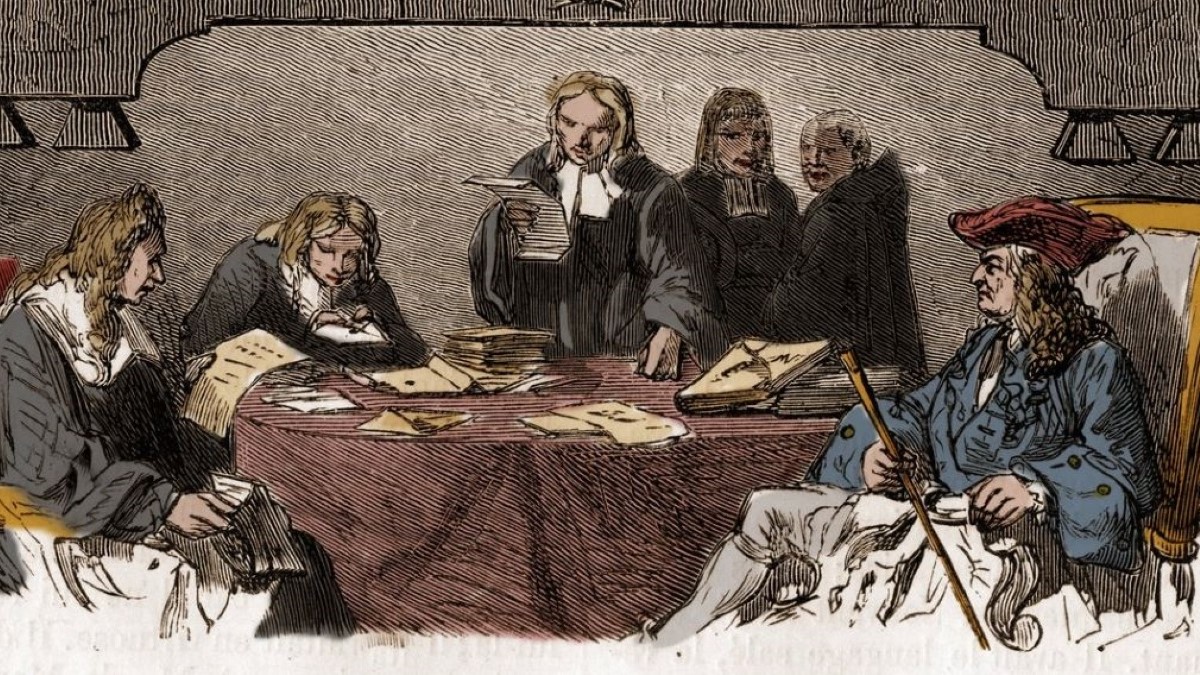
Picture: Anonymous engraving of a 19th century service called the Black Cabinet. The cabinet’s duty was to examine private correspondence for security reasons. From arts print website Meinsterdrucke

The Trump/Musk conversation: Over the media’s head?

Our legacy media has not been kind regarding the recent Trump/Musk conversation. Did they miss that this was supposed to be freewheeling and extemporaneous? Did the whole thing go over the media’s head?

The Just Vote No Blog is not a partisan website, but the Trump/Musk conversation live streamed on August 12, was interesting enough to comment on. Equally interesting has been the legacy media’s focus on “slurring” and “rambling.” Did the fact this was a freewheeling, extemporaneous conversation escape the media? Did the noteworthy comments made go over their head? Well, here are this blog’s observation of a few issues discussed on the Trump/Musk conversation.

Eliminate the Department of Education. Trump briefly spoke about such elimination, which he would endeavor for two reasons: 1) Government is way too big and too expensive. Lots needs to be eliminated if the current unsustainable national debt is to be reduced. 2) Constitutionally, what is not listed as duties of the federal government must be left to the states. Education is not a duty of the federal government. The Department of Education is, therefore, a good candidate for elimination.

There are good, decent people coming through our borders. But there are also criminals that are not being vetted. Both Trump and Musk agreed on this point. Both focused on the criminals, since that is the “existential threat” (Musk’s view) to the U.S. Accusations of “racism” do not apply here.

The current level of inflation is a threat and realistic action needs to be taken to bring it under control. Inflation was probably the challenge Musk wanted to focus on the most. He succinctly stated the cause of inflation: Too much government spending with borrowed money. He also stated his view of a remedy: Establish a commission to determine costs/benefits of every current and proposed spending. Trump agreed with Musk’s definition of inflation (“there is too much waste”), but glossed over Musk’s remedy. The objective is to shrink government, not grow it with another commission.

Climate change is not our greatest threat; nuclear war is. Neither Trump nor Musk slighted challenges posed by earth’s changing climate. Their viewpoint, however, is that serious conflicts are brewing that could result in the use of nuclear weapons. Current negotiations are not proving effective. Trump’s view is that the cudgel of severe sanctions aimed as disruptors of peace works better than long-winded talks.

Vladimir Putin and Kim Jong Un are smart people that know what their threats are. Trump again repeated what gets progressive panties in a bunch. His point is not that ruthless dictators are to be emulated, but that the smart ones know a threat when they see one. A friendly but deadly serious threat of severe sanctions brings better results than an insulting threat of military aggression. Teddy Roosevelt had a great line on this subject: “Speak softly and carry a big stick; you will go far.”

Significant decreases in oil production and electric vehicle mandates are unrealistic ways of mitigating the effects of climate change. The first part of this statement came from Musk, the majority owner of Tesla. Oil and its thousands of derivatives keep the wheels of the economy moving. We cannot significantly decrease oil production without accepting a significant decrease in economic activity. The second part of the statement was what Trump emphasized. His point was simply “An electric car is not for everyone.”

Want to go on strike? “Everyone of you is gone.” It is not surprising that Trump, owner of several businesses, speaking with a fellow business owner, would express his opposition to union-originated strikes. Businesses exist to produce goods and services, not to sit idly while workers strike. Understandably, the UAW immediately filed a lawsuit against Trump and Musk claiming worker intimidation. It will be interesting to see come November if most workers want union protection or want a job – companies that feel pressured by regulations or by unions simply move out of state or out of the country.

Don’t take prosperity for granted. Musk gave Argentina and Venezuela as examples of countries once unbelievably prosperous that fell into total disintegration. Trump agreed, adding the reason for the disintegration was ascension of “stupid people.” Both Trump and Musk also mentioned current President of Argentina Javier Milei, who turned his failed country around in under a year, principally bringing inflation down to single digits in six months. Milei is a libertarian capitalist that knows what he is doing. Milei is not “stupid,” and it shows.

It would be good to hear Vice President Kamala Harris, the presumptive Democratic presidential candidate, in a similar relaxed conversation with a personality of her choice. It is good for voters to get a feel for how candidates for political office talk, just talk. Often what people say in friendly conversation is what they feel about issues.

Picture: From website Donald J. Trump for President 2024

Violence never solves anything

Presidential candidate Donald J. Trump was the victim of an assassination attempt. As other perpetrators of violence, Trump’s assailant solved nothing and failed in his intent in so many ways.

Presidential candidate Donald J. Trump suffered an assassination attempt on July 13, 2024. Thankfully, the tortured soul that pulled the trigger missed. He missed in so many ways. He missed his target, he instead mortally wounded a well-respected father of two, injured two others, and provided a news-worthy image of a bloody but defiant Trump.

If the shooter was looking for fame, he likely failed there as well. His terrible deed was overshadowed by the animated crowd at the Republican National Convention two days later. If history repeats itself, his name will be largely forgotten. Anyone remembers Richard Lawrence, John Flammang Schrank, Giuseppe Zangara, John Warnock Jr, Arthur Bremer, or Lynette Fromme?

There have been perpetrators of violence whom history chooses to remember, but often as creators of martyrs. In this context, perpetrators again fail in their intent. Speaking about Trump’s attempted assassination, HBO show host Bill Maher said:When I saw that photo today of him with the blood streaming down his face … MAGA nation finally has its full martyr.

Senseless violence does not end well for either perpetrators or society. Violence does not solve any challenges to which its was aimed. Violent acts should be pre-emptively avoided by shunning needlessly inflammatory speech, demeaning nicknames, and glorification of guns (one thing is to understand the reason the Founding Fathers rightly placed the Second Amendment near the top of the Bill of Rights, but another thing is to flaunt rifles and boast ownership).

Hopefully, there will be no more political violence going forward. Hopefully, our presidential candidates will focus on economic and governance issues, and voters will do so as well. Hopefully, legislators and other officials will behave impartially, firmly abiding by our nation’s Constitutional principles.

Picture: Firefighters of Butler, Pennsylvania, mourned one of their own. Corey Comperatore, well-respected member of the Butler community and volunteer firefighter, was an innocent bystander killed at the Trump rally on July 13, 2024.

When establishments’ outcasts become leaders

Repeatedly throughout history the risk-taking establishment outcasts do what needs to be done. They often recognize and are instrumental in ending a regime in decay. They often rise to power to start a new cycle in a nation’s history.

It is assumed that any nation would prefer as its leader someone with an impeccable record, free of imperfections.  However, at certain times in history the establishment’s outcast was the one chosen to do what needed to be done.  Reasons vary, but the root cause is constant – the establishment accepted by the dominant power has run its course. 

When the power behind the establishment fails to accept its decay and inevitable end, the agent for change is often the extreme risk taker, willing to suffer tribulations including incarceration, or worse.    

If they persist and survive, agents for change often achieve their objective of ending a decayed regime, and in the process, they rise to power.  Their rise and eventual position of leadership simply indicate that a new cycle is starting.  Whether the new cycle is of benefit to the people of a nation depends on the sincerity and ability of the new leader. 

An interesting report dated May 16, 2018, by the news network France 24, From Prison to Power: Leaders who Served Time, gives five examples of individuals who famously went from incarceration to leadership. Of the five, here is, very briefly, the story of the better-known three:

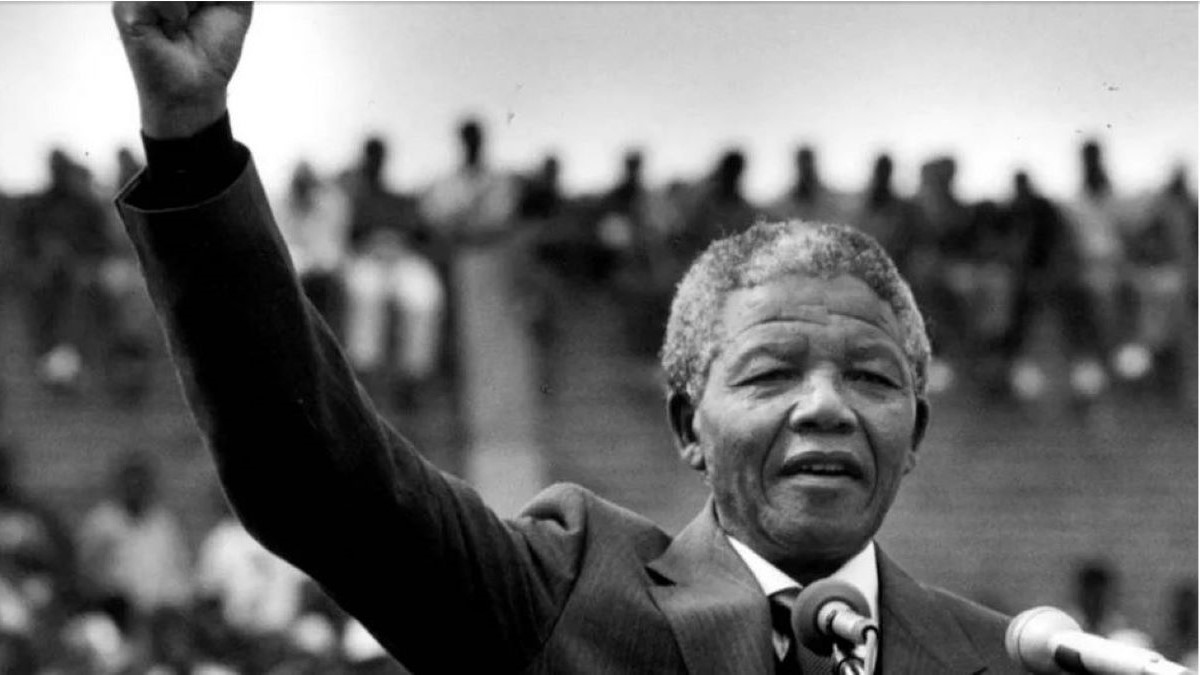
Nelson Mandela founded the paramilitary wing of the African National Congress with the mission to fight against the South African apartheid government.  After 27 years of incarceration, Mandela became in 1994 South Africa’s president in the country’s first multiracial election.  One of his most popular quotes is, “I am not a saint, unless you think of a saint as a sinner who keeps on trying.”

Jawaharlal Nehru’s opposition to British colonial rule in India landed him in jail in 1921.  His continued civil disobedience campaigns alongside Mahatma Gandhi cost him nearly a decade of incarceration.  When in 1947 India finally achieved independence, Nehru was elected the country’s first prime minister, a position he held until his death in 1964.  Nehru’s efforts could be summarized in one of his quotes: “The policy of being too cautious is the greatest risk of all.”

Vaclav Havel was a Czech playwright, essayist, and poet.  He was also a dissident.  During the 1970s and 1980s Havel was arrested several times by the ruling Soviet regime and spent four years in prison.  But December 29, 1989, saw the peaceful overthrow of communist rule. Vaclav Havel was democratically elected president.  The Czech transition to democratic rule was achieved non-violently – the “otherwise” of what Havel once said: “Evil must be confronted in its womb and, if it can’t be done otherwise, then it has to be dealt with by the use of force.”

Regimes, like people, become sclerotic.  As time passes, regimes grow increasingly inflexible and unresponsive.  They become wedded to ideologies that might no longer fit time and place.  At some point, the regime simply collapses, as did the Soviet Union at the end of the Cold War; or suffers a violent demise, as did the French monarchy during the reign of Louis XVI. 

Agents of change, like the Soviet Union’s Mikhail Gorbachev or the French Revolution’s Maximilien Robespierre play major roles in ending a regime that is in an untenable level of decay.  Like Mandela, Nehru and Havel, agents often rise to power to start a new cycle.

For clarification, it is useful to note that the organic cycle of regimes from natural birth to natural demise has no relation to forceful takeovers by outside agents.  For example, the rise and fall of the Roman Empire exemplifies a regime’s organic cycle.  Conversely, inorganic takeovers include colonization of other people’s land by European powers starting around the 1500s, or the more socially acceptable “partitioning” of territories as occurred after the fall of the Ottoman Empire in 1922, or today’s Russian invasion of Ukraine. 

Picture:  Nelson Mandela in Soweto, Johannesburg, South Africa, two days after his release from prison.  Image from In Pictures: 30 years since Nelson Mandela became a free man, AlJazeera, February 11, 2020.

Student loans and the Great Bailout

Recommended item: Cameron Weber – economist, historian, and author of the popular book Economics for Everyone, is also producer of Hardfire TV, a political economics talk show. His latest show discusses student loan debt and debt “forgiveness.” It is worth watching for a different perspective.

Recommended item: Cameron Weber – economist, historian, and author of the popular book Economics for Everyone, is also producer of Hardfire TV, a political economics talk show. His latest show discusses student loan debt and debt “forgiveness.”

College tuition and student loan debt have suffered mind-boggling increases since the early 2000s. In an October 2023 report Education Data reported the following,

“Before adjusting for inflation, the average student loan debt at graduation has increased 106% since 2007; after adjusting for inflation, the average debt increased 41%.”

When adding to this sad statistic a February 2024 report by Inside Higher Ed indicating that nowadays 52% of college graduates are underemployed, seems that young people need to do some homework on what is causing such unfortunate situation.

The student loan segment on Hardfire TV might help. The show can be seen on YouTube.

A few words on political economics as preview.

Economics, especially political economics, wears several hats. It is not akin to, say, mathematics. Political economics is more like the costume of Le Bon Florian, Anatole France’s harlequin – viewed from one perspective the costume is red, and viewed from another it is blue.

The libertarian-leaning perspective of student loans and the accompanying student loan debt is that government intervention – subsidies – has incentivized colleges to raise their tuition to unsustainable levels. As tuition rises, so does student loan debt. The solution is to end the subsidies. This will force colleges to trim their offerings, staff, and tuition. Also, colleges will likely return to emphasizing work-study programs, and financial institutions in the marketplace will again compete to offer college assistance.

The progressive-leaning perspective is that government is a better provider than the marketplace. The marketplace increased tuition and student loan debt to untenable levels. Therefore, government needs to step in and abate that debt. Students and former students carrying the heavy burden of student loan debt are constrained from investing sufficiently in goods and services, thus fail to contribute fully to the economy. Everyone benefits when everyone contributes, which justifies taxation – income and debt redistribution.

And in the middle of these harlequinesque perspectives is the vision of the nation’s Founding Parents. This nation was founded as a grand experiment. It would be ruled not by kings or other sole decision makers, but by the people, like farmers, silversmiths, and carpenters. Therefore, education beyond that of the well to do and privileged was necessary. George Washington, Thomas Jefferson, John Adams were among those that argued in favor of public schools and colleges that would provide the populace with the wisdom, knowledge and awareness necessary to make wise decisions at the ballot box.

Letter from Thomas Jefferson to Richard Price, January 8, 1789. “… wherever the people are well informed they can be trusted with their own government…”

Letter from John Adams to John Jebb, September 10, 1785. “There should not be a district of one Mile Square without a school in it, not founded by a Charitable individual but maintained at the expense of the People themselves.”

So, would our Founders then support the idea of having free colleges today? Probably not. Today, things are quite different than back in the 1800s.

Today we talk about money earned by college graduates vs. non-graduates. Young people often major in trendy subjects, like gender studies or DEI, hoping to find positions in government programs or equally trendy corporations. Hardly expectations seeped in wisdom and awareness.

Agreed that not all was perfect back then. It took nearly 100 years for women and Black students to be routinely admitted into colleges. For a brief historical perspective:

Harvard University (originally called New College) was established in 1636, and Yale University in 1701. These and other equally fine schools, were Colonial institutions established for the education of white, mostly upper class, males.

Oberlin College started accepting women in 1837. 1865 saw the emergence of women’s colleges that offered courses comparable to those of men. By the 1880s women could acquire higher education at Vassar, Smith, Wellesley, Bryn Mawr, and Mount Holyoke colleges.

There were only a few Black colleges before the Civil War. However, between 1865 and 1900, several Historically Black Colleges were established, the majority in 1867, two years after Emancipation.

Today, qualified students are admitted to colleges and universities regardless of sex and color. But whether they are receiving the skills, wisdom, and work ethic the Founders had in mind is questionable.

As libertarian-leaning economists consistently point out, government often creates problems which it then tries to take credit for solving, only to create more problems. The problem of the ballooning student loan debt, and the perceived need for debt forgiveness is a prime example. Those of a libertarian bent suggest that government get out of the student loan business, and let private banks compete to offer students the best loan deal.

Maybe the November 2024 elections will inform us which side of the harlequin’s costume is the most appealing.

Picture: From YouTube video of the Hardfire TV show on Student Loans, with host Cameron Weber and guests Marcy Berry and Melissa Wilcox.