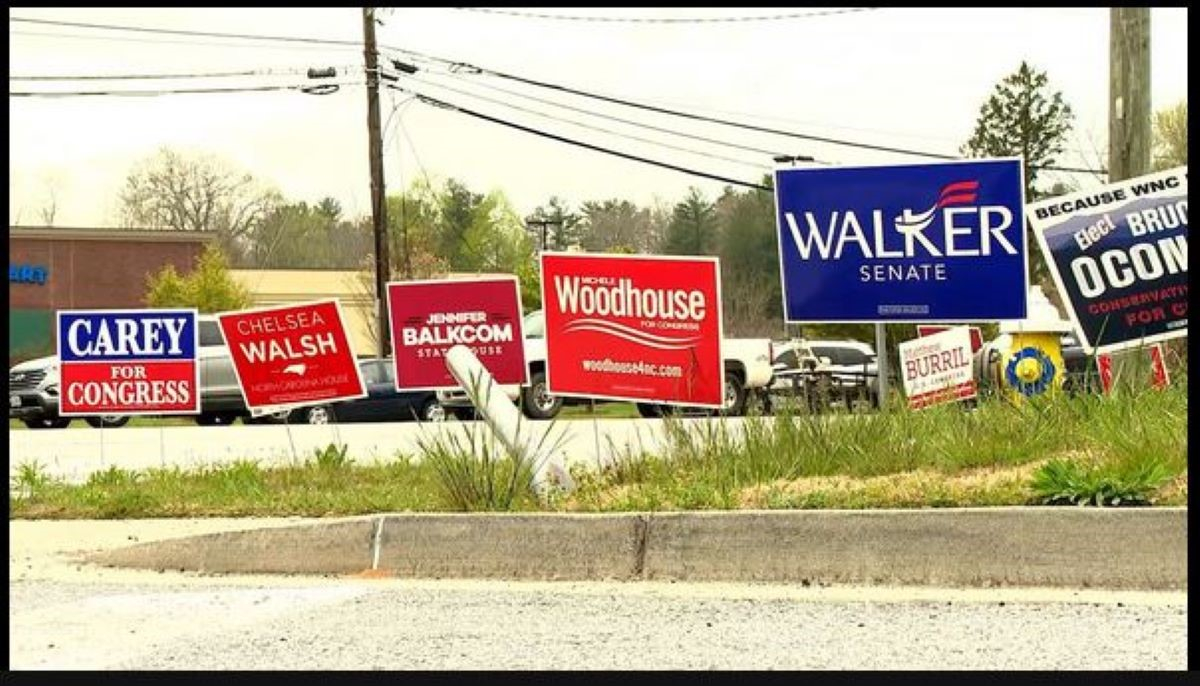
How Refreshing to have political choices!

Today’s political battles are about preserving our Constitutional Republic or abandoning it in preference of a Marxist-based democracy. States like California or New York have already chosen Marxism. Swing states like North Caroline are still waging war.

After living in California, a state forced into a progressive political bubble by the populous coastal region, it is refreshing to now call North Carolina home. This state has strong voices in both progressive and conservative camps.

Even within camps, there are divergent voices. In the conservative camp there are the Trump-anointed vs. establishment. In the progressive camp there are reformers vs. centrists. The libertarian camp is not as visible, although several libertarians are on the upcoming elections ballot.

This mishmash of sides will thin out on May 17, when voters choose who will represent them in the General Election.

The stakes are not insignificant.

North Carolina has maintained a workable political balance with a Republican-majority state legislation and a Democrat governor. Although most voters seem content with such arrangement, activists are not.

At the more contentious Federal level is where swords are drawn. The U.S. Senate is divided 50-50, with the Vice President, a Democrat, being the tie breaker. U.S. Senator from North Carolina, Richard Burr, a Republican, is retiring. His successor, depending on affiliation, can help either maintain or upset the 50-50 balance.

Then there is the Trump Effect. Former President Donald Trump won in North Carolina in 2016 and in 2020. Some say Trump’s influence in North Carolina will be determined if his endorsed candidates do well in the May 17 primary. Others point that the leading contender in North Carolina’s important U.S. Senate race is Trump-endorsed Ted Budd.

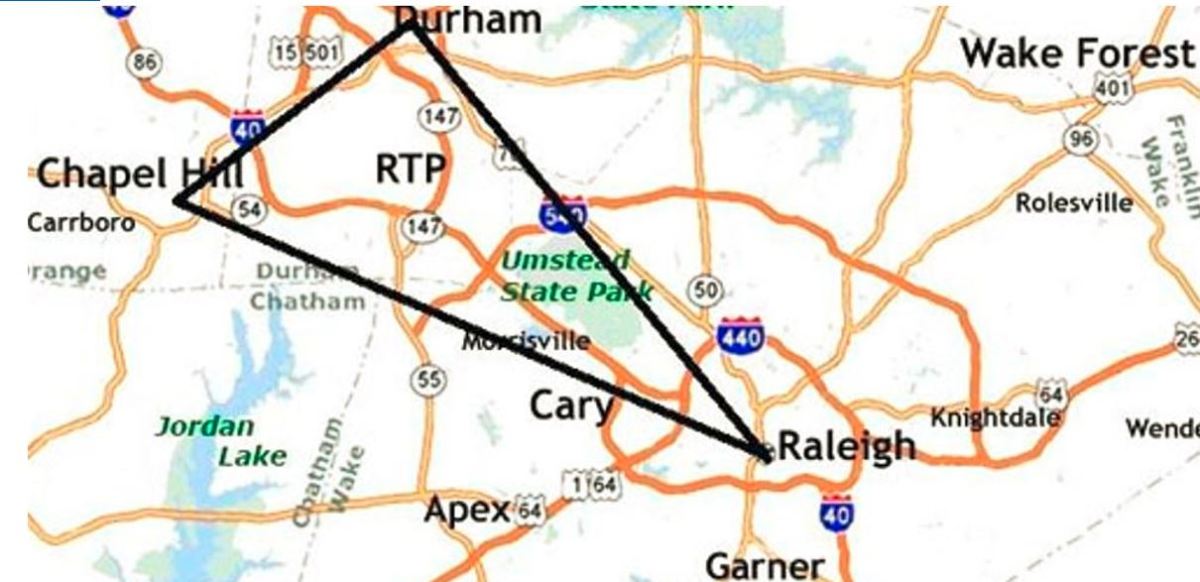
On the other side of the coin is the Millennial Effect. Liberal states like California are emptying out, and the bulk of the out-migrants are young professionals. Wake County, N.C., for example, is full of them, since the burgeoning Research Triangle offers well-paying jobs and pleasant low-cost living. Wake County is politically blue, and locals say that Cary stands for “Concentrated Area of Relocated Yankees.”

Thus, battles between factions rage

In his speech marking the anniversary of the January 6 debacle President Joe Biden said,

“I have said it many times. It’s no more true or real than when we think about the events of January 6. We are in a battle for the soul of America.”

A bit melodramatic but apropos. Today’s battle is not over one or two issues, like The Vietnam War or the New Deal. The battle, daunting and relentless, is over a wide range of subjects that are sometimes lumped together in phrases like “our democracy” or “make America great.”

At its core, the fight is about preserving our Constitutional Republic or abandoning it in preference of a Marxist-based democracy. States like California or New York have already chosen Marxism, so there is no real battle there. Residents of swing states like North Caroline, Florida, and Texas are still waging war.

Good to be where political choices still exist.

Marcy Berry
Editor
Just Vote No Blog

Quotable Quotes from George Soros

George Soros, founder of Open Society Foundations, once said, “The main obstacle to a stable and just world order is the United States.” His many quotable quotes clearly explain what Soros wants.

To those right of center, George Sorors is evil incarnate. Whatever goes wrong, it’s Sorors fault. Given such position, the specifics of what he does goes unaddressed.

George Soros, the billionaire investor and philanthropist founder of Open Society Foundations, has made his philosophy, objectives, and modus operandi perfectly clear, especially in the numerous very quotable quotes in his books, speeches, and public conversations.

Soros is an intellectual who is considered one of the best hedge fund managers in the world. His fortune, estimated at $8.6 billion, attests to his acumen. His Open Society Foundations, endowed at around $18 billion, is a grant-making machine amply capable of transforming markets and societies.

His objectives, as clearly expressed in his own words, matter.

A man with a mission

Soros objectives could be boiled down to two of his quotes:

When I had made more money than I needed for myself and my family, I set up a foundation to promote the values and principles of a free and open society.

An open society is a society which allows its members the greatest possible degree of freedom in pursuing their interests compatible with the interests of others.

Back in the late 1970s, when Soros started his philanthropic work, he funded educational initiatives for Black South Africans and gave financial support to dissidents of the Communist regime in the European Eastern Block. When South African apartheid dissolved and the Soviet Union collapsed, Soros turned his attention to other “enemies of open societies.”

The main obstacle to a stable and just world order is the United States.

According to information on its website, Open Society Foundations spends approximately one in five dollars in the United States.

Why? Because most people, including George Soros, view the U.S. as the hot bed of capitalism.

The main enemy of the open society, I believe, is no longer the communist but the capitalist threat.

Capitalist threat?

Such view of capitalism espoused by someone who made his fortune in the world’s capital markets is surprising.

However, today, Soros views his same theory of reflexivity that led to his success in the capital markets as a destabilizing force that needs government regulation.

Reflexivity is the “gap between perception and reality.” According to Soros markets often operate on perception, so prices reflect perception not reality. Reliance on past performance and ideas of how markets should behave can become useless when perceptions of the day interfere with prices.

Add to reflexivity what Soros sees as a tendency of markets toward excess, and we have, according to Soros, a recipe for instability, uncertainty, and economy mayhem.

His solution is to regulate institutions and the market

Throughout the 19th century, when there was a laissez-faire mentality and insufficient regulation, you had one crisis after another. Each crisis brought about some reform. That is how central banking developed.

A global regulatory system would be even better, as Soros explains in one of his books, The Crisis of Global Capitalism.

To stabilize and regulate a truly global economy, we need some global system of political decision-making.

In short, we need a global society to support our global economy.

Soros explained during his remarks on October 1, 2013, at the Global Economic Symposium,

Behind the invisible hand of markets lurks the visible hand of politics. Both the markets and the authorities are fallible; that is what makes their interaction reflexive.

The downside? According to Soros, reflexivity applies to society as a whole, not just to capital markets. He willingly admits that his views and actions are a result of his perceptions of reality. As his perceptions change given new information or new developments, he recalibrates.

Unfortunately political decision makers are seldom blessed with such wisdom. Their perceptions mushroom into eternal rules

More downsides

* Soros view of the ideal society “which allows its members the greatest possible degree of freedom in pursuing their interests compatible with the interests of others” clashes with his desire to achieve stability through heavy regulation. Nevertheless, he acts on his perception that wide-spread regulation is desirable.

* The perception is that capitalism, especially American capitalism, is the cause of imbalance, uncertainly, and economic disaster. The reality is that capitalism has been transformed into cronyism. Already excessive regulation exclude competitors from markets, low interest rates facilitate acquisitions and monopolies, largess showered on the populace disincentivizes workers.

* Power corrupts. Thus, it stands to reason that politicians with the power to heavily regulate and control markets, especially on a global scenario, face temptations to act in corrupts ways.

* Soros is quick to clarify that when he refers to global decision makers, he means a decision-making body that supports sovereign open societies. A nation that must take orders from a global decision maker cannot be called sovereign, whether it is an open society or not.

Watch who supports your political candidates

George Soros’ Open Society Foundations aim to transform economic and social systems in America. Some systems like the creation of elites through inflated stock or real estate prices, for example, could use improvement. But transformation from a sovereign nation with still some semblance of free markets and still some semblance of individual freedom into a subsidiary of a global decision-making body is not what we should want.

Open Society Foundations has created a vast network of grant-making entities that target candidates who will support George Soros’ vision of what America should look like.

Voters need to pay attention for whom they vote. Voters that reject the U.S.’s form of capitalism as does Soros are certainly free to vote for Soros-supported candidates. However, voters who still place faith in our markets and our sovereignty, might want to choose other candidates.

In this article the JVN blog discussed Soros’ economic objectives and how he is advancing those objectives in the U.S. In an earlier article, published in California Political News & Views, JVN discussed Soros’ focus on transforming America’s judicial system by funding selected candidates for district attorney.

_____________________________________

Pictured: This picture, from a timeline of initiatives on the Open Society Foundations website, shows Step by Step, an early childhood education institution funded by Open Society. These institutions are now in 120 countries, including the U.S.

Source of Soros’ Quotable Quotes: Most of the quotes in this JVN article come from Everyday Power: Daily Inspirational Quotes

CBDC: Where Angels Should Fear to Tread

CBDC is not like Bitcoin or Stablecoin or any other form of private digital currency in existence today. CBDC is government issued, and government controlled to stay in concert with government objectives.

CBDC stands for Central Bank Digital Currency, and President Joe Biden, along with other heads of state are on a roll to get CBDC implemented.

“My Administration places the highest urgency on research and development efforts into the potential design and deployment options of a United States CBDC.” Executive Order, March 9, 2022.

The Fed’s White Paper

The Federal Reserve had already been tasked with preliminary exploration, and on January 20, 2022, the Fed released Money and Payments: The U.S. Dollar in the Age of Digital Transformation, a surprisingly balanced white paper.

The paper mainly lists the forms CBDC could take, and the benefits and risks of implementation. That is all the paper could do, since the key issue – the form CBDC could take – is at this time undetermined.

However, Money and Payments is clear on the following points,

* CBDC is a liability of the U.S. government, just like paper money. The general public and private institutions such as banks carry no liability. The white paper does not discuss that a U.S. government liability is a public liability – when government functions sour, Joe Q. Public pays the price in taxes or soup lines.

* CBDC can be designed to achieve various levels of privacy, stability, surveillance, crime fighting, inclusion, risk, transparency, permanency, cross-border availability. The white paper does not discuss the likely levels of each. Numerous articles found on the Internet simply assume the shapes CBDC will take without any basis for such assumptions.

In other words, CBDC is not like Bitcoin or Stablecoin or any other form of private digital currency in existence today. CBDC is government issued, and government controlled to stay in concert with government objectives.

Today, several countries have launched pilot CBDC programs, and 9 countries – 8 in the Caribbean plus Nigeria – have fully functioning CBDC.

Rushing to where angels should fear to tread

It is not just Internet pundits imagining what CBDC would look like.

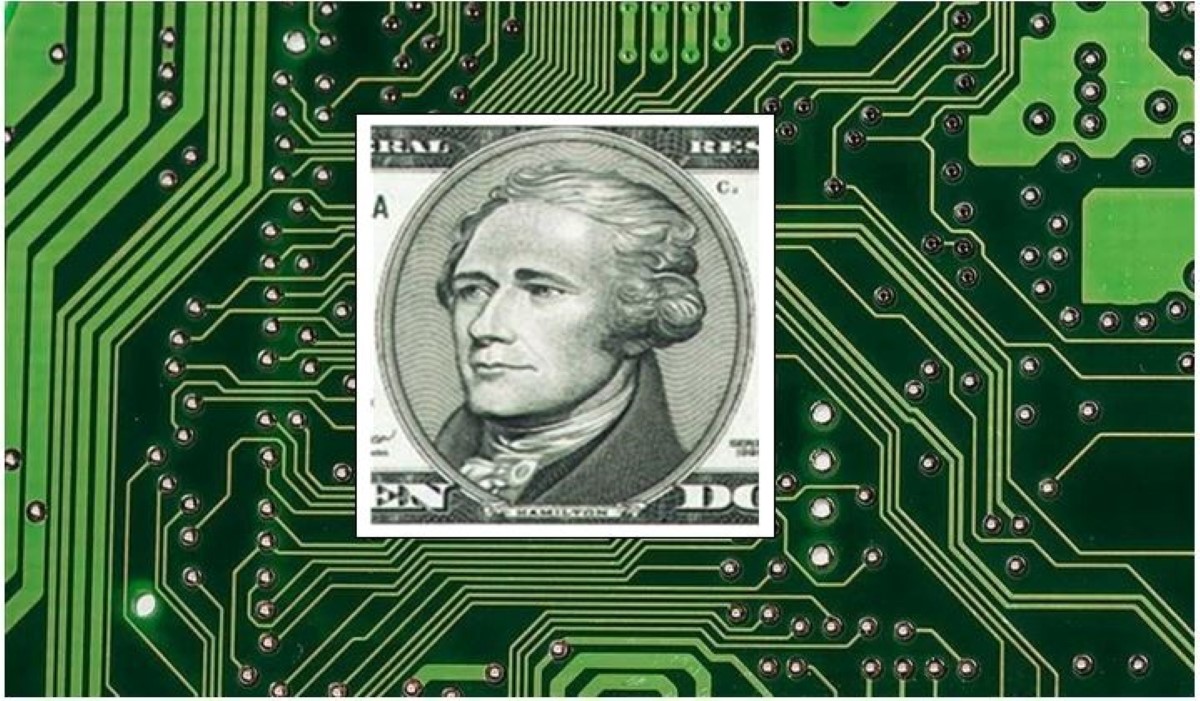
The Federal Reserve Bank of Boston and the Massachusetts Institute of Technology are collaborating on Project Hamilton to explore CBDC design.

Some members of Congress have introduced legislation on CBDC. Not the kind of authorizing legislation that Chairman Powell would like to have, but what could be called preemptive legislation. Examples:

On January 12, Representative Tom Emmer (R-MN) introduced a bill prohibiting the Federal Reserve from issuing a central bank digital currency directly to individuals.

On March 30, Senator Ted Cruz (R-TX) introduced a bill, companion to Rep. Emmer’s, in the U.S. Senate. The Federal Reserve is already prohibited by Constitution and statute from issuing money directly to the public; which might be the reason Senator Cruz emphasizes his concern for individual privacy and his desire to keep the market competitive

U.S. Sen. Ted Cruz (R-Texas), member of the Senate Commerce Committee, today introduced legislation to prohibit the Federal Reserve from issuing a central bank digital currency (CBDC) directly to individuals. Sen. Cruz’s bill was cosponsored by Sens. Braun (R-IN) and Grassley (R-IA).

Specifically, the legislation prohibits the Federal Reserve from developing a direct-to-consumer CBDC which could be used as a financial surveillance tool by the federal government, similar to what is currently happening in China. The bill aims to maintain the dollar’s dominance without competing with the private sector.

On March 28, Representative Stephen Lynch (D-M), with co-sponsors Jesús “Chuy” García (D-IL), Rashida Tlaib (D-MI), Ayanna Pressley (D-MA), and Alma Adams (D-NC), introduced a bill calling for an “ECash” prototype that would be distributed directly to the public by the U.S. Treasury.

The Fed treads more lightly

The Fed Board of Governors so far has stuck to what it was mandated to do: produce a preliminary study.

On several occasions Fed Chairman Jerome Powell indicated that he will not proceed with CBDC on his own. He wants specific authority from Congress in the form of legislation, concurrence from the Administration, and acceptance from the general public.

When issuing those statements, Powell might be referring to the fact that the U.S. Constitution clearly says that the power “to coin money, regulate the value thereof…” belongs to Congress. Also, although the Federal Reserve is tasked with ensuring the efficiency and safety of payment systems, it does not have the power to unilaterally implement a totally new payment system or engage in transactions with the public directly.

Powell also might be noting that implementation of CBDC could, as the white paper states, “fundamentally change the structure of the U.S. financial system, altering the roles and responsibilities of the private sector and the central bank.” Not something the Federal Reserve should undertake without support from the public and their representatives in Congress.

What is Biden proposing exactly?

We don’t know what Biden is proposing, and at this point neither does he. U.S. CBDC could be designed in many forms and to accomplish many diverse objectives.

The Money and Payments white paper comment section illustrates how widely interpreted is CBDC. Comments vary from viewing CBCD as a pig in a poke, a solution looking for a problem, another step in the evolution of the current U.S. payment system, a great opportunity for inclusion, and so on.

Informed consent from Congress in the form of adopted legislation (if that ever happens) with the approval of the President will provide cover for Chairman Powell.

But can do little to ensure,

  • Individual privacy
  • Economic good health
  • Sustainable national debt

The Hypocrisy of Russia and U.S.

“Hypocrisy Abounds in Russia and US”: Article by Paul Lovinger on Antiwar.com asks if there is a difference between Russia’s invasion of Ukraine and U.S. invasion of Libya or Iraq

Paul Lovinger, founder of the War and Law League, makes an interesting point regarding politicians’ comments on the Russian invasion of Ukraine.

Lovinger is a frequent contributor to Antiwar.com. In his latest contribution, he lists absolute contradictions between what politicians say regarding war and what they do. Today they condemn Putin and his invasion of Ukraine. Yesterday they supported U.S. invasion of Iraq and Libya. Not the same thing? Paul Lovinger argues otherwise.

Lovinger’s aim is to avoid U.S. involvement into yet another “presidential war.”

Here is his article as it appears in Antiwar.com :

Hypocrisy Abounds in Russia and U.S.

By Paul W. Lovinger March 14, 2022

In March 2003, when the U.S. launched its second war on Iraq, Russian President Vladimir Putin denounced it. The attack flouted world opinion and international law, he said. In bypassing the United Nations, America threatened “collapse of the international security system.”

Iraq posed no danger to any neighbor or any other country, Putin said. Noting signs of Iraqi cooperation with arms inspectors, he questioned the claim that Iraq possessed “weapons of mass destruction.”

President George W. Bush perpetrated that invasion. Based on his lies that Baghdad had WMD and ties to terrorists, Congress agreed (10/12/02) to let him decide whether to fight Iraq. (He was already hellbent for hostilities. His staff had drafted the resolution relinquishing Congress’s constitutional war power.)

On the following March 19, Bush’s bombs attacked a nation of one-twelfth the U.S. population, commencing a war to topple Saddam Hussein’s government. It sacrificed, some say, as many as a million lives, including those of about 4,840 Americans. Officially it ended December 15, 2011, but U.S. combat forces remain in Iraq, at least through this year.

Nineteen years after the unprovoked and unjustified invasion of Iraq, Bush condemned Putin (2/24/22) for his “unprovoked and unjustified invasion of Ukraine.”

He urged “solidarity with the Ukrainian people as they seek freedom and the right to choose their own future. We cannot tolerate the authoritarian bullying and the danger that poses.” Let’s support “our friend and democratic ally.” (The U.S. and Ukraine, non-member of NATO, are not military allies.)

A Warrior Protests the War

Another ex-president, Barack Obama, castigated Putin. First, let’s go back eleven years.

On March 19, 2011, exactly eight years after Bush attacked Iraq, U.S. and NATO bombs began blasting Libya. No congressional vote preceded war, just President Obama’s order. Presented as a humanitarian, UN no-fly zone, it became a gory campaign to oust—and assassinate—Libya’s leader, Muammar Qadafi.

Three years and three months before Libya, Senator Obama wrote The Boston Globe: “The president does not have the power under the Constitution to unilaterally authorize a military attack in a situation that does not involve stopping an actual or imminent threat to the nation.”

We return to Obama’s statement (2/24/22), protesting the “brazen attack on the people of Ukraine, in violation of international law and basic principles of human decency.” Russia did so because “Ukrainians chose sovereignty, self-determination, and democracy.” A brutal onslaught kills thousands and displaces untold numbers.

The illegal invasion by authoritarian forces, Obama wrote, “threatens the foundation of the international order and security.” All Americans should support President Biden’s hard-hitting sanctions.

“We all face a choice between a world in which might makes right and autocrats are free to impose their will through force, or a world in which free people everywhere are free to determine their own future.”

The writer had imposed his will on Libya through force, escalated Bush’s anti-Taliban war on Afghanistan, launched an unauthorized anti-Assad war on Syria, committed countless drone assassinations, and helped Saudis bomb Yemenis. Obama was the first president to wage war throughout his presidency (2009–2017).

Donald’s remarkable shifts

In various tweets, citizen Donald Trump opposed an attack on Syria in 2013 when Obama proposed it, called Obama’s foreign policy “reckless,” and extolled peace.

Speaking in 2016 in Washington, DC, candidate Trump repeatedly promised a new policy, aiming at “peace and prosperity, not war and destruction …. Unlike other candidates for the presidency, war and aggression will not be my first instinct.” He pledged diplomacy, caution, restraint, a peacemaker’s role for America, and so on.

Once in the White House, Trump showed that war and aggression did appear to be his first impulse. He soon bombed Syria.

Not only did he continue existing warfare: he intensified it. Looser rules of engagement and disregard of international law swelled civilian tolls. In Afghanistan the devastating MOAB bomb detonated for the first time. Trump continued the policy of furnishing bombs to Saudis to drop on Yemen; additionally, U.S. soldiers shot villagers there. New conflicts transpired in Africa. Trump scrapped weapons treaties, considered giving battlefield commanders nukes, and nearly fought Iran.

Comments by Trump on the Ukrainian crisis have swung wildly from praise of Putin’s “genius” to mocking of Biden’s avoidance of military action in Ukraine for fear of nuclear war with Russia.

Trump proposed a false-flag operation in which U.S. warplanes disguised as Chinese “bomb the s* out of Russia.” That scheme, presented to GOP donors, would supposedly fool Putin into fighting China. (The more likely result would be Russia’s bombing the s**t out of us.)

Joe will ‘defend NATO countries’

Joe Biden exemplifies both hawk and dove. In 1995 he urged Bill Clinton to bomb Serbia. When Clinton did so, in 1999, Biden told him not to let up.

Senator Biden opposed Bush Senior’s 1991 Iraq war, but Bush Junior’s lies about WMD and terrorism bamboozled Biden eleven years later. As chairman of the Senate Foreign Relations Committee, he echoed them in a prowar Senate speech. Later, as presidential candidate, he claimed he had opposed the war.

President Biden ended the Afghan war. However, he bombed Iraq and Syria and—contradicting election promises—has continued the Obama-Trump support for Saudi-led bombing of Yemen’s people.

Biden’s State-of-the-Union oration March 1 dealt first with the state of Ukraine. History taught “when dictators do not pay a price for their aggression, they create more chaos. [But not more aggression?] That’s why the NATO alliance was created to secure peace and stability in Europe after World War II.” (So why has it waged wars from Yugoslavia to Libya to Afghanistan?)

Putin’s attack was “premeditated and unprovoked.” He resisted “repeated efforts at diplomacy and tried to falsely justify his aggression.” (Biden could have been talking about the U.S. aggression against Iraq, which he tried to justify.)

U.S. forces “will not be engaged in a conflict with Russia in Ukraine.” (Knock on wood!) However, “we’ve mobilized American ground forces, air squadrons, and ship deployments to protect NATO countries …. [Uh oh!] The United States and allies will defend every inch of territory of NATO countries with the full force of our own collective power.”

Will Congress authorize such a war? Or will Bidden dictate it himself—a la Iraq, Syria, and Yemen? And what keeps it from becoming World War III??

By Paul W. Lovinger
March 14, 2022
North Carolina’s Dr. Ralph Baric, Virologist

North Carolina’s Dr. Ralph Baric is praised for his cutting-edge SARS-CoV-2 research, but not without controversy.

North Carolina’s Research Triangle is home to world-class institutions. The Triangle gets its name from Research Triangle Park and three Tier 1 research universities—Duke University, North Carolina State University and University of North Carolina Chapel Hill. Thus, it is not surprising to find North Carolina scientists on the forefront of coronavirus research and pharmaceutical development.

One such person is Dr. Ralph Baric, distinguished researcher and professor at the University of North Carolina, Chapel Hill. Recognition for his contributions to coronavirus research and vaccine development abound. Among his accolades in 2021 are the O. Max Gardner Award which recognizes faculty within the UNC System that make “the greatest contribution to the welfare of the human race,” and the News & Observer Tar Heel of the Year award given to North Carolina residents who have made lasting contributions to their community and state.

Acknowledgement of individuals in any cutting-edge endeavor never comes without controversy. In today’s hyper reaction and response to the corona virus pandemic, Dr. Baric’s virus engineering is especially controversial. Dismissing concern about his work as conspiracy theory does not help, since it detracts from the immense complexity of such work. Some of the arguments are worth repeating.

The Lab-Leak Debate

In its September 2021 issue, the Atlantic carried an article about a proposal presented by Peter Daszak, President the EcoHealth Alliance, to DARPA (Defense Advanced Research Projects Agency) in 2018, describing a $14.2 million project to defuse the threat of bat-borne coronaviruses. Here is an excerpt from The Lab-Leak Debate Just Got Even Messier, the Atlantic, 09/26/21.

The document seems almost tailor-made to buttress one specific theory of a laboratory origin: that SARS-CoV-2 wasn’t simply brought into a lab by scientists and then released by accident, but rather pieced together in a deliberate fashion. In fact, the work described in the proposal fits so well into that narrative of a “gain-of-function experiment gone wrong” that some wondered if it might be too good to be true.

Central figures in the coronavirus-origins debate were involved. Among Daszak’s listed partners on the grant were Ralph Baric of the University of North Carolina at Chapel Hill, an American virologist known for doing coronavirus gain-of-function studies in his lab, and Shi Zhengli, the renowned virus hunter from the Wuhan Institute of Virology.

Risks vs. Benefits of Virus Engineering

In June 2021, MIT Technology Review discussed the risks of bat-virus engineering that need to be weighed against the urgency of emerging pandemics. The article quoted Dr. Ralph Baric’s assessment of risk vs. benefit. Here is an excerpt from Inside the risky bat-virus engineering that links America to Wuhan, Technology Review, 06/29/21

His 2015 paper, “A SARS-like cluster of circulating bat coronaviruses shows potential for human emergence,” was a tour de force, utilizing bleeding-edge genetic technology to alert the civilized world to a looming danger on its periphery. It also revived concerns about gain-of-function experiments, which Baric had known it would.

In the paper, he spelled out the extra precautions he’d taken and held up the research as a test case. “The potential to prepare for and mitigate future outbreaks must be weighed against the risk of creating more dangerous pathogens,” he wrote. “Scientific review panels may deem similar studies building chimeric viruses based on circulating strains too risky to pursue.”

The NIH decided the risk was worth it. In a potentially fateful decision, it funded work similar to Baric’s at the Wuhan Institute of Virology, which soon used its own reverse-genetics technology to make numerous coronavirus chimeras.

Quest for the Universal Remedy

As arguments pro and con COVID-19 vaccines rage, scientists on the fore front of vaccine development will inevitably receive both accolades and criticism. Again, dismissing all con arguments as conspiracy, anti-science, or anti-vaxxer is unhelpful. More rational and helpful would be to acknowledge that, as human beings, none of us produces perfect solutions, free from human limitations and frailties. Picking a best balance between risk and rewards is perhaps the best any of us can do.

The MIT Technology Review article quoted earlier mentions Dr. Baric’s efforts to develop “universal drugs and vaccines against the full spectrum of SARS-like viruses.” A breakthrough came with his collaborative work in 2013 with Dr. Shi Zhengli, the virology at China’s Wuhan Institute of Virology.

Shi had detected the genome of a new virus, called SHC014, that was one of the two closest relatives to the original SARS virus, but her team had not been able to culture it in the lab.

Baric had developed a way around that problem—a technique for “reverse genetics” in coronaviruses. Not only did it allow him to bring an actual virus to life from its genetic code, but he could mix and match parts of multiple viruses. He wanted to take the “spike” gene from SHC014 and move it into a genetic copy of the SARS virus he already had in his lab. The spike molecule is what lets a coronavirus open a cell and get inside it.

The resulting chimera would demonstrate whether the spike of SHC014 would attach to human cells. If it could, then it could help him with his long-term project of developing universal drugs and vaccines against the full spectrum of SARS-like viruses that he increasingly considered sources of potential pandemics.

From Splicing to Vaccination

Dr. Baric holds Patent number 9884895 Methods and compositions for chimeric coronavirus spike proteins, among his many other scientific papents. As the inventor of this product (with Drs. Sudhakar Agnihothram and Boyd Yount), Dr. Baric can claim a major contribution to the development of COVID-19 vaccines.

Risks Necessitate Free and Informed Choices

Identification and manipulation of viral spike proteins entail serious risk. But so is being exposed to the coronavirus without the choice of protection via a vaccine.

Researchers in the life sciences are the primary line of defense against organisms that harms us. Polio and smallpox are no longer the scourges they once were. Hopefully, soon SARS-CoV-2 will also be tamed in a collaborative approach that allows for rational and free assessments of risks and benefits.

And the Soul Felt its Worth

Like liberty, self worth is God given. You either find it in yourself or, to your detriment, you wait for others to decide to give it to you or not. Merry Christmas!

Seems each year that passes, Christmas is getting less exciting. Christmas 2021 is competing not only with the devastation caused by COVID-19 response, but also with the drumbeat of identity politics. Maybe it is time to dial back. Maybe it is time to regain some “Christmas Spirit.”

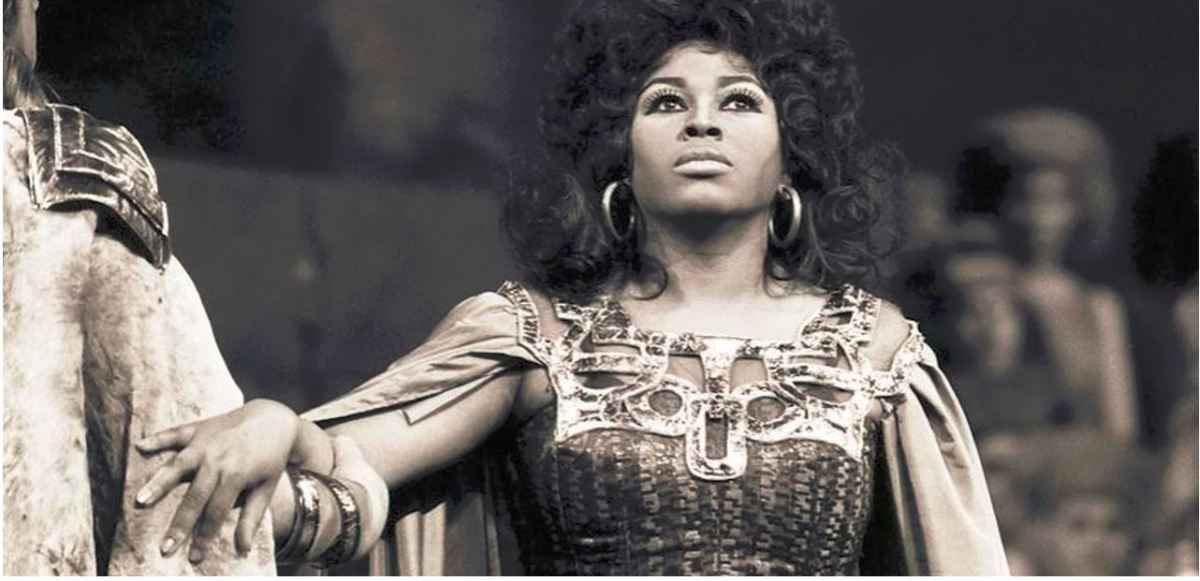
Here is one way to do both: Sit back and listen to Leontyne Price sing Oh Holy Night. Better yet, also listen to a Price interview, where she is fun, loving, and oh, so self-assured.

Picture above shows Leontyne Price performing one of her most famous operatic parts, Aida. Picture below shows Price in an interview with Anthony Tommasini, chief classical critic at the New York times.

Oh Holly Night and Leontyne Price seem to fit together well. The song talks about Jesus moving people away from desperation to a feeling of self-worth and new beginnings:

O holy night, the stars are brightly shining,
It is the night of the dear Saviour’s birth;
Long lay the world in sin and error pining,
‘Till he appeared and the soul felt its worth.
A thrill of hope the weary world rejoices,
For yonder breaks a new and glorious morn…

Leontyne Price has absolutely no doubt about her worth as a human being or an accomplished singer. She said:

Accomplishments have no color.

To sing is the most human of the art form delivery, more than, perhaps, an instrument which has to be tuned mechanically. You are the tuner; you are the vessel. Everything depends on how you feel as a person. It is for you to hear how beautiful your instrument is.

In Leontyne Price’s interview with Anthony Tommasini, she talks about her voice range. Her point is you need to know what you want to achieve, visualize the result, and be in complete charge of what you need to do to accomplish what you want. In other words, feel your worth.

Like liberty, self worth is God given. You either find it in yourself or, to your detriment, you wait for others to decide to give it to you or not.

Merry Christmas

Alternate Media with Cameron Weber

The Just Vote No Blog recommends Hardfire TV with host Cameron Weber for engaging, liberty-leaning discussions.

Thank you to Cameron Weber — economist, historian, and educator — for writing, producing and hosting Hardfire TV. Several of the Hardfire segments are on YouTube.

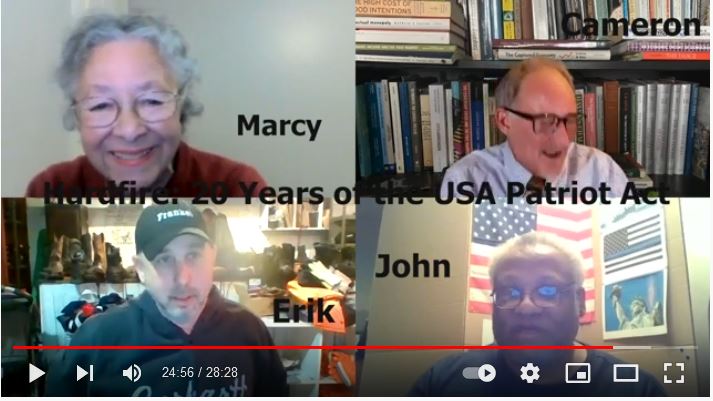
Dr. Weber and the guests on his show provide the liberal (“liberal” meaning “liberty-leaning”) view on a wide variety of subjects. On December 10, 2021, guests Marcy Berry, John Clifton, and Erik Frankel discussed how government seizes the opportunity of a crisis to expand its power and reach.

20 Years of the USA Patriot Act shows how new laws and changes to existing laws immediately followed the declaration of emergency in the wake of the 9/11 attack. The Patriot Act was not renewed in 2020, but the numerous restrictions imposed by the laws the Act left behind remain.

Guests at Hardfire TV

Erik Frankel: Citizen Statesman

Erik Frankel ran for a seat in the Brooklyn District 38 Council. His main opponent’s day job was to distribute money from a nonprofit. Guess who won?

As the size of government at all levels grows, so does obscurity and lack of accountability. Most unfortunately, what goes on under layer upon layer of bureaucracy affects us all, mostly in negative ways.

We can choose to accept the status quo and do the best we can to avoid the fallout, or we can actively fight for transparency and accountability.

One such fighter is Erik Frankel of Sunset Park, Brooklyn, New York.

Erik Frankel sells shoes. His store, Frankel’s Shoe Co., has been in his family since 1890. According to Yelp, Frankel’s Shoe Co. supplies most of New York construction workers, iron workers, and utility workers with their safety toe shoes and clothes. He has shared his knowledge and experience with workers in Vietnam, Myanmar, China.

Upon returning to the U.S., Frankel seems to have had an epiphany – small businesses, workers, communities are all in danger of falling victim to obscure bureaucracies that claim to help but do nothing but hinder. So he ran for a seat in his district’s Council.

Frankel wasted no time doing his homework as to who his main opponent was, and how in his view, she was a strong spoke in a bureaucratic wheel. Alexa Aviles managed the huge portfolio of the non-profit Scherman Fund. The fund distributed money to various progressive groups locally and nationally.

Then Ms. Aviles ran for a spot in Council District 38 – with endorsements and support from receivers of her largess?

It goes without saying that with high-profile endorsements Alexa Aviles won the race with 9,228 votes vs. Erik Frankel’s 2,209. Interestingly, though, that 2,209 votes was a strong showing, given that the other opponents of Alexa Aviles each received 1 to 3 votes.

The Founding Fathers had a point – folks running the country should do it out of patriotism not necessity. A politician needs to get elected by any means necessary to put food on his family’s table. A store owner does not.

Now, Erik Frankel is running for Congress. Stay tuned.

The Just Vote No Blog recommends Erik Frankel’s opinion piece of October 15, 2021, regarding his run for City Councilmember. His op-ed appeared on Star Review, a paper serving several Brooklyn neighborhoods. Please read on:

Is Aviles Conflicted?

The Scherman Fund is a huge non-profit fund with hundreds of millions of dollars in assets, including millions invested in hedge funds, some in the Cayman Islands.

As Program Director, Alexa Aviles managed a portfolio in the tens of millions. She was given a mission to spread the money around to various progressive groups in New York and around the country.

During her tenure, she oversaw donations to numerous organizations in Brooklyn, including key grass roots groups in Sunset Park and Red Hook within District 38.

Ms. Aviles has yet to explain how, as a socialist and a member of the DSA, she justified working for a non-profit largely engaged in investing in the very same capitalist institutions she reviles. It turns out, it was worth it for her.

The Scherman Fund’s 990 tax forms from 2018 show a series of large donations to one organization, Make The Road New York. $200,000 in two contributions for “Sanctuary NYC Campaign” and another $25,000 for “Get Out The Vote”. The 2018 form also shows $40,000 to the Red Hook Initiative for “RedHookFarms”.

It’s no wonder Make The Road’s action committee felt the need to endorse Alexa in the Democratic primary in June. The irony is Ms. Aviles was in charge of the Governmental Transparency and Accountability program at the Scherman Fund. Ms. Aviles clearly was thinking about her run for a long time. She wanted to make sure potential backers knew she means business. Especially in a crowded field with a number of qualified candidates.

While she champions her record as an educational activist and her time as a PTA member, she really has been making hundreds of thousands of dollars, first as a consultant, then at a politically beneficial job as program director of an influential charity.

While we don’t expect to hear from the Aviles campaign on this, we encourage them to at least respond with a statement for the public’s sake. We are running a campaign based on transparency, something that is desperately needed in District 38 where third party groups and the community board have provided anything but.

Our opponent is running with the support of all the very same institutions that have stifled growth in Sunset Park and Red Hook for years. They claim to be for environmental justice and housing justice but have failed to deliver for the working people of the district. They want affordable homes and good paying jobs,not empty promises and continued gentrification.

We’re running a campaign to provide an alternative to the status quo which, despite her radical leanings, Ms. Aviles will continue to represent. We call on her campaign to release the Scherman fun’s 990 tax forms for 2019 and 2020 which are unavailable to the public. We ask them, for transparency’s sake, to reveal if any of the money went to groups which then backed her bid.

Hello North Carolina

The Just Vote No Blog moved to North Carolina from California October 2021. This article is a personal first impression of the state. North Carolina is a beautiful place, and generally the people are nice!

Greetings from North Carolina. The Just Vote No Blog just moved here. Therefore, the Blog now has a new page dedicated to the state. Here is an overview of JVN’s new home.

Population and Growth

North Carolina is one of the fastest-growing states, along with Texas and Florida. People are moving here seeking economic opportunities — especially in the expanding technology field — affordability, and open spaces. In 2020 there were 10.4 million people living in North Carolina, making it the ninth largest state in the nation, and one which gained an additional congressional seat in the 2020 census. Net migration in and around the state’s largest cities has been a key component of North Carolina’s growth.

The state’s most populous and best-known cities are,

  • Charlotte, population 912,096, is a business and financial center. Bank of America headquarters are in Charlotte, and Wells Fargo Bank has a large presence in the city.
  • Raleigh, population 483,579, is the state capital. The city is known for financial, educational and cultural facilities.
  • Durham, population 283,506, is the principal city in North Carolina’s famous Research Triangle (Raleigh, Durham, Chapel Hill). Duke University and Duke University Health System are Durham’s largest employers.

Despite growth, North Carolina’s rural population remains significant. In 2019, 40% of the state’s population lived in rural areas, and 85% of North Carolina’s municipalities had less than 10,000 residents. Residents of the more suburban areas enjoy tree-lined streets, large leafy backyards, and lots of open space.

Major Industries

North Carolina is home to 13 Fortune 500 companies. Major industries with headquarters or business presence in the state are:

Aerospace and defense: Lockheed Martin, Honeywell, GE Aviation and Spirit AeroSystems.
Automotive and heavy machinery: Bridgestone, Caterpillar, Borg Warner, Freightliner, and Thomas Built Buses.
Food processing and manufacturing: Campbell’s, Butterball, Smithfield, Sierra Nevada, Texas Pete (known for its Louisiana-style hot sauce) and Mt. Olive (known for its pickles).
Information Technology: Google, IBM, Cisco.
Biotechnology and pharmaceutical: Bayer, BASF, LabCorp and Novo Nordisk.
Furniture: Ethan Allen, Ashley Furniture, Lexington Home Brands and Sealy.

Income, Housing and Employment

Real median household income is $60,266 (U.S. $67,521; California $77,358).
Average listing price of homes is $513,120 (U.S. $710,321; California $1,554,478).
Unemployment rate is 4.1 (U.S. 4.6; California 7.3)

Note: When we speak of homes in North Carolina, especially in southern counties such as Holly Springs or Apex, we are talking about relatively large residences. Neighborhoods with few, if any, homes smaller than 3-bedrooms 3-baths are not uncommon.

Politics

Republicans outnumber Democrats in the state’s General Assembly, but do not have veto-proof majorities. Thus, Governor Roy Cooper, Democrat, uses his veto power prolifically. This arrangement satisfies the majority Democrat voters for now. Libertarians and Greens do not comprise a share of the voting public significant enough to affect political outcomes.

History and Culture

North Carolina was one of the original 13 British colonies. Despite hardships and disease, the colonies grew and prospered along the Atlantic coast during the 17th and 18th centuries. Growth was mostly the result of migration of free and indentured people fleeing war, persecution, or lack of opportunities in Europe; convicts sent to America by the European courts; and Africans sold to slave traders.

Climate, soil, natural resources, and proximity to the sea determined how the colonies developed. New England Colonies — New Hampshire, Massachusetts, Rhode Island and Connecticut — flourished with fish, whale products, ships, timber products, and furs. The Middle Colonies — Pennsylvania, Delaware, New York, and New Jersey — with vast fertile ground, were the “breadbasket” of the colonies, where farmers produced corn, wheat, beef, and pork. The Southern Colonies — Maryland, Virginia, North Carolina, South Carolina and Georgia – had hilly coastal plains with good soil to grow large tracks of cash crops like tobacco, rice, cotton, sugar cane and indigo.

The large, labor-intensive cash crop plantations of the Southern Colonies encouraged the adoption of cheap labor. Slavery was the cheapest form of labor. After the initial outlay for the purchase of a slave, a plantation owner spent little more in food and shelter, and garnered the benefit of subsequent generation of slaves. Slavery did exist in the Northeast and Middle Colonies, but not to the same extent, since the economies of those colonies did not depend on sizeable manual labor.

Slogan and Motto

On April 12, 1776, North Carolina’s Provincial Congress met in Halifax and passed a resolution calling for independence from Great Britain. The Halifax Resolves made North Carolina the first state to call for independence.

By that time, the colonies had developed some form of self-government. They also had developed sustaining trade both with one another and with Great Britain. So the time was ripe for independence, which formally came with the 1784 Treaty of Paris.

Today, North Carolina motorists can choose to have the official slogan “First in Freedom” on their license plates to commemorate the Halifax Resolves.

Obviously, that slogan did not come about without controversy, since antebellum North Carolina was heavily dependent on slave labor and joined the Confederacy in 1861. The state was not readmitted to the Union until 1868, after it agreed to ratify the 13th Amendment to the U.S. Constitution.

Given North Carolina’s slogan, the state’s motto seems almost chiding: Esse quam videri, “To be rather than to seem.” The phrase is from Cicero’s essay On Friendship chapter 98: Virtute enim ipsa non tam multi praediti sse quam videri volunt, “Few are those who wish to be endowed with virtue rather than to seem so.”

Pictured Above

Skyline of Charlotte, North Carolina.

Pictured Below

Fuquay-Varina is one of the fastest-growing towns in Wake County, North Carolina, but visiting Fuquay is like stepping into a quiet past. Fuquay’s Christmas Parade was on Sunday, December 5. It was a pretty relaxed, fun event, with lots of cheering for the marching local groups. Pictured is the enthusiastic brass band.

A parade always shows what is important to residents. This parade was led by police and firefighters in uniform. North Carolina is host to several military bases; thus, unsurprisingly the state National Guard and other military contingents rode their military vehicles or marched. The Fuquay Cruisers showed off their pre-1970s classic cars. High schoolers, home schoolers, ROTC, and Scouts were all there.

One had to wonder how many of the happy people lining up the parade route were transplants from California and other states.

Brass band in parade

California Emptyin’

Thank you to Steve Frank, publisher of the California Political News and Views for publishing my adieu to California. Our family has joined the exodus out of a state we once loved.

Thank you to Steve Frank, publisher of California Political News & Views, for publishing my adieu to California. In October 2021, my family and I joined the exodus out of a state we once loved and once offered so many opportunities for work and growth. A misguided political class that rose to power in the early 1990s has chased away the middle class, invited in the billionaires, and blanketed the streets with the homeless.

Those of us who bailed out are not looking back. Those who chose to stay behind have one more choice to make: fight for a return to sanity or slowly descend into irrelevance.

Marcy Berry
Just Vote No Editor

________________________________

California Emptyin’

Some of us are old enough to remember the Mamas and the Papas’ iconic hit California Dreamin’.

All the leaves are brown
And the sky is gray
I’ve been for a walk
On a winter’s day
I’d be safe and warm
If I was in L.A.
California dreamin’
On such a winter’s d
ay

There was a time when people did dream of coming to California. There was a time when L.A. was safe. But today, California is experiencing it’s own kind of winter’s day. There is less of California dreamin’ and more of California emptyin’.

Today the middle class – the backbone of America’s economy – is choosing brown leaves and wintry days over California’s nightmare of inordinate living costs, back-breaking taxes, endless restrictions, miserable schools, homelessness, and unsightly streets.

As I look out of the window of my new home in North Carolina, I see loads of brown leaves. I have already felt a couple of days of bone-chilling breezes, and I have been advised to purchase some heavy winter clothes. And I have met several California ex-pats who are happy to be here and are not looking back. We are the middle class. We are the workers on the ground. And we are leaving California.

The California political class is either amazingly brilliant or abysmally dull on the head. If their aim is to grow and cement inordinate power by methodically obliterating their constituents’ individual rights, they are doing a magnificent job. If they are hoping to maintain California’s stature as having an impressive production of goods and services, they are, as the saying goes, not all there.

Either way, though, the picture is not pretty. Either way, the state will disintegrate as other jurisdictions from Rome to Detroit have in the past.

This is the time to choose: bail out, roll up your sleeves and fight, or quietly descend into irrelevance.

Our family chose to bail out of California. But we have not chosen to stop fighting for the survival of the Republic our Founding Fathers envisioned.

We send you best wishes.