Identity Politics: Good way to Divide and Conquer

Politicians use identity politics to cement their own power. As long as voters are fighting against one another, they are not noticing they are being sold a bill of goods.

Divide and Conquer GoetheIdentity wars are useful when politicians wish to deepen or to widen their power over the populace. Such wars divide populations into smaller groups, which can then be pitted against one another. While each group is focusing on its own challenges and fighting other groups to defend its limited interests, all groups are ignoring the big picture. They are missing opportunities. They are ignoring their real manipulator. They have been divided and conquered.

So, we the people, divided and conquered, focus on a myriad of wars: class, race, gender, disabilities, environmental, social justice, gentrification, fetus-as-person, open space, climate change, drug, opiod. Meanwhile, our liberties are decimated unnoticed. We are slaves to the IRS, mandated to pay our pound of flesh under dire penalties if we do not obey. We are hostages to the obscene costs of healthcare and education. We are automatic criminals given the numerous laws and regulations at every level of government, of which we are bound to break some unwittingly. Our Bill of Rights is constantly under siege.

Some enclaves in these United States have become epicenters of identity wars. California is such an epicenter. The state’s residents never tire of group warfare, while they lose their basic constitutional liberties, such as free speech, self defense against tyranny, or local jurisdictional control of their destiny. At present California is fighting the “housing crisis,” pitting NIMBYs vs. YIMBYs, while politicians crank out laws obliterating local control of what gets built where and how.

As Joseph-Marie, Comte de Maistre, 19th century lawyer, diplomat, writer, and philosopher said every nation has the government it deserves. In a republic such as the United States, where the ballot box is available to all citizens, this maxim could be interpreted as meaning every individual has the government he/she deserves.

Housing Affordability & Smart Cities

Who is really deciding what our cities look like and where we live?

A little conspiracy theory is good for helping us question the status quo.  The greater the number of people telling us something is so great, the faster we should start asking  who, what, why, and who benefits.  Compact, supposedly “sustainable” cities are being promoted by planners not only as wonderful places in which we all want to live, but also solutions to astronomically expensive housing.  If such dense cities are also “smart cities,” all the better.  We invite you to ask, “Really?”

….more and more it’s becoming apparent that to be modern, to be contemporary, to be cutting edge, buying and owning things is a bug not a feature. Buying and owning things prevents you from monetizing tomorrow, let alone optimizing today.  Ben Pring, Leasing the Future, Huffington Post.

Every digital click, swipe, “like”, buy, comment and search produces a unique virtual identity – something we call a Code Halo™. While Code Halos are important to each of us, they are becoming increasingly vital to the success of every business. A new book from our Center for the Future of Work reveals how organizations can catalyze business with Code Halo thinking.  Cognizant Technologies

We all have a personal responsibility to adapt to changing housing markets. For some, this will require adjusting our savings and spending patterns, our expectations regarding home size, access to ground/yards and distance from work or school. For others, it may require adapting expectations regarding the evolution of our neighborhood character, or the personal equity gains derived from the housing market.  10 Common Ground Principles for Affordable Housing, Smart Cities Dive

To what extent have businesses today bought into the theory that in order to survive in today’s market, they need to track everybody’s every move? Businesses could be content with convincing health-conscious consumers to wear a fitness tracker at all times, or businesses could amass enough political donation power to change the way cities are built in order to facilitate maximum interconnectivity.

For example, California’s Bay Area Silicon Valley is home to technology giants, as well as sophisticated business-led public policy advocacy organizations that aggressively support dense housing in limited spaces. California has taken to heart draconian policies that limits land use, establishes vast protected areas off limits to development, and invests taxpayer money in dense subsidized housing located in “transit corridors.” Also, California, especially the San Francisco Bay Area, experiences a housing market that is totally unaffordable. Therefore, it would seem that land use policies such as Plan Bay Area beg the questions,

* Does limited space on which to build result in higher housing prices, and calls for government-subsidized and government-preferred development?

* Is there a relationship between government-preferred development and political support from dominant technology giants?

* Does proximity facilitate interconnectivity, supposedly so crucial to business success?

* Does the current generation truly see ownership as a “bug not a feature,” or is the generation being sold a bill of goods?

So, just in case voters perceive even a remote relationship between efforts such as Code Halo and how much they are paying for housing, what to do? Simply remember that there is a choice whether to wear a fitness bracelet, vote for “affordable housing” bonds to support narrow housing corridors, or re-elect anyone who has specialized in proposing legislation that removes your control of where or how you live.

Smart Cities: Your Life in a Fish Bowl

“The Internet of Things really comes together with the connection of sensors and machines. That is to say, the real value that the Internet of Things creates is at the intersection of gathering data and leveraging it. All the information gathered by all the sensors in the world isn’t worth very much if there isn’t an infrastructure in place to analyze it in real time.”

Amazon-Dash-Image-Tide 2Smart Cities are a national, state and county goal, for whatever reason anyone can come up with. Here is the reason offered by the U.S. Department of Transportation,

In December 2015, we launched our Smart City Challenge, asking mid-sized cities across America to develop ideas for an integrated, first-of-its-kind smart transportation system that would use data, applications, and technology to help people and goods move more quickly, cheaply, and efficiently.

Sensors Are at the Heart of Smart Cities

* Builders are developing ways to use smart concrete to make bridges, highways, and buildings laced with carbon fibers able to respond to stress and monitor activity.

This new invention allows construction of smart concrete structures, able to detect even minute changes in the amount of stress inside. This new composite material is able to self-monitor for signs of cracks or stress.

In addition, smart concrete is expected to be used for building facility management, i.e. to weigh each room of a building to monitor the room occupancy in real time, thereby saving money and energy by allowing the lighting, heating, cooling and ventilation of the room to be controlled according to the occupancy level.

* Manufacturers are making smart appliances.

…select Whirlpool® smart appliances now support the Google Assistant and Amazon Alexa, allowing families to control their appliances from anywhere in the house with simple voice commands. So whether in the other room helping with homework or cooking dinner with messy hands, families can care for their loved ones better, faster and smarter.

Technology Companies Are Leading the Way

Facebook, Google, LinkedIn, and Microsoft are the natural candidates in the building of smart cities. They already thrive on collecting and evaluating data. Microsoft is building the city of Belmont in the state  of Arizona.

Belmont (as the town will be called) will feature 80,000 residential units, public schools, and commercial buildings. Everything in the 25,000-acre property will be built around a flexible infrastructure model, which is why many are calling the proposed town a smart city. In many ways, Belmont will be a location where the latest technologies and innovative designs can be tested on a actual community, creating a real-life blueprint for how cities of the future could be run.

The Internet of Things

Thus, in a smart city we reach the pinnacle of The Internet of Things, where all is connected, watched and evaluated.

The Internet of Things really comes together with the connection of sensors and machines. That is to say, the real value that the Internet of Things creates is at the intersection of gathering data and leveraging it. All the information gathered by all the sensors in the world isn’t worth very much if there isn’t an infrastructure in place to analyze it in real time.

Watch for the Downside

Since Biblical times knowing where you live is understanding who you are.

I know thy works, and where thou dwellest (Revelation 2.13)

Now imagine not only knowing where you live, but also where you are at all times via your phone, your appliances, your city. Imagine not only knowing where you are, but also what are you doing or buying. Or do you for a moment think that the information gathered about you is not inventoried, catalogued, evaluated, and used?

Not everyone is happy with smart cities. Critics are concerned about the rise of the tech oligarchy.

The tech oligarchs who already dominate our culture and commerce, manipulate our moods, and shape the behaviors of our children while accumulating capital at a rate unprecedented in at least a century want to fashion our urban future in a way that dramatically extends the reach of the surveillance state already evident in airports and on our phones.

The drive to redesign our cities, however, is not really the end of the agenda of those who Aldous Huxley described as the top of the “scientific caste system.” The oligarchy has also worked to make our homes, our personal space, “connected” to their monitoring and money machines.

Your Life, Your Choice

Do you want maximum convenience because you are so pressed for time? Do you want to keep up with your peers and have the latest tech gadget on the market? Is your desire to help stop climate change high enough for you to actively support housing-dense villages filled with sensors that constantly monitor your use of energy?

If so, then you need to accept your life in a virtual fish bowl, where your actions can be relayed to a cloud server and analyzed for purposes beyond your control. You need to accept the possibility that the information gathered from you might be about you in particular, not just about what everyone does in the aggregate. And you need to accept the risk that in a future you do not at present foresee, someone possessing considerable power may not like what they see in the data gathered from you.

Just Vote No If Big Data Does not Appeal to You

Technology, the Internet, smart phones have increased our productivity, enriched our lives and given us power as individuals to express our thoughts and share our discoveries.  Therefore, it behooves us to ensure that the positive blessings of technology remain friendly towards us.

However, it appears that Big Data might be developing in ways akin to Big Pharma.  Regulation has been suggested for both biggies, but can one really regulate away people’s natural profit motives or the market’s unforgiving forces?  Probably not, or at least not without ushering in tyranny.  If the free and open market demands smart cities, great! However, if they are foisted on an unsuspecting public by interested parties, that’s not so great.

If you are not a supporter of Big Data, you might consider choosing leaders who do not use your tax dollars to subsidize developers of smart cities.  Find out if your city or county leaders are falling all over one another rushing to give technology companies tax breaks, while your small business has none.  Be aware of who wants to change things in your neighborhood, and just vote no on tax proposals sure to be on your ballot to support such changes.

The Socialist Establishment Threat

It is so comforting to know you are being taken care of, even when you are a healthy adult. Oh, but is that called slavery?

The Establishment and its supporters are not at all happy with current events in Washington DC. The discontent is not a partisan issue, since the Capitol is populated mostly by Establishment folk regardless of party affiliation.

Establishment folk like their constituents to be taken care of, be free of risk, remain docile and unquestioning. Any questioning would place front and center the unsustainable national debt, fiat currency, endless wars, gargantuan bureaucracy, and a populace dependent on public assistance and/or public services. Questioning might bring to mind the list of societies that disintegrated under the weight of those same events – from the Roman Empire to Venezuela.

So what appears to be different lately? The difference could be summarized by a couple of memes. One meme implies that government holds the responsibility for an individual’s well being; that government’s job is to do whatever it takes to provide all manner of services, since all services are rights. The other meme implies that government exists only to protect everyone’s life, liberty and property; everything else is each individual’s responsibility.

Border Wall 3

To be sure, today’s Washington DC is a very long way from returning to the nation the Founding Fathers intended. The military-crony capitalism-welfare state is still here. The national debt is still a distant blur in Congress’ collective mind. The Establishment folk are still sucking up gobs of tax money in salaries and benefits while they prance around “resisting.” It remains to be seen whether the corporation tax cut will result in more jobs or more bonuses. It remains to be seen if the economy grows sufficiently to make up for the tax cuts.

But progress can be seen in the slow shrinkage of the bureaucracy through attrition, efforts to awaken the nation’s dormant manufacturing, and promises in speeches of jobs not public-assistance.  Let’s hope it is not too late for this nation to escape the fate of Rome.  Let’s hope we are are able to fix what we broke, and not make debt and dependency our legacy to our grandchildren.

Update: Judge Dismisses Case Against the Bundys

Background of this federal trial is on our article “Whose Land is This Land Anyway?”

In Nevada, on January 8, 2018, U.S. District Judge Gloria Navarro dismissed felony charges against Cliven Bundy and his sons arising from the 2014 Bundy Ranch Standoff. In dismissing the case, Judge Navarro issued strong statements against federal prosecutors for their “reckless disregard for Constitutional obligations,” in withholding evidence from the defense, and violating “the universal sense of justice.”

Cliven Bundy and his sons once again exercised their Constitutional right to challenge government actions they deemed unconstitutional. Outside the courthouse after the dismissal, the elder Bundy said,

“My defense is a 15-second defense: I graze my cattle only on Clark County, Nev., land and I have no contract with the federal government.” … “This court has no jurisdiction or authority over this matter.”

Although federal jurisdiction over public land and over “trespassing” in public land might be a good case for another trial, the Bundys in this trial once again affirmed what our Founding Fathers intended – it is the duty of the People to ensure that when government ceases to be the People’s servant and protector of the People’s liberties, it is challenged by the People.

Background of this case is in Just Vote No article, “Whose Land is This Land, Anyway?” The L.A. Times has a good article on the trial’s dismissal.

Recommended site: The Atlas Society

Ayn Rand’s objectivism vs. the coddling society.

AynRandHere is a website worth mentioning, The Atlas Society. The “Atlas” part refers to Ayn Rand’s book, Atlas Shrugged. The website features lessons in Objectivism, readers’ tools to assist in the understanding of Rand’s books, commentary on a variety of subjects relating to the objectivist view, and events. Students and educators in conventional schools, as well as homeschoolers, could benefit from such information.

Objectivism, as presented by writer Ayn Rand, is not a household word these days, but should be at least understood. The Atlas Society describes objectivism as follows,

Objectivism is the philosophy of rational individualism founded by Ayn Rand (1905-1982). In novels such as The Fountainhead and Atlas Shrugged, Rand dramatized her ideal individual, the producer who lives by his own effort and does not give or receive the undeserved, who honors achievement and rejects envy. Rand laid out the details of her world-view in nonfiction books such as The Virtue of Selfishness and Capitalism: The Unknown Ideal.

Today, politicians and advocates for a plethora of special interests continually call for greater taxation to support social programs and projects that for the most part discourage the practice of objectivism. Words like “equity,” “social justice,” and “inclusivity,” so prevalent in today’s vocabulary, would leave individualists like John Stuart Mill or Thomas Jefferson befuddled. Adam Smith, the father of free-market capitalism, would be equally perplexed with the terms “crony capitalism” or “corporate welfare.” Ayn Rand, were she alive today, would probably simply admonish us all with an “I told you so.”

However, just as big-government people worked to main stream their ideas, so can small-government, objectivist-leaning individualists work at spreading theirs. Returning the nation towards a path that encourages the self-directed true producer, not coddles the unhappy dependent, could easily start with just voting NO on proposals that “feed the beast” with workers’ hard-earned cash.

California’s Vanishing Neighborhoods

California legislators love their “sustainable communities” projects, and are ready to tax residents into the poor house. But “Repeal the Gas Tax” looks promising for a November ballot near you.

California is labeled a “progressive” state by mild voices and a “Marxist” state by more aggressive voices. Interestingly, the true progressives/Marxists occupy only a thin strip of land along California’s coast, but are so numerous they are the state’s deciders. Even within the progressive/Marxist coast, there are small pockets of conservatives that, for the most part, have little say.

However, once in a while, the fiscally conservative, free market, private property loving silent minority rises up in fury and hits the tax-and-spenders where they hurt – the ballot box. They rose up in 1978 and passed Proposition 13, which ended the bountiful distribution of property owners’ hard-earned cash. They rose up in 2003, and engineered the successful recall of Governor Grey Davis, who had plunged the state into a squabbling war among special interests. They helped elect Donald Trump in 2016. They are not happy campers today, and seemingly ready for another “Revolt” like the one in 1978.

Outside of progressives/Marxist eyes, observers can cite ample reasons for another cultural uprising: generous largess supported by high taxes, continuous mandates voiding local decision making, mounting state debt, an army of bureaucrats earning six-figure salaries, a legion of unelected officials doing what elected officials should be doing, and the huge elephant in the room that will not budge – uncontrollable unfunded public pension liabilities that have crowded out basic services.

Of this laundry list of grievances, one seems to stand out: state mandates that obliterate the ability of local property owners to decide the character of their neighborhoods. By character, residents mean appearance, density, tranquility, safety, ease of using one’s transportation of choice.

Sacramento has been cranking out legislation that allocates specific numbers of new housing units to each jurisdiction, requires such allocated housing to be built for all income levels in all neighborhoods, and voids decisions by local planners.

The latest example is Senate Bill 827 introduced January 3, 2018, requiring dense housing at all income levels within one-half mile of a bus stop, regardless of neighborhood. The proposal, supported by the now ubiquitous YIMBYs (Yes In My Back Yard), elicited this furious comment on the Crenshaw Subway website,

Like the Colonizers before them, YIMBYs claim the ‘Hood as Theirs! The bill is backed by group that calls themselves YIMBYs, which stands for “Yes in my backyard.” Like the colonizers whose agenda they seek to replicate, it takes a certain entitlement/ supremacist mindset to call a community they didn’t grow up in, don’t live in or are new to as “theirs.” It’s NOT their backyard – it’s ours. And we’re not about to give it up. WE SHALL NOT BE MOVED!

Ouch! The fury continues with a list of obvious housing injustices ignored by YIMBYs, such as,

…they could care less about the predatory lending that led to the greatest evisceration of Black wealth in decades – it wasn’t their grandma whose mortgage became unaffordable overnight.

The article ends with a battle cry,

It is time that we put our war paint on, soldiers. SB 827 is bill that must be killed.

Another piece of legislation particularly disliked by conservatives and small businesses is Senate Bill 1, signed into law in April 2017, mandating a $0.12 per gallon increase in gasoline taxes. SB1 claims roads and bridges have been long neglected and need funding to upgrade.

However, there is enough talk in the bill of “sustainable communities” and “greenhouse gas emissions reduction targets,” code words for top-down mandates from Sacramento, to have elicited a proposed voter initiative that as of this writing has achieved over 25% of signatures required for ballot status. “Repeal the Gas Tax” would require that all increases in gas taxes be presented to voters from approval, including that included in SB1.

The National Federation of Independent Businesses issued the following statement in opposition to SB 1,

NFIB/CA is opposed to this Main Street Menace, which adds 12 cents per gallon in new taxes to gasoline, which is already the most expensive in the country. It also increases the high price of diesel by a whopping 22 cents per gallon, and adds $70 in new registration fees to each vehicle. These new taxes are supposed to be used to fix California’s ailing highways, a problem that government has failed to address for decades. The politicians have diverted budget money to other pet projects for years and now want consumers and businesses to pony up more hard-earned dollars to bail them out without offering real reforms.

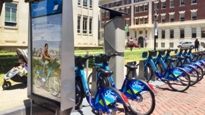
Ford GoBike
Is this legislators’ idea of upgrading California’s infrastructure?

Politicians’ favorite “pet projects” are the “sustainable communities” mandates conservatives do not like either.

If the gas tax repeal initiative gets on the ballot, and passes, progressives/Marxists, as well as YIMBY “colonizers,” will likely experience great distress, since the event could signal the first salvo of the The New Tax Revolt.

The Culture of Victimhood

Politicians feed false narratives. Reject them!

Sometimes a post on Facebook resonates. People get it. This was the case with a post, shared on the Just Vote No Facebook Page, showing a video of a young man (Brandon Tatum) saying he voted for Barack Obama for U.S. President, but came to regret it. The young man’s message is that Democrats have harmed Black people by casting them as victims.

Just Vote No does not deal in partisan politics. A crook from one party looks the same as a crook from another party. So, let’s focus on what the young man is saying regardless of political party. When someone viewed as an authority figure (politician, police officer, teacher, social worker) acts as if you are different and in need of their assistance and discipline, you internalize that information, and neglect to review your own actions to see how they might change to improve your situation. The young man in the video calls this treatment the feeding of a false narrative – a narrative that does not help, and certainly hinders.

Thought of racism is for those who have time to think about it, or who promote it for their own benefit. The young man says he has no time to think of racism because he is too busy getting things done. Focusing on racism is victimhood. Focusing on getting things done is rejecting the false narrative and being on the way to success.

His recommendation? Same as ours. Believe in yourself and your ability to thrive. Look carefully at what you vote for. Don’t vote for crooks.

Brandon Tatum

Brandon Tatum speaks out against the feeding of false narratives.

A Star, a Star Shining in the Night

“In your palace warm mighty king, do you know what I know? A child, a child shivers in the cold…”

The Holidays:  The Winter Solstice, when winter desolation starts receding.  Hanukkah, remembering defending of culture and worship.  Christmas, and the birth in a cold manger of a baby who grew up to change the world.  These stories, and several others told and retold around this holy time of year, share the theme of common people not only prevailing but triumphing in defense of their peace and a better world for themselves.  Here is a suggestion as to how such victory can be accomplished:  the snowball effect of confidence and hope, like in this traditional song:

Said the night wind to the little lamb, do you hear what I hear?
High up in the sky little lamb, do you hear what I hear?
A song, a song, high above the trees
With a voice as big as the sea, with a voice as big as the sea.

Said the little lamb to the shepherd boy, do you see what I see?
High up In the sky shepherd boy, do you see what I see?
A star, a star, shining in the night
With a tail as big as a kite, with a tail as big as a kite.

Said the shepherd boy to the mighty king, do you know what I know?
In your palace warm mighty king, do you know what I know?
A child, a child shivers in the cold,
Let us bring him silver and gold, let us bring him silver and gold.

Said the king to the people everywhere, listen to what I say
Pray for peace, people everywhere, listen to what I say
The child the child, sleeping in the night
He will bring us goodness and light, He will bring us goodness and light.

May you prevail over all your winters.

Shepherds and Star

Rapidly “Decarbonize” or Perish!

Hold on to your wallets! U.S. city mayors are on a roll sermonizing about how the End is Near due to the “climate change crisis.”

City officials from around the U.S. and around the world on December 5, 2017, signed the Chicago Climate Charter at the Inaugural North American Climate Summit. The mainstream media puts the number of city mayors that signed the Charter at “dozens” and “more than 50.” A count of signatures on the Charter posted by the host Mayor Rahm Emanuel shows 64 signatures. The media says 36 of the signatories were U.S. mayors.

Sixty four out of 4,416 cities in the world is 1.45% (assuming “city” means jurisdictions housing 100,000 or more residents). That’s not much. However, 56% of U.S. signatories might be sufficient for what could be the Charter’s objective.

The Charter’s objective is for cities and regions to continue working on commitments made under the Paris Climate Agreement, even though the U.S. withdrew from the Agreement. Just Vote No discussed why President Donald Trump did not renew U.S. participation.

Considering the fact that the U.S. is the only country at present not to be a participant in the Paris Climate Agreement, this Charter begs the question, why bother, if the other nations that do belong to the accord can carry on the work without the U.S. – or can they? Maybe it is not work that is needed but funding, otherwise called redistribution of resources from those according to their ability to those according to their need. Redistribution of wealth principally from the United States and the more affluent countries in the European Union to the poor countries was clearly spelled out in the Paris Climate Agreement.

Principals behind the Chicago Climate Charter are not U.S. city mayors simply wanting to ensure clean air and clean water for their jurisdictions, but global players, or in the case of California Governor Jerry Brown and Chicago Mayor Rahm Emanuel, global wannabes:

* Michael Bloomberg :  Former mayor of New York City and now United Nations Special Envoy for Cities and Climate Change.

* The Global Covenant of Mayors for Climate & Energy: An international alliance of cities and local governments with the objective of assisting jurisdictions to transition to low-emission societies.

* United States Conference of Mayors: Forum for city officials to discuss diverse challenges, but also founding member of the Global Parliament of Mayors.

* C40 Cities: Network of big cities committed to implementing measurable and sustainable action on climate change.

*Rahm Emanuel:  Mayor, City of Chicago, host of the 2017 North American Climate Summit, where the Chicago Climate Charter was signed.

* Jerry Brown: Governor of California and founder with Michael Bloomberg of America’s Pledge, an initiative to quantify actions of U.S. states, cities, and businesses to drive down their greenhouse gas emissions consistent with the goals of the Paris Agreement.

If these players are so determined to carry on the objectives of the Paris Agreement, and one prerequisite of the Paris Agreement is for more affluent countries to fund the climate change initiatives of the less affluent, they will surely find a way. For example, the Global Covenant of Mayors partnered with the European Investment Bank and the World Bank Group,

Paris, France, 12 December 2017 – Today, at the One Planet Summit in Paris, the Global Covenant of Mayors for Climate & Energy and World Bank Group, the world’s largest multilateral development bank, announced a new partnership to provide technical and financial assistance to 150 cities across the world undertaking aggressive climate action programs. The World Bank’s investment [loan] of $4.5 billion USD will ensure cities battling the increasing threats of climate change have the funding necessary to implement sustainable initiatives and climate resilience programs.

The lending will occur over the next three years under the umbrella of the World Bank’s City Resilience Program (CRP), and will draw on resources from IFC [International Finance Corporation] and MIGA [Multilateral Investment Guarantee Agency] to provide financial and technical assistance to 150 cities, including current and future Global Covenant cities, to drive climate ambitions forward and upwards and build greater resilience to climate and disaster risks.

Let’s focus for a moment on the phrase “climate and disaster risks.” Governor Jerry Brown’s website mentions the Governor’s keynote speech on December 12, at the Two-Year Anniversary of the Paris Agreement:

Pointing to the state’s nearly year-round fire season – and the blazes still raging in Southern California – the Governor also sounded the alarm on the costly and destructive global impacts ahead unless we rapidly decarbonize.

CA wildfire nbcnews 2More effective action would be for Californians either not to build homes right next to wild areas that have regularly gone up in flames for as long as history exists, or for conservation rules to allow for cutting down vegetation where Californians want to build houses. This NBC News image shows how close this beautiful home is to the dense vegetation in the background.


Houston-flood-mapThe same can be said for building in floodplains. Floodplains will not move or disappear when we all “decarbonize.” They will stay where they are and keep flooding. And folks will keep building homes in them.  This map shows the blue areas of flood risk, all populated.


Weather.com makes an interesting observation regarding the flood zones, “Politicians appear to be supportive of this new development despite the inherent risks of building on a floodplain.” Intriguing. Cui bono – who benefits?

We should always keep in mind that government’s only source of funds is the taxpayer. Any redistribution of funds is redistribution from a taxpayer’s pocket to someone else’s pocket. Therefore, if you feel “climate crisis” is the cause of lives and property tragically lost in California’s fires or Houston’s floods, we are certain you will gladly pay any additional taxes that result from efforts to “rapidly decarbonize.” Otherwise, you can Just Vote No on “decarbonization” funding.