Editorial: Liberty requires there be choices

Come October 2025, Microsoft will stop supporting Windows 10. Microsoft says those of us with older devices need to buy new ones. No we don’t! We can switch operating systems!

So, your old laptop works just fine, but come October 2025, Microsoft says your Windows 10 operating system will die, and you must buy a new laptop with an “approved” processor.

Gee, you don’t use your laptop for quantum computing or anything like that. And you would rather replace your 20-year old water heater, than replace a perfectly good laptop. Also, you are finding it stressful to pay subscriptions for all your software, like a basic word processor, spreadsheet, and antivirus.

To make it all even worse, you are starting to resent being told by the Davos elite that “You will own nothing, and you will be happy.” You know that back in the day people paid a one-time fee and actually owned their software to use as they saw fit.

Well, why are you sticking with Windows?

Windows is not your only alternative. You can declare your independence from from Microsoft. You can “own” your operating system, office suite, image editor, financial software, and other applications – all for free.

Welcome to the world of open source.

Open source operating systems and applications designed for the average computer user (as opposed to technology professionals) date back to the early 1980s. Back then, proprietary systems and software with closed source codes started to pop up to the dismay of many programmers. So, in 1983, enter Richard Stallman (programmer with Harvard and MIT credentials), now considered the father of open source. He launched the GNU Project to write a free operating system that anyone could tailor to needs, improve, or debug. Today software developed by GNU programmers is used by numerous systems.

Throughout the 1990s, open source web servers (like Apache), operating systems (like Linux) and applications (like LibreOffice) expanded and became increasingly user friendly, especially by the creation of graphic interface.

Open source has come a long, long way, but has a little more ways to go if it is to become truly competitive with the paint by numbers nature of the current near-monopolistic giants in the software market. Also, today’s users seem to prefer the often inane and irrelevant responses to questions on Microsoft or QuickBooks forums than read the clear and effective documentation on Linux or GnuCash.

There is lots of information on open source software online, and you need to choose what works best for your needs.

My choice

I have two perfectly good workhorse laptops, which are 8 and 9 years old. They both came with Windows installed. That’s the operating system I have been using ever since I gave up my beloved DOS. I have never discarded a computer unless I absolutely had to.

Therefore, rather than cave to Microsoft’s suggested laptops and approved processors, my choice was to wipe Windows OS and Microsoft apps, install Linux Mint, and move my most needed data to the new system.

I chose Linux for my new operating system because of its particularly good reputation. I chose Mint as the version (distribution) of Linux that seemed most user friendly. There are other open source systems, as well as other distributions of Linux (like Debian, Fedora, Ubuntu).

Although there are users that must do their work online, many do not. Also, some users prefer not to be “signed on” all the time. For those users a system like Linux is ideal. You can work offline, and use your Internet to install new applications, update the applications you have chosen to install, and of course the many other things you do like emails, looking up stuff, ordering from your favorite stores, etc.

Linux can do just about everything Windows can. However, Linux does not have its own email provider, like Microsoft has Outlook or Google has Gmail. But you can use Gmail, Outlook, ProtonMail, and other providers on Linux.

My Linux Mint came with LibreOffice suite for everything I needed to do on Microsoft Office 365. Zoom works fine. Gimp works fine for image editing. I am still deciding on a financial software, but leaning towards GnuCash, which looks pretty much like QuickBooks.

All truly open source software is free of charge. However, some users choose to donate to specific development projects or to organizations like the Linux Foundation or the Free Software Foundation.

What does open source software have to do with Suggestions for Liberty?

First, let’s be clear that this article is not an ad for open source, nor did the Just Vote No blog receive anything from anyone for posting it.

What this article hopes to do is offer suggestions that could help individuals or families on a budget, provide an alternative to being chained to near-monopolistic providers, and fight the credo that “you will own nothing” (you “will be happy “ paying rent for your home, lease for your car, and subscriptions for the software in your computer).

Liberty in government, in the market place, in daily life requires that there be choices.

Pancho Barnes: She was the trailblazer few have heard of

In the 1920s and early 1930s, air travel was still in its infancy. But aviation trailblazers were barnstorming in popular airshows, setting and breaking flying records, and moving mankind closer to space travel. Pancho Barnes was one of these pioneers.

March is Women’s History Month, and the Just Vote No blog has chosen to celebrate the contributions of Pancho Barnes (July 22, 1901 – March 30, 1975). Who? Interestingly, a search of Google Doodles does not show that Pancho Barnes was ever celebrated. Amelia Earhart was celebrated twice. No wonder Barnes once said, “Amelia Earhart got all the publicity and Bobbi Trout made all the money, but I was the best pilot.” True.

Brief background.

Florence Leontine Lowe was born into a well-to-do family in San Marino, California. She attended fine private schools, became an accomplished equestrian at an early age, and acquired a love of flying from her paternal grandfather. Grandfather Thaddeus S. C. Lowe established the first military air unit during the American Civil War, the Army of the Potomac’s balloon corps.

At 18, Florence married the Reverend C. Rankin Barnes, with whom she had her only child, William E. Barnes. However, after a few years as a reluctant wife, she ran away and eventually ended up in Mexico. There Florence Barnes became Pancho Barnes.

Pancho Barnes returned to the U.S. at the death of her father, from whom she received a large inheritance. With that money, she purchased a Travel Air biplane and took flying lessons. History has it that after only six hours of instruction, she was flying solo.

Pancho was then on her way to becoming a legend in her own time.

Those were the times of early aviation when airplanes were still a mystery. Young men and women were eager to test their own maximum capacity as pilots as well as the capabilities of their airplanes. They were also eager to share their derring-do with an enthusiastic public.

Thus, there were the barnstormers, with Pancho Barnes among them. Barnstormers made their living putting on well attended flying shows in barn fields. Their spins, rolls, loop-the-loops, wing walking not only entertained large audiences, but also served to prove a barnstormer’s skills.

In 1929, when Cliff Henderson promoted his first Women’s Air Derby (immediately nicknamed the Powder Puff Derby by American humorist Will Rogers), Pacho Barnes was there. The transcontinental race ran from Santa Monica, California, to Cleveland, Ohio. Of the race’s 20 participants, 15 made it to the finish line. In the heavy airplane class, Louise Thaden finished first, Gladys O’Donnell second, and Amelia Earhart third. In the light airplane class the winners were Phoebe Omlie, Edith Foltz and Jessie Keith-Miller. Pancho Barnes was not one of the finalists because a car crashed into her airplane as she was landing in one of the stops.

But barnstorming and racing were not Pancho Barnes only interests. In Hollywood she was a popular stunt pilot. She is credited with forming one of the first Hollywood unions, the Associated Motion Picture Pilots, which gave stunt pilots more bargaining control over pay and safety.

Two other feats: Pancho Barnes was the first female test pilot for Lockheed. In 1930, Barnes broke Amelia Earhart’s speed record.

Then came the Great Depression and Pancho’s new lifestyle.

The Depression of the 1930s was a life-changing event for everyone, including Pancho Barnes. That’s when she pivoted from aviatrix to businesswoman.

In 1935, she sold her home in Los Angeles and purchased a ranch near Muroc Dry Lake in California’s Mojave Desert. Nearby was a small base called the Muroc Army Airfield, later to become Edwards Air Force Base. And there was nothing else in that hot, barren, dusty expanse.

At the ranch Pancho built an airstrip, hangers, and classrooms for her Civilian Pilot Training Program. During WWII, Pancho’s ranch was taken over by the military. After the war, she added rodeo grounds, racetracks, a swimming pool, and a 20-room motel. The ranch became a fly-in destination for her numerous pilot and Hollywood friends, as well as a place for the men from the Muroc base to gather. In 1946, the ranch became a private club named The Happy Bottom Riding Club, which at one point had 9,000 members worldwide.

The Happy Bottom Riding Club.

Pancho Barnes, like other female pioneers of early aviation, proved women could be skillful daring pilots — just like Valentina Tereshkova, Svetlana Savitskaya, and Sally Ride proved women could be cosmonauts and astronauts. These are invaluable cultural contributions.

But, Pancho Barnes’ contemporaries credit her not only with cultural contributions, but also with helping to advance America’s aviation and the space program. This point is entertainingly made in a video released in 1994 by Computer Sciences Corporation, funded by the Department of Defense Legacy Resource Management Program, called The Happy Bottom Riding Club: The Legacy of Pancho Barnes.

In the video, a narrator, several aviation pioneers, and Pancho herself tell stories about The Happy Bottom Riding Club. Here are a few snippets from the video’s transcript.

0:31 – 0:47 “What took place here a half century ago altered the course of history and changed the world. The events that happened here probably helped America win the cold war, launched us into the space program, and made America a major force to be reckoned.”

1:27 – 1:57 “But the story of Pancho Barnes and the Happy Bottom Riding Club is one that is tightly interwoven with the history of Edwards Air Force Base and the flight test center. You can’t tell one story without telling the other. Edwards is where the first American jet airplane flew, the sound barrier was broken, and where the rocket sled tests blasted through the sound barrier on the ground and proved that man could survive ejection from an airplane.”

16:50 – 17.04 “That’s where everybody would go and talk about your whatever kind of program you’d been on today. Whatever you’d encounter during the course of the day was invaluable to get around to each other and the way we managed to do that we’d always go over there and have a beer at Pancho’s place.”

32:11 “I knew we could break the sound barrier and I offered a free stake to the first man brave enough and smart enough to do it.”

32:17 “Most aviation riders I know consider the 1947 flight [when Chuck Yeager broke the sound barrier] probably the most important flight in history after the first flight of the Wright Brothers.”

35:34 – 35:45 “And when they heard the sharp double crack of the sonic boom although they didn’t realize it they were actually witnessing the dawn of the space era.”

36:17 – 36:29 “Chuck says, ‘Well, I broke it,’ and it was just like that, no big deal made out of it. He broke it. Everybody knew he would. We bee lined it to Pancho’s.”

Every aviation pioneer knew the sound barrier had to be broken before space could be conquered, and everybody knew Chuck Yeager could do it (even if he had two broken ribs at the time he climbed on his airplane). Yeager got the steak dinner promised by Pancho, and that was it.

Things changed when powers that be decided to “clean up” Muroc Army Airfield.

In 1949, Muroc Army Airfield was renamed Edwards Air Force Base. Then in 1952, the base’s commander, General Al Boyd was replaced by Brigadier General Stanley Holtoner. His mission was to turn Edwards into a modern aviation test center, which to him meant discipline and no fooling around.

So, maybe The Happy Bottom Riding Club had to go? Apparently. General Holtoner’s orders were to acquire Pancho’s land by eminent domain, because an extended runway had to be built. Pancho fought back in court and won, but to no avail, since a “mysterious” fire broke out that totally destroyed the ranch. Pancho did not feel it was feasible for her to rebuild and sold the land to Edwards Air Force Base. The runway was never built.

So, Pancho Barnes retired.

She rode horses and raised dogs. Until in 1975, Pancho Barnes died. Today she is best remembered by military and aviation enthusiasts, who understand her aviation skills and contributions.

Pancho was not pretty like Amelia Earhart, she did not disappear in mysterious circumstances, and she died in her home at 74 of natural causes.

But she definitely deserves a Google Doodle during Women’s History Month.

Picture: Pancho Barnes, age 29, with her Travel Air Mystery Ship. On that day, August 4, 1930, she set a new speed record for women. The record was previously held by Amelia Earhart.

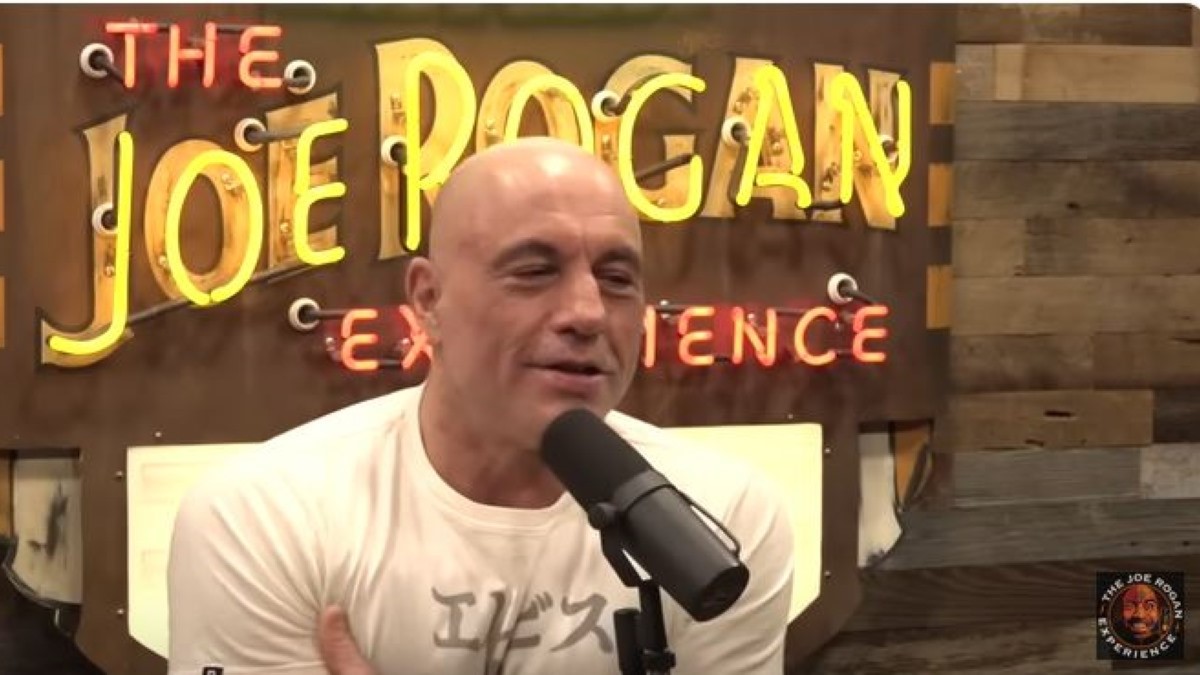
Recommended eye opener: Joe Rogan podcast #2281 with Elon Musk

This recommendation is for folks not familiar with The Joe Rogan Experience podcasts. And for those who would like to understand what DOGE is really doing and why.

This recommendation is for those not yet familiar with Rogan’s conversations with folks like J.D. Vance, Mark Zuckerberg, Mel Gibson, Rod Blagojevich, Tulsi Gabbard, Donald J. Trump, Woody Harrelson, Bob Lazar, Gad Saad, and many others with a lot to say.  Those who are already Rogan enthusiasts will surely have already listened to this episode.

Briefly regarding the Joe Rogan Experience podcasts: Rogan, born in 1967, started his podcast in 2009 on YouTube.  Today, the podcast has massive audiences on all popular platforms.  The recommended episode #2281 with Elon Musk had 10,518,308 views and 66,911 comments on YouTube as of this writing.  Joe Rogan lives in Austin, Texas.  He practices martial and fighting arts, and is an avid archer and bow hunter (yes, he and his family eat everything he kills).  Rogan is able enthusiastically to discuss all kinds of subjects with his podcast guests.

So, why is the Joe Rogan Experience episode #2281 with Elon Musk important?  Because this episode has the potential of forcing DOGE opponents to understand what DOGE is really doing and why it needs to be done.

In episode #2281, Elon Musk says that Americans are living in two separate universes.  There is the DOGE opponents’ universe, and there is the DOGE supporters’ universe.  As a rule, opponents most likely get their news and facts only from mainstream media sources like MSNBC, AP, Washington Post, New York Times, and Facebook.  As a rule, DOGE supporters most likely also consume alternative media like X and the Joe Rogan podcasts. 

Today’s mainstream media shows DOGE protesters speaking of service cuts to the needy, fears of deportation from the U.S., anxiety over changes to Social Security and Medicare, shattered dreams of laid off government employees.  It shows legislators pointing to the “human impact of DOGE cuts.”  It talks about DOGE usurping Congress’ job.  All valid concerns.

Alternative media like X and the Joe Rogan podcasts expose DOGE’s findings in the underbelly of a government doing its best to delay its certain collapse.  The alternative media tacitly brings awareness that DOGE is indeed doing the job Congress has failed to do, since Congress remains unconcerned that absent policy changes the U.S. will face bankruptcy in the not too distant future.   

Just a few numbers can show why DOGE needs to take a chainsaw to the U.S.’s bloated bureaucracy – a task Congress should do but will not.

*   National debt as percentage of gross national debt was 123% as of fiscal year 2024.  As debt increases faster than GDP, this percentage will increase, eventually resulting in unsustainability.

*   House Continuing Resolution No. 14 passed on February 25, 2025, along party lines, with the sole Republican “Nay” coming from Thomas Massie (R-KY).  The Resolution recommended increased amounts of debt each year, resulting in a 47.5% cumulative increase 2025 to 2034.  The Economic Times sounded a warning in November 2024, which like all other warnings, was ignored by the U.S. Congress.

America’s national debt has reached a record high of $36 trillion, with a $2 trillion increase this year alone … The situation is becoming more dire, with the US debt now standing at 125% of the country’s GDP. Experts predict that this debt-to-GDP ratio could reach 200% in the coming years, meaning that the national debt could be twice the size of the entire US economy.  This is expected to result in the government spending more on interest payments than on essential areas such as infrastructure, development, and education.” America Headed for Bankruptcy, The Economic Times, November 25, 2024.

*   In 2024 the U.S. national debt was $35.5 trillion.  The combined wealth of billionaires was $6.2 trillion.  The combined wealth of millionaires was $26.1 trillion.  Even if the government taxed all the wealth of billionaires and millionaires in 2024, it would not succeed in reducing the national debt to zero.  Congress has preferred to remain ambivalent on calls to fix the country’s deficits by taxing the rich, because it can’t be done.

It would be great if DOGE’s opponents among voters would listen to Elon Musk’s conversation of February 28, 2025, with Joe Rogan. The entire 3-hour conversation is worth listening to, with plenty of entertaining topics — like responses from the sassy sexy voice from Grok. But the segment starting at 13.56 relates to DOGE findings and is the most crucial part of the podcast. 

Here are just a few observations by Musk:

*   Today’s dominant notion is that although a business needs to at least break even to survive, government can spend way beyond its revenues.  That notion is flawed, and on the current trajectory, the U.S. government will collapse in the near future. 

*   Again comparing government to business, a business must pass audits (external or internal) showing clearly described payment (where the money goes and why).  The U.S. Treasury issues numerous payments without codes or descriptions, the destination of which no one can readily determine.  [Note: This observation about the U.S. Treasury is not new.  For example, a report issued by the Office of Inspector General released May 29, 2024, concluded that the Treasury lacked sufficient controls to be fully compliant with the Payment Integrity Information Act of 2019.  Apparently, nothing has changed.]

*    About 1.5 million non-government organizations (NGOs) operate in the U.S.  An estimated 30% of NGOs rely on U.S government grants.  Payments to them are often on autopilot, without any follow-up as to the NGOs activities or efficiency. 

*   Concerns over the fate of Social Security are valid.  Concerns should include the fact that Social Security is a pay-as-you-go system that has created massive unfunded liabilities.  Future obligations are far greater than payments.  If the system is not rectified soon, it will collapse.

*  “DOGE staffers”:  These are the worker bees of DOGE.  They work as employees of government agencies and are vetted in the same way as any other government employee.  Their role is explained in the Executive Order of January 20, 2025. 

*   What DOGE does is shown event by event, line by line, on the DOGE website.  The website is accessible to anyone, including DOGE critics who express concern about not knowing what DOGE does. 

It is unfortunate that those truly concerned about the economic future of our nation had to resort to drastic unconventional action.  But inaction would have been an even more unfortunate choice. 

Picture:  Joe Rogan in his studio on February 28, 2025.

Shakespeare for Valentine’s Day

If Valentine’s Day candlelight dinner or box of chocolates is not in your budget this year, print a copy of Shakespeare’s Sonnet #116 and read it to your sweetheart. Then have a Happy Valentine’s Day!

How are you all celebrating Valentine’s Day? Romantic dinner by candlelight? Box of La Madeline au Truffe (US$25 per gram)? Or doing not much given the high cost of living?

If the latter, here is an unassuming suggestion: Print a copy of Shakespeare’s Sonnet #116 (funny thing about Shakespeare’s sonnets, they go by number instead of title), read it to your sweetheart, then talk a little bit about it. Not a big, deep discussion, please!

Why Sonnet #116? First, this is the most familiar of Shakespeare’s sonnets, so it must be good. Second, for so many folks, Sonnet #116 bursts into an epiphany when read or heard for the first time. Third, many find this sonnet worth revisiting by way of reminder.

So, here is Shakespeare’s Sonnet #116:

Let me not to the marriage of true minds
Admit impediments; love is not love
Which alters when it alteration finds,
Or bends with the remover to remove.
O no, it is an ever-fixèd mark
That looks on tempests and is never shaken;
It is the star to every wand’ring bark
Whose worth’s unknown, although his height be taken.
Love’s not time’s fool, though rosy lips and cheeks
Within his bending sickle’s compass come.
Love alters not with his brief hours and weeks,
But bears it out even to the edge of doom:
If this be error and upon me proved,
I never writ, nor no man ever loved.

Depending on our age and social milieu we might know couples that still hold hands walking down the street after 40 years together, or we might know some of today’s ubiquitous single parents (some divorced, some never married).

In Sonnet #116, Shakespeare characterized his view of the hand-holding oldsters – once young with “rosy lips and cheeks.” Challenges surely came their way. Certainly, at times one or the other had to stay steady, like a star, and not bend “with the remover to remove.” Chances are these couples will bear it out “even to the edge of doom.”

Agreed, this is not your typical Valentine’s Day poem, dripping with gleeful passion and lovely allusions. You can tell that from the sonnet’s first line which refers to the “marriage of true minds,” not the marriage of true hearts.

Happy Valentine’s Day!

Picture: Herbert and Zelmyra Fisher of James City, North Carolina. This picture is from Deep Roots at Home. As of February 2024 Herbert and Zelmyra still held the Guinness record for the longest married couple: 86 years of marriage. Herbert passed away in 2011 at age 105, and Zelmyra followed him two years later also at 105.

Here is an excerpt from Herbert and Zelmyra’s Choice Secrets Of Successful & Long Marriage, Deep Roots at Home, September 14, 2020.

Together, as young friends and then later when married, they survived the effects of World War I and II, the Great Depression, the Korean War, the Vietnam War, the civil rights movement and 15 presidential administrations.

During the Depression, Herbert lived off the land and worked for as little as 5 cents a day. They had to raise their own food and ration it for their five children. Unable to afford a car, Herbert got to work as a mechanic the best way he could. Undaunted, Herbert built their home with his own hands in 1942.

USAID – Humanitarianism vs. America First

The new normal: “Every dollar we spend, every program we fund, and every policy we pursue must be justified with the answer to three simple questions: Does it make America safer? Does it make America stronger? Does it make America more prosperous?”

On January 26, less than a week after President Donald Trump took office, the U.S. State Department announced Secretary Marco Rubio was initiating a review of aid programs under the following guidelines:

Every dollar we spend, every program we fund, and every policy we pursue must be justified with the answer to three simple questions: Does it make America safer? Does it make America stronger? Does it make America more prosperous?”

As the principal U.S. agency funding foreign assistance, the U.S. Agency for International Development (USAID) was the first to be reviewed, and subsequently slated for elimination, reform or consolidation.

A perusal of the Internet readily shows numerous articles lamenting the humanitarian catastrophe that pausing USAID assistance will cause. One really must dig to find articles confirming the problems inherent in USAID. Depending on viewpoint, this might be because USAID has no problems or because mainstream media is biased. Or all of the above.

In spite of rhetoric about the ills of wealth redistribution, mainly coming from the right, today’s average Americans do observe charity. The National Philanthropic Trust says, “Per capita, Americans voluntarily donate about seven times as much as continental Europeans.”

This humanitarian spirit spills into governmental policies. Therefore, it should not be surprising that U.S. foreign aid agencies have been giving generously to populations in need whether friend of foe. A hungry child in Taliban-controlled Afghanistan experiences the same suffering as a hungry child in the Philippines.

Unfortunately, this humanitarian spirit causes U.S. aid agencies and other parts of government to work at cross purposes, one part spending money and effort on an adversary and the other part spending money and effort combating that same adversary. Here is an example:

The influx of undocumented individuals into the U.S. has become a cause for concern, particularly in conservative circles. Another cause for concern has been reform district attorneys whom conservatives associate with rise in crime. However, USAID funded East West Management Institute, an Open Society Network organization focusing on judicial reform. Also in the Open Society Network is Welcoming America, an organization that empowers “supportive residents of local communities—immigrants and U.S.-born together—to disseminate positive messages about local immigrants.”

This is most probably just one of many examples of cross purpose foreign assistance that does not sit well with the new White House, prompting the swift actions we all have witnessed.

Indeed, as supporters of USAID point out, government spent in fiscal year 2023 only 1.2% of its budget in foreign aid – not a lot to worry about. However, one of the reasons the nation is $36 trillion in debt (121% of GDP) is that members of the U.S. Congress have been either asleep or busy campaigning, while nickel and diming the nation into fiscal unsustainability.

Supporters also have expressed angst that China, our current competitor on many levels, will gain ground if USAID work is paused. Such concern borders on wishful thinking. While USAID focuses on food and social justice, China focuses on roads, hydro power, transportation, and other hard “aid.” The U.S. Government Accountability Office in its October 2024 post says,

China is the world’s largest debt collector, with outstanding borrower debt sitting between $1.1 and $1.5 trillion. But countries receiving Chinese investments may end up with unsustainable debt that leaves them no choice but to support Chinese global goals.”

Sounds like while the U.S. is playing checkers, China is playing 3-D chess.

Although it is good for the American people to remain charitable and the U.S. to remain engaged in the needs of less fortunate nations, we need to refrain from being naïve. Our legislative leaders have done very little besides bicker and campaign. It is time for somebody to make our government efficient and focused on America’s best interests.

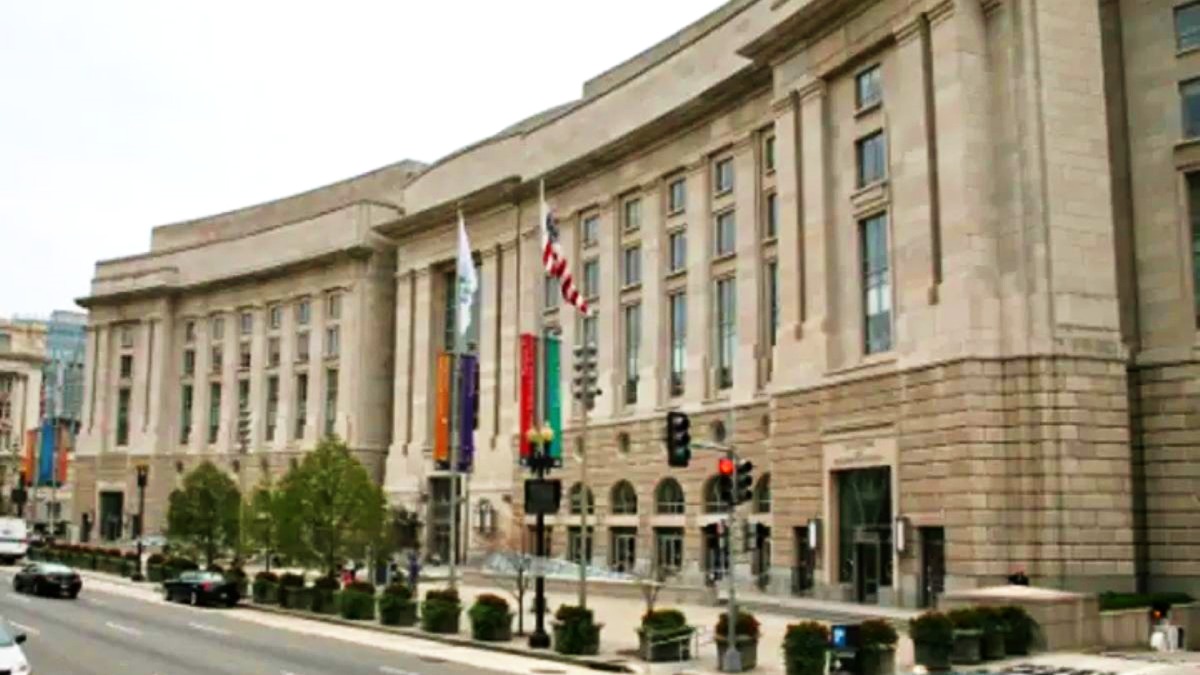
Picture: The former USAID headquarters in Washington DC. USAID employees also occupied a 38,520 sq ft annex building, also located in Washington DC.

Did Greenland say it wanted Texas?

Nations have always felt comfortable taking over other nations. So, it should not be surprising that President-elect Donal Trump wants Greenland. Niccolo Machiavelli explained the situation way back in 1532.

No, Greenland did not say it wants Texas. However, nations have always felt comfortable taking over other nations or occupying foreign territories, and nothing has changed. Examples currently abound: China is committed to reunification with Taiwan, by force if necessary. Russia wants Ukraine as security against NATO encroachment. Israel also cites security as it expands settlements in Palestinian territories and occupies buffer zones in southern Syria. North Korea has never stopped eyeing South Korea.

Therefore, it should not be surprising that President-elect Donald Trump, especially given the expansionist aspirations of China and Russia – as well as the treasure trove of valuable minerals under Arctic soil — wants to take over Greenland. This despite the clear message “Greenland is not for sale” repeated by both Greenland and Denmark. And by the way, Trump also would like to take over Canada and the Panama Canal.

Whether Trump’s threat of maximum menace represent his version of negating tactics or his version of American exceptionalism — i.e. empire building — is anyone’s guess. However, either way, he is seemingly guided by what Niccolo Machiavelli called “effectual truth” in his novel The Prince (1532). Here is an excerpt,

It remains now to see what the modes and government of a prince should be with subjects and with friends … it has appeared to me more fitting to go directly to the effectual truth of the thing than to the imagination of it … it is so far from how one lives to how one should live that he who lets go of what is done for what should be done learns his ruin rather than his preservation.

Especially in developed nations, ideal leaders are often envisioned as behaving presidentially, respecting other nations’ sovereignty, practicing “peace, commerce, and honest friendship with all nations, entangling alliances with none” (as Thomas Jefferson advised during his inaugural speech of 1801).

But the U.S. has enjoyed very few years of peace since independence in 1776. During the 19th century, the U.S. used force during its Western expansion and its removal of French and Mexican presence. The 20th century saw the two great wars and combat against Communist expansion. In the 21st century U.S. lives and treasure have been spent establishing footholds in the Middle East. Today, thankfully not U.S. lives, but certainly plenty of U.S. treasure is being spent defending Israel and Ukraine. While China and Russia are just outside the gates.

Perhaps the world is engaging in imagining what should be rather than what is. So, Donald Trump’s expansionist pronouncements stick out like a sore thumb.

Alternatives? Peace through strength (waging war and calling it peace) is the historical possibility chosen by great empires. Globalization as exemplified by the European Union chooses peace and prosperity through national acquiescence. That’s it?

Niccolo Machiavelli is often perceived as supporting ruthless leaders. However, in Chapter 19 of The Prince he says,

… a prince ought to have two fears, one from within, on account of his subjects, the other from without, on account of external powers. From the latter he is defended by being well armed and having good allies … But concerning his subjects, when affairs outside are disturbed he has only to fear that they will conspire secretly, from which a prince can easily secure himself by avoiding being hated and despised, and by keeping the people satisfied with him, which it is most necessary for him to accomplish,

It appears a prince stays in power at the will of his subjects! Would that mean that in our time and place we could at the ballot box choose leaders who prefer peace, commerce, and honest friendship with all nations? If so, why have we not?

Picture: The symbol for the 1964 World’s Fair in New York state was The Unisphere. The theme of the fair was “Peace Through Understanding.” This picture is from The Legacy of the 1964 World’s Fair in the History website.

With a name like DOGE it’s got to be good

Wasteful government spending is nobody’s secret. Neither are ways to curtail that spending. However, the debt ceiling is raised every year, the spending continues, and the national debt keeps rising. Maybe DOGE, named after a meme coin featuring Kabosu the dog is weird enough to succeed!

We are living in a brave new world of memes, soundbites, and billion-dollar campaign war chests. Thus, chances are media savvy billionaires calling themselves DOGE might succeed in saving this nation from eventual bankruptcy, when other fiscal Cassandras were and are ignored.

Some reminders

As of December 31, 2024, the U.S. national debt was $36 trillion. As of September 30, 2024, the debt to GDP was 123%. What the country owes is greater than what the country produces to pay its debt.

For the last several decades, Congress – keeper of the nation’s purse strings — has shown no interest in cutting spending. Members feign anguish about raising the debt ceiling every year at budget time, then go ahead and raise it.

Voters seem content re-electing spenders and having their giggles at news of any ludicrous government expenditures.

Three outstanding producers of much giggle but little action

The late Senator William Proxmire (D-Wisconsin) issued 168 “Golden Fleece” awards from 1975 to 1988, informing the public of questionable ways Congress was spending taxpayer money. One of his best choices was a 1978 $97,000 ($400,489 today) study by the National Institute of Mental Health of activities in a Peruvian brothel.

Retired Representative Ron Paul (R-Texas) served in the U.S. Congress for 12 non-consecutive terms. While in Congress he was known as “Dr. No,” since he would not vote in favor of any proposal not expressly authorized by the Constitution. Imagine how much leaner, better, faster, cheaper government would be if every member of Congress did the same!

Current Senator Rand Paul (R-Kansas) has somewhat followed his father’s footsteps in speaking out against our big, expensive government. So far, Rand Paul has issued 10 annual “Festivus Reports” to acquaint voters of the frivolous ways their hard-earned tax money is spent by Congress. Judging by press reaction, one of the most giggle-worthy expenditures in the 2024 report is National Endowment of the Arts funding for ice-skating drag queens.

Enter DOGE

Soon after his presidential victory, Donald Trump appointed entrepreneurs Elon Musk and Vivek Ramaswamy to lead an extra-governmental group tasked with dramatically reducing the federal budget and the national debt. These objectives are to be accomplished by drastically curtailing government spending, downsizing the federal workforce, and radically cutting regulations. This yet to be configured group has been named DOGE, an acronym for Department of Government Efficiency.

Never mind that, in addition to the government waste warriors mentioned above, we already have the Government Accountability Office and the House Committee on Oversight and Accountability shouting from the rooftops about the incredible amount of taxpayer dollars wasted by various and sundry federal government activities.

Never mind that DOGE will need to dodge all manner of pelts that will surely come its way – claims of extra-constitutional actions, challenges from the legion of entities feeding at the public trough, lawsuits from axed civil servants, dissatisfaction from the forever-growing mass of government-dependent voters, and reluctance from Congress members not willing to upset established sources of donations and votes.

How could DOGE miraculously succeed when others have failed?

  • The power of constant soundbites

Most people these days tolerate (or welcome) a ceaseless stream of breaking news and social media notifications. Shortcuts into the populace’s conscious abound. So do media influencers who successfully promote or ruin products, people, and ideas. Just look at your Facebook or X account, and no further indication of this truth is necessary.

DOGE comes with the power of Elon Musk’s frequent soundbites in the news. It comes with the power of X. It comes riding on the waves of a populist movement made credible by the success and high visibility of leaders like Javier Milei of Argentina and Nayib Bukele of El Salvador.

  • The power of ubiquitous memes

Evolutionary biologist Richard Dawkins coined the word “meme,” short for the ancient Greek word “mimeme” meaning cultural copying. Dawkins characterized memes as,

“… melodies, ideas, catchphrases or bits of information that leap from brain to brain through imitation, expediting their transmission.” The surprising power of internet memes, 09/28/2022.

Unsurprisingly, DOGE is a meme coin, Elon Musk’s favorite crypto currency. The coin came into being when a photo of a Shiba Inu dog named Kabosu went viral, and crypto innovators riding on the popularity of Bitcoin produced the DOGE featuring Kabosu. Take your pick as to whether DOGE stands for DOG-E coin or not.

Kabosu, RIP, died May 24, 2024, at the age of 18. But she will forever be remembered thanks to the Kabosu monument built in 2023 in her honor in Sakura City’s Sakura Furusato Hiroba riverside park. See featured image of this article, showing Atsuko Sato (who rescued Kabosu from an animal shelter) cuddling Kabosu at the Sakura monument.

May the fiscal salvation offered by the X owner and frequent poster come to pass.

  • The power of excellence.

Elon Musk and Vivek Ramaswamy are of the intellectual elites of our times. In the old days we had Nicolaus Copernicus, Isaac Newton, John Locke, Benjemin Franklin – minds that operated outside the accepted norm and thus produced what was unimaginable before they came along.

Nowadays with excellence justifiably comes monetary rewards. Musk and Ramaswamy are billionaires. And with money comes power. Musk contributed $259 million to groups supporting Trump’s 2024 campaign, most certainly because he did want to do what he proposed during an X interview with Trump: cut government waste.

One would be naïve to think members of Congress are not aware that plying ball might translate into re-election support.

  • The power of sudden epiphanies.

Today, January 6, is Epiphany, also called the Day of the Magi and the 12th Day of Christmas. The word epiphany means a sudden realization of something, an unexpected grasp of reality.

Let’s hope that voters, Congress, and the legacy media soon come to the realization that the current national practice of borrowing to support spending is not sustainable.

Christmas in a hot climate

I was born in the Southern Hemisphere, where it can get
hot as blazes in December. So, snow-covered trees made no sense to my family. Ah, but wait ’till you hear about our DIY Nativity Scene. Merry Christmas everyone.

For some people, including me, no Christmas ever goes by without remembrance of childhood. Scenes of trees, sleighs and snow, remind me of my Christmases in sweltering hot weather. See, I was born in the Southern Hemisphere, in South America, where December is summertime.

For my family the snowy tree scenes so popular in the Northern Hemisphere made no sense at all. Besides, they said, what do trees have to do with the birth of Jesus?

Ah, also, real trees were expensive for folks of modest means like us, and they only lasted one season. Some fancy people had fake trees, like those shimmering aluminum ones, but that was equally out of our range.

But my Christmases were unforgettable!

The extended family in which I grew somehow managed to instill in all of us kids that experiences differ according to condition. The trick is to understand the condition, accept it, and build rituals of cheerful dedication.

The ritual of Christmas included us kids scouring the neighborhood for discarded wood, the older kids bringing sand from the beach, one of my uncles cutting branches with lovely leaves, and another uncle building the frame of what was to be the most beautiful Nativity Scene you have ever seen.

The gathering and building are what stand out in my memory.

The uncle whose job was to build the Nativity frame expected teamwork and precision (he was a draughtsman for the army). The uncle in charge of bringing the branches collected them from a veritable jungle that stood mysteriously abandoned for decades in the back of his property.

Gathering and transporting sand required deep planning. The gathering had to be when it was not too hot and the beach was not covered with sunbathing folks. Transporting entailed avoidance of market days when lots of people who also depended on the local streetcar brought home numerous bags of produce (and often a live chicken). My Dad, given that he was known for destroying a wall while trying to hammer in a small nail, did not participate in the building of the Nativity Scene. His job was the Christmas dinner.

Once the frame was built, the canopy of greenery was in place, and the sand was spread evenly on the frame’s platform, we kids were allowed to place rocks and other nature items that we felt were appropriate on the sand.

Lastly came the piece de resistance.

The adults cautiously and lovingly unwrapped the Holy Family, the Angel (the Bible does not mention an angel present at the manger, but Nativity Scenes like to have one), the Three Wise Men (the Bible does not say how many there were, but makes sense to say 3 since they brought 3 gifts), the shepherds and their sheep (yes, mentioned), and the cow and donkey (nothing about them in the Bible, but they fit the story so beautifully).

And voila, there was the Nativity Scene, to us a beautiful and joyous scene that seemed to shout “Hey, cooperation and good will can work. How abut spreading them around as far and wide as you can?”

To this day, although I now live where it is cold in December, I set up a little Nativity Scene at Christmas time. I am happy that my little granddaughters cooperate setting up their tiny Scene in their room every year, the featured picture of this Christmas article.

Have a wonderful Christmas or Hanukkah (they fall on the same day this year), or just celebrate the Season. Best wishes for a prosperous and peaceful 2025.

Marcy Berry
Just Vote No Editor

North Carolina proposed a Convention of States – Be wary

Article V Convention of States is a bulwark against federal government abuses. Only problem is it has never been used and nobody knows how it works.

On December 5, 2024, the North Carolina State Legislature passed a Joint Resolution applying to the U.S. Congress for an Article V Convention of States to limit the term of Congressional Leaders.

To those familiar with what a Convention of States is and what pros/cons such a convention carries, kudos. This Just Vote No article is for folks who say, “What are we getting into here?”

So, first off, what is Article V

Article V of the U.S. Constitution is a crucial bulwark against federal government abuses. It gives states and its people the right to amend the Constitution whether the federal government likes it or not. This form of redress has never been used. All 27 Amendments to the Constitution have been placed via another route offered by Article V – Congress proposes, and states ratify. Here is Article V:

“The Congress, whenever two thirds of both houses shall deem it necessary, shall propose amendments to this Constitution, or, on the application of the legislatures of two thirds of the several states, shall call a convention for proposing amendments, which, in either case, shall be valid to all intents and purposes, as part of this Constitution, when ratified by the legislatures of three fourths of the several states, or by conventions in three fourths thereof, as the one or the other mode of ratification may be proposed by the Congress; provided that no amendment which may be made prior to the year one thousand eight hundred and eight shall in any manner affect the first and fourth clauses in the ninth section of the first article; and that no state, without its consent, shall be deprived of its equal suffrage in the Senate.”

The language of Article V is purposefully lean.

Our Founders established an experimental way of governing – We the People, on our own or via our elected representatives, decide the nation’s path. Article V guarantees an antidote against federal misconduct but leaves open how states (The People) use it.

It is clear from the language of Article V that applications from 34 states (2/3 of 50 states) are needed for Congress to call for a Convention of States, and that whatever amendments are proposed at such Convention must then be ratified by the legislatures of 38 states (3/4 of 50 states).

Other than that, at present, there is nothing.

We have no precedent for guidance. We have no rules that guarantee what states propose is what delegates will aim for at a Convention. There is nothing about who can be a delegate, or how delegates should be chosen. We have no guidance when or how U.S. Courts can intervene if amendments stray too far from the intentions of our Founders.

It is not even clear when Congress is required to call a Convention of States, since there is disagreement how applications should be counted. Article V says nothing about subjects on applications, nothing on whether applications expire or are forever valid, nothing on how to count or not count rescinded applications.

Even if we all agree to count only applications currently clearly on the table, does Congress count 9 applications for “Term Limits” and 25 to go. Or count 9 for terms limits plus 19 to “Limit the power and jurisdiction of the federal government, impose fiscal restraints, and place term limits on federal officials,” so only 6 to go.

Therefore, voters should be wary of assertive self-assured applications.

Here is the wording of Section 1 of the North Carolina application for a Convention of Stares,

“SECTION 1. The legislature of North Carolina hereby makes an application to Congress, as provided by Article V of the Constitution of the United States of America, to call a convention limited to proposing an amendment to the Constitution of the United States of America to set a limit on the number of terms that a person may be elected as a member of the United States House of Representatives and to set a limit on the number of terms that a person may be elected as a member of the United States Senate.”

Although this language and that of other applications sound completely straight forward, the people can only depend on the good character and promises of Convention delegates.

The chances that promises would be kept or not is anyone’s guess.

Even a cursory search on the Internet for “Convention of States” will yield numerous pros and cons. The pros mostly point out that a Convention is needed to do the job Congress refuses to do, and there should be no fear of a “runaway Convention” given the specificity of Convention applications. The cons simply disagree that any specificity can exist based on the language of Article V, and Congress’ dysfunction can be easily cured by voters at the ballot box.

Both sides can be right, since Article V doesn’t say much! Both sides can try to guess what the Founders intended via the Federalist Papers or other writings, and one guess would be just as good as another.

Both sides often bring up the first and only Constitutional Convention, which convened in Philadelphia in the summer of 1787. The pro side points to the fact that this was a Constitutional Convention, a different animal than a limited Article V Convention of States. The con side sees no difference, based on the language of Article V.

Y’all remember what happened there? That 1787 Convention, attended by George Washington, Alexander Hamilton, James Madison, and other great minds of the time convened to improve the Articles of Confederation which lacked a way that states could operate in concert by a set of rules. As we all know, delegates did not improve the Articles of Confederation but instead wrote a whole new Constitution.

It all sounds a bit too risky. Even if we say the real intent of Convention of States is to scare government into taking action, uncertainties of what happens if a Convention is called remain.

How about the good old ballot box?

The ballot box remains the only sure-fire way that people can control what government does. If voters want a smaller fiscally restrained government, don’t groan and grind teeth when radicals in Congress speak out against increasing spending limits. If voters want terms limits, stop voting for career politicians and support the “citizen statesmen” that our Founders envisioned.

Want to hear the pros/cons first hand?

For those interested in a good collection of pros and cons all in one place, here is a link to a YouTube video called Conference on the Constitutional Convention: Legal Panel. This conference was presented by the Harvard Law School. Five panelists participated in the discussion.

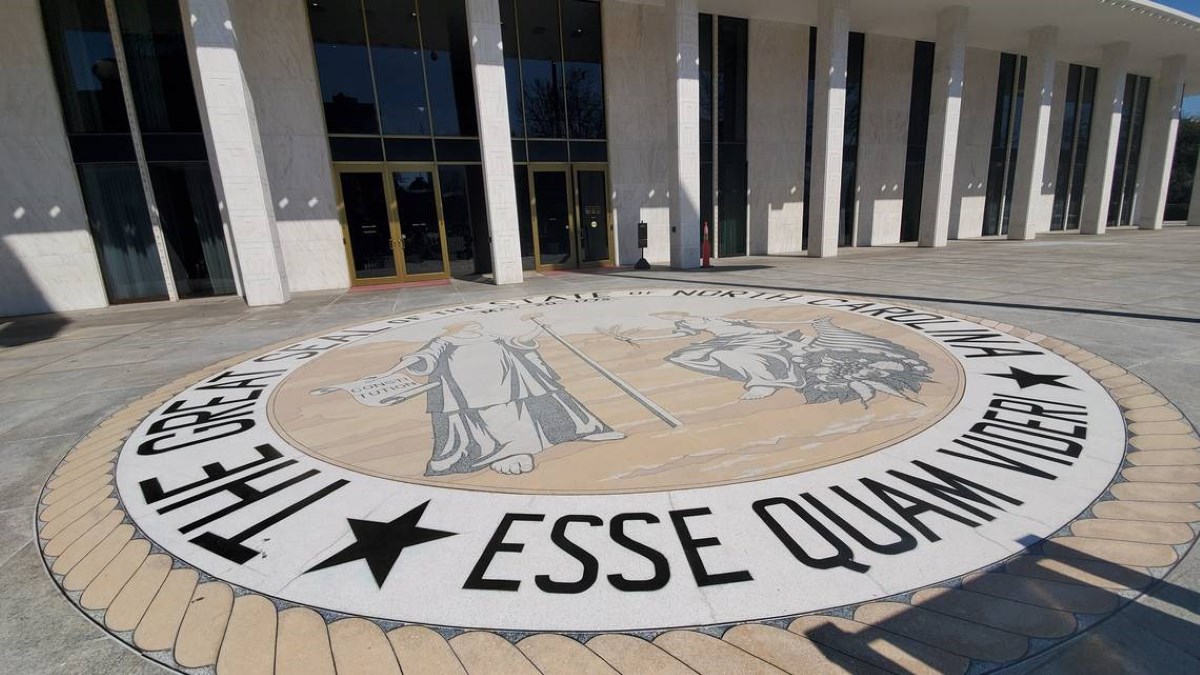
Picture: The Great Seal of North Carolina is embedded in the walkway at the main entrance of the North Carolina State Legislative Building. Around its edge is the state motto, “Esse Quam Videri,” Latin for “To be, rather than to seem.”

San Francisco: Notes from an expatriate

San Francisco is a place of distinctive neighborhoods. One place they get together is Coalition of San Francisco Neighborhoods.

California’s jewel city of San Francisco is a place of neighborhoods, each with its own distinctive features and characteristics. The city is also a physical contradiction in terms. Its lovely neighborhoods of Pacific Heights and Marina contrast sharply with the homeless-filled Tenderloin and SOMA districts.

One place where denizens of these divergent neighborhoods have come together since 1972 to “Advocate for a healthy city” is the Coalition for San Francisco Neighborhoods (CSFN).

Thanks to long-time fellow advocate for a better world and dedicated member of CSFN for sending to the Just Vote No Blog the link to one of CSFN’s YouTubes, this one featuring another long-time fellow advocate.

The YouTube dated November 19, 2024, Chris Bowman on 2024 Election, is filled with his usual great insights. However, the segment this JVN post would like to highlight is Chris’ spot-on description of various labels ascribed to politicians’ governing philosophy (37.00).

Why does it matter? San Francisco, a Republican bastion until around 1964, today is solid left-of-center Democratic. Which is fine, since that is what the city’s voters voted for. But the point of these notes from an expatriate is that what San Francisco calls “moderate” would be viewed in, say, Florida, as socialist, and leftward from there.

So, here are Chris Bowman’s thoughts on the matter, paraphrased best as possible:

Moderate: A leader that wants government to live within its means, without substantially raising taxes.

Conservative: A leader that wants government downsizing, by reducing expenditures and government involvement.

Liberal: A leader that wants economic growth, which increases the tax base, and allows for expenditures on social projects.

Progressive: A leader that wants to raise as much taxes as possible and spend as much as possible on social projects, even if that entails taxing the rich out of existence [or taxing the rich into exile].

Comparison between a liberal and a progressive: A liberal wants a very well-fed goose that can lay lots of golden eggs. A progressive is OK with cutting up the goose to produce a rich stew.

In conclusion, pay no mind to labels San Francisco politicians adopt for themselves, or what labels the media ascribes to them. Pay close attention to what they advocate.

Picture: San Francisco’s beautiful Marina. More like this on bcx.news, Arts, Literature, Photography, Events.