Today, Donald Trump fired John Bolton. One might ask why Trump, a self-described deal maker, chose a quintessential foreign policy hawk in the first place.
On September 10, 2019, President Donald Trump accepted the resignation of John Bolton, the National Security Advisor he chose in April of 2018.
Bolton is the quintessential foreign policy hawk, who believes forceful action — what some call regime change — should be the preferred option in dealing with nations the U.S. perceives as threats.
The question could enter people’s mind as to why a President who saw himself as an accomplished deal maker and campaigned on the promise of ending U.S. endless wars would choose an advisor like Bolton. Perhaps the answer is that John Bolton’s purported aim is the same as Donald Trump’s: advocate for American interests.
But, unfortunately, no matter how sincere is Bolton’s aim, Trump must have finally faced the fact that the devil is in the details, and Bolton’s strategy has never included deal making or ending war in the maintenance of regime change.
As noted in a comprehensive article in The Atlantic, in his memoir Surrender is Not an Option John Bolton expresses contempt for what he views as soft foreign policy.
State careerists are schooled in accommodation and compromise with foreigners, rather than aggressive advocacy of U.S. interests, which might inconveniently disrupt the serenity of diplomatic exchanges, not to mention dinner parties and receptions.
The problem that Trump possibly had to face in Bolton’s case is that in government, just as in business, something either works as advertised or it does not. True, the bigger the entity, the more freely it can paper over discrepancies between what is said and what is done.
However, the failures of regime changes are becoming simply too obvious to hide: Guatemala, Chile, Iran, Zaire, Afghanistan, Iraq. The autocrats that took over these nations after the U.S. intervened left them no better than before intervention.
There is a saying, “War is the health of the state.” Hawks like John Bolton probably sincerely believe that. However, Thomas Jefferson might have had a better idea,
Peace, commerce, and honest friendship with all nations – entangling alliances with none. Thomas Jefferson, Inaugural Address.
Nobody likes to pay almost half of one’s wages for housing, but that is what is happening to so many California residents. Reasons for the astronomical housing costs vary according to whom one asks. However, regardless of reason, the situation is now promoted as a “crisis,” and duly exploited as such.
Of concern to the Just Vote No Blog is that the housing crisis is at the heart of today’s central planning, which renders residents and voters increasingly powerless in land use and housing decisions.
A Brief Background
In The Curious Case of Housing Legislation, the Just Vote No Blog noted the history behind today’s network of housing bills. The state’s evolving efforts to remove land use and housing decisions from voters is one of the evident aspects of such history. Here are some reminders:
The seminal Assembly Bill 32, The Global Warming Solutions Act of 2006, started the ball rolling by mandating the reduction of the state’s greenhouse gas emissions to 1990 levels by 2020 and to 80 percent below 1990 levels by 2050.
Climate crisis soon morphed into a land use crisis that required dense job/housing development along narrow corridors throughout the Bay Area, ostensibly to cut down on greenhouse gas emissions produced by workers commuting from homes in the suburbs.
Predictable pushback from neighborhoods, cities and counties not wanting to lose their chosen quality of life encouraged increasingly stronger state mandates. SB 330 and AB 1487 are the latest high-profile bills bent on removing housing decisions from cities and counties.
SB 330, the Housing Crisis Act of 2019, introduced in February by Senator Nancy Skinner and approved by the legislature September 6, has the general objective to “prohibit a county or city, including the electorate exercising its local initiative or referendum power, in which specified conditions exist, determined by the Department of Housing and Community Development as provided, from enacting a development policy, standard, or condition, as defined…..” Thus, the electorate is summarily dismissed.
AB 1487, the San Francisco Bay Area Regional Housing Finance Act of 2019, introduced in February by Assembly Member David Chiu is currently active and in desk process. This bill is a game changer. Voters, no matter how disempowered by mandates such as SB 330, at present can still vote down tax proposals that finance mandates they do not like. AB 1487 makes that strategy more difficult. This bill establishes a new agency, the Bay Area Housing Finance Authority, run by bureaucrats removed from the wrath of voters, with the power to place tax proposals on region-wide ballots, and to determine pass/fail on an aggregate region-wide basis.
Progression Towards Powerful Public-Private Partnerships
The plethora of housing bills in the style of SB 330 and AB 1487 passed into law during the past few years calls for a good deal of cash, perhaps more than the creative financing that could be achieved by the Housing Finance Authority would be able to raise on its own. Thus, enter powerful private players interested in housing development for reasons of their own, willing to forge partnerships with public entities. As one would expect, tech companies like Google and Facebook are becoming major players.
Google, Facebook and other deep-pocketed tech companies are at present investing in housing, a dream come true for housing advocates. They are also encouraging the California legislature to pass legislation that will streamline housing production (more on this later), since investors do not like lengthy bickering over what or where housing is built.
Of course, private influence in public affairs is nothing new. Neither is privately-funded housing developed with government blessings — company towns like Hershey, Marktown, and Pullman are examples. However, today California is witnessing not just tech-towns developed for tech workers, but also the much broader endeavor of using tech money to fund housing for the general population.
Recommended Articles on Public-Private Partnerships
A San Francisco Bay Area publication, 48 Hills, has been deeply concerned about the waning power of voters in land use, housing and transportation decisions. A series of articles by researcher and journalist Zelda Bronstein, published in 48 Hills, explains in great detail how a private entity, the Chan Zuckerberg Initiative, is poised to affect housing policy. In the first two installments published May 29, 2019 and August 29, 2019 of the series (there might be more to come), Ms. Bronstein zeroes in on Senate Bill 330 and Assembly Bill 1487.
The articles are rich with information that Bay Area residents will find useful in understanding who is becoming in charge of their neighborhoods.
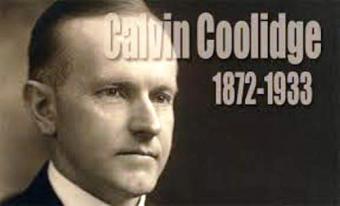
Calvin Coolidge was one of those geniuses ignored by most and respected by a loyal following.
Why Calvin Coolidge?
These days we certainly hear a lot about Lincoln, Roosevelt, Obama, Trump. How about Coolidge?
“Silent Cal,” so named because he spoke only when it was absolutely necessary, is admired by small-government advocates and ignored by central planners. In his address delivered to the Holy Name Society, Washington DC, 1924, Coolidge expressed the ultimate liberty-leaning rule:
Liberty is not collective, it is personal. All liberty is individual liberty.
It is your serfdom or liberty. It is your choice. It is your vote. Your vote puts candidates, good or bad, into office. Your vote determines the laws under which you live.
Your vote also determines your take-home pay, how much of what you earn is available to purchase and invest by yourself and your family. Here is another favorite Coolidge quote from his 1925 inaugural address,
The men and women of this country who toil are the ones who bear the cost of the Government. Every dollar that we carelessly waste means that their life will be so much the more meager.
There is a reason why you may know a lot of people who keep guard dogs, but none who keep guard sheep. The reason might surprise you.
Sheep: The Animal That Fell From Grace
There is a reason why you may know a lot of people who keep guard dogs, but none who keep guard sheep.
Sheep Logic, an article by W. Ben Hunt published in Epsilon Theory, gives a fascinating account of sheep behavior. After you read the article, you will have a better understanding why there are no guard sheep, why there is a distinction between a flock and a pack, and why today people are encouraged to fall into flocks not packs.
Here is a summary of sheep protocol according to Dr. Hunt:
*Sheep are other-regarding. Their actions are prompted by what they see other sheep do.
*Sheep have zero capacity for altruism. They do not form bonds, they do not lead, nor do they follow. They just do not care!
*Sheep’s other-regarding and selfishness continue even when such traits prove unbeneficial to them. If no outside event prompts any sheep to discontinue a detrimental behavior, the entire flock continues the behavior.
*Sheep’s flocks are social structures that promote other-awareness, and preclude coordination or formation of objectives. Flocks, therefore, differ sharply from packs, since the hallmark of pack animals is a self awareness that encourages a social structure formed to carry out common objectives, such as hunting for food or raising the young.
Do people resemble sheep or wolves today?
According to Ben Hunt, people today are encouraged to behave like sheep – other-regarding, selfish, dogmatic, and “willing to pursue a myopic behavior even unto death.”
“Why are we being trained to think like sheep? Because sheep are wonderful prey animals. They pay the rent with their fleece, and when push comes to shove you can eat them, too.” “Just keep them from killing themselves in some really stupid accident and you can harvest them for years and years and years.”
“How are we trained to think like sheep? By the rewards we receive from our modern social institutions for other-regarding flock behaviors like jealousy (feeling sad when others are glad) and schadenfreude (feeling glad when others are sad), and by the penalties we receive for self-regarding pack behaviors like honor and shame.” “Shame requires self-evaluation and self-judgment against some standard of obligation to the pack, concepts which would make sheep laugh if they could.”
This Biblical animal certainly loses its cuddliness at the hands of Dr. Hunt, though it continues to illustrate human deportment well.
(Sheep Logic, authored by Dr. W. Ben Hunt, appeared on Epsilon Theory, on October 5, 2017)
There is a world of difference between political correctness and civility. PC is rapidly replacing civility, to perhaps dire consequences.
The Difference
There is a world of difference between civility and political correctness (PC). Civility is thoughtful behavior towards everyone. PC is prescribed, agenda-driven speech and action that applies to some but not to others. Civility comes from the inside, while PC is prompted from the outside.
Increasingly, PC is taking the place of civility. PC harshly censors our speech, actions, and even thoughts. Dare to call for discipline in a classroom, and the label of “privileged” soon follows. Dare to criticize the work of a self-identified-female employee, the label of “sexist” immediately arises. Oh, and calling anyone female or male without the qualifying “self-identified” borders on the self destructive.
The Advocates
Advocates of PC say they want to level the playing field, promote equality of outcomes, compensate for privilege. At first blush, such objectives might even sound laudable. But the problem is political correctness does not recognize limits.
The Example
Kurt Vonnegut’s short story Harrison Bergeron(1961) paints a world towards which PC advocates might be takings us all, a world in which the new and improved American Constitution prescribes complete equality for all.
In Vonnegut’s dystopian world nobody can be smarter, more talented or prettier than the rest. Laws force people to wear “handicaps,” such as masks for the beautiful, sound to disrupt thought for the intelligent, and bags filled with lead balls for the strong and/or agile.
Here is Vonnegut’s idea of a domestic dialogue in the age of complete fairness:
“You been so tired lately — kind of wore out,” said Hazel. “If there were just some way we could make a little hole in the bottom of the bag, and just take out a few of them lead balls. Just a few.”
“Two years in prison and two thousand dollars fine for every ball I took out,” said George. “I don’t call that a bargain.”…
“If I tried to get away with it,” said George, “then other people’d get away with it — and pretty soon we’d be right back to the dark ages again, with everybody competing against everybody else…”
The Consequences
And here is a concern related in an article on U.S. News.com about the downward trends of math and English scores as measured by college-readiness tests:
“Much more concerning, however, were readiness levels in math and English, which continued a downward slide dating to 2014. This year [2018], math scores dropped to a 20-year low.”
“The news reignited concerns over whether there is a mismatch between what students learn in school and what college entrance exams ask of them, whether tests are an accurate barometer of college readiness, and — from an equity standpoint — whether the tests present an advantage to those with more means.”
Hopefully colleges will not further waste parents and/or taxpayers’ money carrying out studies on whether “those with more means” have advantages over those without, since we all know that to be the case already. Such advantages will always exist … that is unless legislators decide to really level the playing field by creating the position of “Handicapper General” as those in Kurt Vonnegut’s story did.
Residents need to become aware of how much control they will cede to a regional agency such as the proposed BAHFA. Voters’ intentions to cast NO votes on BAHFA funding proposals might prove more effective than attempting to negotiate patches to AB 1487 with legislators. Putting lipstick on a piggy will not make it any pettier.
Assembly Member David Chiu, author of AB 1487, and his colleagues in the California legislature have removed all hint of what the bill would specifically do if signed into law. Now, in essence, the bill simply says that a new agency is being created with power to raise, administer, and allocate funding as it sees fit for affordable housing in the San Francisco Bay area.
Not much of what was said of Assembly Bill 1487 when it was first introduced in February 2019 applies. “Stakeholders and local leaders” are at present meeting with legislators to re-construct the peripherals of the bill. Of course, the core feature remains: Establishment of the Bay Area Housing Financing Authority, an agency that will initially share staffing with the Bay Area’s Metropolitan Transportation Commission, and that will have power to raise tax money from all counties in the Bay Area.
BAHFA as MTC’s Other Self
The proposed new agency will serve as the Metropolitan Transportation Commission’s other self, with the additional coveted ability to raise funds.
MTC, the Bay Area’s version of a federally-mandated Metropolitan Planning Organization, has what one might call a checkered past. Its major feats are finalizing the construction of a span of the Bay Bridge damaged by the 1989 Loma Prieta earthquake after years of delays and billions in costs overruns, and implementing central planning via Plan Bay Area (approved in 2013 by MTC Commissioners, but never by voters). Today, MTC doles out considerable sums under its various centrally-planned transportation and housing projects, but it does not have power to raise fund. It will indirectly should AB 1487 pass.
So, now the prospects are excellent for MTC’s other self, the Bay Area Housing Financing Authority, routinely to raise taxes regionally in the fashion of Measure AA. As the Just Vote No Blog noted in With AB 1487 There is No Opt Out, in 2015 Measure AA passed by the aggregate votes of all counties without possibility of any county opting out.
An Alternative to Putting Lipstick on AB 1487
AB 1487, last amended July 11, 2019, is currently an active bill in Floor process. A third reading in the Senate is scheduled for August 26, 2019.
Individuals and organizations concerned about BAHFA’s undue influence in the operation of their city or county should remember that the agency’s success in raising money depends entirely on the willingness of taxpayers to part with their hard-earned cash.
The possibility of residents becoming aware of how much control they will cede to a regional agency such as BAHFA and deciding to vote “No” on BAHFA funding proposals might give legislators some pause in moving forward with their plans. For those opposed to mandated central planning, aiming for such pause might be more effective than accepting BAHFA as fait accompli and merely attempting to negotiate damage control with legislators.
Putting lipstick on a piggy will not make it any pettier.
Addendum: The Transformation of NeighborhoodsParkmerced, a traditional privately owned residential community in the heart of San Francisco that houses over 3,000 residents, has developed Parkmerced Vision. Under the plan, the garden homes surrounding green spaces will be demolished to make room for taller, denser buildings. Some applaud the plan, others despise it. The transformation of neighborhoods is occurring for good or bad all over the state. A regional housing agency such as the proposed Bay Area Housing Financing Administration is intended to accelerate the process by injecting public funds for subsidized housing.
This post is in fairness to those who truly believe that climate change is an existential threat requiring collective, globally-mandated action.
The Just Vote No Blog View
“Climate change” and “Climate denial” are charged phrases that often elicit strong responses. The Just Vote No Blog has often noted that the subject of climate has grown beyond common sense efforts like installing scrubbers on smokestacks, investing in useful transit systems, or driving reasonably-sized gas-saving private automobiles. Today the subject serves to implement the cause of “social justice and equity.” The Just Vote No Blog has encouraged honest appraisal of the costs and benefits of such a cause.
The View From the Other Side
In all fairness to social justice warriors who truly believe that climate change constitutes an existential threat that requires globally-implemented mandates, the JVN Blog asked the permission of a fellow activist to post some heartfelt beautifully expressed responses he wrote during an email discussion on climate change.
Primarily, he visualizes need for transformation in our social institutions that will bring about renewal of collective action based on trust. He sees a culture of individualism that since the 1960s rose in tandem with mistrust of social institutions, thus spawning impediments to the kind of collective action that fighting climate change requires.
Here are Steve J.’s thoughts, posted without editing and with the respect that is due to honestly differing views.
In response to a question why research is limited to rise in CO2:
“The reason why ‘changes caused by other than CO2’ have not been studied is an excellent question. One explanation for alternative climate change theories not being funded is that they are opposed by a vast conspiracy that includes the government, the scientific community, and their funding sources. The other reason may be that in the last 30 years alternative theories to the greenhouse effect have been examined by scientists in multiple disciplines and dismissed as less plausible. What are we to believe?”
“There is considerable evidence that counter arguments to James Hansen’s 1988 theory and subsequent scientific research are funded by the fossil fuel industry. While I don’t dismiss the possibility that the scientific consensus is wrong and is the result of an extremely broad conspiracy, there is substantial evidence that there has been a profit-driven PR campaign to oppose the scientific consensus, leaving us with unanswered questions like yours. Here’s one example, Kochland: The Secret History of Koch Industries and Corporate Power in America, by business reporter Christopher Leonard: ‘A new book reveals that Charles Koch, along with his brother David, played an earlier and more central role in climate-change denial than was previously understood.’ Reported in The New Yorker by Jane Mayer (the author of Dark Money), August 13, 2019.”
Guest Post: Announcement of Conservative Grassroots meeting Sunday, August 25, 2019.
Guest Post: Conservative Grass Roots group to meet Sunday –By Richard Eber
Following a trend we have seen in the past year, a group of conservatives not affiliated with the California Republican Party are meeting this Sunday, August 25, to map a grass roots strategy to deal with the Democratic Party domination of politics in California.
Organized by activist Kathryn (Kat) Knowles the event is to be held between 2 to 4 pm at 941 Terminal Way in San Carlos. She expressed frustration for “people who want to make a difference and will not accept defeat as what has occurred in recent years.” To buck this trend Knowles has brought grass roots guru Randy Ross from Florida to address the gathering.
In 2016 Ross was the campaign Chairman in Orange County, Florida, for the Donald Trump campaign. It has been agreed that carrying this critical area was an important element in winning the State for Donald Trump. His grass roots approach includes fearless fund raising, minority outreach, community organizing, and firing up the team to achieve victory.
Knowles wants to see this type of spirit extend to California where the Republican Party has floundered in recent years. She desires to “help establish common goals of furthering conservative values.”
This frustration with establishment political leadership has found its way all over the State. Jack Frost’s Small Biz CA organization has been espousing similar ideas to create grass roots leadership to promote conservative values in the Golden State. Others including Winston Chin’s Bay Area Conservatives and the Election Integrity Project in Ventura are all pointing in the same direction of compensating for what is perceived to be weak leadership in the California State GOP.
Also on the Sunday program are Anita Anderson from Sonoma County, publisher Terri Wilde of the Silicon Valley Conservative Newspaper, voter registration organizer Anna Krammer, and Minority recruiter Linda Rost. All of these individuals will try to communicate their efforts to raise the profile of conservative principles in California politics.
In addition Our Free WriteEditor-in-Chief Edward Shturman, a high school fellow at Stanford University will speak about educating young people with alternative views to what they receive by predominantly Progressive educators in the public schools.
It should be an interesting meeting this Sunday. If similar events held recently are to be any indication, there will be a standing room crowd in San Carlos. Conservatives want to have their voices heard in a sea of leftist ideology.
Those wishing to reserve space this Sunday can do so by emailing Kat Knowles <kat.knowles@aol.com> or by texting or calling her at 831.313.6072.
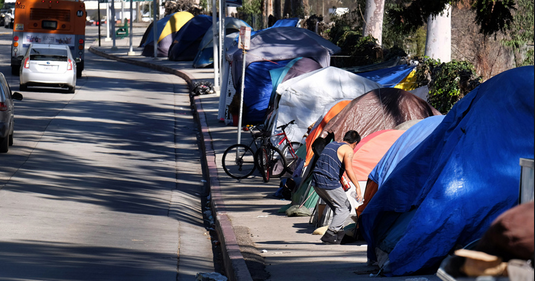
When we routinely see drug injection needles discarded in sidewalks, parking lots, and our kids’ playground, we really need to think whether the current narrative of gentrification and housing shortage as the primary cause for homelessness makes sense.
When we see so many people with no other place to call home except a piece of sidewalk or a tent, we need to ask whether our leadership is choosing the appropriate solution to challenges at hand. In the case of homelessness in numbers such as we see in purportedly rich California cities, the answer is probably “no.”
When we routinely see drug injection needles discarded in sidewalks, parking lots, and our kids’ playground, we really need to think whether the current narrative of gentrification and housing shortage as the primary cause for homelessness makes sense.
We need to ask what role the drug industry, facilitated by political leaders, may play in such a scenario. The folks in question here are not the usual small-fry drug dealers, but the legitimate barons of an industry not shy about prices. Injection needles and other drug paraphernalia cost serious money, so does the increasingly ubiquitous naloxone.
Naloxone maker Kaleo has an injection treatment called Evzio that has a list price of $4,100. The company plans to release a generic version of Evzio with a retail price of $178 for a two pack this year. A two-pack of Narcan, a naloxone nasal spray, has a retail price of about $125. Generic naloxone costs about $40 per dose. FDA Clears the Way to Increase Access and Lower Cost of Life-saving Opioid Overdose Treatment Drug. CNBC. January 28, 2019.
The increase has cost the federal Medicare and Medicaid health programs more than $142 million since 2014, according the Homeland Security permanent subcommittee on investigations. Drug Company Raised Price of Lifesaving Opioid Overdose Antidote More than 600 Percent USA Today November 19, 2018.
The Just Vote No Blog recommends the article Homelessness: Housing is not the Problem, in the California Political News and Views of August 4, 2019, for more on this unfortunate homelessness situation.
Thomas Jefferson said, “Enlighten the people generally, and tyranny and oppression of body & mind will vanish like evil spirits at the dawn of day.” It is up to each of us, though, to seek real enlightenment. Cameron Weber, an economist from Brooklyn, has a bunch of YouTube episodes to help you start.
This is an interesting find, scholarly discussions on economics in lay-person’s language. There are over 150 episodes on YouTube of Hardfire: Libertarian Issues in Focus, produced by Cameron Weber, PhD economics.
Dr. Weber is generally pleasantly soft spoken, which is a plus in today’s strident public dialogue. As the title of the show suggests, issues are discussed from a libertarian (versus collective or socialist) perspective.
Why is the Just Vote No Blog recommending this show?
As a nation, we are in need of the basic education that allows us to competently fill out a resume, keep a financially sound household budget, point to where a country is located on a map, and assess the economic feasibility of what is proposed at the ballot box. Some point to home schooling, charter schools, and on-line courses as a way for students to improve their chances of competing favorably in an increasingly complex job market. Others point to free or low-cost life-long learning as a way for everybody to stay informed.
The trick is not only to find free or low cost instruction, but to avoid the echo-chamber trap of learning only what often agenda-driven groups prescribe. One way to avoid this trap is to explore different sources of information. It is good to listen to what Robert Reich (professor of public policy at U.C. Berkeley and partial to Keynesian economics) has to say, but counter that with what Thomas Sowell (Senior Fellow at the Hoover Institution and partial to Chicago School economics) says.
Cameron Weber’s show represents instruction that is freely available as well as libertarian (free market) economics which today is less widespread than the liberal central planning.
An Example of a Hardfire Episode
On the segment of August 2, 2019, Dr. Weber discusses what at first glance borders on the heretical – Adam Smith, father of free market capitalism, called for non-market government intervention! However, as Cameron Weber explains, this apparent contradiction is the result of Adam Smith’s discussion of two separate situations.
One situation describes economic relationships between individuals. For example, you sell widgets and I know you for being an honest and knowledgeable maker of widgets, so I decide to buy widgets from you. In this situation, the free market is the best judge of who are the most successful widget makers. Adam Smith discussed this theme in one of his two principal books, The Theory of Modern Sentiment (1759).
The other situation regards not individuals but nations, thus the title of Smith’s other principal work, The Wealth of Nations. Now, the free market must take second place to national wealth and security. Any benefit that might accrue to individuals comes as a result of government-determined policies on manufacturing and trade that aim to make nations wealthy and secure. Such policies according to Smith must include exceptions to the free market that protect 1) products used in national defense, and 2) infant industries.
From a libertarian viewpoint, the questions would be 1) are we really talking about national defense or imperialism, 2) do industry protections ever end once implemented, and 3) where does the line of protectionism end.
Sprinkled throughout this segment are explanations of mercantilism, social scores, analytic egalitarianism, and other interesting terms.
The Just Vote No Blog hopes you will enjoy this show and also watch a variety of points of views on economics, so much of it free of change on YouTube.
Enlighten the people generally, and tyranny and oppressions of body & mind will vanish like evil spirits at the dawn of day. Thomas Jefferson
 On September 10, 2019, President Donald Trump accepted the resignation of John Bolton, the National Security Advisor he chose in April of 2018.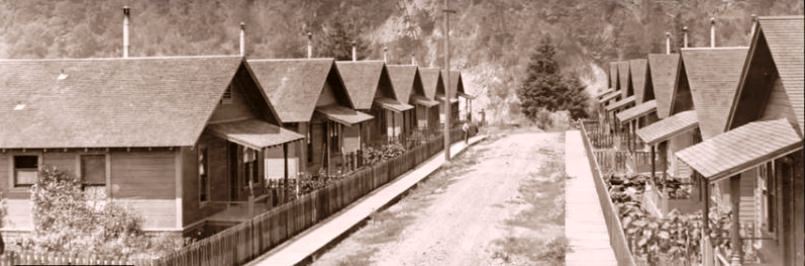
 These days we certainly hear a lot about Lincoln, Roosevelt, Obama, Trump. How about Coolidge?
 There is a reason why you may know a lot of people who keep guard dogs, but none who keep guard sheep.
 Hopefully colleges will not further waste parents and/or taxpayers’ money carrying out studies on whether “those with more means” have advantages over those without, since we all know that to be the case already. Such advantages will always exist … that is unless legislators decide to really level the playing field by creating the position of “Handicapper General” as those in Kurt Vonnegut’s story did.
 Parkmerced, a traditional privately owned residential community in the heart of San Francisco that houses over 3,000 residents, has developed

 Just Vote No