School age children today exhibit greater emotional instability than in the past, seen since around the 1970s in poorer academic performance, inattention, incidents of violence, and suicides. Society’s response has been to significantly increase the number of mental health counselors present in schools, so far it appears to no avail.
To a hammer everything looks like a nail.
To the American Psychological Association, “With a growing mental health crisis among young people—a trend both exacerbated and illuminated by Covid—the need for school psychologists is multiplying.”
However, to a layperson with an open mind, there should be something amiss with this one-solution mindset, especially since it does not seem to be working. The “growing mental health crisis” did not develop in a vacuum – nothing does. Should we not look for what changed in the past few decades that might have contributed to the “crisis” and fix those variables?
Here are some likely candidates.
Bad Therapy: Let’s begin with the emphasis on mental health in schools – “trauma informed education” – that encourages inward-looking, self-awareness, and emotional skills. A common sense question should be whether “An individual is more likely to meet a challenge if she focuses on the task ahead, rather than her own emotional state. If she’s thinking about herself, she’s less likely to meet any challenge.” (How Bad Therapy Hijacked Our Nation’s Schools, The Free Press, 02/27/24.)
Clueless experts: “Experts” nowadays seem to come with an agenda, rather than with common sense. For example, when someone blames poverty and lack of sufficient services for the sad state of our youth, the question should arise, was there no poverty in the past?
Denatured foods: Nutrients in our foods feed our bodies, our brains, our energy levels, our well being. The detrimental effects of processed foods should be obvious to everyone. However, more insidious is the prevalence since the 1960s of denatured (meaning altered) fruits and vegetables, which contain significantly lower nutrient contents. In an effort to increase fresh produce yield, resistance to disease, storage life, transit capability, attractiveness, and other beneficial characteristics, farmers choose to grow hybrid varieties. Unfortunately, in nature we often lose one characteristic to gain another. (Industry Scandal: The Loss Of Nutrients, 07/20/24)
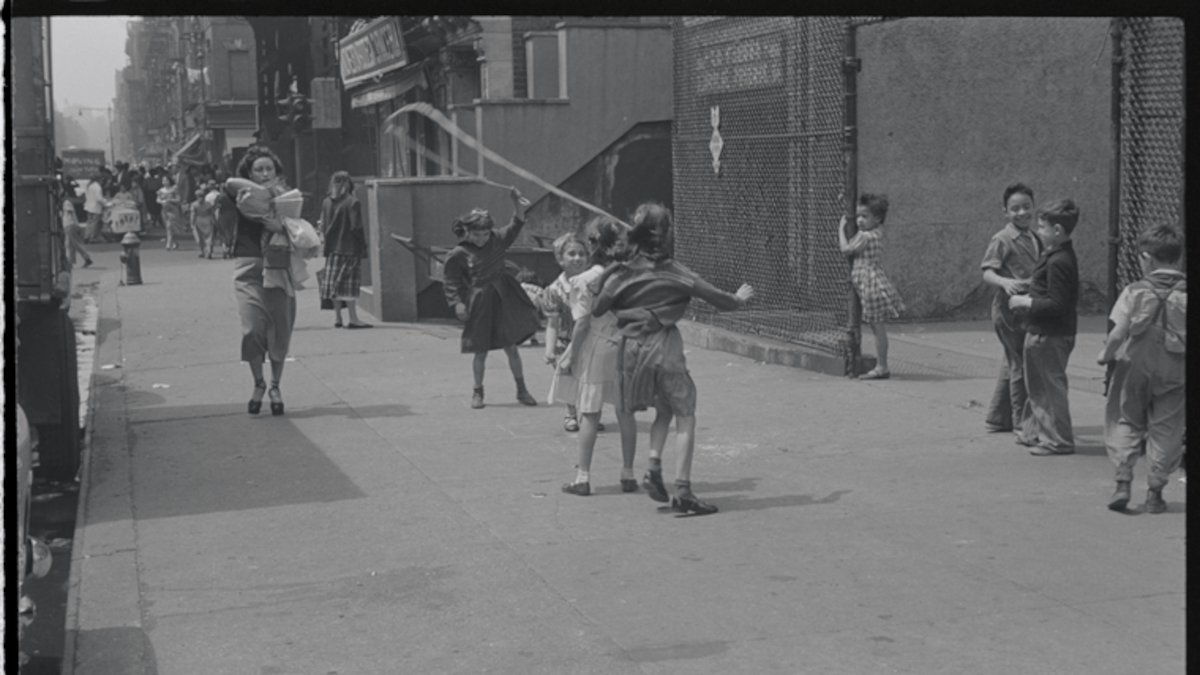
Barren existence: Boomers like to tell how when they were kids, their free time was spent outdoors, jumping rope, making up games, deciding who went first and whose turn it was to wait, watching fireflies, and hurrying home just before suppertime (lateness had consequences). Hot summers in the inner cities were famous for fire hydrant sprinkling & splashing. Too many kids today have supervised playdates and structured activities — if they are lucky. Otherwise, chances are their time is spent in front of TV screens, on endless scrolling on smartphones, texting, or immersed in video games where differences are solved by shooting opponents and blowing things up.
Screen time: It should be obvious to anyone with an iota of common sense that today’s addiction to screens cannot be healthy or lead to productive social interactions. Yet parents and teachers seem to lack the will or authority to keep youth away from screens (often they themselves suffer from screen addiction). Worse, video games — purposefully and obsessively designed to addict, extract information, and monetize — fill hours of youth time. “Gaming audiences form a wide-ranging, worldwide community that goes beyond age, gender, and cultural limits … They’re deeply involved in these games, making them a prime audience for tech, entertainment, and lifestyle ads … Gaming audience spend a lot of time playing, giving advertisers a great chance to connect.” ( Advertising in Gaming: Who are Gamers?, Iion, 03/25/24)
But in the old days there were the work houses…
Media and other communicators are fond of pointing out the plight of children and youth in days gone by, when there was no “regulation” or “services.” Indeed the life of poor and sometimes orphaned children and young adults was certainly not idyllic in the past. Child labor, work houses, illiteracy, and often hunger were common.
Society did eventually recognize and effectively deal with those egregious conditions, mostly though legislation.
Unfortunately, as is so often the case, solutions implemented to solve one problem spawn other problems. Today, our children and youth, coddled by parents and government, have shed the masters of the workhouses and acquired the masters of advertising and agendas. Promotional advertising creates lifestyles, and agendas create dependence on everything from government assistance to youth gang requirements.
Looking back might help
Maybe looking at the array of variables that made kids different back in the day would help. Those variables could include hard working two-parent households, parents with high expectations of their children, teachers willing to impose discipline and expect performance, focus on the 3 Rs of education, and effective (not ineffectively brutal) law enforcement to ensure safe neighborhoods where all kids can play outside.
Interestingly, all those variables include action, not the navel gazing today’s “experts” encourage our kids, to wallow in!
Picture: Kids playing in the street around the 1940s, from the New York Public Library Digital Collections.
Discover more from Just Vote No
Subscribe to get the latest posts sent to your email.

 Just Vote No