Our kids’ brains, fried on social media

Frequent use of platforms is crucial for the generation of profits. Therefore, algorithms aim for what amounts to addiction. And social media addiction is associated with negative changes in brain structure, especially in young people.

One of our Founding Fathers, James Madison, said “A well-instructed people alone can be permanently a free people.” So, what are our chances of eventually not falling into the hands of masters when our kids’ brains are being fried by social media?

No, this is not hyperbole. Frequent use of platforms is crucial for the generation of profits. Therefore, algorithms aim for what amounts to addiction. And social media addiction is associated with negative changes in brain structure, especially in young people.

What studies say.

Many studies have associated changes in specific areas of the brain — especially young people’s brain — with frequent use of social media. Areas negatively affected regulate thoughts, emotions, judgment, decision-making, higher-order thinking, impulse control, attention.

Here are excerpts that explain the harms.

“Internet addiction can also cause changes in the prefrontal cortex and lead to an imbalance in the frontostriatal pathway, which increases sensitivity to stimuli and reduces inhibitory control, thus influencing decision-making and emotional changes. In adolescents and young adults, impairments in cognitive functions, such as self-monitoring, memory retention, organizational skills, and time management, are commonly seen in cases of internet and smartphone addiction.” Social Media Algorithms and Teen Addiction, January 8, 2025.

“Social media platforms, by design, tap into our neurobiological vulnerabilities, particularly the mesolimbic dopamine system, creating cycles of craving and satisfaction. People’s tendency of addictive behavior with smartphones is not merely a matter of willpower but a neurological phenomenon with far-reaching consequences on attention, memory, and overall cognitive function.” Likes, Loops, and Limbic Systems, November 28, 2024.

“Upon exposure to rewarding stimuli, the mesolimbic system releases dopamine into specific target nuclei … Social media systems are taking advantage of the system by increasing dopamine release via digital footprints and machine learning algorithms that flash personalized content. This reinforcement motivates extended use, while users find it harder to unplug due to the expectation of rewards.” Social Media Algorithms and Teen Addiction, January 8, 2025.

So, is freedom in peril?

Judging by the excerpts above and the widespread use of social media by children and young adults, it appears we may be raising a generation lacking essential characteristics necessary to maintain a functioning republic.

In his “farewell address,” President George Washington listed many things necessary to preserve the republic. One of those things was a populace blessed with knowledge and enlightenment.

“Promote then, as an object of primary importance, institutions for the general diffusion of knowledge. In proportion as the structure of a government gives force to public opinion, it is essential that public opinion should be enlightened.” George Washington’s address.

His point was obvious: Our republic is based on the public’s will. If our populace suffers from “impairments in cognitive functions, such as self-monitoring, memory retention, organizational skills,” then the republic cannot endure.

In such scenario we will have “more need of masters,” as Ben Franklyn predicted. And the frightening part of this scenario is that the helpless populace will not know what kind of masters they will end up getting!

What to do? Here are laypersons’ suggestions.

If you are waiting for government to “do something,” you may be out of luck. Social media moguls donate tons of money to political campaigns. If you want your children to have healthy brains, you will have to take matters into your own hands.

* Whether your family dinner is pheasant on tarragon cream or beans and rice, the kids will benefit from sitting with you and learn to converse. No cell phones, no television, just sharing how the day went and how it could have gone better.

* Visit your school board (try to make time, even if you work two jobs) and insist that cell phones be in lockers during class time (yes, this is getting to be a dangerous world where cell phones might be considered a safety tool, but are they also contributing to violence?)

* Bed time is sleep time, not text time. Taking a book to bed might work. New readers might love traditional comic books. Once kids get hooked on reading the good stuff, they are on their way to being lifetime readers instead of texters.

A Republic, if you can keep it.

It is up to We the People. Do we want a populace with fried brains in need of masters, or a nation of readers and problem solvers capable of maintaining a functional free republic?

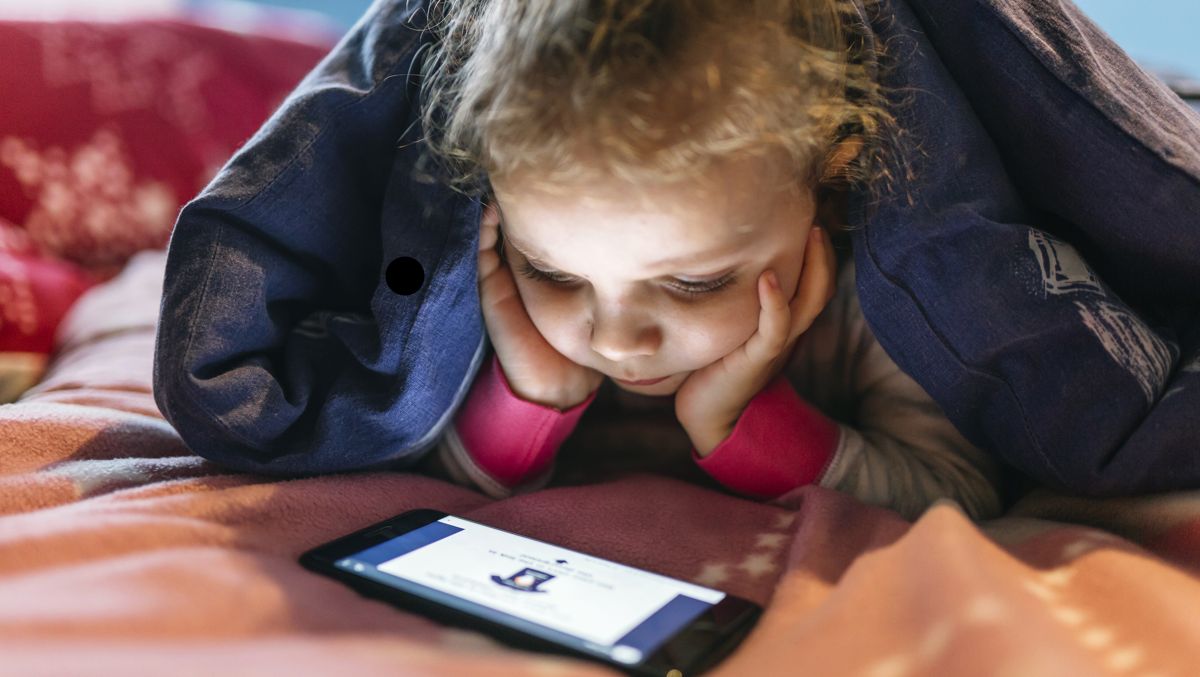
Picture: From Freepik, a creative suite with a treasure trove of free images.
Did Facebook just figure censorship is wrong?

Recently Facebook CEO Mark Zuckerberg admitted that government officials pressured his company to censor certain Covid-19 content. We will see going forward whether his contrition is real.

On August 27, Mark Zuckerberg expressed what perhaps most people knew. He said in a letter to Representative Jim Jordan (R-OH), chair of the House Judiciary Committee, that government officials pressured Facebook to censor certain Covid-19 content. He indicated in the letter that he regretted not being more outspoken about it.

Although Mr. Zuckerberg has now articulated contrition, it will be his actions not his words that prove his repentance. He could start by directing Facebook engineers and content administrators to restore the “reach” of posts that dared to bring up a situation, event, research that diverged from official prescribed positions during the pandemic.

Interestingly, the censorship alluded by Mark Zuckerberg applied to any Facebook account, no matter how obscure. And that included the Just Vote No Blog.

Up to the rise of Covid-related censorship, the Just Vote No Facebook Page reached a good number of people and received several comments on each post. Then, one fateful day, the Just Vote No Blog placed on its Facebook Page a post criticizing the way the pandemic was being handled by U.S. officials. Mind you, the post acknowledged that Covid-19 was real, and people were dying. The post only disagreed with the official response to the challenge, calling the ensuring disarray Keystone Cops behavior.

Overnight, the “reach” of all subsequent posts was “0,” and comments disappeared. This situation continues to this day.

It will be interesting to see whether Mark Zuckerberg’s newly-found courage and common sense will translate into more diverse posts on his platform. There is so much in cat video and cute memes content most people can tolerate.

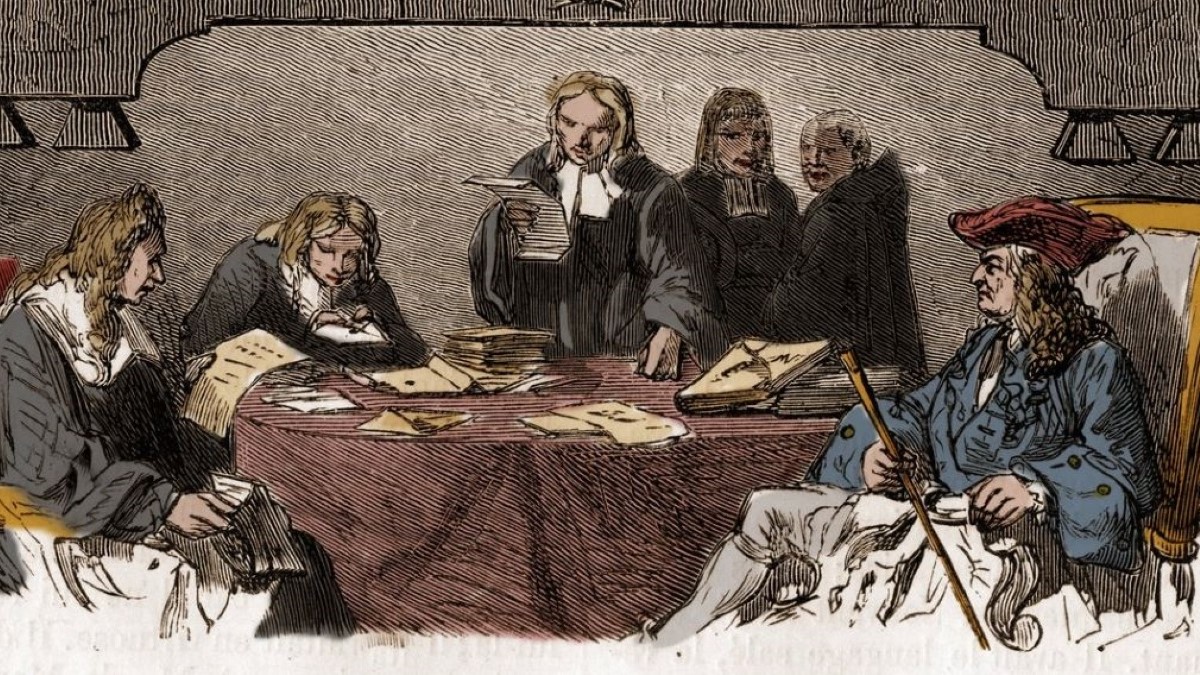
Picture: Anonymous engraving of a 19th century service called the Black Cabinet. The cabinet’s duty was to examine private correspondence for security reasons. From arts print website Meinsterdrucke

Halloween – Ah, the good old days

Celebrating the good old days at some point in everyone’s life is inevitable – like death and taxes. But, hey, Halloween was once fun. Not only for the little ones lusting after candy from the neighborhood, but also for the candy givers. How many kids came to your door this Halloween?

Do kids come to your door Trick or Treating on Halloween? Do you decorate your porch or window with ghosts and goblins? Or do you even buy Halloween candy? In so many neighborhoods, the answer is “no” these days.

Things have changed from the proverbial good old days.

The good old days. That’s when kids played outside until dark, usually unsupervised. That’s when kids decided on their own whether they were going to jump rope, play hide-and-seek, ride their bikes, or walk to the ice cream shop. Kids in the city cooled off at the fire hydrant, and kids in the suburbs drank from water hoses. And Halloween was time to amass bushels of candy from the neighborhood.

Then things changed.

Today, in some small towns kids still play outside, close to home — maybe they have a basketball hoop, maybe a soccer ball. And come dusk, chances are everybody goes inside.

For Halloween, some neighborhoods have developed supervised Halloween gatherings. Some neighborhoods have patrolled “Treat Trails.” But, the old tradition of kids just deciding on their own how they would roam the neighborhood collecting candy and compliments on their costumes is pretty much gone.

What happened?

Did people get mean or loony all of a sudden? Did government suddenly go berserk making up safety laws? Did the scourge of drugs, ripping up minds and soiling communities, turn our neighborhoods into battlefields. Did the bane of social media force itself upon vulnerable young minds, exchanging reality for mimicry?

Who knows.

Regardless. “Happy Halloween!!” Or should it now be the bromidic “Stay Safe.”

Culture Wars Rage on Social Media

Twitter calls it quits on accepting political ads. Sounds like a pretty good decision for any platform not interested in investing resources in today’s exhausting culture wars.

Scene from WC Movie

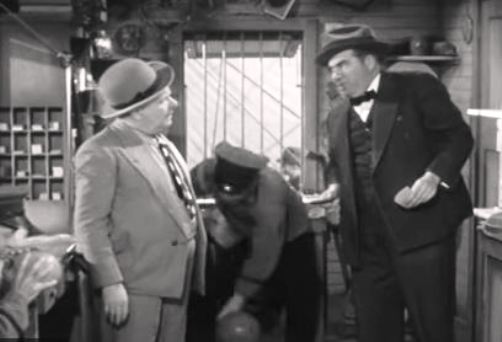
Pictured:  Scene from one of W.C. Fields’ immortal movies, You Can’t Cheat an Honest Man.  Well, you can’t fool voters who don’t want to be fooled either.  But…, read on.

Twitter Calls it Quits on Political Ads

Jack Dorsey, Twitter CEO, made news on October 30th when he Twitted,

We’ve made the decision to stop all political advertising on Twitter globally. We believe political message reach should be earned, not bought.

The ban, which will contain some exceptions, will take effect November 22. Guidelines will be published November 15, according to Jack Dorsey.

The Twitter Announcement is Big News

Banning political ads on any social media platform these days is not only big but huge.
Commercial TV viewing is not what it used to be. Cable networks do not need to abide by the same rules as do broadcast networks (requirements for equal time afforded to opposing views and prohibition of “censorship” do not apply to Cable political ads). A vast number of people obtain their “news” from social media platforms.

Advertisers, including political advertisers, are able to pitch their message to highly targeted audiences when advertising on social media. As everyone should know, targeted ads are the holy grail of all advertisers. A candidate for political office will search for targeted audiences as fiercely as will a seller of baby playpens.

These factors make social media platforms valuable assets in raising awareness for candidates, legislation, issues, and most importantly cultural trends.

The Cultural Initiative

In an earlier post on the Just Vote No Blog there was reference to Andrew Breitbart’s quote “Politics is downstream from culture.”

This is powerful stuff. Change the culture and political change will follow. Today the most likely place to change cultural trends is social media. Thus the battle for who determines the content of platforms like Twitter or Facebook. Of particular interest these days are the skirmishes over political “lies” on social media. Here are a couple of examples, not from Twitter, but from Facebook.

* Mark Zuckerberg, CEO of Facebook, recently endured five hours of questioning during a Congressional hearing supposedly intended to discuss Facebook’s proposed alternative currency Libra.  However, not much of what transpired during the hearing had to do with Libra. The majority of Congressional comments zeroed in on Facebook’s policy regarding political ads, which supposedly does not call for fact checking such ads.

During the hearing Representative Alexandria Ocasio-Cortez asked Mr. Zuckerberg,

You announced recently that the official policy of Facebook now allows politicians to pay to spread disinformation in 2020 elections and in the future. So I just want to know how far I can push this in the next year…

So, you won’t take down lies or you will take down lies? I think that’s just a pretty simple yes or no.

Once again during this interminable hearing, unable to respond with a “simple yes or no,” Zuckerberg found himself at a loss for words.

* Senator Elizabeth Warren engaged in a clever strategy with a Facebook campaign ad that ran on October 10.

If Trump tries to lie in a TV ad, most networks will refuse to air it. But Facebook just cashes Trump’s checks.

Since FCC rules prohibits “censorship” on broadcasting networks (not counting Cable), Warren came up with the brilliant fine print on the ad claiming that her campaign included purposefully incorrect information to test whether Facebook will post untruthful ads.

It should be an obvious question what Ocasio-Cortez and Warren consider lies to be. In politics facts and untruths are often interchangeable.

Given the quantity of political ads social media such as Facebook and Twitter receive, as well as the complexity of issues involved in such ads, it would be fair to ask how accurate, cost effective, and blow-back free fact checking all of them would be. For example, what would a fact checker do with a political ad that mentioned the “climate crisis?”

The word “lies” has joined the lexicon designed to change culture and chance politics. Point deficits in any candidate or legislation and run the risk of being branded a racist, a homophobe, a baby killer, a liar, or some other weaponized set of adjectives.

It is no wonder that Twitter decided to call it quits, at least for the moment, on political ads.

As an Aside

Here the discussion purposefully leaves out questions such as political benefits that might or might not accrue to shareholders of social media for supporting or not supporting political sides, and possible algorithmic or human decisions on the reach of unpaid posts. Those could perhaps constitute strategies as powerful as paid ads, but outside the purview of the present discussion.

Free Speech Rights Do Not Exist in the Private Sector

There is no such thing as “free speech rights” in the private arena, and the U.S. Supreme Court just told us that.

Internet platforms, especially dominant social media arenas, are now the populace’s principal venues for personal, community, business and political communication. With the growth of social media, platform users benefitted from massive reach and ignored the potential perils of oligarchies. Now we hear howls about some users being excluded from social media and accusations of violation of “free speech rights.”

Well, there is no such thing as free speech rights in the private sector. With some specific exceptions (such as your shouting “fire!” in a crowded theater when you know there is none, engaging in libel, or making serious threats) government is prohibited by the First Amendment of the U.S. Constitution from abridging your freedom of speech. The Constitution says nothing about private individuals or entities choosing not to propagate speech they do not like for whatever reason. So, if you are banned from a social media platform, at present you are probably out of luck. On June 17, 2019, the U.S. Supreme Court may have cemented this state of affairs.

MNN v. Halleck

Manhattan Community Access Corp., also known as Manhattan Neighborhood Network (MNN), is a non-profit public-access television network serving New York City. As a community media center, it offers media production, education, and distributions services for Manhattan residents and community organizations. MNN is the entity New York City chose to operate the public access channels on Time Warner’s cable system in Manhattan. Its website says that MNN’s purpose is,

…to ensure the ability of Manhattan residents to exercise their First Amendment rights through moving image media to create opportunities for communication, education, artistic expression and other non-commercial uses of video facilities on an open and equitable basis.

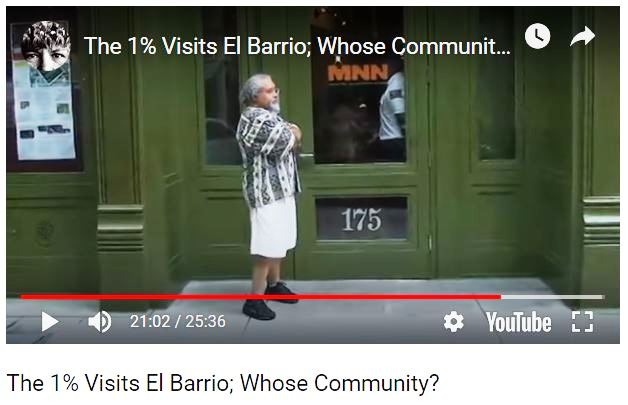
DeeDee Halleck and Jesus Papoleto Melendez, Manhattan residents and participants in MNN’ activities, produced a film called The 1% Visits El Barrio; Whose Community? The 1% refers to the politicians, government agency representatives, and corporate officials who were invited to the grand opening of the Barrio Firehouse (a former firehouse on East 104 Street that MNN converted into television studios), to the exclusion of “the 99%” Papolete Melendez says he represents. The film did air on MNN, but was removed, and Melendez barred from using MNN’s facilities, due to viewers’ complaints over inappropriate content in the film, according to MNN.

MNN Halleck Case
Video by Dee-Dee Halleck and Jesus Melendez that resulted in the MNN v. Halleck lawsuit

Halleck and Melendez were not pleased, and filed a lawsuit, against MNN, claiming the network violated their free speech protections under the First Amendment of the U.S. Constitution. The District Court dismissed the claim on the grounds that MNN is not government but a private entity. The Second Circuit State Court of Appeals reversed the lower-court decision saying MNN was a “state actor,” since it was designated by New York City as the community access network.

The U.S. Supreme Court heard arguments on Manhattan Community Access Corporation et al v. Dee-Dee Halleck et al in February 2019, and issued its decision on June 17, 2019. Justices Kavanaugh (delivering the majority opinion), Roberts, Thomas, Alito, and Gorsuch did not view MNN as a state actor subject to First Amendment responsibilities. Justices Sotomayor (delivering the dissenting opinion), Ginsburg, Breyer, and Kagan did not agree.

Justice Kavanaugh indicated in his remarks that this decision applies only to the case at hand. However, his concluding statement contains broader implications.

It is sometimes said that the bigger the government, the smaller the individual. Consistent with the text of the Constitution, the state-action doctrine enforces a critical boundary between the government and the individual, and thereby protects a robust sphere of individual liberty. Expanding the state-action doctrine beyond its traditional boundaries would expand governmental control while restricting individual liberty and private enterprise. We decline to do so in this case.

MNN is a private entity that operates public access channels on a cable system. Operating public access channels on a cable system is not a traditional, exclusive public function. A private entity such as MNN who opens its property for speech by others is not transformed by that fact alone into a state actor. Under the text of the Constitution and our precedents, MNN is not a state actor subject to the First Amendment.

Justice Sotomayor and her colleagues in their dissenting opinion argued that although MNN is indeed private, government rents it. The situation would be akin to government renting a billboard to communicate with passersby, then excluding from that billboard messages it did not like. The billboard is private, but the communicator is not.

This is a case about an organization appointed by the government to administer a constitutional public forum. (It is not, as the Court suggests, about a private property owner that simply opened up its property to others.) New York City (the City) secured a property interest in public-access television channels when it granted a cable franchise to a cable company. State regulations require those public-access channels to be made open to the public on terms that render them a public forum. The City contracted out the administration of that forum to a private organization, petitioner Manhattan Community Access Corporation (MNN). By accepting that agency relationship, MNN stepped into the City’s shoes and thus qualifies as a state actor, subject to the First Amendment like any other.

The Conservative/Liberal Divide

As often happens “conservative” justices and “liberal” justices disagreed, as indicated in their decisions. Commentators disagreed as well.

Property and free speech rights both scored a big victory at the Supreme Court this week, when the Court decided Manhattan Community Access Corp. v. Halleck. Although the facts of this case focus narrowly on public access television networks, the Supreme Court’s decision has significant implications for all property owners, the internet, and social media more specifically.  The Pacific Legal Foundation, June 17, 2019.

The Court is unconvinced by the fact that the private company running New York’s public access channel was specifically selected and is heavily regulated by the city government. And while the dissent, authored by Justice Sotomayor, disagrees with the majority about whether the facts of the case reflect a government property interest in the forum at issue, it largely signs onto the idea that property rights precede political rights.  MerionWest, June 23, 2019.

The First Amendment only limits governmental actors—federal, state, and local—but there are good reasons why this should be changed. Certain powerful private entities—particularly social networking sites such as Facebook, Twitter, and others—can limit, control, and censor speech as much or more than governmental entities. A society that cares for the protection of free expression needs to recognize that the time has come to extend the reach of the First Amendment to cover these powerful, private entities that have ushered in a revolution in terms of communication capabilities.”  David L. Hudson, Jr, In the Age of Social Media, Expand the Reach of the First Amendment,” The American Bar Association.

Interestingly, there appears to be fans of free speech for owners of social media platforms and fans of free speech for non-owner users of such platforms. Also, what are “political rights?” Further, the U.S. Constitution Bill of Rights serves only to protect individual liberties against tyrannical behavior by government; therefore, it seems awkward to call for extending the reach of the First Amendment to private entities regardless of how big or powerful such entities become.

So what to do?

The Just Vote No Blog likes the Court’s decision and Justice Kavanaugh’s suggestion that the bigger the government the smaller the individual, and thus a narrow definition of “state actor” serves the cause of liberty. If some of us are harmed by social media curbing our ability to reach community and customers, well, that is the price we must all pay for ignoring the growth of enticing behemoths. Competition is a good antidote to institutional transgressions, but there cannot be competition in an age of gigantic oligarchies.

Perhaps in a post-MNN vs. Halleck world folks that hold views different from those preferred by the dominant social media players need to imagine new ways of outreach. Efforts toward enforcing existing but largely ignored antitrust laws would also help in the blossoming of a wider variety of platforms.