Recommended eye opener: Joe Rogan podcast #2281 with Elon Musk

This recommendation is for folks not familiar with The Joe Rogan Experience podcasts. And for those who would like to understand what DOGE is really doing and why.

This recommendation is for those not yet familiar with Rogan’s conversations with folks like J.D. Vance, Mark Zuckerberg, Mel Gibson, Rod Blagojevich, Tulsi Gabbard, Donald J. Trump, Woody Harrelson, Bob Lazar, Gad Saad, and many others with a lot to say.  Those who are already Rogan enthusiasts will surely have already listened to this episode.

Briefly regarding the Joe Rogan Experience podcasts: Rogan, born in 1967, started his podcast in 2009 on YouTube.  Today, the podcast has massive audiences on all popular platforms.  The recommended episode #2281 with Elon Musk had 10,518,308 views and 66,911 comments on YouTube as of this writing.  Joe Rogan lives in Austin, Texas.  He practices martial and fighting arts, and is an avid archer and bow hunter (yes, he and his family eat everything he kills).  Rogan is able enthusiastically to discuss all kinds of subjects with his podcast guests.

So, why is the Joe Rogan Experience episode #2281 with Elon Musk important?  Because this episode has the potential of forcing DOGE opponents to understand what DOGE is really doing and why it needs to be done.

In episode #2281, Elon Musk says that Americans are living in two separate universes.  There is the DOGE opponents’ universe, and there is the DOGE supporters’ universe.  As a rule, opponents most likely get their news and facts only from mainstream media sources like MSNBC, AP, Washington Post, New York Times, and Facebook.  As a rule, DOGE supporters most likely also consume alternative media like X and the Joe Rogan podcasts. 

Today’s mainstream media shows DOGE protesters speaking of service cuts to the needy, fears of deportation from the U.S., anxiety over changes to Social Security and Medicare, shattered dreams of laid off government employees.  It shows legislators pointing to the “human impact of DOGE cuts.”  It talks about DOGE usurping Congress’ job.  All valid concerns.

Alternative media like X and the Joe Rogan podcasts expose DOGE’s findings in the underbelly of a government doing its best to delay its certain collapse.  The alternative media tacitly brings awareness that DOGE is indeed doing the job Congress has failed to do, since Congress remains unconcerned that absent policy changes the U.S. will face bankruptcy in the not too distant future.   

Just a few numbers can show why DOGE needs to take a chainsaw to the U.S.’s bloated bureaucracy – a task Congress should do but will not.

*   National debt as percentage of gross national debt was 123% as of fiscal year 2024.  As debt increases faster than GDP, this percentage will increase, eventually resulting in unsustainability.

*   House Continuing Resolution No. 14 passed on February 25, 2025, along party lines, with the sole Republican “Nay” coming from Thomas Massie (R-KY).  The Resolution recommended increased amounts of debt each year, resulting in a 47.5% cumulative increase 2025 to 2034.  The Economic Times sounded a warning in November 2024, which like all other warnings, was ignored by the U.S. Congress.

America’s national debt has reached a record high of $36 trillion, with a $2 trillion increase this year alone … The situation is becoming more dire, with the US debt now standing at 125% of the country’s GDP. Experts predict that this debt-to-GDP ratio could reach 200% in the coming years, meaning that the national debt could be twice the size of the entire US economy.  This is expected to result in the government spending more on interest payments than on essential areas such as infrastructure, development, and education.” America Headed for Bankruptcy, The Economic Times, November 25, 2024.

*   In 2024 the U.S. national debt was $35.5 trillion.  The combined wealth of billionaires was $6.2 trillion.  The combined wealth of millionaires was $26.1 trillion.  Even if the government taxed all the wealth of billionaires and millionaires in 2024, it would not succeed in reducing the national debt to zero.  Congress has preferred to remain ambivalent on calls to fix the country’s deficits by taxing the rich, because it can’t be done.

It would be great if DOGE’s opponents among voters would listen to Elon Musk’s conversation of February 28, 2025, with Joe Rogan. The entire 3-hour conversation is worth listening to, with plenty of entertaining topics — like responses from the sassy sexy voice from Grok. But the segment starting at 13.56 relates to DOGE findings and is the most crucial part of the podcast. 

Here are just a few observations by Musk:

*   Today’s dominant notion is that although a business needs to at least break even to survive, government can spend way beyond its revenues.  That notion is flawed, and on the current trajectory, the U.S. government will collapse in the near future. 

*   Again comparing government to business, a business must pass audits (external or internal) showing clearly described payment (where the money goes and why).  The U.S. Treasury issues numerous payments without codes or descriptions, the destination of which no one can readily determine.  [Note: This observation about the U.S. Treasury is not new.  For example, a report issued by the Office of Inspector General released May 29, 2024, concluded that the Treasury lacked sufficient controls to be fully compliant with the Payment Integrity Information Act of 2019.  Apparently, nothing has changed.]

*    About 1.5 million non-government organizations (NGOs) operate in the U.S.  An estimated 30% of NGOs rely on U.S government grants.  Payments to them are often on autopilot, without any follow-up as to the NGOs activities or efficiency. 

*   Concerns over the fate of Social Security are valid.  Concerns should include the fact that Social Security is a pay-as-you-go system that has created massive unfunded liabilities.  Future obligations are far greater than payments.  If the system is not rectified soon, it will collapse.

*  “DOGE staffers”:  These are the worker bees of DOGE.  They work as employees of government agencies and are vetted in the same way as any other government employee.  Their role is explained in the Executive Order of January 20, 2025. 

*   What DOGE does is shown event by event, line by line, on the DOGE website.  The website is accessible to anyone, including DOGE critics who express concern about not knowing what DOGE does. 

It is unfortunate that those truly concerned about the economic future of our nation had to resort to drastic unconventional action.  But inaction would have been an even more unfortunate choice. 

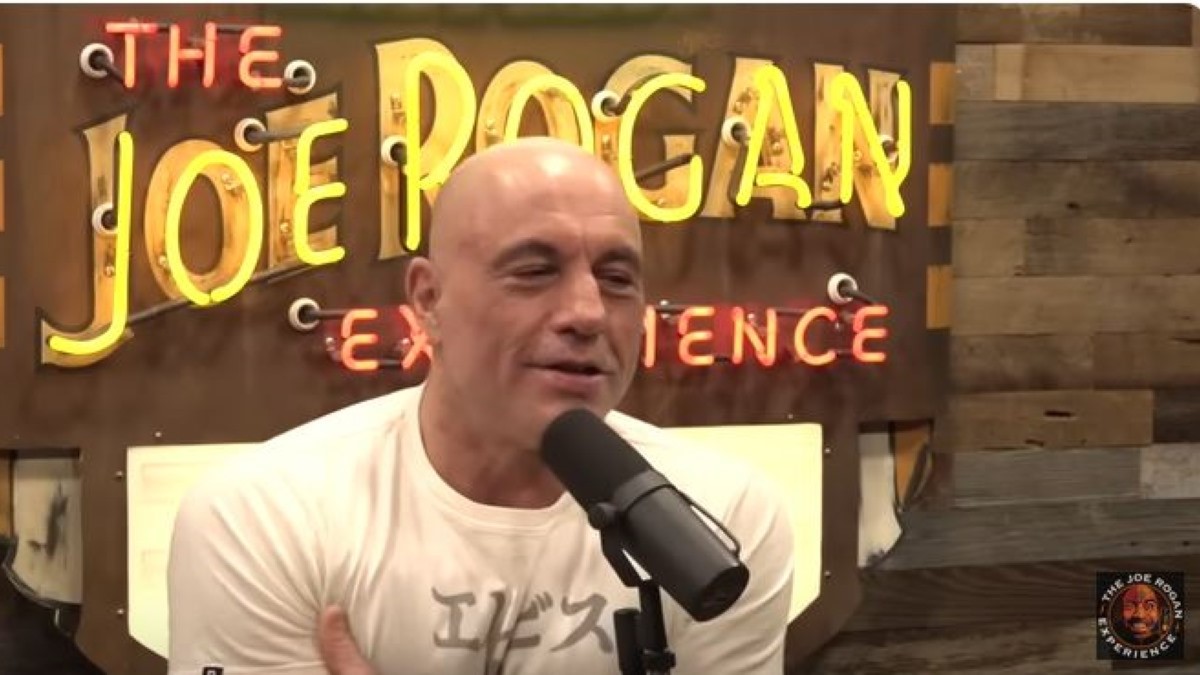
Picture:  Joe Rogan in his studio on February 28, 2025.
USAID – Humanitarianism vs. America First

The new normal: “Every dollar we spend, every program we fund, and every policy we pursue must be justified with the answer to three simple questions: Does it make America safer? Does it make America stronger? Does it make America more prosperous?”

On January 26, less than a week after President Donald Trump took office, the U.S. State Department announced Secretary Marco Rubio was initiating a review of aid programs under the following guidelines:

Every dollar we spend, every program we fund, and every policy we pursue must be justified with the answer to three simple questions: Does it make America safer? Does it make America stronger? Does it make America more prosperous?”

As the principal U.S. agency funding foreign assistance, the U.S. Agency for International Development (USAID) was the first to be reviewed, and subsequently slated for elimination, reform or consolidation.

A perusal of the Internet readily shows numerous articles lamenting the humanitarian catastrophe that pausing USAID assistance will cause. One really must dig to find articles confirming the problems inherent in USAID. Depending on viewpoint, this might be because USAID has no problems or because mainstream media is biased. Or all of the above.

In spite of rhetoric about the ills of wealth redistribution, mainly coming from the right, today’s average Americans do observe charity. The National Philanthropic Trust says, “Per capita, Americans voluntarily donate about seven times as much as continental Europeans.”

This humanitarian spirit spills into governmental policies. Therefore, it should not be surprising that U.S. foreign aid agencies have been giving generously to populations in need whether friend of foe. A hungry child in Taliban-controlled Afghanistan experiences the same suffering as a hungry child in the Philippines.

Unfortunately, this humanitarian spirit causes U.S. aid agencies and other parts of government to work at cross purposes, one part spending money and effort on an adversary and the other part spending money and effort combating that same adversary. Here is an example:

The influx of undocumented individuals into the U.S. has become a cause for concern, particularly in conservative circles. Another cause for concern has been reform district attorneys whom conservatives associate with rise in crime. However, USAID funded East West Management Institute, an Open Society Network organization focusing on judicial reform. Also in the Open Society Network is Welcoming America, an organization that empowers “supportive residents of local communities—immigrants and U.S.-born together—to disseminate positive messages about local immigrants.”

This is most probably just one of many examples of cross purpose foreign assistance that does not sit well with the new White House, prompting the swift actions we all have witnessed.

Indeed, as supporters of USAID point out, government spent in fiscal year 2023 only 1.2% of its budget in foreign aid – not a lot to worry about. However, one of the reasons the nation is $36 trillion in debt (121% of GDP) is that members of the U.S. Congress have been either asleep or busy campaigning, while nickel and diming the nation into fiscal unsustainability.

Supporters also have expressed angst that China, our current competitor on many levels, will gain ground if USAID work is paused. Such concern borders on wishful thinking. While USAID focuses on food and social justice, China focuses on roads, hydro power, transportation, and other hard “aid.” The U.S. Government Accountability Office in its October 2024 post says,

China is the world’s largest debt collector, with outstanding borrower debt sitting between $1.1 and $1.5 trillion. But countries receiving Chinese investments may end up with unsustainable debt that leaves them no choice but to support Chinese global goals.”

Sounds like while the U.S. is playing checkers, China is playing 3-D chess.

Although it is good for the American people to remain charitable and the U.S. to remain engaged in the needs of less fortunate nations, we need to refrain from being naïve. Our legislative leaders have done very little besides bicker and campaign. It is time for somebody to make our government efficient and focused on America’s best interests.

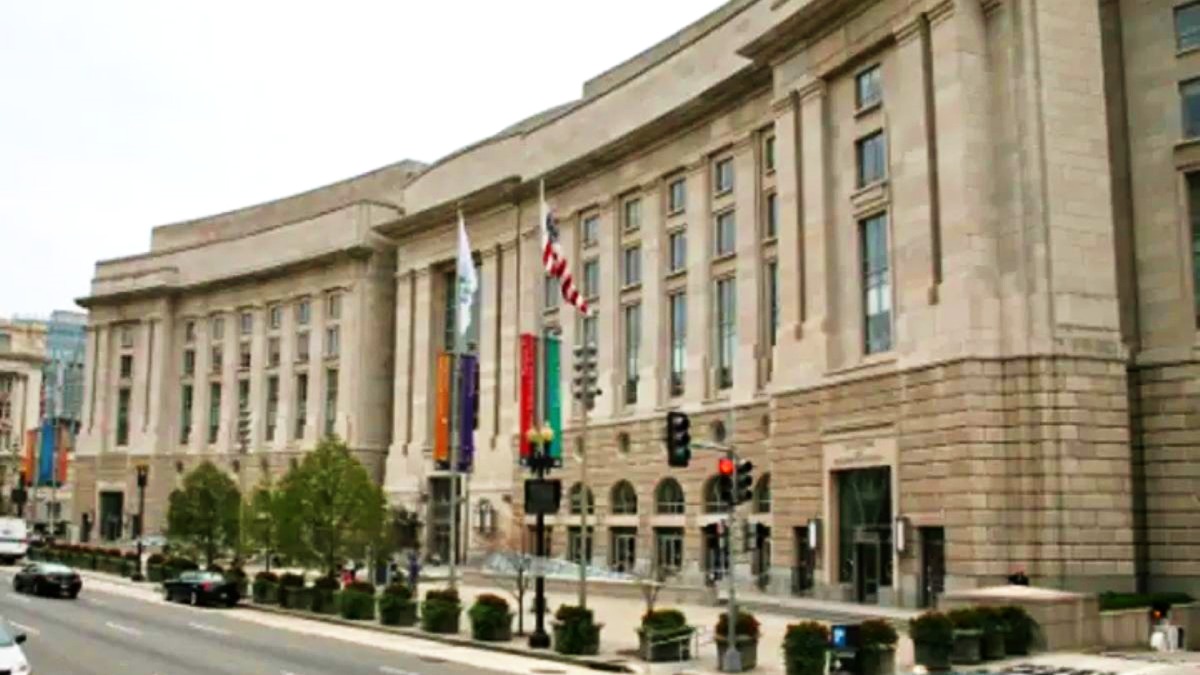
Picture: The former USAID headquarters in Washington DC. USAID employees also occupied a 38,520 sq ft annex building, also located in Washington DC.

With a name like DOGE it’s got to be good

Wasteful government spending is nobody’s secret. Neither are ways to curtail that spending. However, the debt ceiling is raised every year, the spending continues, and the national debt keeps rising. Maybe DOGE, named after a meme coin featuring Kabosu the dog is weird enough to succeed!

We are living in a brave new world of memes, soundbites, and billion-dollar campaign war chests. Thus, chances are media savvy billionaires calling themselves DOGE might succeed in saving this nation from eventual bankruptcy, when other fiscal Cassandras were and are ignored.

Some reminders

As of December 31, 2024, the U.S. national debt was $36 trillion. As of September 30, 2024, the debt to GDP was 123%. What the country owes is greater than what the country produces to pay its debt.

For the last several decades, Congress – keeper of the nation’s purse strings — has shown no interest in cutting spending. Members feign anguish about raising the debt ceiling every year at budget time, then go ahead and raise it.

Voters seem content re-electing spenders and having their giggles at news of any ludicrous government expenditures.

Three outstanding producers of much giggle but little action

The late Senator William Proxmire (D-Wisconsin) issued 168 “Golden Fleece” awards from 1975 to 1988, informing the public of questionable ways Congress was spending taxpayer money. One of his best choices was a 1978 $97,000 ($400,489 today) study by the National Institute of Mental Health of activities in a Peruvian brothel.

Retired Representative Ron Paul (R-Texas) served in the U.S. Congress for 12 non-consecutive terms. While in Congress he was known as “Dr. No,” since he would not vote in favor of any proposal not expressly authorized by the Constitution. Imagine how much leaner, better, faster, cheaper government would be if every member of Congress did the same!

Current Senator Rand Paul (R-Kansas) has somewhat followed his father’s footsteps in speaking out against our big, expensive government. So far, Rand Paul has issued 10 annual “Festivus Reports” to acquaint voters of the frivolous ways their hard-earned tax money is spent by Congress. Judging by press reaction, one of the most giggle-worthy expenditures in the 2024 report is National Endowment of the Arts funding for ice-skating drag queens.

Enter DOGE

Soon after his presidential victory, Donald Trump appointed entrepreneurs Elon Musk and Vivek Ramaswamy to lead an extra-governmental group tasked with dramatically reducing the federal budget and the national debt. These objectives are to be accomplished by drastically curtailing government spending, downsizing the federal workforce, and radically cutting regulations. This yet to be configured group has been named DOGE, an acronym for Department of Government Efficiency.

Never mind that, in addition to the government waste warriors mentioned above, we already have the Government Accountability Office and the House Committee on Oversight and Accountability shouting from the rooftops about the incredible amount of taxpayer dollars wasted by various and sundry federal government activities.

Never mind that DOGE will need to dodge all manner of pelts that will surely come its way – claims of extra-constitutional actions, challenges from the legion of entities feeding at the public trough, lawsuits from axed civil servants, dissatisfaction from the forever-growing mass of government-dependent voters, and reluctance from Congress members not willing to upset established sources of donations and votes.

How could DOGE miraculously succeed when others have failed?

  • The power of constant soundbites

Most people these days tolerate (or welcome) a ceaseless stream of breaking news and social media notifications. Shortcuts into the populace’s conscious abound. So do media influencers who successfully promote or ruin products, people, and ideas. Just look at your Facebook or X account, and no further indication of this truth is necessary.

DOGE comes with the power of Elon Musk’s frequent soundbites in the news. It comes with the power of X. It comes riding on the waves of a populist movement made credible by the success and high visibility of leaders like Javier Milei of Argentina and Nayib Bukele of El Salvador.

  • The power of ubiquitous memes

Evolutionary biologist Richard Dawkins coined the word “meme,” short for the ancient Greek word “mimeme” meaning cultural copying. Dawkins characterized memes as,

“… melodies, ideas, catchphrases or bits of information that leap from brain to brain through imitation, expediting their transmission.” The surprising power of internet memes, 09/28/2022.

Unsurprisingly, DOGE is a meme coin, Elon Musk’s favorite crypto currency. The coin came into being when a photo of a Shiba Inu dog named Kabosu went viral, and crypto innovators riding on the popularity of Bitcoin produced the DOGE featuring Kabosu. Take your pick as to whether DOGE stands for DOG-E coin or not.

Kabosu, RIP, died May 24, 2024, at the age of 18. But she will forever be remembered thanks to the Kabosu monument built in 2023 in her honor in Sakura City’s Sakura Furusato Hiroba riverside park. See featured image of this article, showing Atsuko Sato (who rescued Kabosu from an animal shelter) cuddling Kabosu at the Sakura monument.

May the fiscal salvation offered by the X owner and frequent poster come to pass.

  • The power of excellence.

Elon Musk and Vivek Ramaswamy are of the intellectual elites of our times. In the old days we had Nicolaus Copernicus, Isaac Newton, John Locke, Benjemin Franklin – minds that operated outside the accepted norm and thus produced what was unimaginable before they came along.

Nowadays with excellence justifiably comes monetary rewards. Musk and Ramaswamy are billionaires. And with money comes power. Musk contributed $259 million to groups supporting Trump’s 2024 campaign, most certainly because he did want to do what he proposed during an X interview with Trump: cut government waste.

One would be naïve to think members of Congress are not aware that plying ball might translate into re-election support.

  • The power of sudden epiphanies.

Today, January 6, is Epiphany, also called the Day of the Magi and the 12th Day of Christmas. The word epiphany means a sudden realization of something, an unexpected grasp of reality.

Let’s hope that voters, Congress, and the legacy media soon come to the realization that the current national practice of borrowing to support spending is not sustainable.

The Piper must eventually be paid

No, Ms. Janet Yellen, the Fitch downgrade of the U.S. credit rating is not “arbitrary.” Mr. Paul Krugman, the downgrade is not “bizarre” either. And you both know it.

Fitch, one of three major global credit agencies, told it like it is on August 1, 2023, and slapped a downgraded credit rating of AA+, down from AAA, to the United States of America. The temerity! Well, it took guts, since the last time a downgrade happened – that one in 2011 by S&P, another of the three major global credit agencies – the U.S. Justice Department launched an investigation on S&P that resulted in the firing of the agency’s CEO.

Fitch’s downgrade elicited predictable reactions

The current downgrade by Fitch was predictably met with fire and brimstone by the Biden administration and its assorted allies. The New York Times had a short summary of criticisms:

The Biden administration and others pushed back. Treasury Secretary Janet Yellen called the downgrade “arbitrary,” noting that Fitch had shown U.S. governance deteriorating as far back as 2018 but hadn’t moved until now. “The American economy is fundamentally strong,” she added.

Paul Krugman, the Times Opinion columnist and Nobel laureate, said the move was “bizarre.” And Larry Summers, the former Treasury secretary, told Bloomberg, “I can’t imagine any serious credit analyst is going to give this weight.”

Fitch will be pilloried by most members of Congress,” Henrietta Trey, director of macroeconomic policy research at Veda Partners, told The Times.

Predictably also, experts like Janet Yellen commenting on the downgrade focused on the visible economic strength of the U.S. economy. Fair enough, since most folks are driving nice cars, consuming prodigiously, and paying taxes. But these experts mostly ignored the underlying weaknesses mentioned on the Fitch report.

Main points of the Fitch report were,

  • Steady deterioration in standards of governance over the last 20 years.
  • Repeated debt-limit political standoffs and last minute resolutions that have eroded confidence in fiscal management.
  • Successive debt increases over the last decade
  • Limited progress in tackling medium-term challenges related to rising costs of Social Security and Medicare
  • Rising general government deficits, reflecting cyclically weaker federal revenues, new spending initiatives and a higher interest burden.
  • Rise in general government debt. The 112.9% debt to GDP on report date is over two-and-a-half times higher than the ‘AAA’ median of 39.3% of GDP and ‘AA’ median of 44.7% of GDP.
  • Absence of policy reforms to address medium-term fiscal challenges: Increased interest service burden due to rising debt and rising interest rates. An aging population that will increase mandatory spending on Medicare and Social Security, depleting these funds by 2035.
  • Risk of recession due to projected tighter credit, weakening business investment, slowdown in consumption, and slowdown in GDP growth

These challenges did not develop yesterday or three years ago.

These weaknesses pointed by Fitch are structural deficiencies that have developed over the last 20 years, which absent deep reforms will render the current appearance of abundance unsustainable. Janet Yellen, Paul Krugman, Larry Summers, Henrietta Treyz, and all other talking heads certainly know this. They are not stupid. However, they choose to focus on superficial appearances of plenty and deflect blame.

They focus only on the readily visible and ignore the foreseeable.

In July of 1850, French economist Frédéric Bastiat wrote an essay called What is Seen and What is Not Seen. Here is a piece from that essay.

In the economic sphere an act, a habit, an institution, a law produces not only one effect, but a series of effects. Of these effects, the first alone is immediate; it appears simultaneously with its cause; it is seen. The other effects emerge only subsequently; they are not seen; we are fortunate if we foresee them.

There is only one difference between a bad economist and a good one: the bad economist confines himself to the visible effect; the good economist takes into account both the effect that can be seen and those effects that must be foreseen.

Yet this difference is tremendous; for it almost always happens that when the immediate consequence is favorable, the later consequences are disastrous, and vice versa. Whence it follows that the bad economist pursues a small present good that will be followed by a great evil to come, while the good economist pursues a great good to come, at the risk of a small present evil.

Perhaps Frédéric Bastiat only meant to call the “bad” economists “incompetent.” But economists as well as politicians who referred to the downgrade uncalled for, arbitrary, or bizarre – while surely being aware of unattended serious structural weaknesses – are more than merely incompetent. They are deceitful.

They know people have children to raise and mortgages to pay, which precludes adding the burden of sacrifice today for a greater tomorrow. So, the experts lie, voters vote for the status quo, and the unseen untreated rot continues to eat into the fabric of our nation.

Biden’s 2024 Budget: 5 loaves and two fish

The current trajectory of the U.S. national debt could be attributed to Keynesian Economics or to Modern Monetary Theory. However, a more accurate description would be Kicking the Can Down the Road.

Annually, our national leaders repeat the ritual: The President presents a budget, Congress frets over it, after a lot of fretting the budget is adopted, and a couple of trillion dollars are added to the already unsustainable national debt.

Democrat President Joe Biden presented his generous $6.8 trillion spending plan on March 9, 2023. $4.7 trillion in taxes on corporations and high earners is also in the budget. As is a promise to cut deficits by $3 trillion over the next 10 years. Republicans controlling the House of Representatives immediately declared the budget dead on arrival.

Many articles have been written on how this budget would achieve its goal of reducing deficits (the shortfall between revenues and expenditures: $722.6 billion so far this fiscal year). Some have pointed that this budget will not reduce the national debt (the accumulation of years and years of deficits: $31.4 trillion as of 03/16/23).

Here, it will suffice to say that Jesus fed 5,000 people with 5 loaves and two fish (John 6:1-14), and perhaps President Biden truly believes he can accomplish something similar.

Barring miracles, can the U.S. sustain its current debt?

In its Financial Report posted on January 31, 2023, the U.S. Department of the Treasury, Bureau of the Fiscal Service, said the following,

The current fiscal path is unsustainable … The debt-to-GDP ratio was approximately 100 percent at the end of FY 2021, and under current policy and based on this report’s assumptions is projected to reach 701 percent in 2096.

The national debt is the nation’s credit card.

Just like an individual’s credit card, the national debt can avoid immediate full payment of obligations. Also, just like an individual’s creditor (the bank or credit union that issued the credit card), creditors that hold U.S. debt (China, for instance), will not lend indefinitely. At some point, creditors start worrying about losing their money and stop lending.

Credit card companies watch your credit balance in relation to the money you said you make. This will give them an idea whether you can pay down your balance or not. Creditors of the United States do the same. They watch the U.S. national debt as a percentage of the U.S. Gross National Product. By traditional metrics, when the Debt to GDP ratio reaches 77%, its time to worry. The U.S. Debt to GDP at the end of the 4th quarter 2022 was 120%. When there is not enough money in the kitty to pay creditors, “full faith and credit” does not mean much.

How about infrastructure and benefits?

The higher the national debt, the more revenue goes toward paying interest on the debt, and less revenue goes toward infrastructure or benefits like healthcare.

Lowering interest rates makes it easier to pay back debt but will unleash inflation. The current rising interest rates will suck money away from other government expenditures.

Why is it practically impossible to lower the national debt?

Politicians depend on donors and voters to keep their job. Dependence on government largess is widespread, and nobody likes to pay taxes.

The most a President and Congress can do is prepare a complex budget that promises to lower deficits over 8 or 10 years (which means nothing when a new President and new Congress comes into power), raise the debt limit each year, and hope that when the day of reckoning arrives they will be long dead.

Accepted economic theories

The current trajectory of the U.S. national debt could be attributed to Keynesian Economics or to Modern Monetary Theory. However, a more accurate description would be Kicking the Can Down the Road.

Your Stimulus Check is Coming – Think No Further!

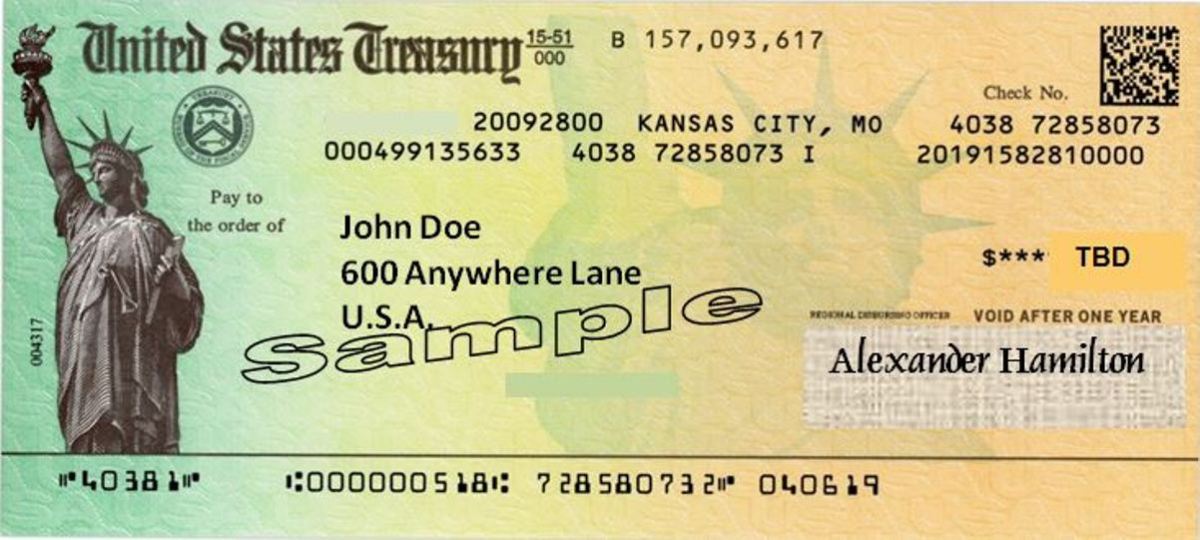
If you made less than $75,000 in 2019 you will likely get a relief check of $600 soon. If you think no further you will be delighted.

On December 27, 2020, President Donald Trump signed the Consolidated Appropriations Act of 2021 (H.R. 133), which contains in it the Coronavirus Response and Relief Supplemental Appropriations Act. This omnibus bill carries a price tag of $2.3 trillion dollars — $1.4 trillion in regular annual appropriations that keep the federal government running, and $900 billion in supplemental appropriations for Coronavirus relief.

Under this bill, a $600 check will be sent to people who made up to $75,000 in 2019. As of this writing, President Trump’s demand that Congress cut “unnecessary” expenses and increase direct payments to $2,000, might be DOA in the Senate. Senate Majority Leader Mitch McConnell has attached a couple of powerful poison pills to the proposal (elections investigation and repeal of legal protections for social media platforms) which Democrats are unlikely to approve.

Situation Chaotic But Normal

The signing came after several weeks of haggling in Congress and four days of objections by President Trump – not an unusual situation. Legislators are under pressure to bring the bacon home to their constituents, so compromises can get lengthy. Presidents do not have line-item veto power, so they must approve or veto an entire bill.

The approve-the-whole-bill or veto-the-whole-bill process leads to pork-laden bills landing in a President’s desk.

In a video release President Trump strongly objected to “wasteful” expenditures in the Appropriations Bill. He would have preferred less “unnecessary” spending and more Coronavirus relief. However, he had to sign the whole bill in order to fund relief and fund government operations.

The Consolidated Appropriations bill occupies 5,593 minutiae-filled pages – 3,280 pages more than last year’s bill. The House Committee on Appropriations website has brief summary of the bill plus links to specific sections (called “Divisions”).

Divisions A through L are regular appropriations, Divisions M and N deal with Coronavirus Relief, and Divisions O through Z are Authorizing Matters unrelated to the funding of regular or Coronavirus appropriations.

This massive bill was delivered to Congress shortly before a vote was expected, not an unusual situation, but much worse than last years’ 24-hour reading allocation of 2,313 pages.

Focus of Coronavirus Relief

As numerous news outlets have reported, the focus of the $900 billion Coronavirus Relief is direct payments to citizens, forgivable loans to businesses, and extension of federal unemployment subsidies ($300 per week).

There are many other provisions, like: Funding of cultural and entertainment venues. A campaign to increase awareness of the safety and effectiveness of vaccines, and combat misinformation. Funding for low-income families that pay for drinking water and wastewater services.

Focus of the Annual Appropriations

The $1.4 trillion regular annual appropriations include the usual, very wide, domestic and international funding. “Very wide” means funding the average American would probably not fathom. For example:

Not less than $20 million for the recruitment and retention of women in the Afghanistan National Security Forces—twice the amount specified last year. Division C – Defense

Up to $500 million for Jordan, including not less than less than $150 million for reimbursements for enhanced border security. Division C – Defense

$116 million for the wild horse and burro program, $15 million above the fiscal year 2020 enacted level. Division G – Interior/Environment

Authorizing Matters

Here are a couple of samples of the Authorizing Matters in the Appropriations and Coronavirus Relief Bill 20121:

Establishes, within the Smithsonian Institution, the Women’s History Museum and the National Museum of the American Latino.” Division T – Smithsonian

Requires the Secretary of Energy to conduct a study on the benefits of blue hydrogen technology and how that can further enhance the deployment and adoption of carbon capture and storage.” Division Z – Energy, Title IV Carbon Management

Who Voted No

Not everyone in Congress felt pressured to concur with this bill.

In the House, 50 Republicans, 2 Democrats, and 1 Libertarian voted against the bill. The two Democrats issued strong statement explaining their vote:

Rashida Tlaib (D-Michigan) – We will be back here in a month because the suffering will have gotten much worse because there has been a lack of bold action and priorities to put people first.

Tulsi Gabbard (D-Hawaii) – $600 is a slap in the face to every American struggling due to the pandemic. You deserve better. I voted against the 5,593-page spending bill that gave billions to corporate interests, the military industrial complex & other countries, leaving crumbs for you who need help most.

In the Senate, 6 Senators, all Republicans, voted NO. They objected to the bill’s price tag in light of an already perilous national debt, the nearly 6,000 pages of complex legislation that nobody had time to read, and the process by which just a few legislators craft bills and expect automatic approval from everyone else. Here is a sample of the Senator’s frustration:

Rick Scott (R-Florida) – Once again, in classic Washington style, vital programs are attached to a massive omnibus spending bill that mortgages our kids & grandkid’s future. Therefore, I can’t support this bill.

Ron Johnson (R-Wisconsin) – The dysfunction of Washington, D.C. was on full display as Congress combined covid relief with a massive omnibus spending bill three months past the deadline and into the current fiscal year. This monstrosity was 5,593 pages long, and passed only nine hours after the Senate first saw it.

Mike Lee (R-Utah) – This process, by which members of Congress are asked to defer blindly to legislation negotiated entirely in secret by four of their colleagues, must come to an end.

And the Spending Goes On

Constituents clamor for relief – this time from the economic effects of Coronavirus response – and legislators are happy to oblige by passing massive spending bills. The idea of cutting back on non-urgent spending to allocated funds to urgent challenges is anathema to most legislators.

The U.S. national debt is $27.5 trillion, and debt to GDP is 128.9%. No matter, say the bulk of today’s legislators. What used to be a derisive accusation – making money out of thin air – is now accepted as Modern Monetary Theory. Government keeps producing money by borrowing, legislators keep spending, and the people are happily appeased. Think no further!