A new Middle East Peace Plan – Again?

The asymmetry between Israel and Palestine is a fatal flaw always present in Middle East peace plans attempted by Western officials. The current plan is no different.

President Donald Trump, in his apparent effort to establish a new global order, is devising peace solutions to the world’s hot spots. The Middle East “20-point Peace Plan” is receiving the most press, possibly because the world would like to see an end to 77 years of lives destroyed or lost in conflict between Israelis and Palestinians. Most unfortunately, this plan suffers from the fatal flaw present in plans going way back to the end of World War I.

The fatal flaw is the asymmetry between Israel and Palestine. The Jewish State has the cultural, political and economic support of a world-wide Jewish community; and Israel has worked hard to be the Western presence in the Middle East. In contrast Palestine suffers from divergent factions, lacks a world-wide community as focused in unity as the Jewish community, and is perceived as anti-Western. Understandably, “peace plans” devised by Westerners will favor Israel.

Thus, we now have a peace plan on the table that includes disarmament of Hamas (understandable given Hamas’ horrific actions of October 7, 2023, but how realistic?), a dependent Palestinian population subject to whether Israel allows food into Gaza or not, an unclear deployment of “international security forces” to ensure success of the peace plan, and no acknowledgment in the plan about Islam’s discomfort with the existence of Israel or Israel’s desire to accommodate its growth via expanding settlements.

Time, effort and treasure spent by government officials in numerous Middle East peace plans have not yielded any peace so far. At this point, one might wonder whether peace through adult negotiation is really the heart-felt objective, or whether annihilation of one side or another is the endgame.

Also at this point, one might be reminded of the 1960s Vietnam Era embrace of a collective unconscious conceptualized in the adage “Make Love not War.” The 20-year carnage of the Vietnam War did not really end with official peace plans. It ended when peace started with a collective “Meh” directed at useless destruction. Obviously for such blessing to occur, individuals and families on all sides need to come to the conclusion that they are better off making love not war.

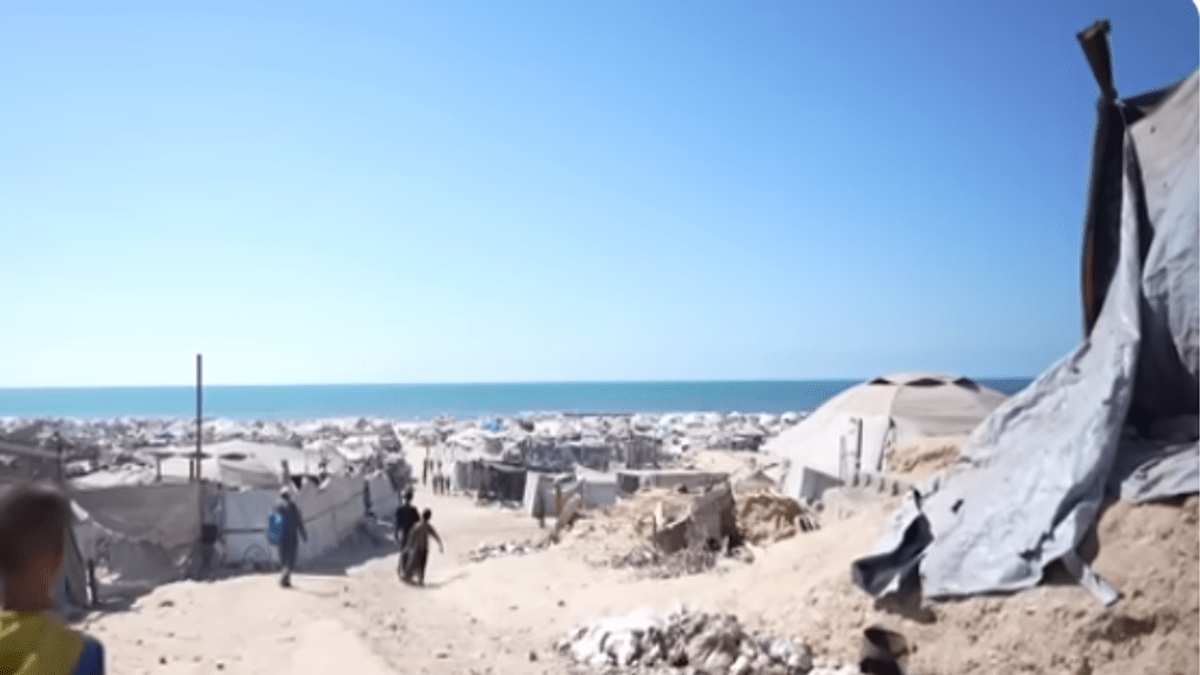
Picture: Sep 1, 2025 Al Jazeera
“Gaza’s beaches, once popular destinations for leisure and relaxation, have been transformed into makeshift refugee camps … Thousands of displaced Palestinians now seek shelter on the very shores that were once symbols of joy and respite.

Recommended article: US strikes on Iran are a test of hard power’s limits

Whether there is indeed a ceasefire between Iran and Israel or whether the US will remain in a rat hole of retaliations remains to be seen. But, as the recommended article explains, Iran will retain its irreversible knowledge gain in matters of nuclear enrichment, to be used or not as Iran sees fit.

In the midst of claims by President Donald Trump of “spectacular military success,” and fears of “descending into a rat hole of retaliation after retaliation” expressed by UN Chief Antonio Guterres, the Reuters news agency published a calm and rational article on June 22, 2025, which describes an additional scenario: nothing has changed as far as Iran’s ability to proceed with its nuclear research.

In US strikes on Iran nuclear sites are real-life test of hard power’s limits, authors Francois Murphy and John Irish speak about Iran’s “irreversible knowledge gain” that bombers cannot obliterate.

Here are highlights from the article:

“You can destroy or disable a nuclear programme’s physical infrastructure but it is very hard or impossible to eliminate the knowledge a country has acquired.”

“Western powers including the United States have publicly suggested as much, complaining of the ‘irreversible knowledge gain’ Iran has made by carrying out activities they object to.”

“‘Military strikes alone cannot destroy Iran’s extensive nuclear knowledge,’ the Washington-based Arms Control Association said in a statement after the U.S. strikes with massive bunker-busting bombs on sites including Iran’s two main underground enrichment plants at Natanz and Fordow.”

“The strikes will set Iran’s programme back, but at the cost of strengthening Tehran’s resolve to reconstitute its sensitive nuclear activities, possibly prompting it to consider withdrawing from the nuclear Non-Proliferation Treaty, and possibly proceeding to weaponisation.”

“Israel has also said it has killed Iranian nuclear scientists but, while little is known about the personnel side of Iran’s nuclear programme, officials have said they are sceptical about that having a serious impact on Iran’s nuclear knowledge, even if it might slow progress in the near term.”

“One important open question is how much highly enriched uranium Iran still has and whether it is all accounted for.”

“A senior Iranian source told Reuters on Sunday most of the highly enriched uranium at Fordow, the site producing the bulk of Iran’s uranium refined to up to 60%, had been moved to an undisclosed location before the U.S. attack there.”

So, ceasefire or not…

Whether there is indeed a ceasefire between Iran and Israel as President Donal Trump announced today, June 23, 2025, or whether the US will remain in the rat hole of retaliations remains to be seen.

But, as the recommended article explains, Iran will retain its irreversible knowledge gain in matters of nuclear enrichment, to be used or not as Iran sees fit.

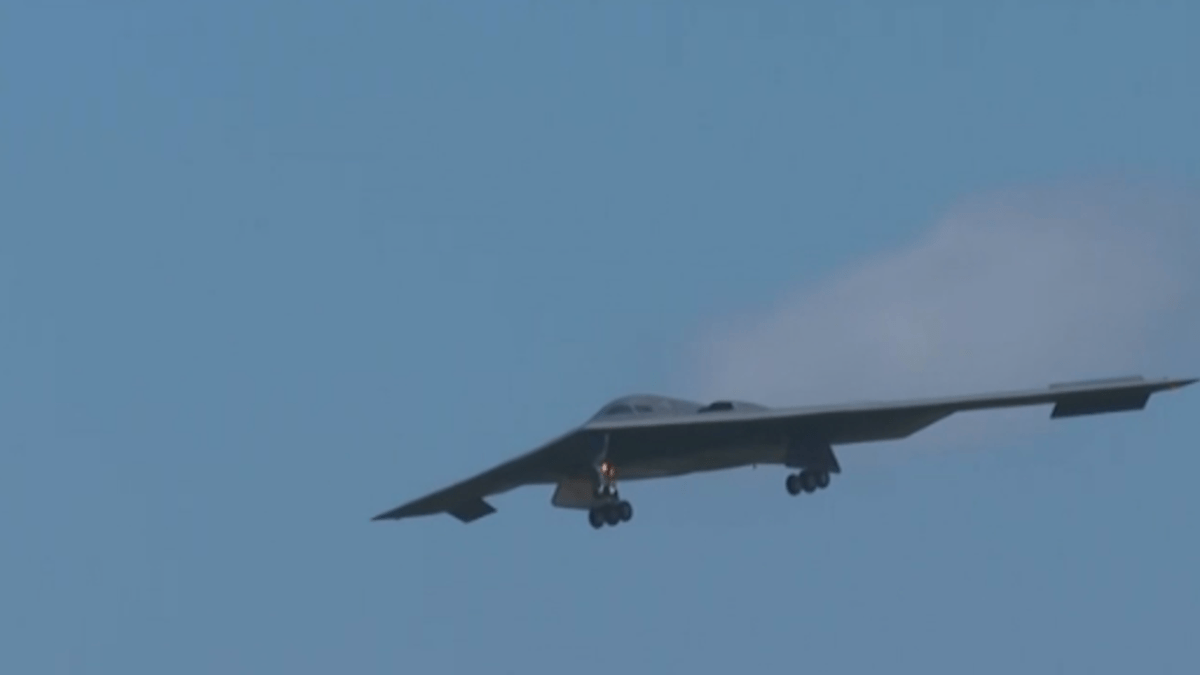
Picture: From AP video on MSN News, B-2 bombers return to US base

A miracle needs to happen in the Holy Land

The miracle that needs to happen in the Middle East includes an epiphany by all peoples on all sides that living a forever war is not a wise choice. The miracle would include Arab acceptance of Israel, and Israeli acceptance of a self-governing State of Palestine.

For the last 75 years, the world has invested a great deal of time and effort attempting to resolve the Israeli-Palestinian conflict. Whether that was time well spent depends on whether one believes that a peaceful apportionment of land between Israelis and Palestinians was ever in anyone’s mind.

The savage Hamas attack on Israeli civilians on October 7 and Israel’s large-scale retaliation need to be viewed as the latest events of the continuous bloodshed between Arabs and Israelis since the fall of the Ottoman Empire in the early 1900s. In spite of calls for ceasefire, lengthy peace negotiations, and thoughts and prayers, evidence keeps pointing to an Arab desire to see Israel disappear and an Israeli desire to empty Gaza and the West Bank of Palestinians.

As the Holy Land continues to be soaked in the blood of the guilty and the innocent – as anyone could have envisioned since the signing of the Balfour Declaration back in 1917 – Israelis and Arabs remain intractable. Annihilation of either side would in theory end the conflict.

However, this is not really a war between Israel and Hamas. It is a much larger fight between Western powers that want a “Western presence” in the Middle East represented by Israel, and Middle Eastern powers that side with Palestinian Arabs. So, chances are Hamas cannot really eliminate Israel without being neutralized by the West. And Israel cannot really eliminate Hamas without creating a new Arab tormentor, whether Hezbollah, Iran, Lebanon, etc.

Further, today’s hyperactive communication channels like social media and massive news sources (New York Times, Washington Post, Al Jazeera) stir up emotions that can easily be translated into election votes, campaign donations, and even foreign assistance – or lack thereof. Thus, leaders walk on eggshells, say what is expedient, do what is necessary to remain in power, and solve nothing.

Examples of either duplicity or confusion abound:

* President Joe Biden urges a two-state solution, but the U.S. abides by its policy of vetoing any United Nations resolution in favor of granting statehood to Palestine.

* U.S. Secretary of State Antony Blinken demands that Israel avoid civilian casualties in Gaza, but he knows that just over 2 million people, including Hamas terrorists, are crammed in an area the size of Philadelphia.

* Benjamin Netanyahu curses Hamas, while the New York Times is busy exposing Netanyahu’s past agreements with Qatar to funnel money into Gaza, supposedly for humanitarian purposes, but seemingly to keep Hamas a healthy enemy of Fatah in the West Bank. The New York Times article of December 10 Buying Quiet suggests that Netanyahu’s divide and conquer policy tragically failed to understand Hamas.

* Hamas is willing to turn its militants and civilians into cannon fodder after each of its terrorist attacks on Israel. How long can Hamas continue its bloody suicidal war of attrition is anyone’s guess.

A miracle needs to happen.

It would be a blessing to the entire world if through an unexpected miracle Israelis and Arabs including Hamas would stop living in the past. Israel is not going anywhere. Israel is the “Western presence” in the Middle East demanded by the powers that be. Palestinians are not likely to go away either as Israelis so fervently hope; their Arab neighbors have enough problems even without an influx of displaced populations.

The miracle if it were to happen needs to be pretty huge, since belligerent minds are difficult to change. Such miracle would include,

* An epiphany by all peoples on all sides that living a forever war is not a wise choice. Arabs, as well as the international community, would accept Israel as the new Middle East neighbor that is not planning to move. Israel, as well as the international community, would accept a self-governing Palestinian state within the 1967 borders of the West Bank and Gaza.

* The new State of Palestine would be demilitarized and self-governing. Like in any other state, leaders and citizens of the new Palestine would need to determine what kind of governance they want. Responsibility for one’s destiny is the price of freedom.

* Israeli settlers in the West Bank, both within the pre-1967 borders and post-1967 occupied territories, would choose to either leave or remain as foreign residents in the new State of Palestine. No further settlement of Israelis would be allowed in the new Palestine.

* A result of such a miracle would be effort and money spent on economic development, education, and health instead of war materiel.

Miracles do happen. It’s time one happened again in the Holy Land.

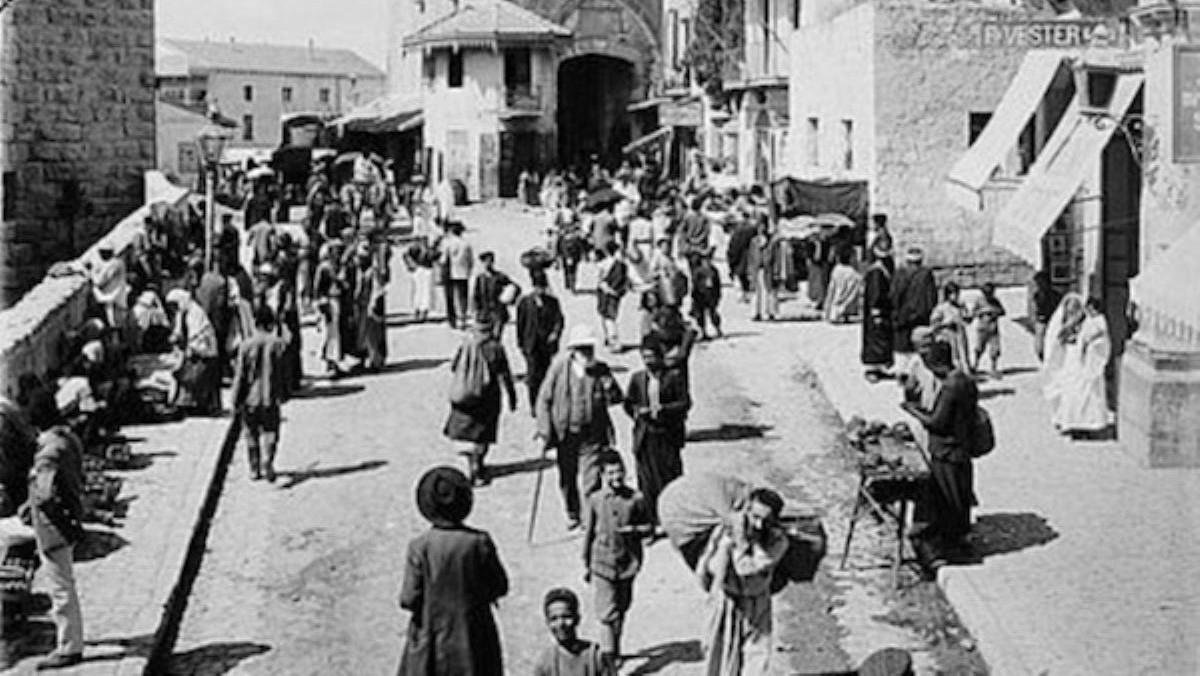
Picture: Jaffa Gate in Jerusalem’s Old City toward the end of the Ottoman Empire. From 972 Magazine article Before Zionism: The shared life of Jews and Palestinians, April 4, 2016. A census taken by the British in 1919 reports 647,261 people living in Palestine: 514,480 Muslims, 65,277 Jews, 62,451 Christians, 153 Samaritans, and 4,900 “Miscell.”
Afghanistan and the sunk-cost dilemma

The correct response to the sunk-cost dilemma is to realistically evaluate the situation. If most variables are not conducive to success, get out – mitigate as best you can, but get out.

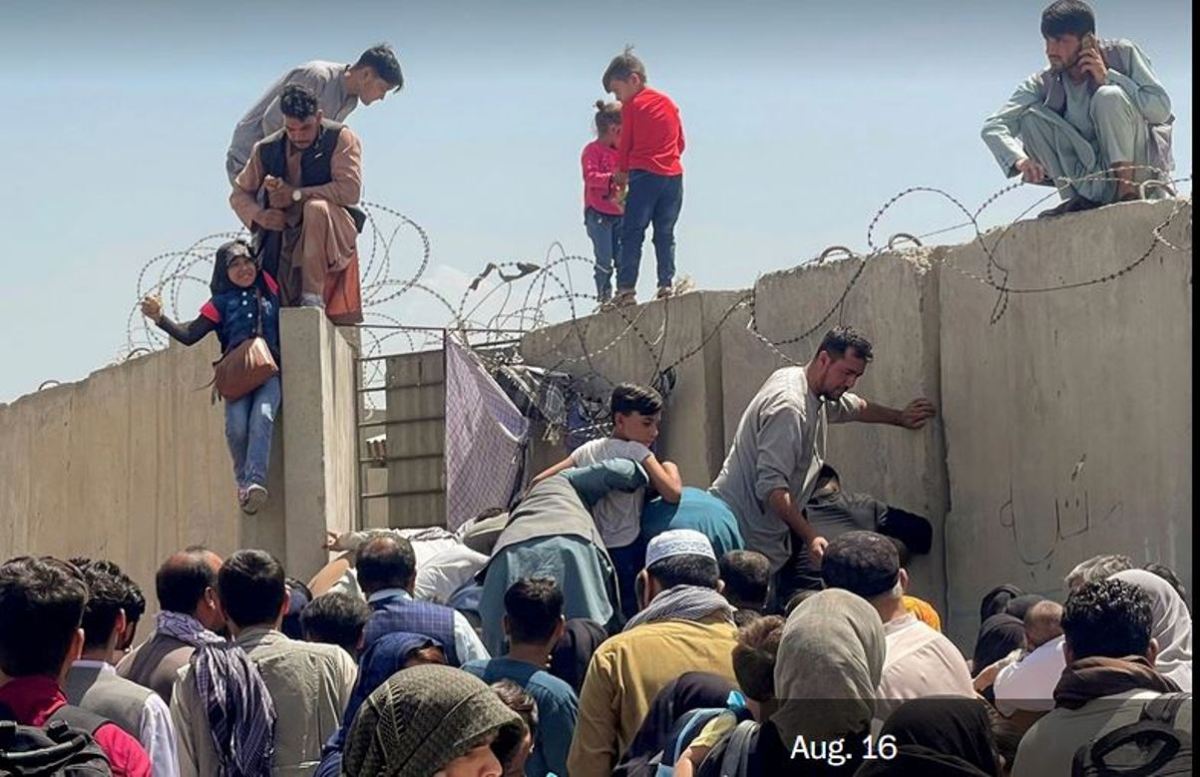
Afghanistan is back in Taliban hands after 20 years of U.S. occupation. On August 16, 2021, President Joe Biden explained his decision to withdraw American troops from Afghanistan.

So I’m left again to ask of those who argue that we should stay: How many more generations of America’s daughters and sons would you have me send to fight Afghans — Afghanistan’s civil war when Afghan troops will not? How many more lives — American lives — is it worth? How many endless rows of headstones at Arlington National Cemetery?

I’m clear on my answer: I will not repeat the mistakes we’ve made in the past — the mistake of staying and fighting indefinitely in a conflict that is not in the national interest of the United States, of doubling down on a civil war in a foreign country, of attempting to remake a country through the endless military deployments of U.S. forces. Joe Biden, August 16, 2021

U. S. costs since 2001 have been: 2,500 U.S. military deaths, 4,000 U.S. civilian contractors killed, an estimated 167,000 Afghan deaths, and $2 trillion spent.

The probability was low that Afghanistan’s central government installed after the U.S. 2001 invasion would survive without a strong U.S. presence.

When I hosted President Ghani and Chairman Abdullah at the White House in June and again when I spoke by phone to Ghani in July, we had very frank conversations. We talked about how Afghanistan should prepare to fight their civil wars after the U.S. military departed, to clean up the corruption in government so the government could function for the Afghan people. We talked extensively about the need for Afghan leaders to unite politically. They failed to do any of that. Joe Biden, August 16, 2021

A good interpreter interacting with the locals might let you in that the locals were confused about our presence there. A great interpreter would take the time to explain to you that outside of a few select people tied directly to the government, many locals were confused by even the mention of Afghanistan. They identified themselves as “Pashtuns” and if asked where they lived, believed they were in “Pashtunistan,” encompassing a region that is parts of Southern Afghanistan and Pakistan. Task & Purpose, August 17, 2021

Joe Biden’s predecessor, President Donald Trump, recognized the realities in Afghanistan, and on February 29, 2020, signed an agreement with Taliban leaders that set the date for U.S. troop withdrawal by May 1, 2021, and lay down a strategy for evacuating U.S. personnel and allies.

Although Biden shared Trump’s vision of troop withdrawal sooner rather than later, he delayed the withdrawal and the evacuation, allowing the Taliban to take control before allies were orderly evacuated. The ensuing chaos, reminiscent of the fall of Saigon in 1975, prompted criticism from Democrats and Republicans alike.

There has also been criticism of perceived disregard for the fate under Taliban rule of women and girls. The Taliban’s interpretation of Islamic principles calls for the subservience of women. The Taliban is now in charge, and expecting the U.S. government to dictate how the Taliban should treat women appears arrogant. If women and girls of Afghanistan value their education, right to work outside the home, owning property, and having other individual freedoms enjoyed by men, they have a challenging road ahead.

Shibboleths like “You broke it, you own it,” feel more like someone’s admonition at Faberge than a reference to the devastation of wars. The U.S. went into Afghanistan to rid itself of Al-Qaeda. It appears it did that, for now. In the context of war, no further action is required.

In the context of diplomacy and intelligence, there is much that can be done, especially now that the Taliban wants to be seen as a gentler, kinder version of its former self.

Since capturing Kabul, the Taliban have sought to rebrand themselves as more moderate, promising former rivals amnesty, urging women to join their government, pledging stability at home and trying to persuade the international community to see beyond a bloody past defined by violence and repression. New York Times, August 21, 2021

The correct response to the sunk-cost dilemma is to realistically evaluate the situation, and if most variables are not conducive to success, get out – mitigate as best you can, but get out. President Joe Biden failed to conduct an orderly conclusion to U.S. occupation of Afghanistan, but at least he gave the orders to get out.