Did Greenland say it wanted Texas?

Nations have always felt comfortable taking over other nations. So, it should not be surprising that President-elect Donal Trump wants Greenland. Niccolo Machiavelli explained the situation way back in 1532.

No, Greenland did not say it wants Texas. However, nations have always felt comfortable taking over other nations or occupying foreign territories, and nothing has changed. Examples currently abound: China is committed to reunification with Taiwan, by force if necessary. Russia wants Ukraine as security against NATO encroachment. Israel also cites security as it expands settlements in Palestinian territories and occupies buffer zones in southern Syria. North Korea has never stopped eyeing South Korea.

Therefore, it should not be surprising that President-elect Donald Trump, especially given the expansionist aspirations of China and Russia – as well as the treasure trove of valuable minerals under Arctic soil — wants to take over Greenland. This despite the clear message “Greenland is not for sale” repeated by both Greenland and Denmark. And by the way, Trump also would like to take over Canada and the Panama Canal.

Whether Trump’s threat of maximum menace represent his version of negating tactics or his version of American exceptionalism — i.e. empire building — is anyone’s guess. However, either way, he is seemingly guided by what Niccolo Machiavelli called “effectual truth” in his novel The Prince (1532). Here is an excerpt,

It remains now to see what the modes and government of a prince should be with subjects and with friends … it has appeared to me more fitting to go directly to the effectual truth of the thing than to the imagination of it … it is so far from how one lives to how one should live that he who lets go of what is done for what should be done learns his ruin rather than his preservation.

Especially in developed nations, ideal leaders are often envisioned as behaving presidentially, respecting other nations’ sovereignty, practicing “peace, commerce, and honest friendship with all nations, entangling alliances with none” (as Thomas Jefferson advised during his inaugural speech of 1801).

But the U.S. has enjoyed very few years of peace since independence in 1776. During the 19th century, the U.S. used force during its Western expansion and its removal of French and Mexican presence. The 20th century saw the two great wars and combat against Communist expansion. In the 21st century U.S. lives and treasure have been spent establishing footholds in the Middle East. Today, thankfully not U.S. lives, but certainly plenty of U.S. treasure is being spent defending Israel and Ukraine. While China and Russia are just outside the gates.

Perhaps the world is engaging in imagining what should be rather than what is. So, Donald Trump’s expansionist pronouncements stick out like a sore thumb.

Alternatives? Peace through strength (waging war and calling it peace) is the historical possibility chosen by great empires. Globalization as exemplified by the European Union chooses peace and prosperity through national acquiescence. That’s it?

Niccolo Machiavelli is often perceived as supporting ruthless leaders. However, in Chapter 19 of The Prince he says,

… a prince ought to have two fears, one from within, on account of his subjects, the other from without, on account of external powers. From the latter he is defended by being well armed and having good allies … But concerning his subjects, when affairs outside are disturbed he has only to fear that they will conspire secretly, from which a prince can easily secure himself by avoiding being hated and despised, and by keeping the people satisfied with him, which it is most necessary for him to accomplish,

It appears a prince stays in power at the will of his subjects! Would that mean that in our time and place we could at the ballot box choose leaders who prefer peace, commerce, and honest friendship with all nations? If so, why have we not?

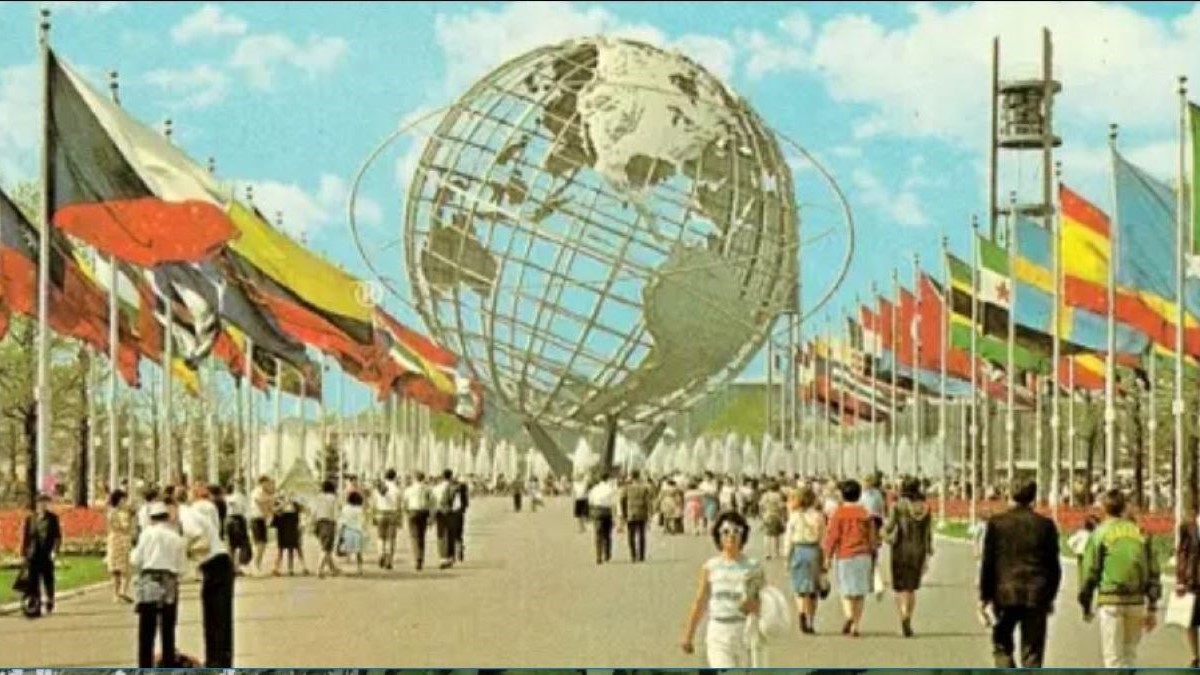
Picture: The symbol for the 1964 World’s Fair in New York state was The Unisphere. The theme of the fair was “Peace Through Understanding.” This picture is from The Legacy of the 1964 World’s Fair in the History website.
John F. Kennedy at Rice University: a call for excellence.

September 12, 2023, is the 61st anniversary of John F. Kennedy’s “We choose to go to the Moon” speech at Rice University. His was a call not to “founder in the backwash of the coming age of space.” Thus a call for a national expectation of excellence.

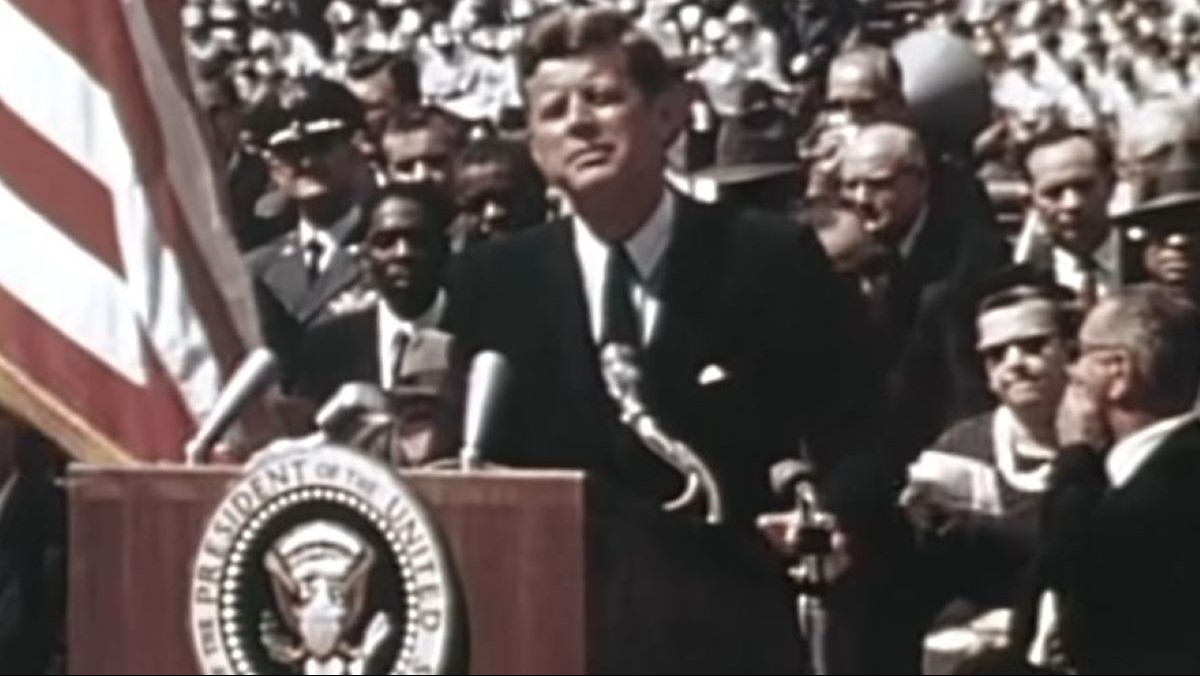
61 years ago, on September 12, 1962, U.S. President John F. Kennedy, stood at a podium at Rice University, under a searing Texas sun, and delivered his iconic “We choose to go to the Moon speech.” His was a call for the expectation of excellence. Not just from a few brave souls that chose to be launched toward the unknown lunar territory, not just from politicians and engineers. Kennedy called for an expectation of excellence from the entire nation.

Those who came before us made certain that this country rode the first waves of the industrial revolutions, the first waves of modern invention, and the first wave of nuclear power, and this generation does not intend to founder in the backwash of the coming age of space. We mean to be a part of it — we mean to lead it.

Kennedy regarded the expectation of excellence as a state of mind, in which dangers, uncertainties and costs are considered and freely chosen. He did not mince words or embellish sacrifices.

We have had our failures, but so have others, even if they do not admit them. And they may be less public.

To be sure, all of this costs us all a good deal of money … Space expenditures will soon rise some more, from 40 cents per person per week to more than 50 cents a week for every man, woman and child in the United States, for we have given this program a high national priority — even though I realize that this is in some measure an act of faith and vision, for we do not now know what benefits await us.

He also regarded excellence as a national commitment to explore space – the Moon, the planets, and beyond – in peace, freedom, and a spirit of sharing discoveries.

For the eyes of the world now look into space, to the moon and to the planets beyond, and we have vowed that we shall not see it governed by a hostile flag of conquest, but by a banner of freedom and peace. We have vowed that we shall not see space filled with weapons of mass destruction, but with instruments of knowledge and understanding.

It only took seven years.

Seven years after Kennedy’s speech at Rice University, a nation glued to television sets and radios heard Apollo 11 Commander Neil Armstrong’s message to NASA Mission Control Center in Houston,

Houston, Tranquility base here. The Eagle has landed.

The Saturn V rocket, developed at NASA’s Marshall Space Flight Center in Huntsville, Alabama: the Columbia command module built by North American Aviation in Downey, California; and the Eagle lunar module, built by Grumman Aerospace in Long Island, N.Y., safely landed Neil Armstrong, Edwin Aldrin, and Michael Collins on the lunar Sea of Tranquility on July 20, 1969. On July 24, 1969, aircraft carrier USS Hornet picked up the command module that had splashed down on the North Pacific Ocean with all three astronauts safely on board.

By that time, the inspiration for the lunar landing, John F. Kennedy, had been assassinated. Lyndon B. Johnson, who to his credit continued the Apollo Space Program, had served his term as president. And President Richard M. Nixon welcomed the three astronauts home.

Although Johnson and Nixon continued and supported the Apollo 11 Space Program after Kennedy’s assassination, the Moon landing would not have occurred when it did without Kennedy rallying the nation. He set great expectations, and as is always the case expectations pretty much determine outcome. Expect much, achieve much. Expect little, achieve little.

Since the Apollo 11 mission, six more lunar missions were successfully conducted by the United States, with 12 astronauts making lunar walks.

The New Frontiers of discovery and cooperation continue.

Space research and exploration thankfully continues in the spirit of peace, freedom, and cooperation envisioned by John F. Kennedy.

The International Space Station main construction was completed between 1998 and 2011. Members of the first crew that arrived at the station November of 2000, were NASA astronaut William Shepherd, and Russian Aviation and Space Agency cosmonauts Yuri Gidzenko and Sergei K Krikalev. Since then, the station has been continuously occupied by rotating crews of scientists, engineers, and researchers from 18 countries. The principal partners are the space agencies of the United States, Russia, Europe, Japan, and Canada.

NASA, along with six major space agency partners from the E.U., Germany, Japan, Canada, Israel, and Italy have been working since 2017 on the Artemis project, a Moon exploration program. Artemis will establish a habitat on the Moon by the end of this decade in preparation to establishing one on Mars.

In June, 4 volunteers entered a simulated Mars habitat, where they will remain for a year, in preparation for a Mars landing.

Just in case some would wonder why spend effort and money traveling to space, John F. Kennedy offered the obvious reason during his Rice University speech: “Because it is there.”

Well, space is there, and we’re going to climb it, and the moon and the planets are there, and new hopes for knowledge and peace are there.

As we celebrate the 61st anniversary of that speech, we might wish to practice expectations of excellence. Perhaps ask ourselves if leaders of our nation, heads of our institutions, and certainly educators of our children expect excellence or merely survival.

Memorial Day: What do we owe the dead?

On Memorial Day we honor those fallen in combat in service of the United States. Some of the dead are buried in Flanders Fields. John McCrae’s poem by that name speaks of what we the living owe the dead.

Monday 29, 2023, the last Monday in May, is Memorial Day. Like Christmas, Mothers’ Day and other holidays, Memorial Day has become a day for taking advantage of store sales – “Memorial Day Sale!”

Before collective sensitivities were obliterated by quests for increased sales, Memorial Day was observed by giving thought to those who did not return, who perished in some God-forsaken field of battle. Traditionally Memorial Day was a day to visit cemeteries, clean and decorate graves, and picnic. Yes, picnic, especially in crowded cities where cemeteries may have been the only green, open space. Peace in the community of saints.

It is always good to remember that Memorial Day is very different from Veterans Day (celebrated November 11 of each year). Memorial Day remembers the fallen in war. Veterans Day remembers all who served in the U.S. military. Useful also to understand the origins of these holidays.

Memorial Day, originally called Decoration Day, started in 1868 as observance of the estimated 620,000 lives cut short during the American Civil War (originally called the War Between the States). After World War I, in which 53,000 American soldiers died in combat, the solemn day was expanded to honor all combatants who died in service of the United States. It became an official federal holiday in 1971.

Veterans Day, by contrast, commemorates those who served. Originally Veterans Day was known throughout the world as Armistice Day, in observance of the World War I truce between Allies and Germany at Compiegne, France, on November 11, 1918. In 1954, the name of the holiday was changed to Veterans Day, to commemorate all who served in the U.S. military. Other countries changed the name Armistice Day to Remembrance Day after WWII.

Both holidays, Memorial and Veterans Day, have some connection with World War I. While we do commemorate, we should also give thought that at one time WWI was called “The war to end all wars.” Purportedly, the perception at the time was that such great slaughter of soldiers and civilians would be avoided in the future. Unfortunately, the 1919 Treaty of Versailles, which ended WWI, was replete with destabilizing punishment of Germany and forceful intrusions in the Middle East. Thus, in retrospect, World War II and Middle East conflicts would seem inevitable.

Leaders’ desire for power dominated the Halls of Versailles in 1919. Seems like not much has changed as we reflect on American lives lost in World War II, Korea, Vietnam, Iraq, and Afghanistan. On this Memorial Day, we honor all those fallen in combat, and hopefully also give thought to a future where leaders of all nations would choose prosperity rather than slaughter.

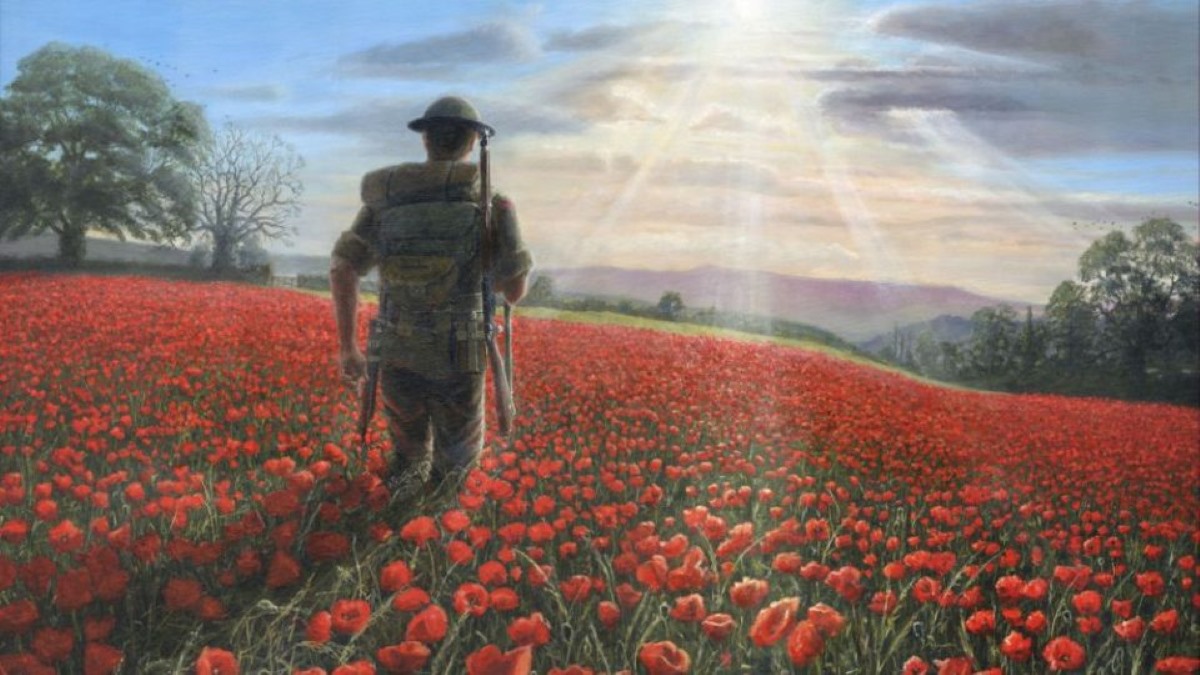
Pictured above is an illustration from the website of Veterans of Foreign Wars Post 3617, Wenatchee Valley, Washington. John McCrae’s poem In Flanders Fields accompanied the illustration. McCrae, soldier and physician in WWI, gave voice to the dead buried in Flanders Fields, Belgium. The poem ends with a plea for the living to continue the fight which the dead left unfinished.

To you from failing hands we throw
The torch; be yours to hold it high.
If ye break faith with us who die
We shall not sleep, though poppies grow
In Flanders fields.

Ever since, the question in some minds has been, that fight of 1914 to 1918 or all the fights that keep following. If the latter, the fallen in Flanders Field shall never find rest. Perhaps a lasting peace, in which young men and women will no longer be buried in battlefield makeshift graves, is what we really owe the dead.

Elizabeth II leaves very big shoes to fill

Elizabeth II, queen and stateswoman, died on September 8, 2022, leaving very big shoes to be filled. Hopefully, King Charles III will lead by example as did his parents and grandparents.

Elizabeth Windsor, better known to the world as Elizabeth II or Queen Elizabeth, died on September 8, 2022, at 96 years of age. Her eldest son Charles, 73, ascended the British throne as King Charles III. Elizabeth II leaves very, very big shoes to fill.

Elizabeth II was the longest reigning British monarch, becoming queen at only 25 years of age in 1952. Thus the 96 year old queen the world lost today had an opportunity to build an exemplary track record as a true stateswoman, as a pillar of stability and service.

She led by example, the highest form of leadership. This virtue she learned from her parents, Duke and Duchess of York, later King George VI and Queen Elizabeth (the Queen Mother).

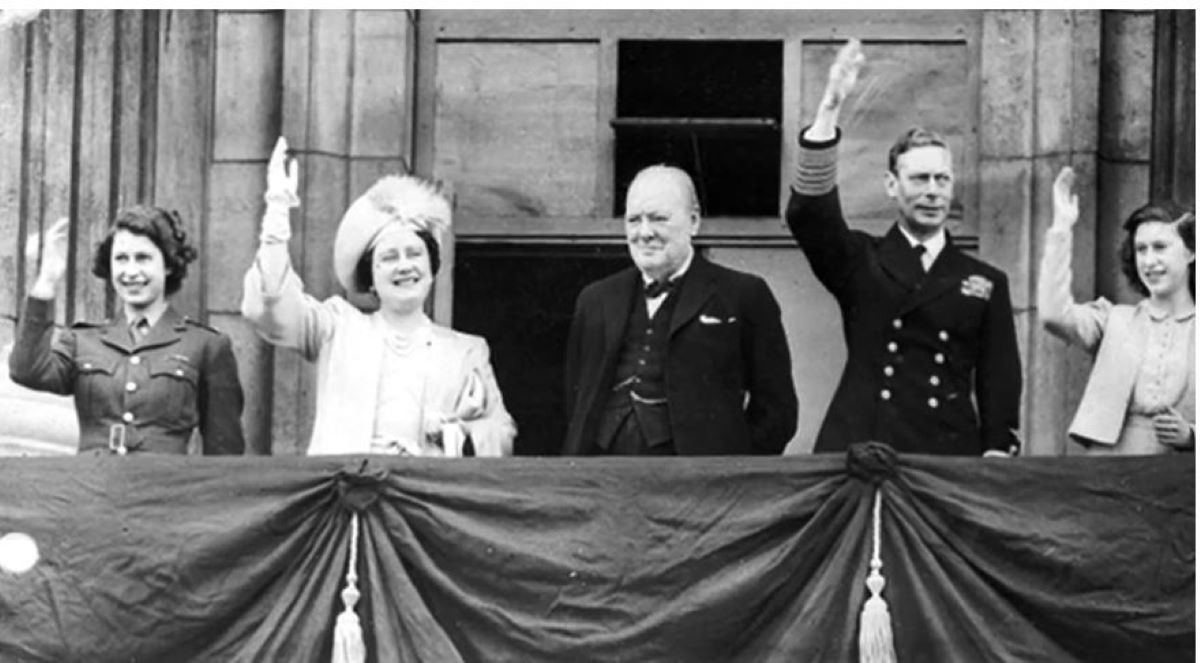
During WWII, the young Elizabeth and her sister Margaret remained in Britain, instead being sent to Canada or other safer parts of the British Commonwealth. The King and Queen remained at Buckingham Palace, even as Germany bombed London. They often visited neighborhoods destroyed in the bombings. At age 19 Elizabeth joined the Auxiliary Territorial Service, a women’s branch of the British army, and trained as a driver and mechanic.

If anyone kept calm and carried on through turbulence since the Cold War, it was Elizabeth II. She met often with world heads of state, and regularly with her Prime Ministers. She missed only three Openings of Parliament during her long reign, two due to pregnancy and one at the end of her life. The respect she commanded, has been key to keeping the British Commonwealth intact.

King Charles III is now tasked with rising to the occasion. Hopefully, his grandparents and parents’ example of service to the people will guide his path.

Pictured: Princess Elizabeth (in uniform), Queen Elizabeth, Prime Minister Winston Churchill, King George VI, and Princess Margaret, in the balcony of Buckingham Palace at the end of WWII.