No, Greenland did not say it wants Texas. However, nations have always felt comfortable taking over other nations or occupying foreign territories, and nothing has changed. Examples currently abound: China is committed to reunification with Taiwan, by force if necessary. Russia wants Ukraine as security against NATO encroachment. Israel also cites security as it expands settlements in Palestinian territories and occupies buffer zones in southern Syria. North Korea has never stopped eyeing South Korea.
Therefore, it should not be surprising that President-elect Donald Trump, especially given the expansionist aspirations of China and Russia – as well as the treasure trove of valuable minerals under Arctic soil — wants to take over Greenland. This despite the clear message “Greenland is not for sale” repeated by both Greenland and Denmark. And by the way, Trump also would like to take over Canada and the Panama Canal.
Whether Trump’s threat of maximum menace represent his version of negating tactics or his version of American exceptionalism — i.e. empire building — is anyone’s guess. However, either way, he is seemingly guided by what Niccolo Machiavelli called “effectual truth” in his novel The Prince (1532). Here is an excerpt,
“It remains now to see what the modes and government of a prince should be with subjects and with friends … it has appeared to me more fitting to go directly to the effectual truth of the thing than to the imagination of it … it is so far from how one lives to how one should live that he who lets go of what is done for what should be done learns his ruin rather than his preservation.“
Especially in developed nations, ideal leaders are often envisioned as behaving presidentially, respecting other nations’ sovereignty, practicing “peace, commerce, and honest friendship with all nations, entangling alliances with none” (as Thomas Jefferson advised during his inaugural speech of 1801).
But the U.S. has enjoyed very few years of peace since independence in 1776. During the 19th century, the U.S. used force during its Western expansion and its removal of French and Mexican presence. The 20th century saw the two great wars and combat against Communist expansion. In the 21st century U.S. lives and treasure have been spent establishing footholds in the Middle East. Today, thankfully not U.S. lives, but certainly plenty of U.S. treasure is being spent defending Israel and Ukraine. While China and Russia are just outside the gates.
Perhaps the world is engaging in imagining what should be rather than what is. So, Donald Trump’s expansionist pronouncements stick out like a sore thumb.
Alternatives? Peace through strength (waging war and calling it peace) is the historical possibility chosen by great empires. Globalization as exemplified by the European Union chooses peace and prosperity through national acquiescence. That’s it?
Niccolo Machiavelli is often perceived as supporting ruthless leaders. However, in Chapter 19 of The Prince he says,
… a prince ought to have two fears, one from within, on account of his subjects, the other from without, on account of external powers. From the latter he is defended by being well armed and having good allies … But concerning his subjects, when affairs outside are disturbed he has only to fear that they will conspire secretly, from which a prince can easily secure himself by avoiding being hated and despised, and by keeping the people satisfied with him, which it is most necessary for him to accomplish,
It appears a prince stays in power at the will of his subjects! Would that mean that in our time and place we could at the ballot box choose leaders who prefer peace, commerce, and honest friendship with all nations? If so, why have we not?
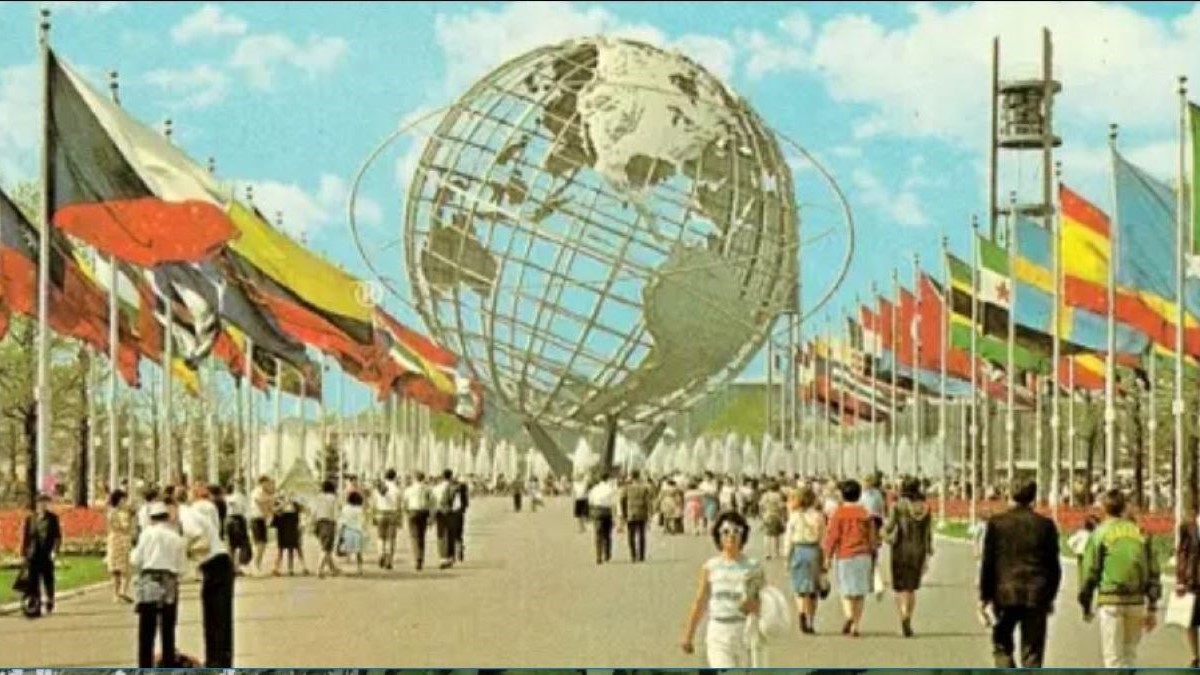
Picture: The symbol for the 1964 World’s Fair in New York state was The Unisphere. The theme of the fair was “Peace Through Understanding.” This picture is from The Legacy of the 1964 World’s Fair in the History website.
Discover more from Just Vote No
Subscribe to get the latest posts sent to your email.

 Just Vote No